Artwork
元 吳鎮 蘆灘釣艇圖 卷|Fisherman
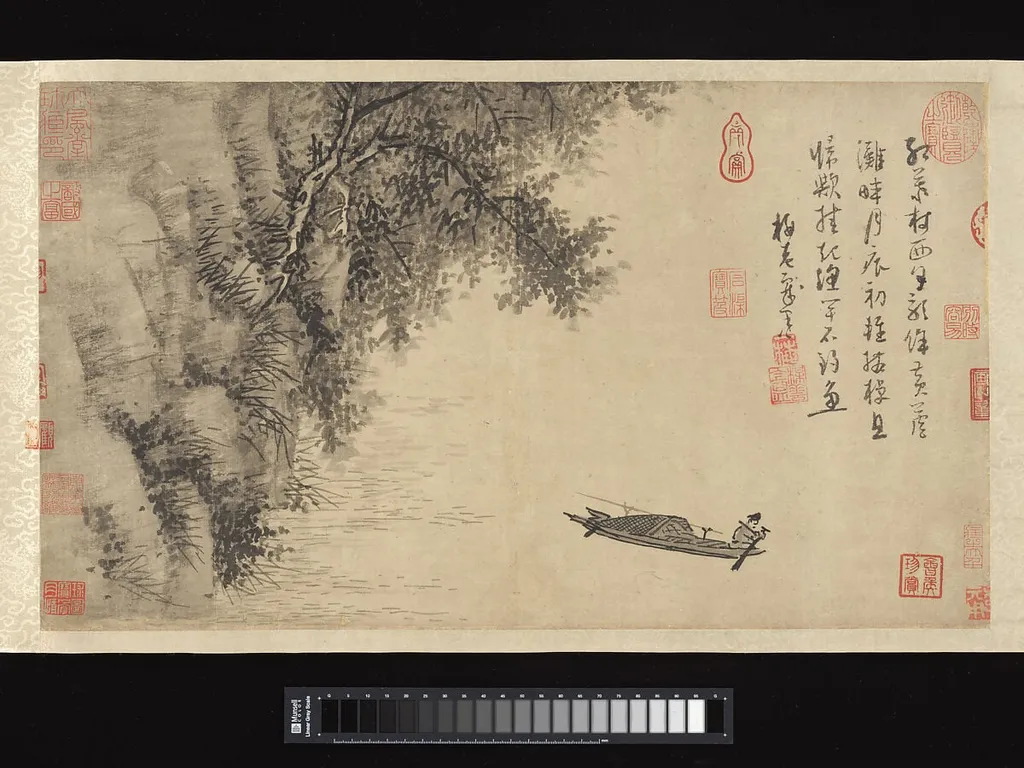
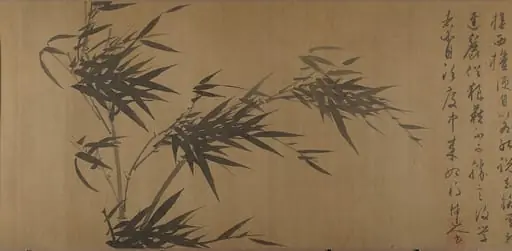
元 吳鎮 蘆灘釣艇圖 卷|Fisherman is an ink painting by the Yuan dynasty literati painting artist Wu Zhen. It dates from 1350 and is held in the collection of the Metropolitan Museum of Art.
- Accession no.
- 1989.363.33
- Credit line
- Bequest of John M. Crawford Jr., 1988
About this work
Subject & Meaning
The subject matter aligns with a longstanding tradition in Chinese art where fishing boats and lone anglers serve as iconic symbols of the eremitic life.
Created in 1350 by the Yuan dynasty artist Wu Zhen, this handscroll presents a landscape scene centered on the act of fishing. The composition depicts a solitary boat situated within a natural environment, likely among reeds as suggested by the title. As a work of landscape painting, the imagery focuses on the interaction between the fisherman and the water.
The subject matter aligns with a longstanding tradition in Chinese art where fishing boats and lone anglers serve as iconic symbols of the eremitic life. These elements typically represent a deliberate withdrawal from societal obligations and political engagement, embodying the Daoist ideal of living in harmony with nature. The depiction of the boat and the fishing activity thus functions not merely as a genre scene, but as a visual metaphor for spiritual freedom and the scholar-artist's desire for seclusion.
Technique & Style
Executed as a handscroll in ink on paper, the work belongs to the monochrome ink-painting tradition characteristic of Yuan-dynasty landscape practice. The medium of ink on paper allowed Wu Zhen to exploit tonal modulation and controlled brushwork, supporting the depiction of a fishing boat within a marshland setting. Its classification as a landscape painting and its handscroll format situate it within the conventional format used by literati artists for intimate, horizontally unfolding compositions. The sources do not provide further specifics on brush handling, seal impressions, paper type, or present condition.
History & Provenance
The handscroll titled 元 吳鎮 蘆灘釣艇圖 (Fisherman), executed by Wu Zhen in 1350, is an ink-on-paper work classified as a landscape painting that portrays a solitary fisherman on a riverbank. The piece was produced in China and entered the collection of the Metropolitan Museum of Art, where it remains on view. Its creation history is documented through the museum’s catalogue, which records the work’s inception in 1350 and its acquisition as part of the museum’s holdings.
The scroll’s provenance reflects continuous ownership by the Metropolitan Museum of Art since its acquisition, with no known earlier private owners documented.
The handscroll 'Fisherman' (1350) by Wu Zhen is held in the collection of the Metropolitan Museum of Art in New York. While the provided records confirm the museum as its current location and classify the work as an ink-on-paper landscape painting, they do not specify a unique inventory or accession number. Furthermore, no details regarding the work's exhibition history, such as specific show titles or dates, are available in the current sources.
Context
Wu Zhen’s Fisherman (1350) occupies a pivotal place in Yuan-dynasty literati painting, embodying the scholar-amateur ideal of retreat into nature. Scholars consistently position the handscroll within the Four Masters of the Yuan, alongside Huang Gongwang, Ni Zan, and Wang Meng, whose works reaffirmed ink landscape as a vehicle for moral cultivation and personal expression. The composition’s spare, rhythmic brushwork and emphasis on solitude reflect the Southern Song legacy while advancing a new, introspective mode aligned with Yuan literati values.
Its inclusion in the Metropolitan Museum of Art’s collection underscores its canonical status in Western surveys of Chinese painting, where it exemplifies the monochrome aesthetic and spiritual resonance central to Yuan scholar-artists’ practice.
Legacy
Wu Zhen's handscroll Fisherman, dated 1350, is recognized as a seminal example of Yuan‑era landscape painting that later artists referenced for its economical brushwork and subtle atmospheric depth. Its inclusion in the Metropolitan Museum of Art’s collection has amplified scholarly attention, positioning the work as a touchstone for studies of Chinese ink aesthetics and influencing subsequent generations of painters who adopted its compositional economy and its thematic focus on solitude and eremitic retreat. The painting’s display context has contributed to its reputation as a representative masterpiece of the period, reinforcing Wu Zhen’s standing in art historical narratives.
Overview
Wu Zhen's Fisherman is an ink-on-paper handscroll from the 1300s. It depicts a solitary figure in a small boat on a vast river, surrounded by a sparse landscape of wind-bent trees and reeds. The distant shore is softened by mist.
This painting embodies a sense of quiet contemplation and is designed to be experienced gradually as the viewer unrolls the scroll, akin to a leisurely stroll through nature.
Artist & collection



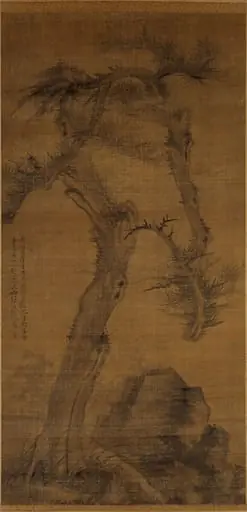
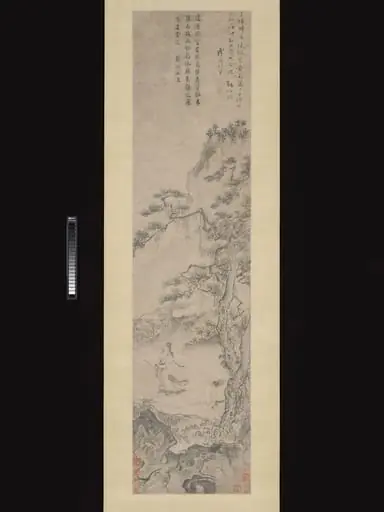 明 杜堇 陶淵明賞菊圖 軸|Tao Yuanming enjoying chrysanthemums
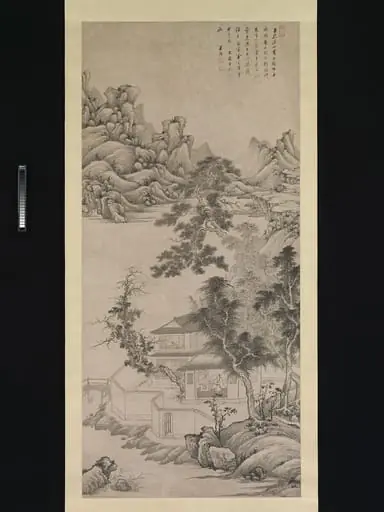 清 王鑑 倣巨然《溪山高士圖》 軸|Lofty Scholar among Streams and Mountains, in the manner of Juran
 名繪集珍 冊 宋馬遠山徑春行
 清 張之萬 山水 冊頁十二開|Landscapes
 明 佚名 朱德潤 怡樂堂圖 卷|Hall of Harmony and Joy
 清院本清明上河圖 卷
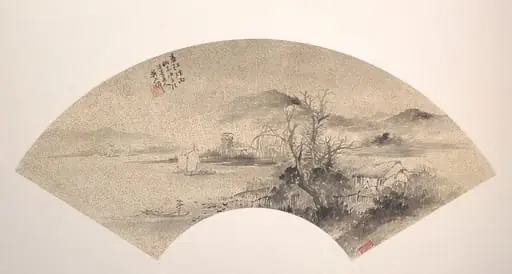 近代 吳石僊 春江煙雨 扇面|Misty Rain on the River in Spring
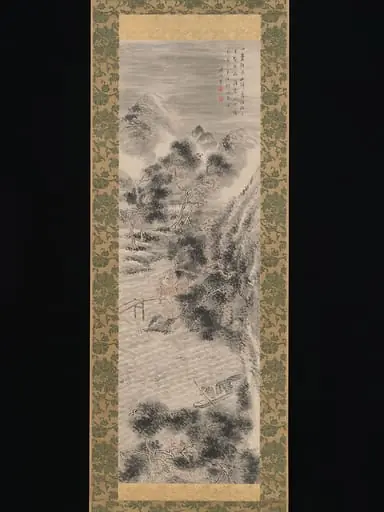 Untitled
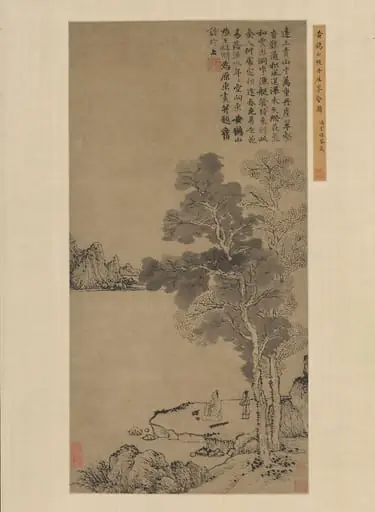 元 王蒙 丹崖翠壑圖 軸|Red Cliffs and Green Valleys
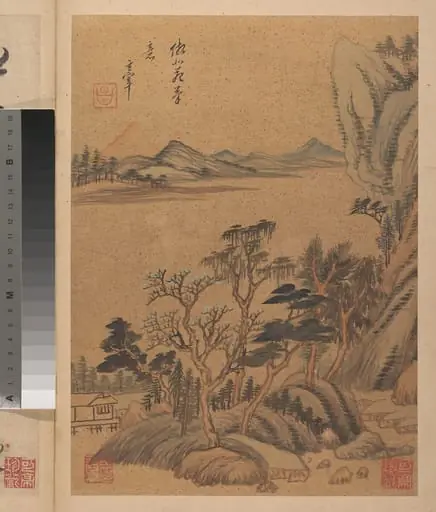 明 董其昌 山水圖詩 冊|Landscapes and Poems