Artwork
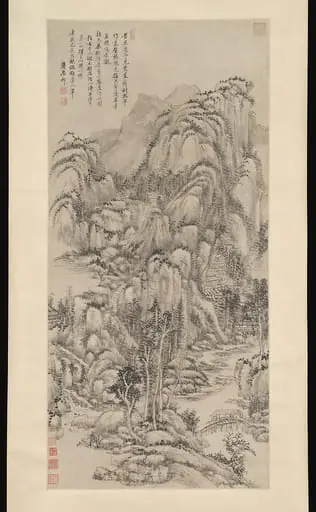
清 王原祁 倣黃公望高克恭山水圖 軸|Landscape in the Styles of Huang Gongwang and Gao Kegong
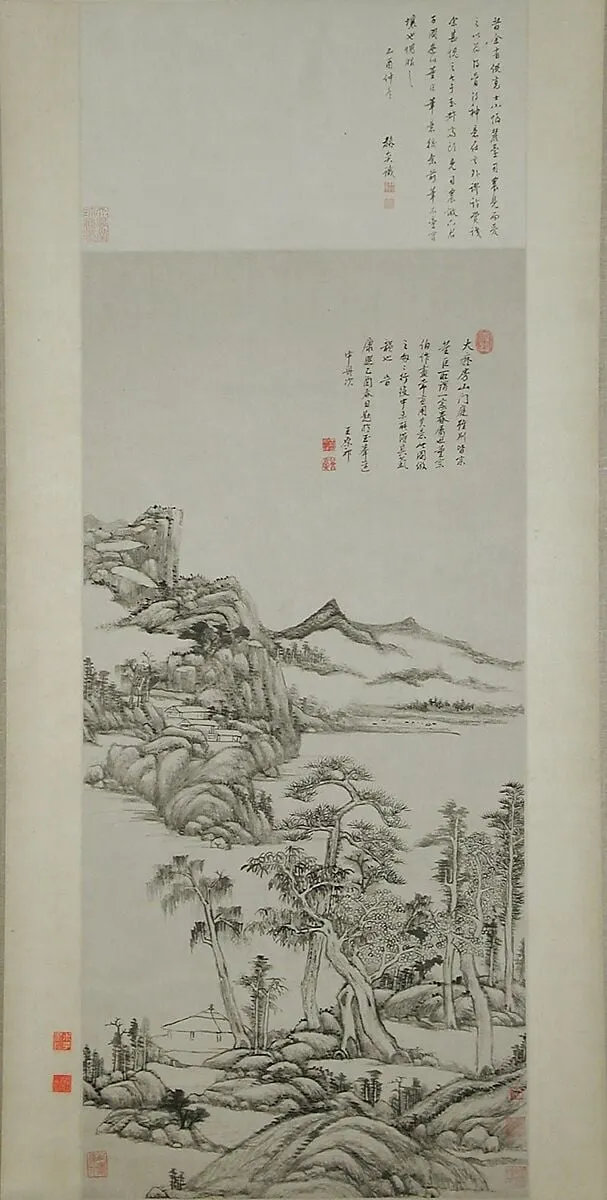
清 王原祁 倣黃公望高克恭山水圖 軸|Landscape in the Styles of Huang Gongwang and Gao Kegong is an ink painting by the Baroque artist Wang Yuanqi. It dates from 1705 and is held in the collection of the Metropolitan Museum of Art.
About this work
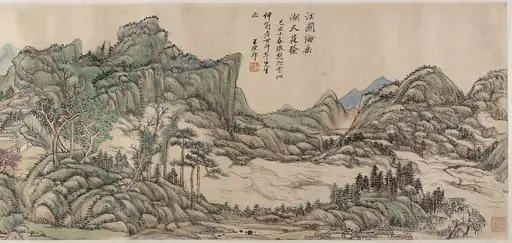
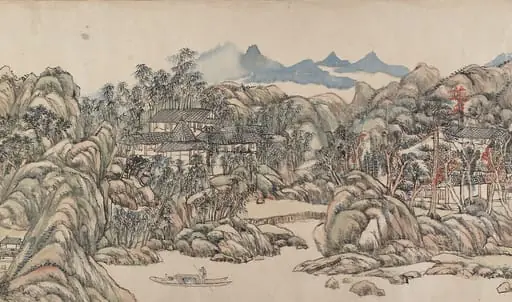
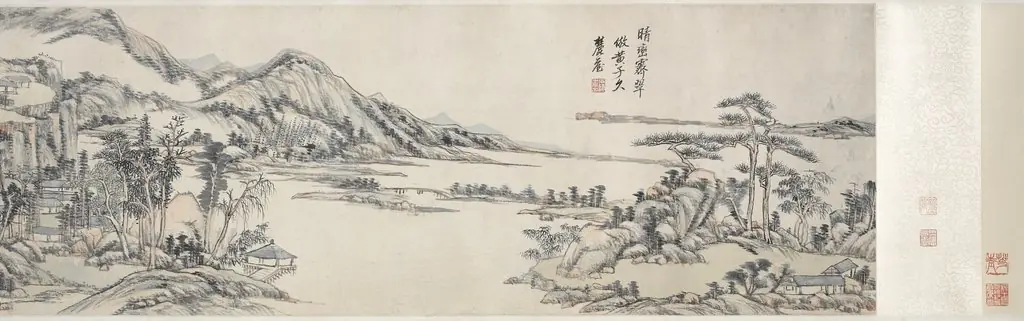
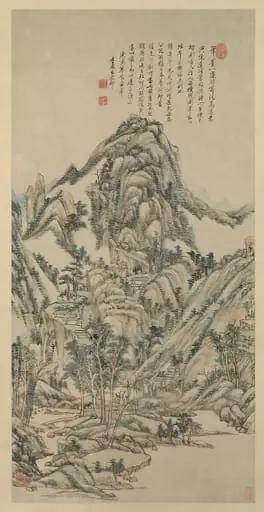
You see a tall scroll of misty mountains, soft brushstrokes building layers of gray ink.
Wang Yuanqi painted this in 1705, copying two earlier artists, Huang Gongwang and Gao Kegong, like a musician covering a classic song. The twist? He blended their styles into one quiet scene, showing respect while making it his own.
Look up landscape painting to find more scrolls like this.
Subject & Meaning
The hanging scroll portrays a landscape that deliberately echoes the compositional and stylistic conventions of the Yuan‑dynasty masters Huang Gongwang and Gao Kegong, emphasizing expansive mountain forms, mist‑filled valleys, and a contemplative sense of natural harmony. Executed in ink on paper in 1705 in China, the work was later acquired by the Metropolitan Museum of Art, where it remains part of the institution’s collection of Chinese paintings. By adopting the aesthetic language of these earlier masters, Wang Yuanqi signals an appreciation for scholarly ideals of quiet reflection and the timeless beauty of the natural world.
Technique & Style
The piece utilizes monochromatic ink applied to a paper support, a medium characteristic of the literati painting tradition in which Wang operated.
Executed in 1705 by Wang Yuanqi, this work is a hanging scroll rendered in ink on paper. As a landscape painting, it formally engages with the stylistic traditions of Huang Gongwang and Gao Kegong, as indicated by its title. The piece utilizes monochromatic ink applied to a paper support, a medium characteristic of the literati painting tradition in which Wang operated.
The handling of the ink and the specific brushwork techniques are employed to evoke the distinct approaches of these two earlier masters within a single composition. Currently held in the collection of the Metropolitan Museum of Art, the artwork represents a Qing dynasty interpretation of previous Yuan and Song dynasty aesthetics through its specific material choices and stylistic synthesis.
History & Provenance
Created in 1705 by the Qing dynasty artist Wang Yuanqi, this hanging scroll executed in ink on paper depicts a landscape synthesizing the styles of Huang Gongwang and Gao Kegong. The work originated in China during the early eighteenth century. While specific details regarding its original commission or intermediate ownership history are not provided in the available records, the painting is currently held in the collection of the Metropolitan Museum of Art.
The piece stands as a documented example of Wang Yuanqi's output from 1705, reflecting his engagement with earlier master traditions through his distinctive brushwork.
The painting is held by the Metropolitan Museum of Art, New York, where it is catalogued under accession number 1973.120.1. It has appeared in at least one exhibition at the museum: the 2018 installation “Art and China after 1949,” where it was displayed as part of the museum’s holdings of modern and contemporary Chinese works.
Overview
Wang Yuanqi's Landscape in the Styles of Huang Gongwang and Gao Kegong, created in 1705, is an ink-on-paper hanging scroll. This work exemplifies the artist's engagement with historical Chinese painting traditions. It presents a serene mountainous vista, rendered through a deliberate synthesis of techniques derived from two eminent predecessors.
The painting serves as both an homage to past masters and an expression of Wang Yuanqi's distinctive artistic vision, demonstrating how he reinterpreted established styles.
Context
The practice of "fang" (倣), or emulating earlier masters, was a fundamental aspect of literati painting in China, particularly during the Qing dynasty. Artists like Wang Yuanqi engaged with historical precedents not merely to reproduce them, but to internalize and then reinterpret their styles, thereby contributing to the ongoing evolution of the tradition. This work illustrates a common approach where artists would study and blend the characteristics of multiple revered painters to forge new expressions.
Artist & collection