Artwork
Landscape with Streams and Mountains
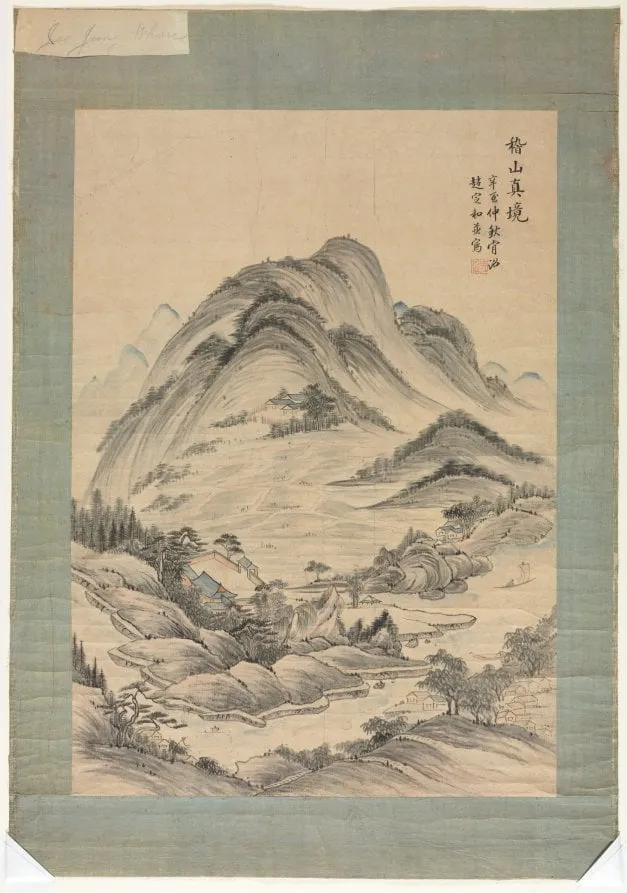
Landscape with Streams and Mountains is an unspecified painting by the Korean Minhwa artist Unknown. It dates from 1800 and is held in the collection of the Cleveland Museum of Art.
- Accession no.
- 1915.216
About this work
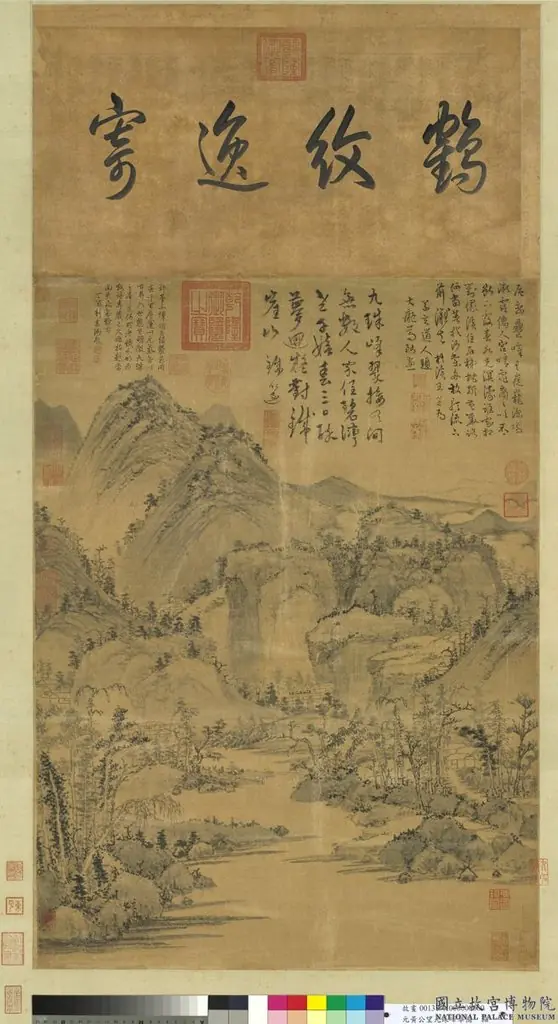
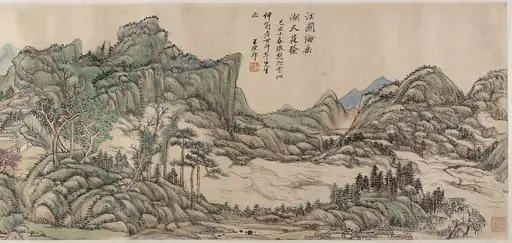
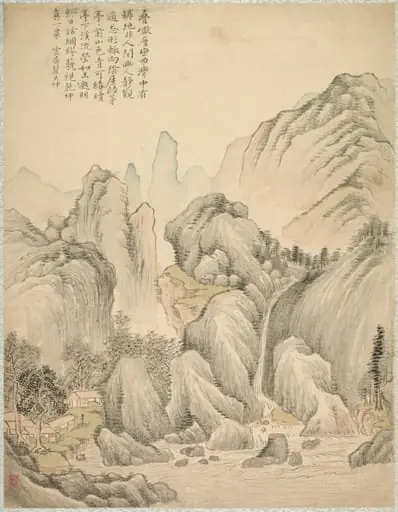
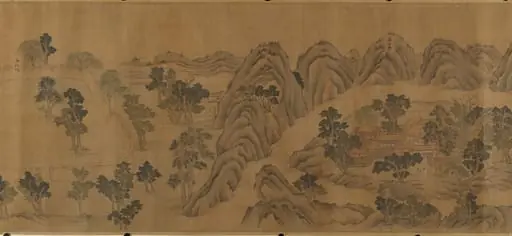
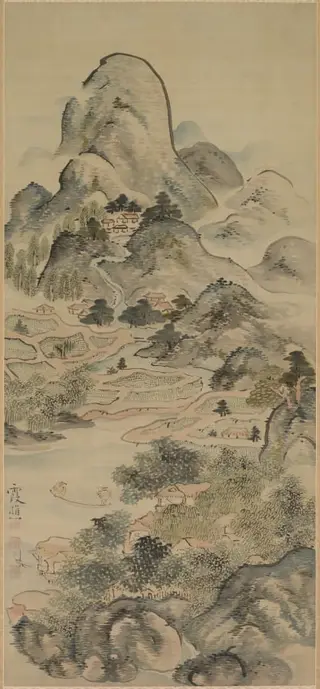
You see a quiet Korean valley: two streams braid through green hills, a few tiny travelers walk the paths, and mist softens the far ridges.
You see a quiet Korean valley: two streams braid through green hills, a few tiny travelers walk the paths, and mist softens the far ridges.
This painting is part of a tradition called “true-view” landscape. Instead of copying Chinese scenes, artists in the Joseon dynasty painted real places they had walked. The details, rocks, trees, even the bend in the river, are drawn from life.
To see more of these real Korean views, look up korea, joseon dynasty (1392–1910).
Overview
This painting belongs to a Korean artistic movement that emerged in the 18th century, shifting focus from idealized Chinese landscapes to depictions of actual Korean terrain. Artists began to record specific locations they had visited, grounding their work in direct observation rather than literary or foreign conventions. The result was a distinct national style known as true-view landscape painting.
Subject & Meaning
The scene portrays a quiet valley in Korea, with two streams winding through rolling hills, faint footpaths inhabited by small figures, and distant mountains softened by mist. Rather than symbolizing abstract ideals, the composition honors the quiet dignity of real places. The inclusion of travelers suggests human presence within nature, not dominance over it, reflecting a contemplative relationship with the land.
Technique & Style
Brushwork is precise yet restrained, capturing the texture of rock formations, the flow of water, and the variation of vegetation with careful attention to observed detail. Ink and color are applied with subtlety, avoiding dramatic contrasts. The composition avoids idealized symmetry, instead mirroring the irregular contours of actual topography, reinforcing the authenticity central to the true-view tradition.
History & Provenance
Created during the Joseon dynasty, this work is part of a broader cultural shift among Korean literati who sought to define a native visual identity. While Chinese landscape models had long dominated, artists increasingly turned to local scenery as subjects worthy of artistic study. This painting likely originated in the 18th or early 19th century, emerging from a circle of scholar-painters committed to documenting Korea’s geography.
Context
The rise of true-view painting coincided with growing interest in regional identity and empirical observation in Joseon Korea. As Confucian scholarship emphasized study of the real world, artists followed suit, rejecting stylized Chinese conventions. This movement paralleled broader intellectual trends, including cartography and natural history, reinforcing the value of firsthand experience over inherited forms.
Legacy
True-view landscape painting laid the foundation for modern Korean artistic identity by affirming the value of local scenery. Its emphasis on direct observation influenced later generations of painters and contributed to the development of a distinctly Korean aesthetic. Today, these works are studied not only for their artistry but as historical records of Korea’s natural and cultural landscape.
Artist & collection