Artwork
Abundance
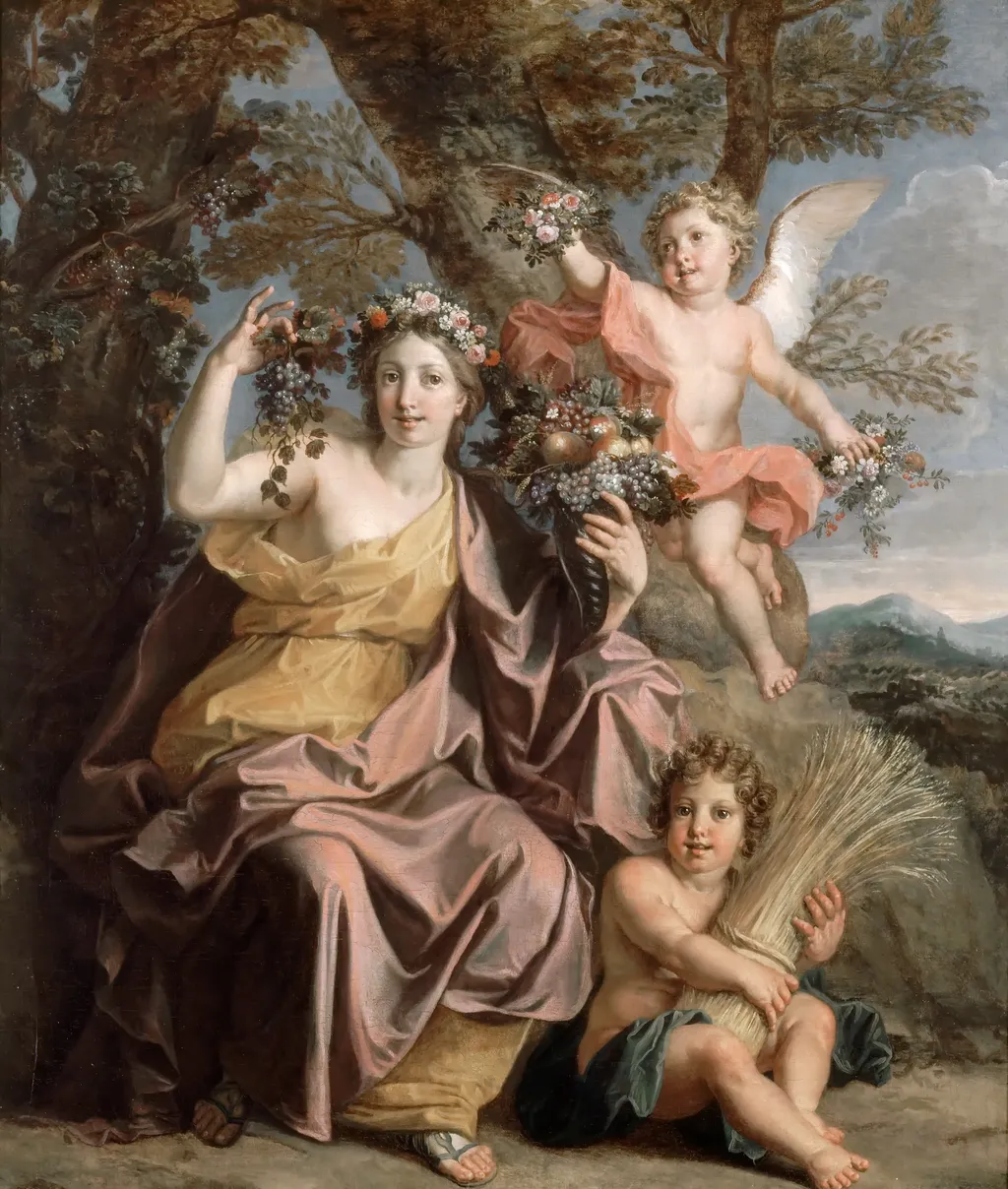
Abundance is an oil painting by the Rococo painting artist Noël Coypel. It dates from 1701 and is held in the collection of the Palace of Versailles.
About this work
Subject & Meaning
The work personifies the concept of abundance through a seated female figure surrounded by specific symbols of agricultural prosperity.
Noël Coypel's Abundance is an allegorical painting commissioned by Louis XIV around 1688 for the Grand Trianon. The work personifies the concept of abundance through a seated female figure surrounded by specific symbols of agricultural prosperity. Visual elements include sheaves of wheat, clusters of grapes, and various flowers, which collectively represent the fertility of the land and the bounty of the harvest.
A putto is also depicted within the composition, reinforcing the theme of plenty. As an allegory, the painting serves as a celebration of royal power and the economic prosperity associated with the reign of Louis XIV, visually manifesting the ideal of a flourishing kingdom.
Technique & Style
Noël Coypel executed the allegorical work Abundance using oil paint on a canvas support, a standard medium for French academic painting of the early 18th century. The composition measures 94 cm in height and 80 cm in width, depicting a seated figure surrounded by symbolic elements such as wheat, grapes, and flowers alongside a putto. Created originally for the Grand Trianon, the painting exhibits the formal qualities of an allegory, utilizing these natural motifs to personify the concept of abundance.
The work was later displayed at the Salon of 1704 before entering the collection of the Museum of the History of France at the Palace of Versailles.
History & Provenance
Noël Coypel created the allegorical painting Abundance around 1700, with a specific inception date recorded as 1701. The work was originally commissioned by King Louis XIV in 1688 for the Grand Trianon at the Palace of Versailles. It was later exhibited at the Salon of 1704.
The painting is currently held within the collection of the Museum of the History of France at the Palace of Versailles, where it remains part of the national heritage.
The painting Abundance (1701) by Noël Coypel is part of the collection at the Museum of the History of France, located within the Palace of Versailles in France. It was created for the Grand Trianon and later entered the Musée national des châteaux de Versailles et de Trianon. The work was exhibited at the Salon of 1704.
Context
Abundance is an allegorical painting by Noël Coypel created circa 1700 and commissioned by Louis XIV for the Grand Trianon at Versailles. Executed in oil on canvas, the work measures 94 cm by 80 cm and depicts wheat, flowers, a landscape, a putto, grapes, and a seated figure representing abundance. It was first exhibited at the 1704 Salon and later entered the collection of the Museum of the History of France at the Palace of Versailles.
The painting’s iconography aligns with classical allegories of plenty, situating it within the decorative program of Versailles while reflecting the artistic patronage of Louis XIV.
Overview
Abundance is a 1701 oil painting by French artist Noël Coypel, characterized by its rococo style and allegorical theme, featuring a central female figure surrounded by symbolic elements of plenty within a serene landscape.
Legacy
While specific direct influences of 'Abundance' on later works are not prominently documented, the painting contributes to the broader legacy of Noël Coypel as a transitional figure in French art history, illustrating the evolution from Baroque to rococo sensibilities.
Own this work as a print
Artist & collection
Artist
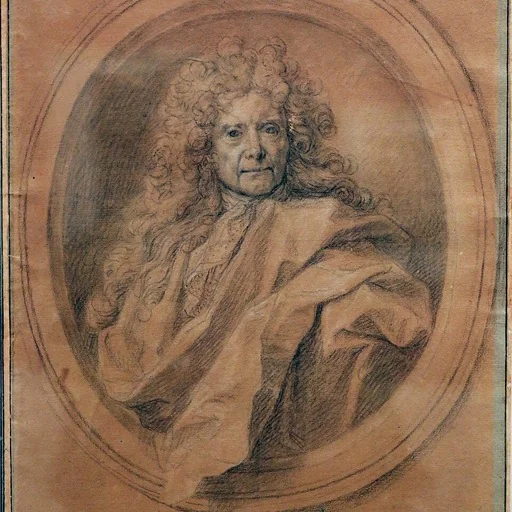
Noël Coypel (French pronunciation:; 25 December 1628 – 24 December 1707) was a French painter, and was also called Coypel le Poussin, because he was heavily influenced by Poussin.

- Allegorical Figure with Flowers (KMSKA 771)
 Ceres
Ceres Ceres (Summer)
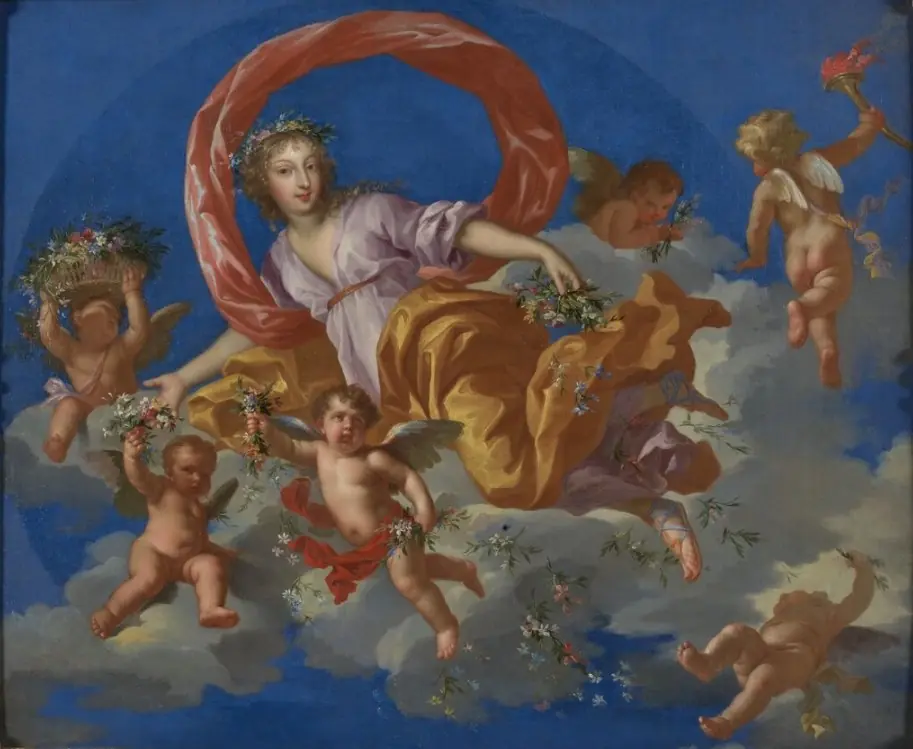 Portrait historié d'Henriette d'Angleterre, duchesse d'Orléans (1644-1670)
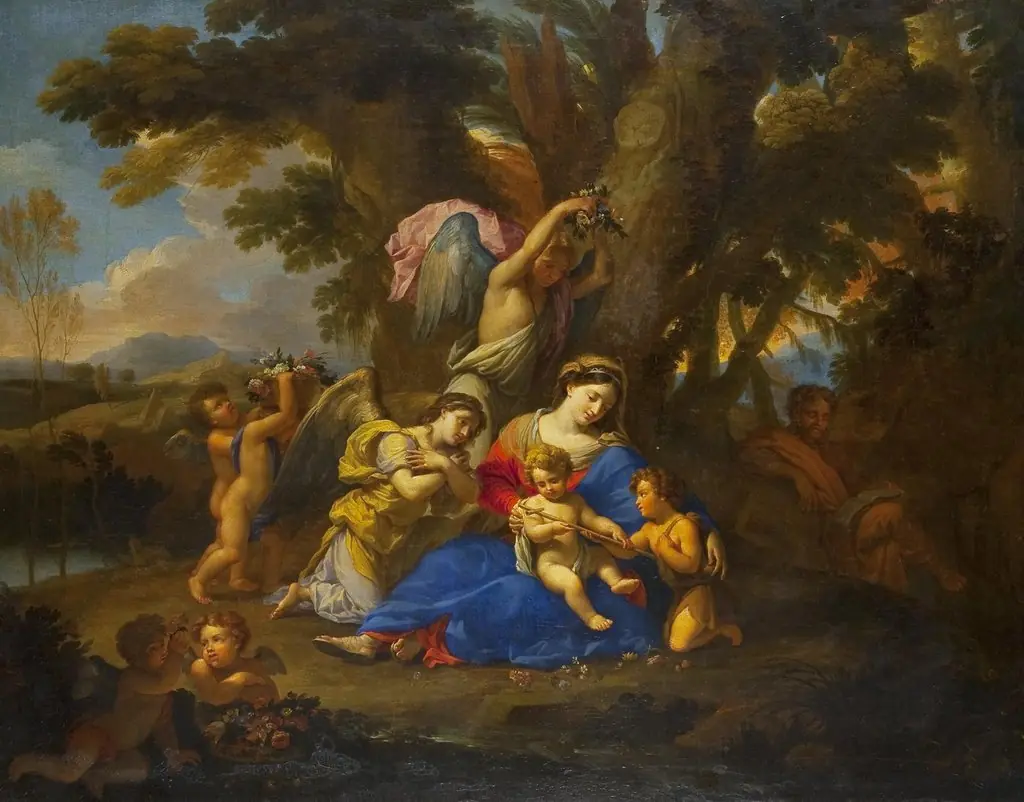 Madonna and Christ Child, with St John the Baptist and Angels
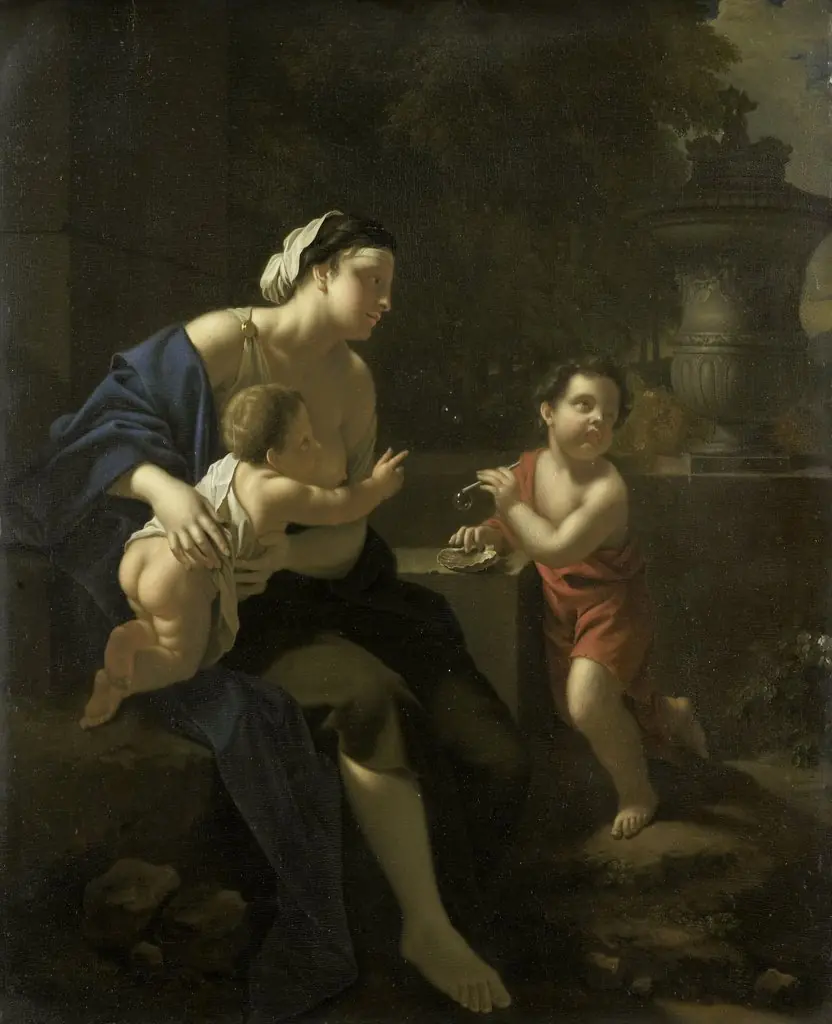 Blowing Bubbles
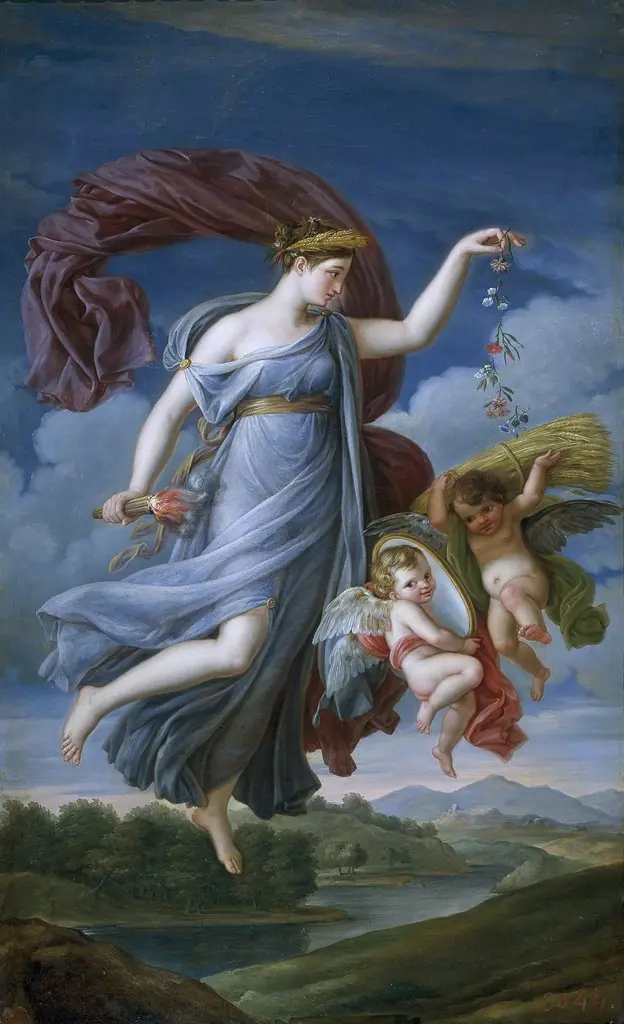 Allegory of Summer
 The Muses Urania and Calliope
 Portrait of a Lady as Pomona
 Bacchus and Ariadne
 Europa riding the bull
 Mercury beholds Herse