Artwork
明 文伯仁 溪山仙舘 圖 軸|Dwellings of the Immortals Amid Streams and Mountains
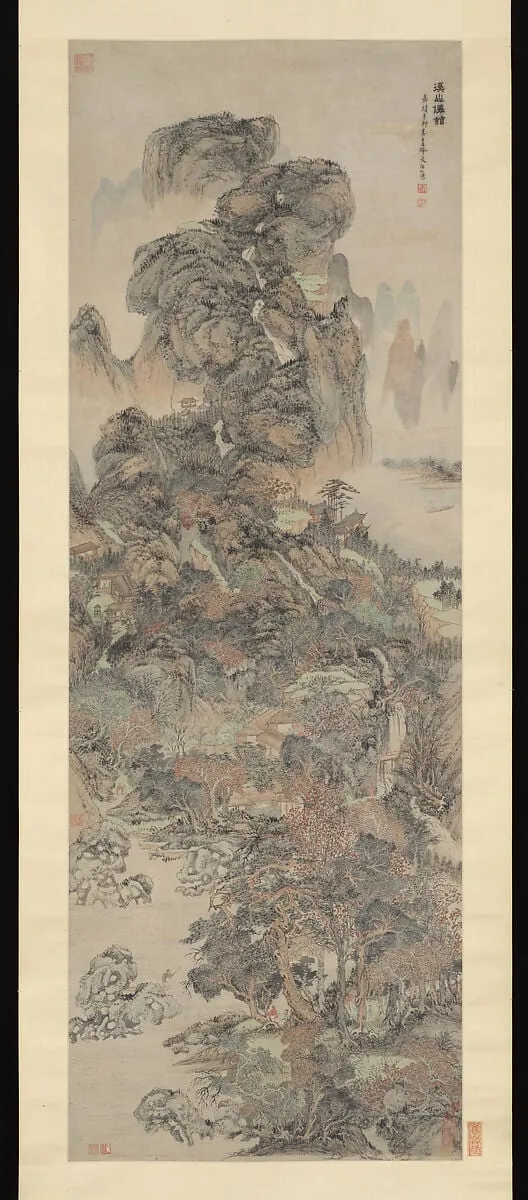
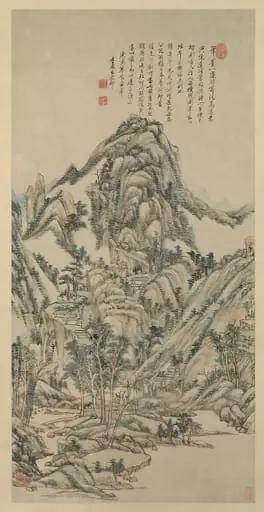
明 文伯仁 溪山仙舘 圖 軸|Dwellings of the Immortals Amid Streams and Mountains is an ink painting by the Ming dynasty painting artist Wen Boren. It dates from 1531 and is held in the collection of the Metropolitan Museum of Art.
About this work
Technique & Style
Executed as a hanging scroll, the work is rendered in ink and color on paper, a traditional Chinese format well suited to its vertical landscape composition.
Executed as a hanging scroll, the work is rendered in ink and color on paper, a traditional Chinese format well suited to its vertical landscape composition. The painting deploys ink-and-color handling to construct layered mountain scenery, with the medium allowing for both fine linear definition and tonal washes typical of mid-Ming landscape practice. The scroll format supports a tall, stacked arrangement of peaks, dwellings, and waterways, organizing the pictorial space in registers that ascend from foreground to distant heights. The paper support carries the ink and pigment without described mounting details in the available records.
Context
The hanging scroll Dwellings of the Immortals Amid Streams and Mountains (1531) by Wen Boren exemplifies Ming‑period landscape painting, employing ink and polychrome on paper to render a secluded mountain retreat. Its composition, featuring a winding stream and cliffside pavilions, aligns with the genre’s emphasis on natural seclusion and scholarly contemplation, as noted in its classification and depicted subjects. Held in the Metropolitan Museum of Art, the work contributes to the understanding of 16th‑century Chinese artistic practice and informs scholarship on the transmission of landscape motifs within the Ming court’s cultural milieu.
Overview
Dwellings of the Immortals Amid Streams and Mountains is a hanging scroll executed in ink and color on paper by the Chinese artist Wen Boren in 1531. Created when the artist was twenty years old, the work depicts a vertical landscape characterized by misty blue mountains and a winding river at the base. Small architectural structures, likely temples or hermitages, are nestled within the folds of the terrain.
The composition reflects Wen Boren's early training under his uncle, the prominent master Wen Zhengming, yet distinguishes itself through a lighter aesthetic. Unlike the denser ink application typical of the Wu School at the time, this piece utilizes pale washes and ample negative space to create an airy atmosphere. The painting demonstrates the artist's precocious skill in adapting the literati landscape tradition, balancing intricate detail in the dwellings with broad, atmospheric treatment of the natural environment.
As an early work, it marks the beginning of Wen Boren's career, showcasing his ability to synthesize established stylistic conventions with a distinct, ethereal sensibility that would evolve in his later, more complex compositions.
Subject & Meaning
The composition unfolds as a vertical panorama of misty blue mountains, their forms receding into the distance. Within the folds of these imposing peaks, small, secluded temples are nestled, suggesting places of retreat or spiritual dwelling. A winding river flows below, guiding the viewer's eye through the expansive scene. The title, "Dwellings of the Immortals," implies a sacred or idealized natural realm.
Artist & collection


 Streams and Mountains
 Conversation in Autumn
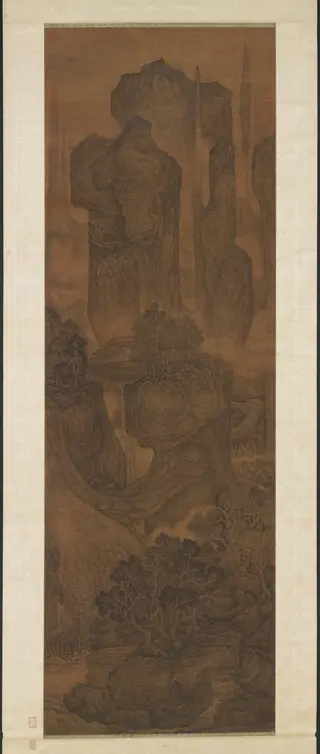 宋人陡壑飛泉 軸
 Untitled
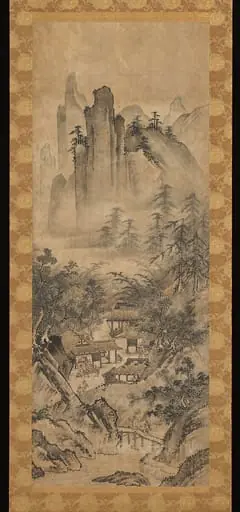 瀟湘八景図|Eight Views of the Xiao and Xiang Rivers
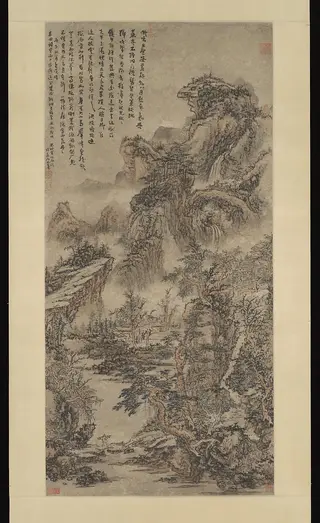 清 倣髡殘 蒸嵐昏巒圖 軸|Wooded Mountains at Dusk
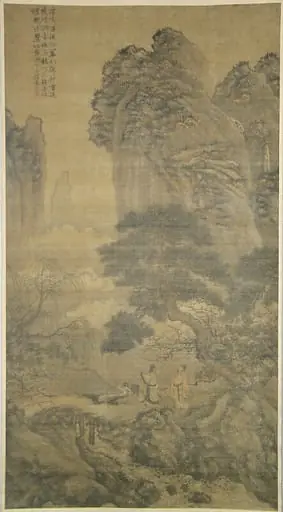 明 謝時臣 谿山春曉圖 軸|Spring Morning in the Mountains
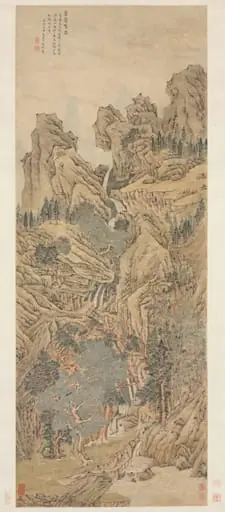 Playing the Qin in a Secluded Valley
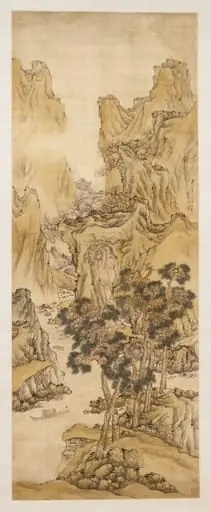 The Peach Blossom Spring
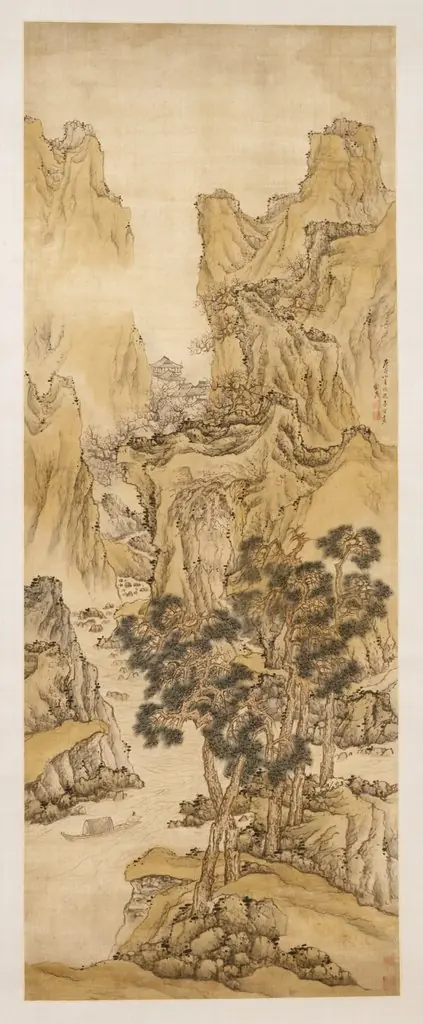 The Peach Blossom Spring
 清 王原祁 為瞻亭畫七發妙劑圖 軸|Landscape for Zhanting
- 明 董其昌 春山暖翠圖 軸|Spring Mountains over Warm Greenery