Artwork
The Little Rotherhithe
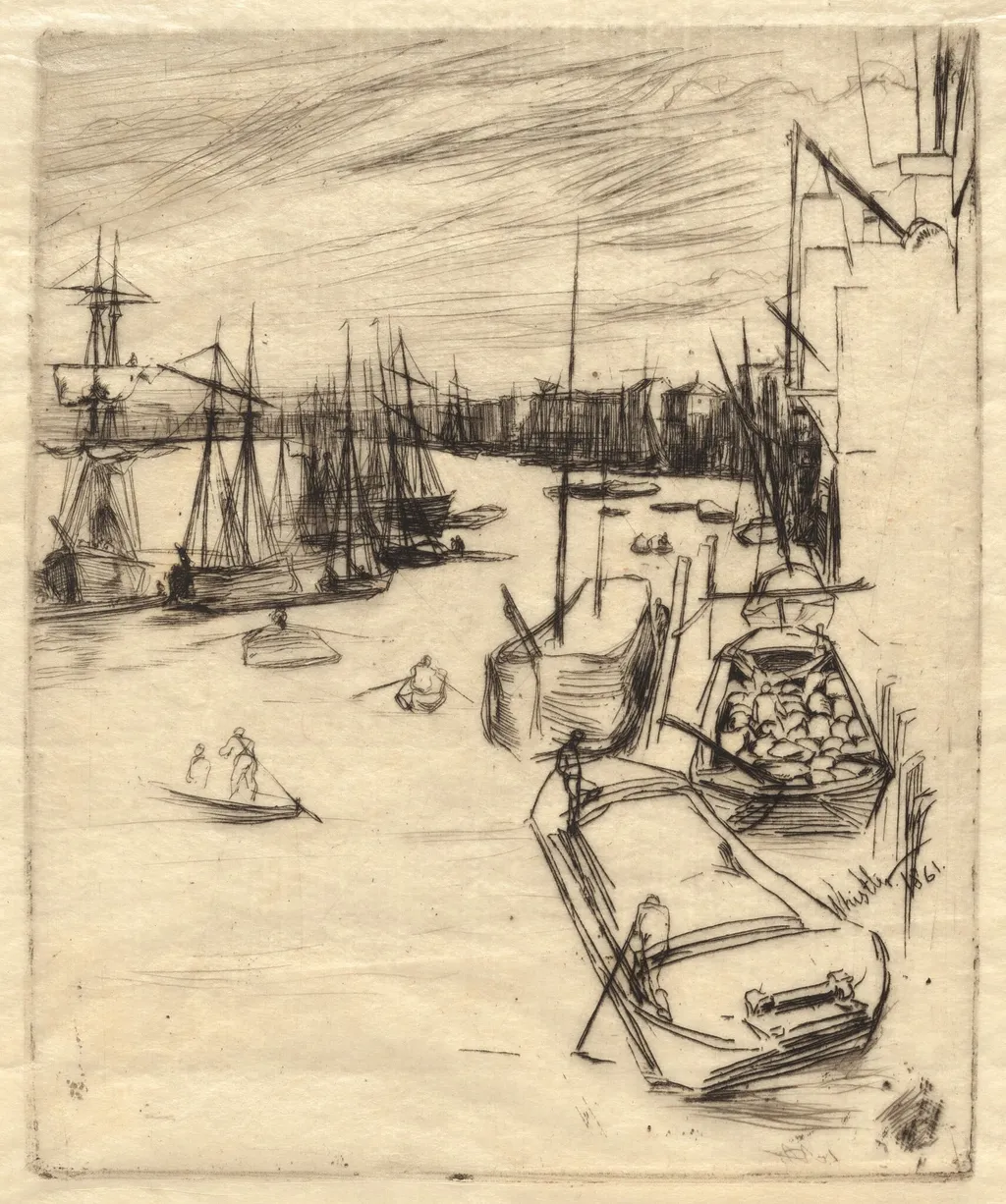
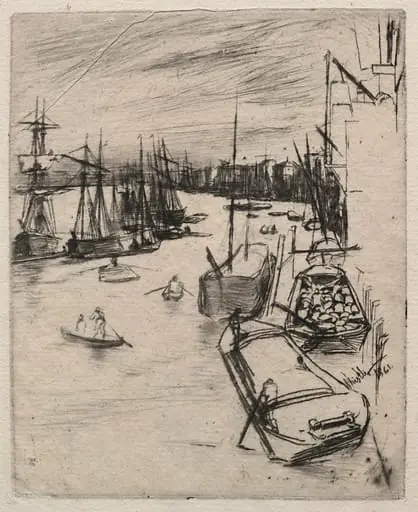
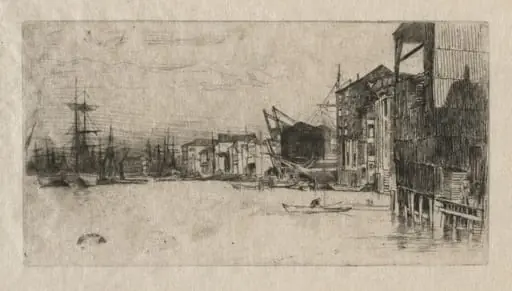
The Little Rotherhithe is an ink print by the Impressionist artist James McNeill Whistler. It dates from 1861 and is held in the collection of the National Gallery of Art.
- Inscription
- Inscribed:on plate: Whistler. / 1861.; by later hands, lower left on the recto: K73 under :I; lower right on the verso (possibly by Whistler?): Towards Thames Tunnel; lower left on the verso: 8; lower centre on the recto by Harold Wright: Little Wapping
About this work
Overview
Created in 1861, The Little Rotherhithe is an early print by James McNeill Whistler. Executed with a combination of etching and drypoint on Asian laid tissue paper, the work records a bustling riverside scene in the Rotherhithe district of London. The piece exemplifies Whistler’s interest in delicate, atmospheric compositions during his formative years as a printmaker.
Subject & Meaning
The image captures a crowded Thames shoreline where large sailing ships lie at anchor beyond a cluster of smaller craft nearer the bank.
The image captures a crowded Thames shoreline where large sailing ships lie at anchor beyond a cluster of smaller craft nearer the bank. Figures can be seen within the modest boats, suggesting everyday activity along the river. The composition conveys a fleeting impression of movement and commerce rather than a narrative episode, aligning with Whistler’s preference for visual mood over storytelling.
Technique & Style
Whistler employed both acid‑etched lines and drypoint burrs, allowing him to render fine, spontaneous strokes that suggest rippling water and fleeting light. The Asian laid tissue paper contributes a textured surface, enhancing the sketch‑like quality of the lines. The overall effect is one of immediacy, as if the artist recorded the scene on site with rapid, gestural marks.
History & Provenance
The print emerged during Whistler’s early career, when he was establishing his reputation in Britain after moving from the United States. Though primarily known for his oils and watercolors, this work illustrates his parallel development in printmaking. It entered museum collections in the early twentieth century, reflecting growing scholarly interest in Whistler’s graphic output.
Context
Produced in the midst of the American Gilded Age, the piece reflects Whistler’s adoption of the “art for art’s sake” ethos, emphasizing aesthetic qualities over moral or historical content. The choice of a London river scene underscores his immersion in the city’s visual culture and his fascination with the interplay of industrial activity and natural light.
Own this work as a print
Artist & collection
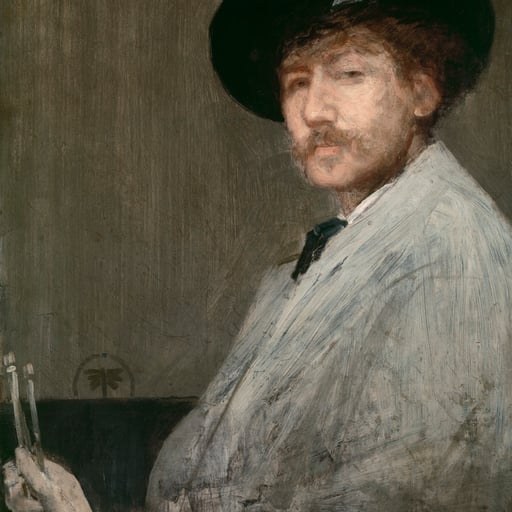
Artist
James Abbott McNeill Whistler (; July 10, 1834 – July 17, 1903) was an American painter in oils and watercolor, and printmaker, active during the American Gilded Age and based primarily in the United Kingdom.

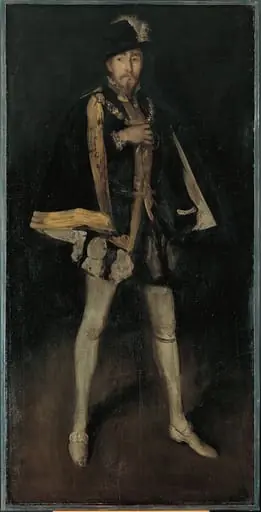 Arrangement in Black, No. 3: Sir Henry Irving as Philip II of Spain
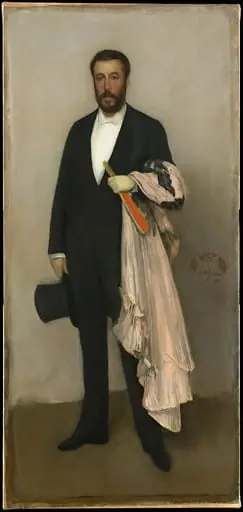 Arrangement in Flesh Colour and Black: Portrait of Theodore Duret
 Gold and Brown: Self-Portrait
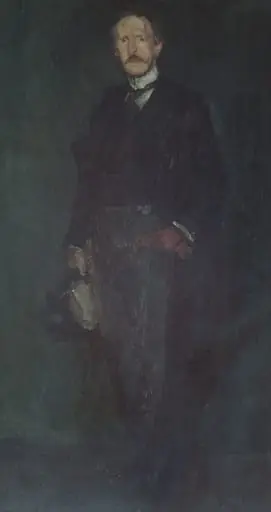 Edward Guthrie Kennedy
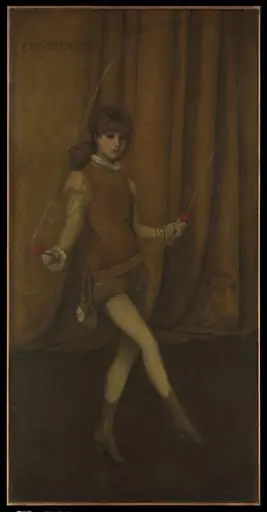 Harmony in Yellow and Gold: The Gold Girl—Connie Gilchrist
 George W. Vanderbilt
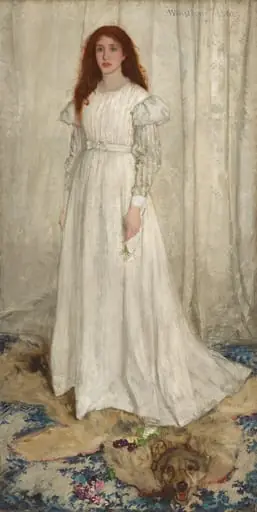 Symphony in White, No. 1: The White Girl
 Henry Irving as Philip II of Spain