Artwork
William Ellery
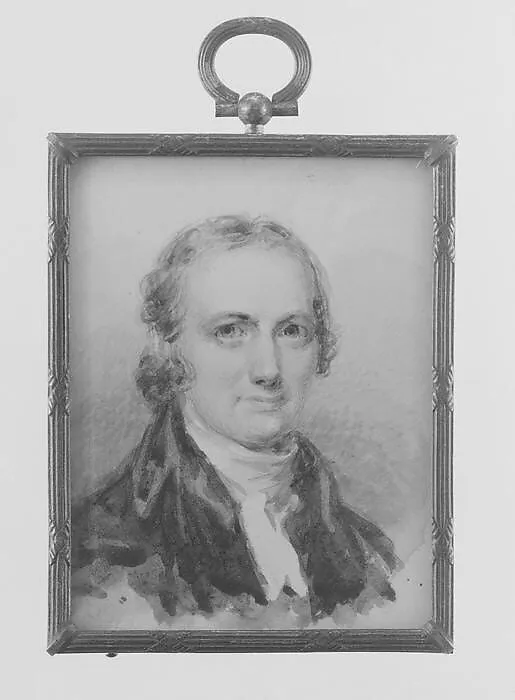
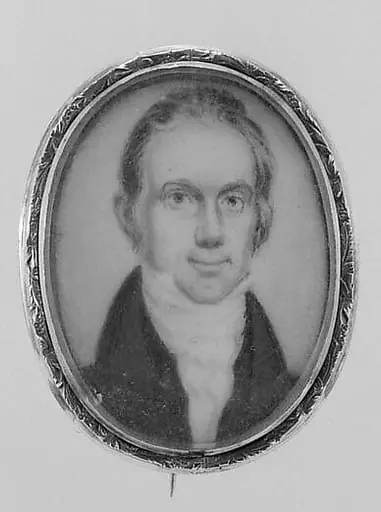
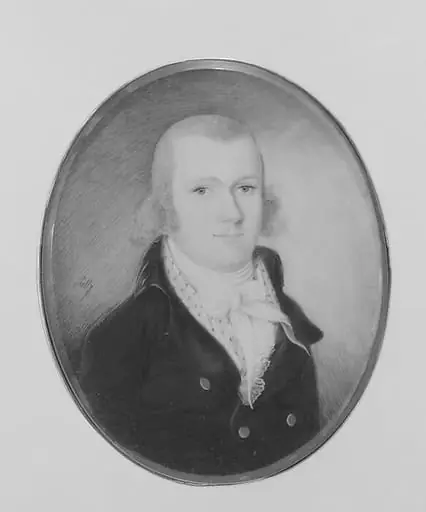
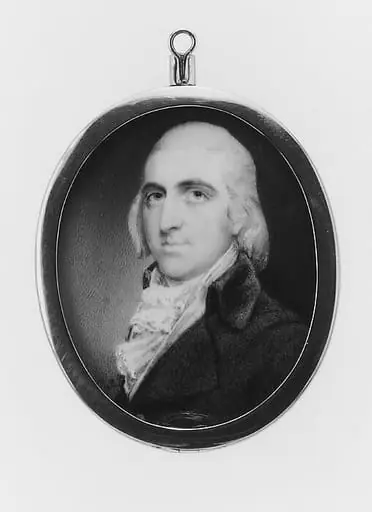
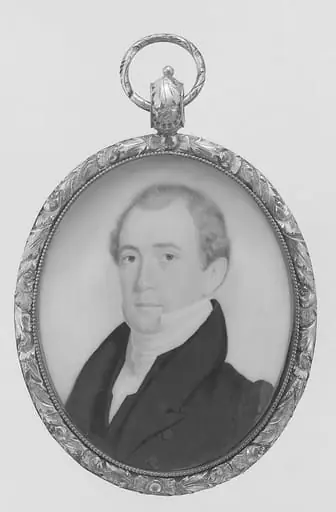
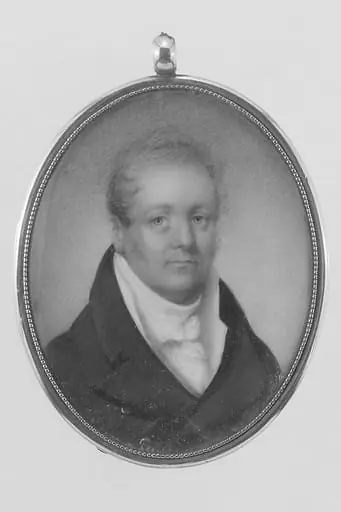
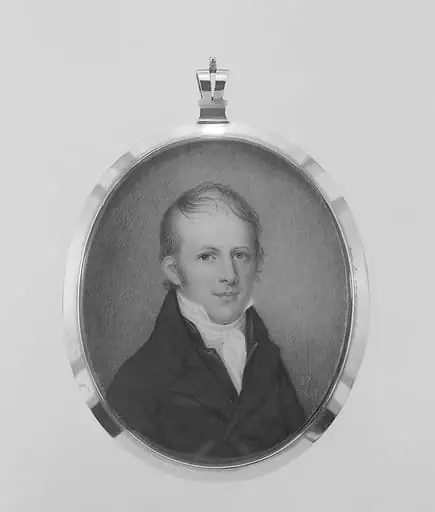
William Ellery is a watercolor work on paper by the Romanticist artist William G. Armstrong. It dates from 1838 and is held in the collection of the Metropolitan Museum of Art. Created around 1838 by American artist William G.
About this work
Technique & Style
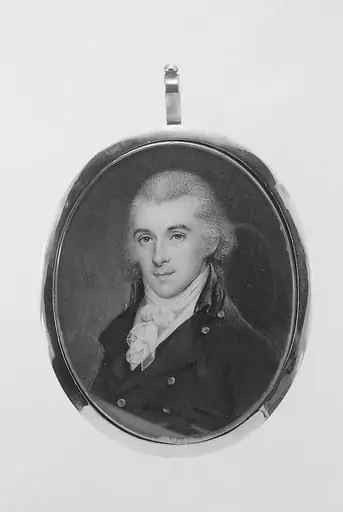
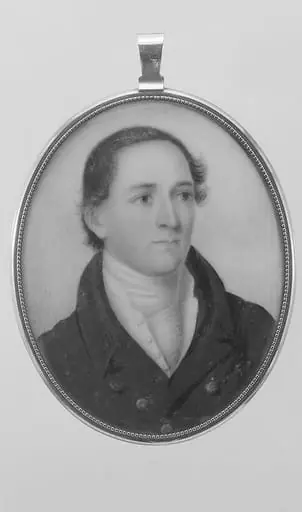
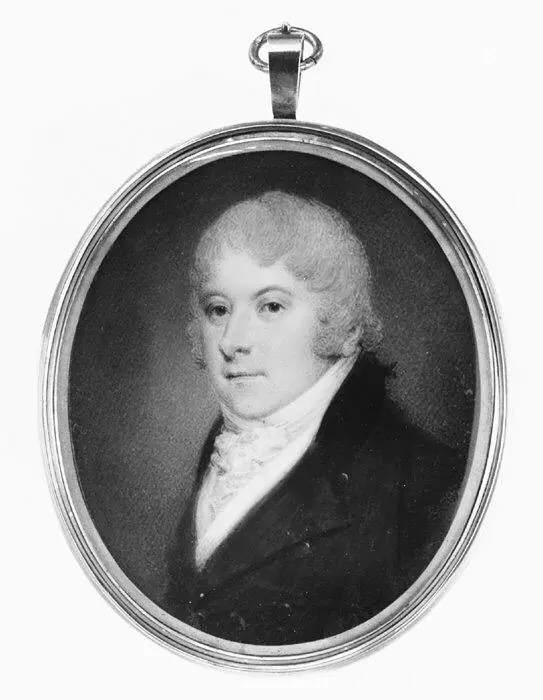
The sitter is depicted in three-quarter view with restrained modeling of facial features, using a restrained palette that emphasizes naturalistic tonality.
The work is a miniature portrait painted in watercolor on paper. The handling is delicate, consistent with the transparent layering and fine stippling typical of early nineteenth-century watercolor portraiture. The sitter is depicted in three-quarter view with restrained modeling of facial features, using a restrained palette that emphasizes naturalistic tonality.
The support’s small dimensions (7.9 cm × 6 cm) and the refined detail indicate a format suited to intimate display, characteristic of portrait miniatures from this period.
History & Provenance
Created in 1835, the watercolor portrait titled William Ellery was executed by the artist William G. Armstrong on paper. The work measures 7.9 cm in height and 6 cm in width. It is currently held in the collection of the Metropolitan Museum of Art, where it is classified within the American Wing.
The piece depicts a male subject and serves as a documented example of Armstrong's portraiture from the mid-19th century.
The watercolor portrait of William Ellery by William G. Armstrong is held in the collection of the Metropolitan Museum of Art. The work, dated 1835, is classified within the American Wing and depicts a man. Specific inventory or accession numbers are not provided in the available records, nor is there documented exhibition history for this piece in the supplied sources.
Overview
Created around 1838 by American artist William G. Armstrong, this watercolor portrait presents a solitary male figure. Rendered on paper, the work belongs to the collection of the American Wing and exemplifies early nineteenth‑century portraiture in a medium that could be completed far more quickly than oil.
Subject & Meaning
The sitter, dressed in a dark coat, sits upright against an unadorned backdrop. His pallid complexion, tightly pressed lips, and direct gaze convey a restrained demeanor, inviting viewers to contemplate the individual's inner composure as much as his outward appearance.
Context
At the time of its production, photography was an emerging technology, and painters were experimenting with ways to capture likenesses more swiftly. Watercolor, with its rapid drying time, offered a practical alternative to oil, allowing artists like Armstrong to respond to the new visual expectations set by early photographs.
Artist & collection

Artist
Early American watercolor portraiture rarely catches a subject mid-thought the way William G.