Artwork
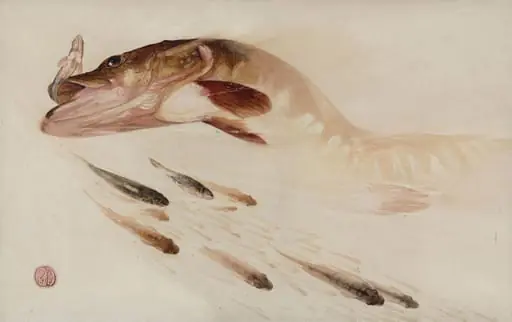
Leaping Trout
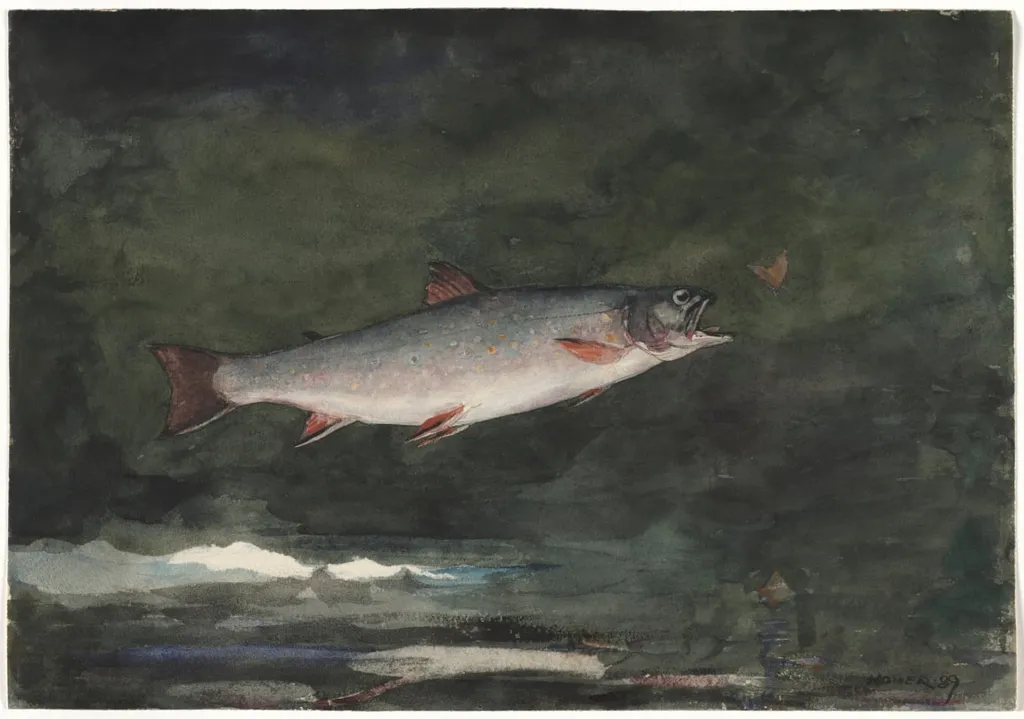
Leaping Trout is a drawing by the Impressionist artist Winslow Homer. It dates from 1889 and is held in the collection of the Cleveland Museum of Art.
- Accession no.
- 1973.142
- Credit line
- Anonymous Gift
About this work
Overview
Leaping Trout is a watercolor drawing by Winslow Homer, depicting a trout breaching the water's surface.
Subject & Meaning
The drawing shows a trout leaping from the water, possibly in pursuit of an insect or fishing fly. Homer's unconventional underwater perspective heightens the scene's drama and immediacy.
Technique & Style
Homer's technique combines luminous washes of transparent blue and grey with opaque touches of bright red, evoking the fish's iridescent skin. Scraping and dry brushing create highlights and texture on the water's surface, influenced by French Impressionism and Japanese prints.
Artist & collection
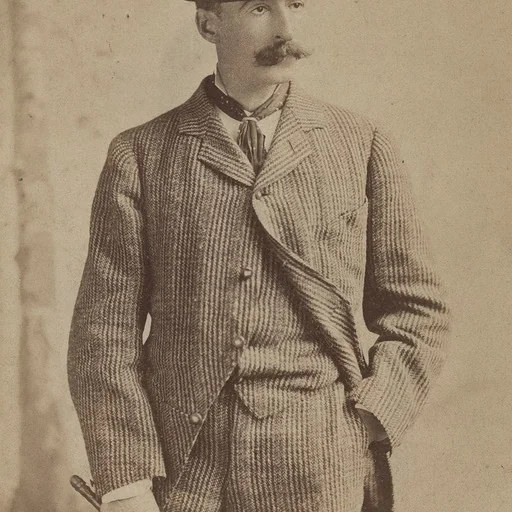
Artist
Winslow Homer (February 24, 1836 – September 29, 1910) was an American landscape painter and illustrator, best known for his marine subjects.