Artwork
清 徐祥 小鳥水仙 扇面|Birds and Narcissus
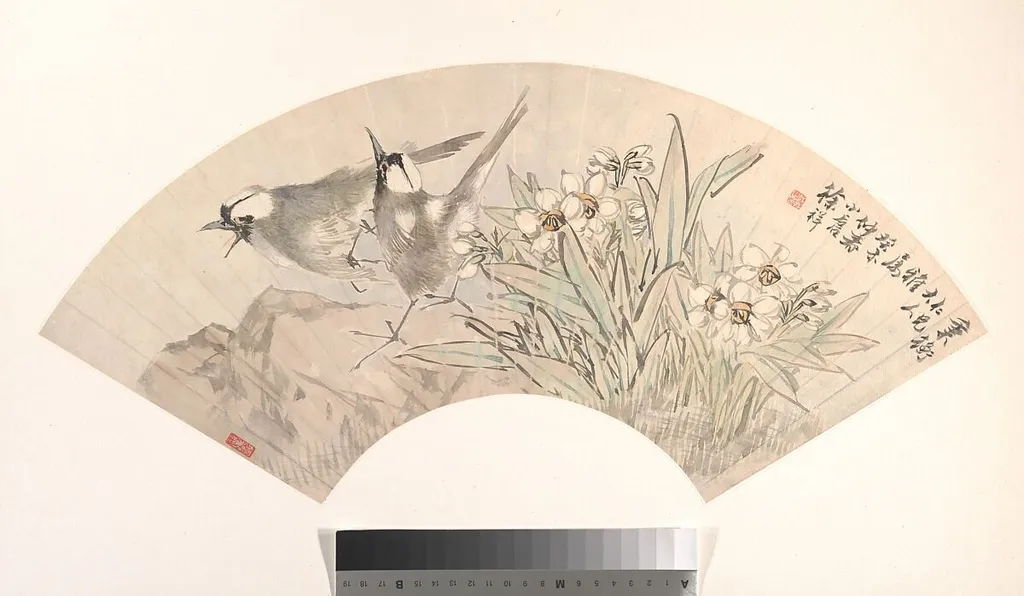
清 徐祥 小鳥水仙 扇面|Birds and Narcissus is an ink painting by the Impressionist artist Xu Xiang. It dates from 1883 and is held in the collection of the Metropolitan Museum of Art.
About this work
A small fan painting shows two birds perched on a rock beside white narcissus flowers. The lines are light, the colors soft, ink and pale washes on paper.
Xu Xiang painted this in 1883, late in the Qing dynasty. The narcissus was a symbol of good luck, often given at New Year. The birds look alert, almost ready to hop.
To see how other artists painted birds on fans, look up the subject: birds.
Subject & Meaning
The bird, rendered in ink and color on alum paper, complements these floral associations by evoking the natural world and the cyclical rhythms of the seasons.
The fan painting depicts a small bird alongside narcissus (shuixian) blossoms, two motifs drawn from traditional Chinese still-life imagery. The pairing of a bird with flowering plants is a classic literati convention in which the bird lends vitality to the botanical subject, while the narcissus introduces seasonal and symbolic resonance. In Chinese culture, narcissus is associated with purity, refinement, and the Lunar New Year, often signaling good fortune and elegance.
The bird, rendered in ink and color on alum paper, complements these floral associations by evoking the natural world and the cyclical rhythms of the seasons. Together, the two subjects transform a modest fan-leaf format into a meditation on auspiciousness, beauty, and the harmony between fauna and flora.
Technique & Style
The work is executed in ink and color on alum paper, a support traditionally favored for fan paintings because of its smooth, absorbent surface that allows for delicate washes and fine linework. Its format is a folding fan leaf mounted as an album leaf, with dimensions of approximately 18.4 by 53.3 cm, a horizontal proportion characteristic of opened fan shapes. The technique combines controlled brushwork for the narcissus blooms and foliage with more fluid handling for the small bird, suggesting a layered approach in which mineral and organic pigments are applied over an ink underdrawing.
The painting belongs to the still-life genre and depicts a bird alongside narcissus, a pairing associated with literati symbolism. No condition issues are recorded in the available documentation.
History & Provenance
Created in 1883 by the Chinese artist Xu Xiang, this work titled Birds and Narcissus was executed using ink and color on alum paper. Although originally formatted as a folding fan, the piece has been mounted as an album leaf. The painting was produced in China and currently resides in the collection of the Metropolitan Museum of Art, where it is classified as a still life depicting birds and narcissus flowers.
No specific details regarding earlier ownership chains, commissions, or the circumstances of its creation beyond the date and location are provided in the available records.
Overview
Created in 1883 by Xu Xiang (1850–1893), Birds and Narcissus is a folding fan painting executed in ink and color on alum paper, later mounted as an album leaf. The composition features two alert birds perched upon a textured rock formation, positioned alongside blooming white narcissus flowers. Xu employs delicate, light lines to define the avian forms and floral structures, utilizing soft pale washes to create a sense of volume and atmosphere against the white ground.
The choice of narcissus is significant within the Qing dynasty context, as the flower traditionally symbolized good fortune and was frequently associated with New Year celebrations. This work exemplifies Xu Xiang's late-career style, characterized by refined brushwork and a harmonious balance between naturalistic detail and decorative elegance. As a fan painting, the piece was originally intended for personal use or social exchange, reflecting the intimate scale and refined taste prevalent among literati and court circles in late nineteenth-century China.
The work stands as a representative example of Xu's contribution to the tradition of bird-and-flower painting during the final decades of the Qing dynasty.
Context
Created in 1883, Birds and Narcissus dates to the late period of the Qing dynasty. During this era, floral and bird motifs remained popular, often imbued with cultural symbolism. The inclusion of the narcissus, in particular, reflects its enduring significance as an emblem of prosperity and good luck, especially relevant during the annual New Year celebrations when such imagery was widely appreciated and exchanged.
Artist & collection

- 清 沙馥 桃李芳園圖 摺扇|The Peach and Plum Garden
 清 胡遠 芍藥 扇面|Herbaceous Peony
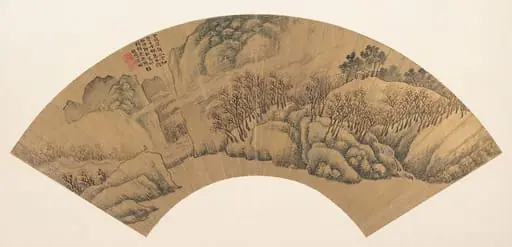 明 吳彬 翠壁丹楓 扇|Azure Cliff with Red Maples
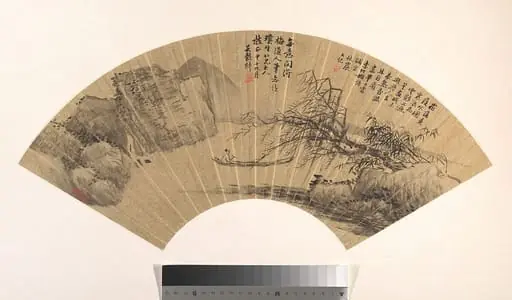 清 吳榖祥 山水 扇面|Landscape
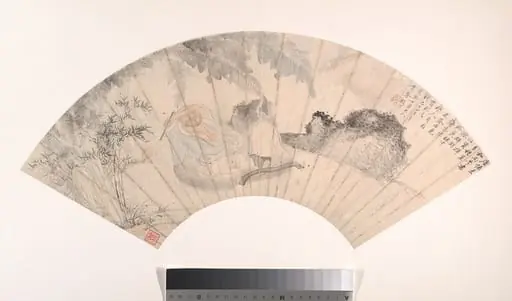 清 顧澐 懷素蕉林午睡圖 扇面|Huaisu in the Banana Grove
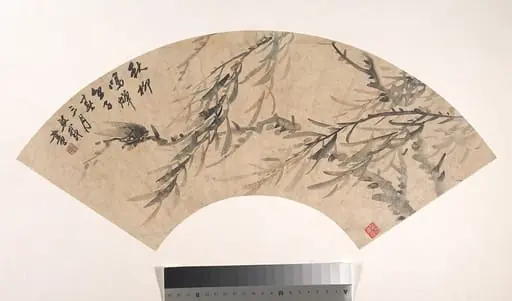 清 吳熙載 蟬柳 扇面|Cicada
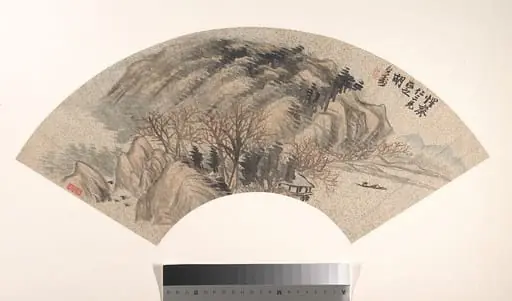 清 胡遠 山水 扇面|Landscape
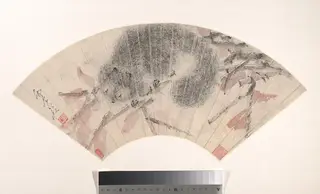 清 虛谷 松鼠 扇面|Squirrel on an Autumn Branch
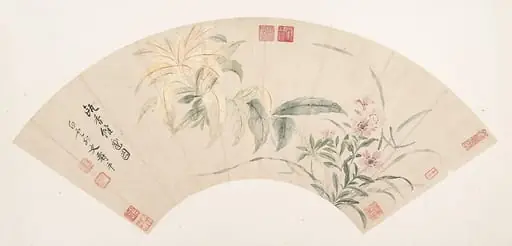 清 惲壽平 花卉圖 摺扇|Carnations and amaranthus
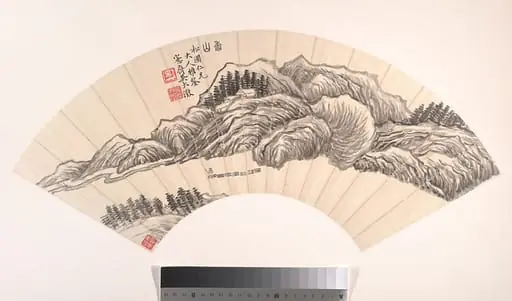 清 吳大澂 山水 扇面|Fragrant Mountains
 清 吳熙載 杏花 扇面|Apricot
 Untitled