Artwork
清 倣張風 石橋圖 軸|The Stone Bridge
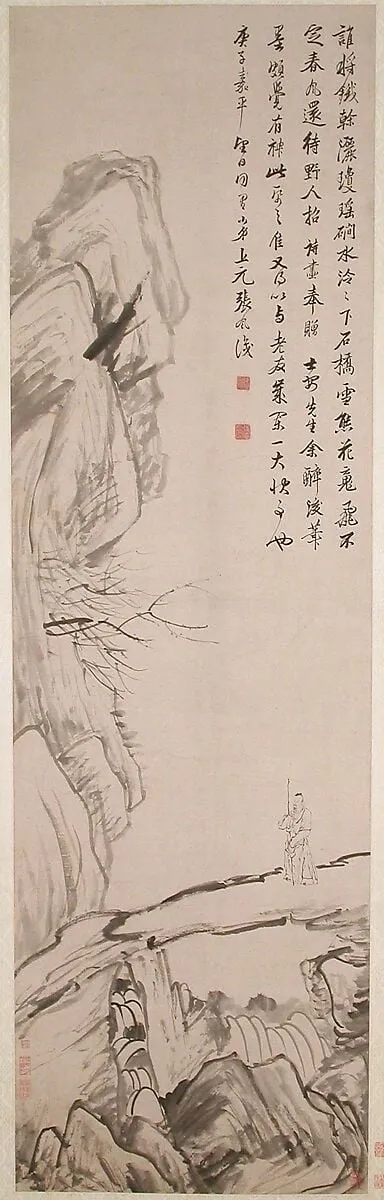
清 倣張風 石橋圖 軸|The Stone Bridge is an ink painting by the Baroque artist Zhang Feng. It dates from 1661 and is held in the collection of the Metropolitan Museum of Art.
About this work
A narrow stone bridge curves over a river, ink on paper, no color. The lines are quick and scratchy, almost vibrating. Zhang Feng painted it in 1661, just after the Ming dynasty fell, and the empty space around the bridge feels heavy, like silence after upheaval.
Technique & Style
The composition, depicting a stone arch over a river, follows the stylistic conventions of Zhang Feng, as indicated by the title “倣張風”.
The Stone Bridge is a hanging scroll painted in ink on paper in 1661, reflecting the Qing dynasty’s landscape tradition. The composition, depicting a stone arch over a river, follows the stylistic conventions of Zhang Feng, as indicated by the title “倣張風”. The work belongs to the landscape painting genre, a category recorded in its classification. Its vertical format allows a gradual unveiling of the scene, a characteristic of Chinese ink‑wash landscapes.
History & Provenance
The work titled "The Stone Bridge" was executed in 1661 in China by the Qing dynasty painter Zhang Feng as a hanging scroll in ink on paper. Its creation is recorded in contemporary documentation that specifies the medium, genre, and subject matter of a bridge within a landscape composition. Following its making, the scroll entered the collection of the Metropolitan Museum of Art, where it has been catalogued as part of the museum's holdings and displayed in its galleries.
The museum's records indicate the work's accession date and confirm its provenance from the artist's native region, establishing a clear chain of ownership from the creator to the current custodial institution.
The Stone Bridge is held in the collection of the Metropolitan Museum of Art, where it is classified as a painting and catalogued as a hanging scroll executed in ink on paper. Created in 1661, the work is attributed to Zhang Feng and was made in China. The Wikidata entry for the painting confirms its location within the Metropolitan Museum of Art's holdings. No specific accession number or prior exhibition history is recorded in the available sources.
Legacy
Zhang Feng's hanging scroll The Stone Bridge, dated 1661, exemplifies Qing‑era landscape painting through its meticulous ink rendering of an architectural motif. Its inclusion in the Metropolitan Museum of Art's collection signals institutional recognition of the work's artistic merit and helps sustain scholarly interest in the artist's oeuvre. By being exhibited alongside other Chinese landscape works, the piece contributes to the narrative of continuity between early modern masters and later generations of painters who reference its compositional strategies.
Documentation of the scroll in major museum catalogs underscores its role in shaping the historiography of Chinese brush painting.
Overview
The Stone Bridge is a hanging scroll executed in ink on paper by the Chinese artist Zhang Feng in 1661. The composition centers on a narrow stone bridge that curves over a river, rendered with rapid, scratchy brushstrokes that impart a sense of vibration to the structure. The work is monochromatic, relying entirely on the modulation of ink tones to define form and atmosphere.
Created shortly after the fall of the Ming dynasty, the painting reflects the turbulent historical context of the early Qing period. The extensive use of negative space surrounding the bridge creates a heavy, silent atmosphere, often interpreted as a visual metaphor for the upheaval and isolation experienced by loyalist scholars during the dynastic transition. This piece exemplifies Zhang Feng's distinctive style, which combines expressive, almost calligraphic line work with a profound sense of melancholy.
It stands as a significant example of late Ming-early Qing literati landscape painting, demonstrating how artists of the era utilized traditional forms to express personal and political displacement.
Subject & Meaning
The composition centers on a narrow stone bridge, depicted curving gently over a river. Its presence is stark against the surrounding empty space, which conveys a profound sense of quietude. This visual emptiness can be interpreted as reflecting the contemplative atmosphere following a period of societal disruption, inviting viewers to consider themes of solitude and transition.
Context
Created in 1661, this painting emerged during the early Qing dynasty, a period of profound political and social change following the collapse of the Ming dynasty in 1644. Artists like Zhang Feng often responded to this upheaval by exploring themes of withdrawal and contemplation in their work, subtly reflecting the broader cultural mood through their landscapes.
Artist & collection


 Untitled
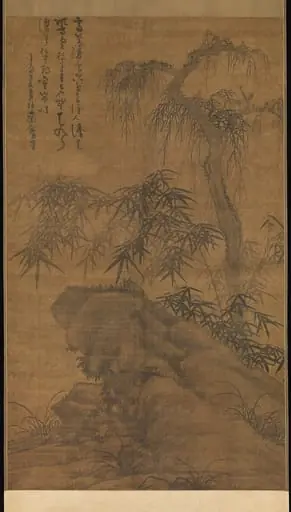 元 吳鎮 高節凌雲圖 軸|Bamboo, old tree, and rock
 Conversation in Autumn
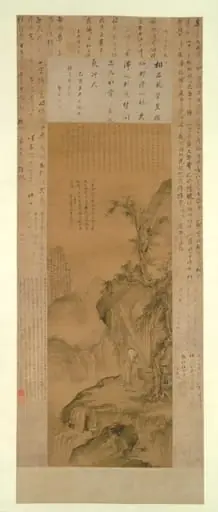 Layered Peaks and Splashing Waterfall: Portrait of Hua Yan as a Young Man
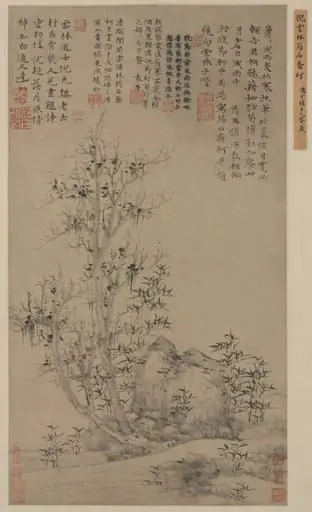 Bamboo, Rock, and Tall Tree
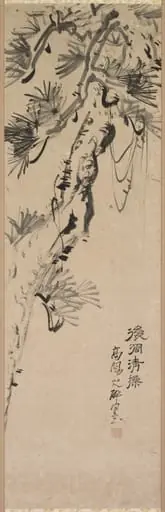 Aged Pine
![Reeds and Geese, by Yishan Yining [Issan Ichinei]](https://artifactworldgallery.com/img/yishan-yining-issan-ichinei--reeds-and-geese--5f360303c5a40d05-w320.webp) Reeds and Geese
Reeds and Geese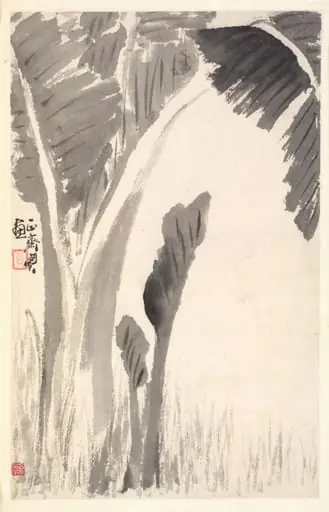 Banana Plants
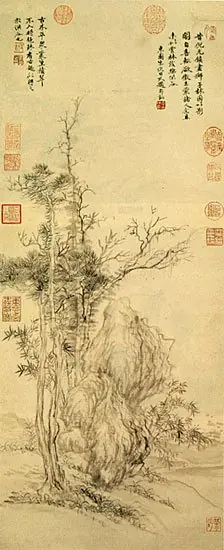 Old Trees and a Cluster of Bamboos after Ni Zan
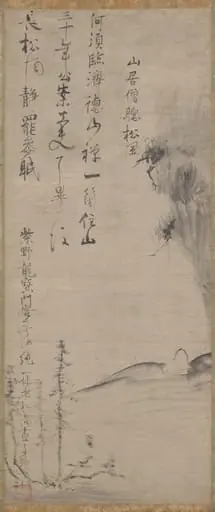 Listening to the Wind in the Pines
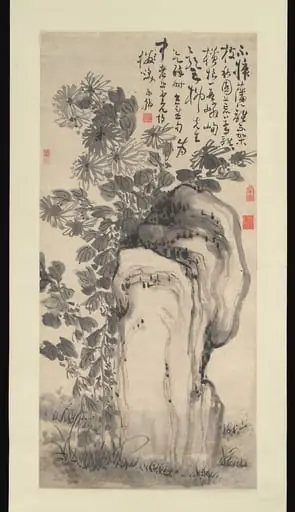 清 高鳳翰 菊石圖 軸|Chrysanthemums by a rock
- 清 石濤 (朱若極) 山水人物圖 冊頁|Landscape with solitary figure