Artwork
元 佚名 倣趙孟頫 九歌圖 冊|Nine Songs
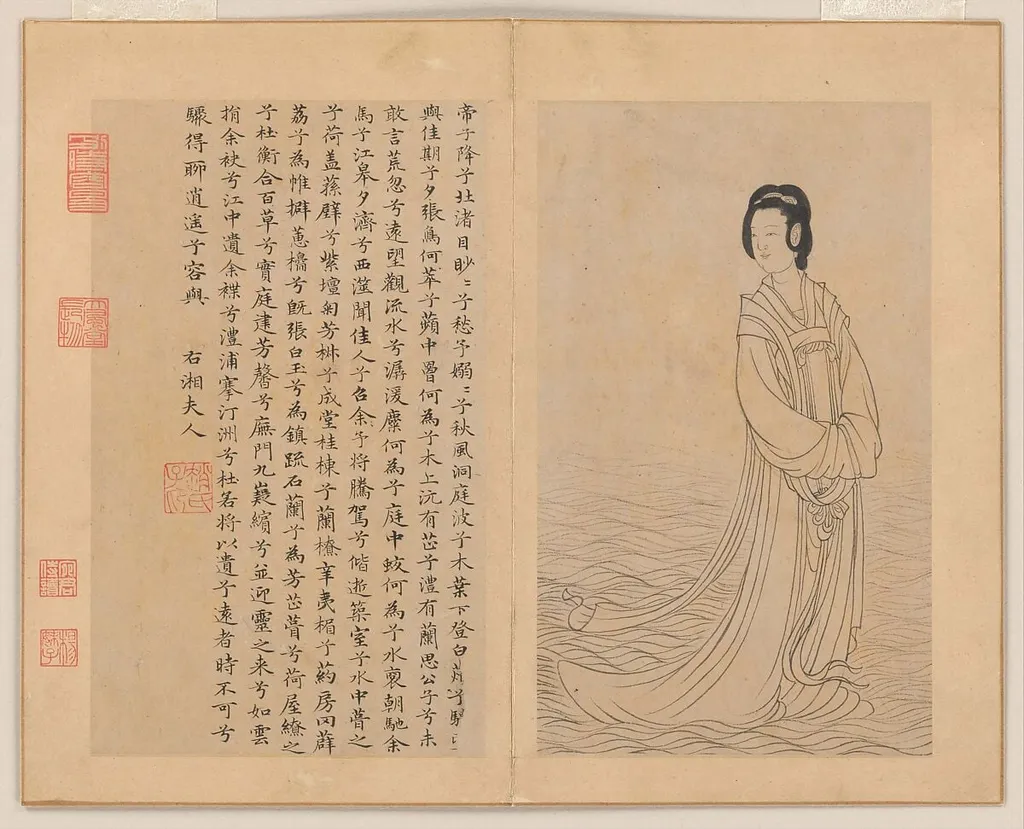
元 佚名 倣趙孟頫 九歌圖 冊|Nine Songs is an ink painting by the Chinese Orthodox School artist Zhao Mengfu. It is held in the collection of the Metropolitan Museum of Art. This album, titled Nine Songs, comprises eleven ink-on-paper paintings created in 1334.
About this work
Subject & Meaning
Created as a series of eleven ink-on-paper paintings, the work visualizes these mythological or literary characters through the depiction of human forms.
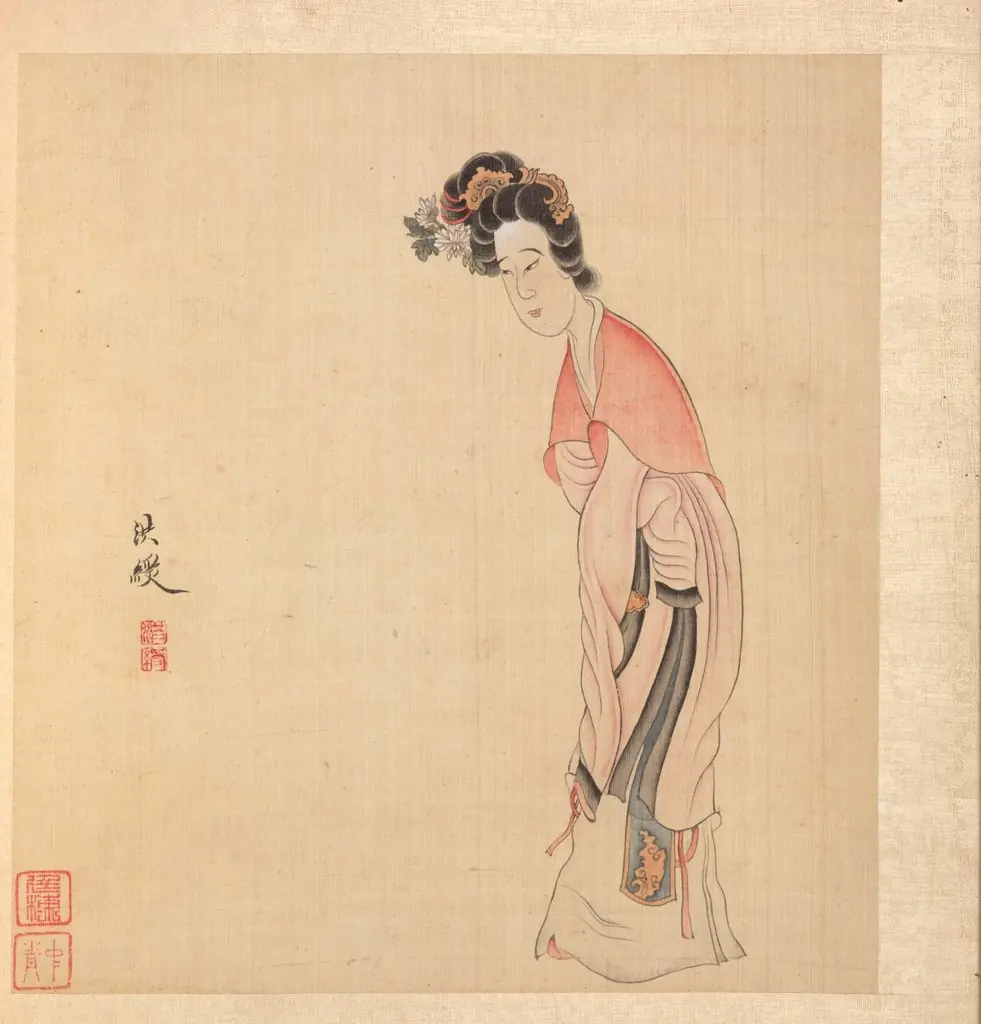
The album depicts figures representing the subjects of the "Nine Songs," specifically illustrating men and women within a landscape setting. Created as a series of eleven ink-on-paper paintings, the work visualizes these mythological or literary characters through the depiction of human forms. The iconography focuses on the representation of these individuals, consistent with the genre of landscape painting where figures are integrated into the natural environment.
The work serves as a visual interpretation of the "Nine Songs" text, capturing the essence of the depicted characters without additional symbolic elaboration in the provided records.
Technique & Style
This work is an album comprising eleven leaves executed in ink on paper. The paintings function within the landscape genre, featuring figural elements that include both men and women. Stylistically, the album is attributed as an imitation of the manner of Zhao Mengfu, though created by an anonymous artist.
The individual leaves measure approximately 26.4 cm in height and 15.9 cm in width. The production is dated to 1334 and originated in China.
Overview
This album, titled Nine Songs, comprises eleven ink-on-paper paintings created in 1334. Although the artist remains unknown, the work consciously emulates the distinctive style of Zhao Mengfu, a prominent figure of the Yuan dynasty. The individual scenes within the album feature various figures set against a backdrop of landscapes, reflecting a traditional approach to narrative illustration within Chinese painting.
Context
The album's stylistic foundation lies in the artistic contributions of Zhao Mengfu (1254–1322), a polymath of the Yuan dynasty. Descended from the Song imperial family, Zhao was celebrated as a scholar, calligrapher, and painter whose innovations profoundly influenced subsequent generations of Chinese ink painting. This 1334 album serves as a testament to his enduring impact, faithfully reproducing a now-lost set of his own Nine Songs illustrations.
Legacy
The creation of this album highlights the practice of artistic transmission and reverence for established masters in Chinese art. As a direct copy of a lost work by Zhao Mengfu, it preserves a visual record of his original compositions. The meticulous attention to detail, evident in minor alterations like a sleeve's fold, underscores the copyist's deep study and appreciation for Zhao's artistry, contributing to the broader understanding of his oeuvre.
Artist & collection

Artist
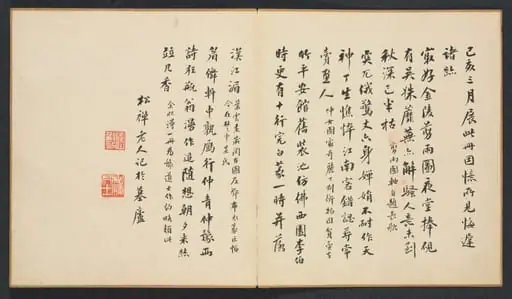
Zhao Mengfu (Chinese: 趙孟頫; pinyin: Zhào Mèngfǔ; Wade–Giles: Chao Meng-fu; courtesy name Zi'ang (子昂); pseudonyms Songxue (松雪, "Pine Snow"), Oubo (鷗波, "Gull Waves"), and Shuijing-gong Dao-ren (水精宮道人, "Master of the Water…

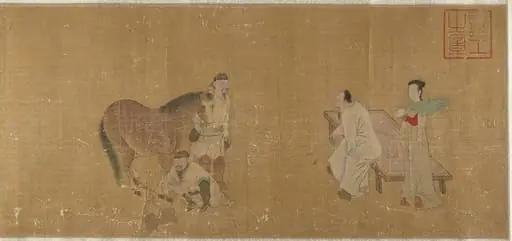
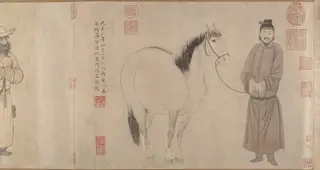


- Paintings after Ancient Masters: Calligraphy
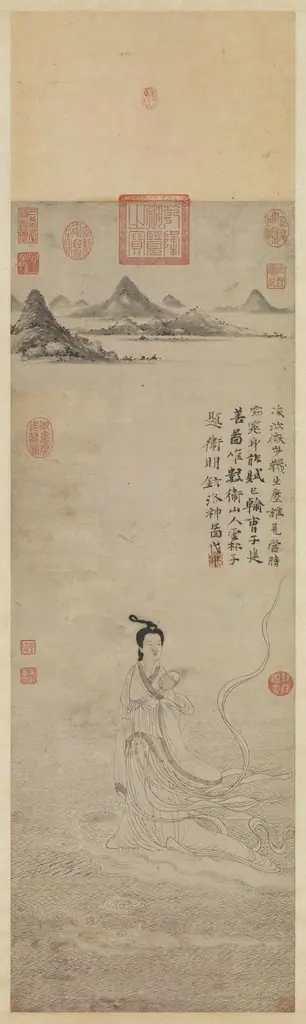 Nymph of the Luo River
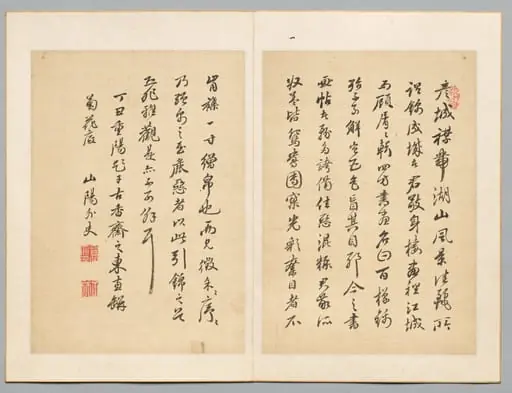 Preface
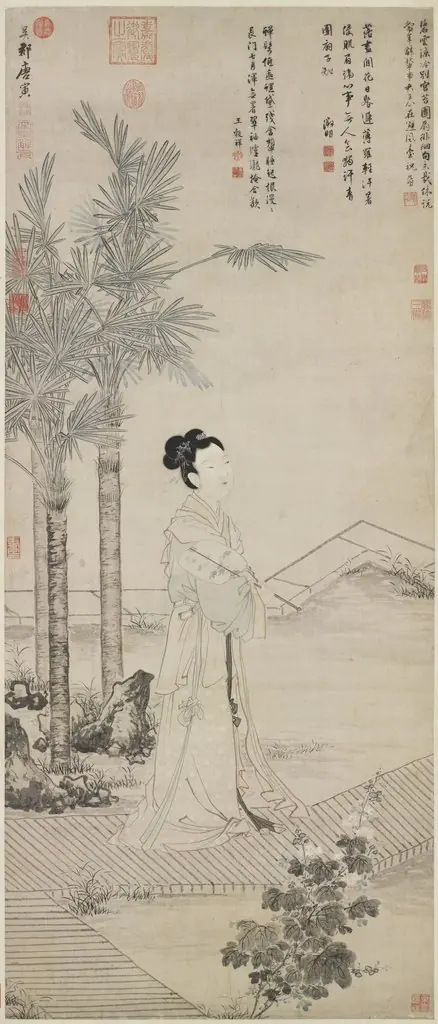 Lady Ban's Round Fan
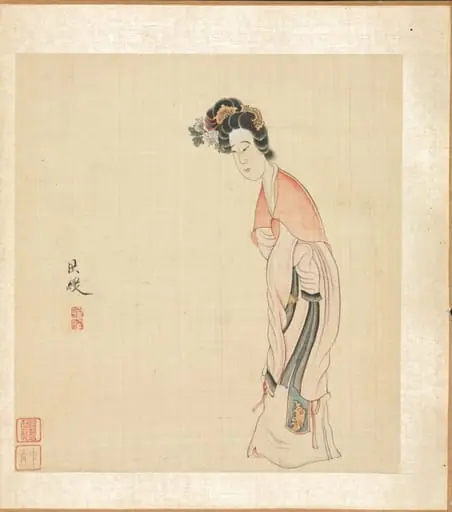 Paintings after Ancient Masters: A Lady
 Calligraphy
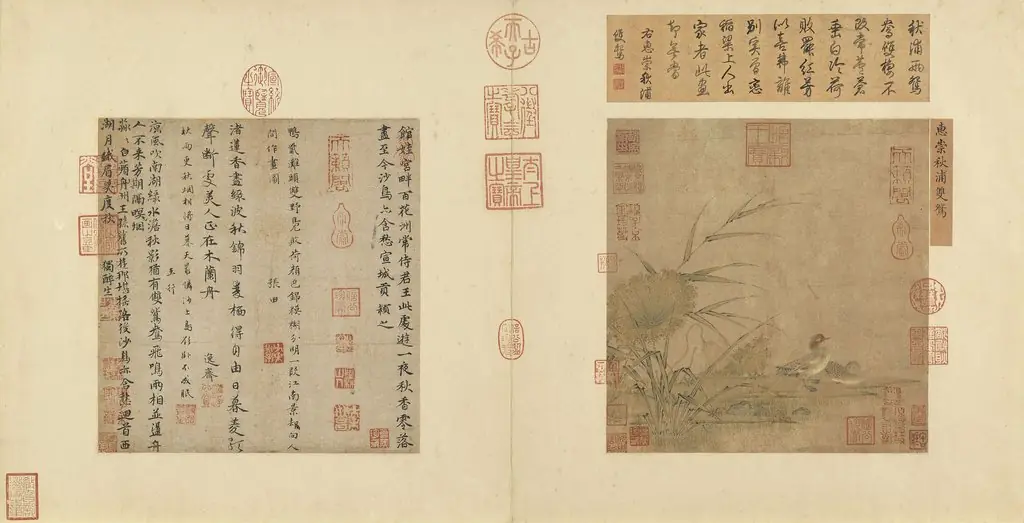 Pair of Mandarin Ducks on an Autumn Bank
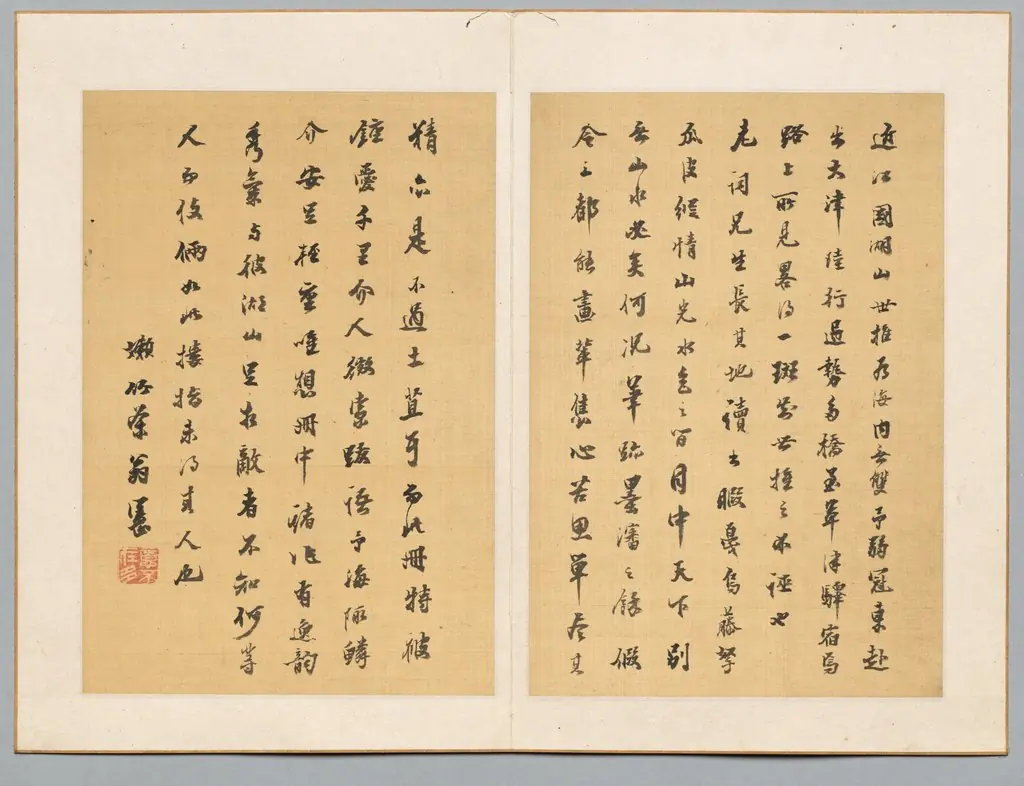 Calligraphy
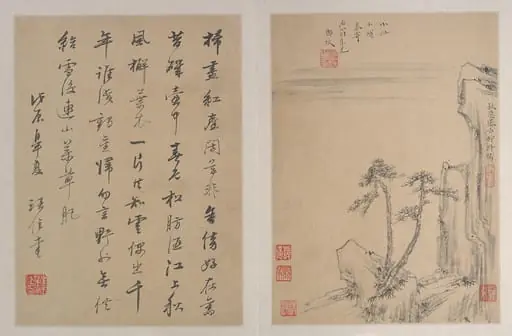 Untitled
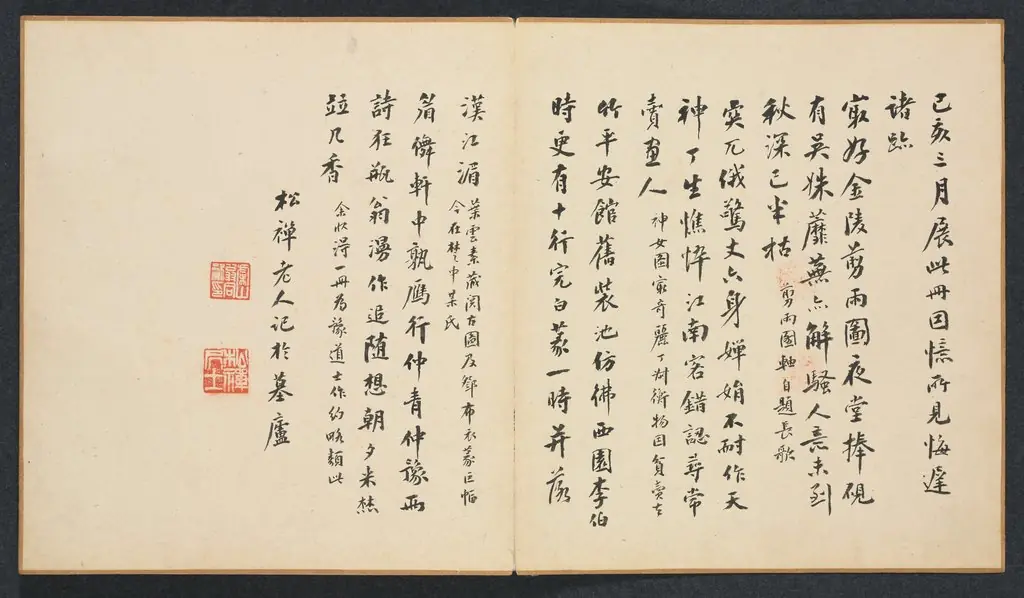 Paintings after Ancient Masters: Calligraphy
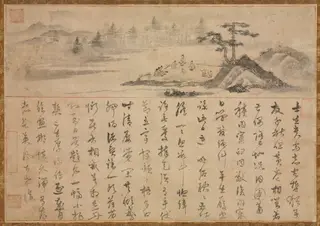 Gathering among the Members of Office Censor-General
 Paintings after Ancient Masters: A Lady