Artwork
Gathering among the Members of Office Censor-General
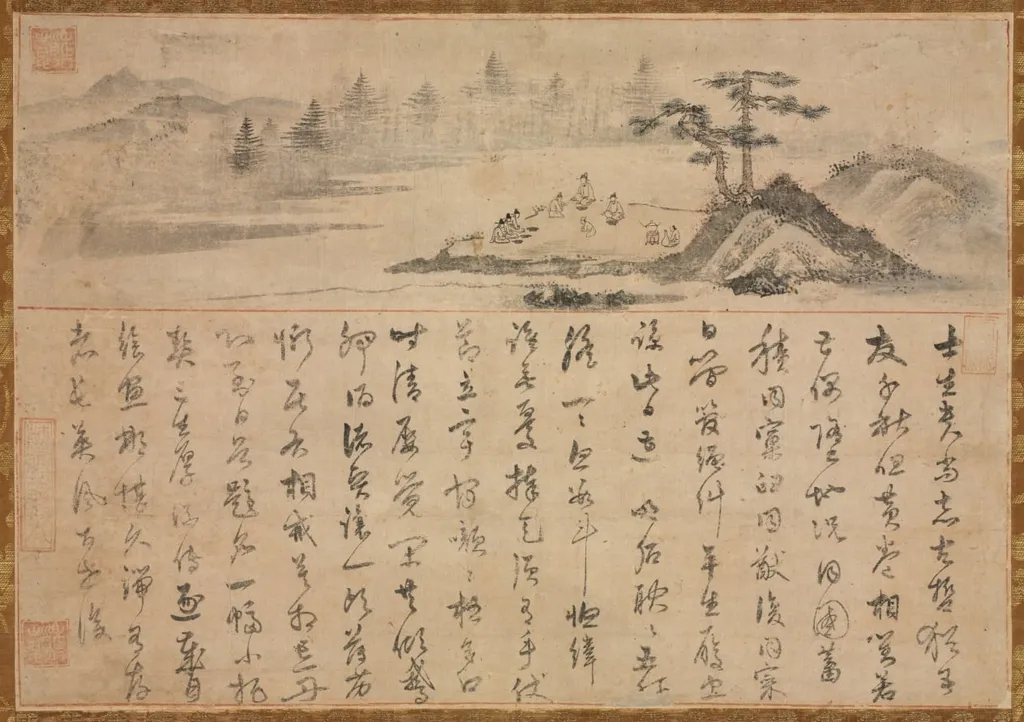
Gathering among the Members of Office Censor-General is an unspecified painting by the Baroque artist Unknown. It dates from 1704 and is held in the collection of the Cleveland Museum of Art. This painting belongs to the gyehoedo tradition, a genre depicting scholarly gatherings among Joseon-era officials.
- Accession no.
- 1997.147
- Credit line
- Leonard C. Hanna Jr. Fund
About this work
The artist added tiny details, ink stones, teacups, even the way the trees bend, to make the scene feel real.
You see a long scroll crowded with men in black hats and robes, seated at low tables in a garden.
This painting was made for a Korean official in the 1500s to show his friends at work. The artist added tiny details, ink stones, teacups, even the way the trees bend, to make the scene feel real. It’s like a group photo, but from 500 years ago.
If you like this quiet look at old Korean life, look up Korea, Joseon dynasty (1392–1910) next.
Overview
This painting belongs to the gyehoedo tradition, a genre depicting scholarly gatherings among Joseon-era officials. Commissioned by Sim Eongwang during his tenure as head of the saganwon, it portrays a formal meeting of cabinet members. Though originally created in the early 16th century, the surviving version is an 18th-century reproduction, preserving the composition and inscriptions of the lost original.
Subject & Meaning
The scene captures a miwon gyehoedo, a gathering of the Saganwon, the royal censors responsible for advising the king and reviewing state affairs. The participants, dressed in formal black robes and hats, engage in quiet conversation amid a garden setting. The inclusion of Sim’s poem at the bottom reflects the literati ideal of moral reflection and spiritual cultivation through scholarly camaraderie.
Technique & Style
Rendered in ink on silk, the painting employs fine brushwork to depict subtle details: teacups on low tables, ink stones, and delicately rendered trees bending with the wind. The composition is tightly packed yet orderly, emphasizing harmony and restraint. The naturalistic treatment of the garden setting grounds the scene in quiet realism, avoiding theatricality in favor of intimate observation.
History & Provenance
Sim Eongwang commissioned the original work around 1530, during his leadership of the Saganwon. His accompanying poem, later included in his literary collection Eochonjip, reinforced the gathering’s intellectual and ethical significance. The original painting is lost; the extant version dates to the 1700s, likely created by a later artist to preserve the composition and inscriptions for posterity.
Context
In early Joseon Korea, scholarly gatherings were more than social events, they were expressions of Confucian ideals, reinforcing hierarchy, moral duty, and intellectual exchange among officials. Paintings like this served as visual records of elite identity, linking personal virtue with public service. The genre flourished as courtiers sought to immortalize their roles within the state’s scholarly bureaucracy.
Legacy
Though the original is no longer extant, the 18th-century copy ensures the survival of Sim Eongwang’s vision and the aesthetic norms of early Joseon literati culture. The painting remains a key example of how administrative roles were visually codified, blending portraiture, landscape, and poetry into a single, restrained expression of official identity and moral aspiration.
Artist & collection









 Landscape
 Spring Mist over Jiangnan
 Landscape
 清 傳高鳳翰 書畫合璧 冊|Landscapes and Calligraphy
 Landscapes in Various Styles after Old Masters
 元吳鎮漁父圖 軸
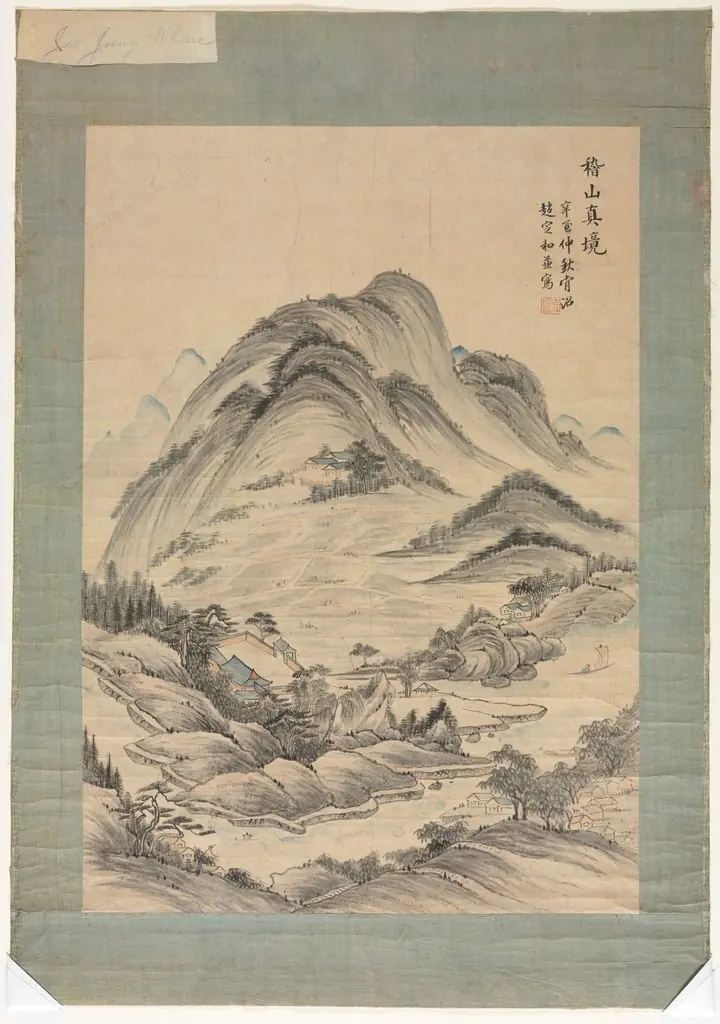 Landscape with Streams and Mountains
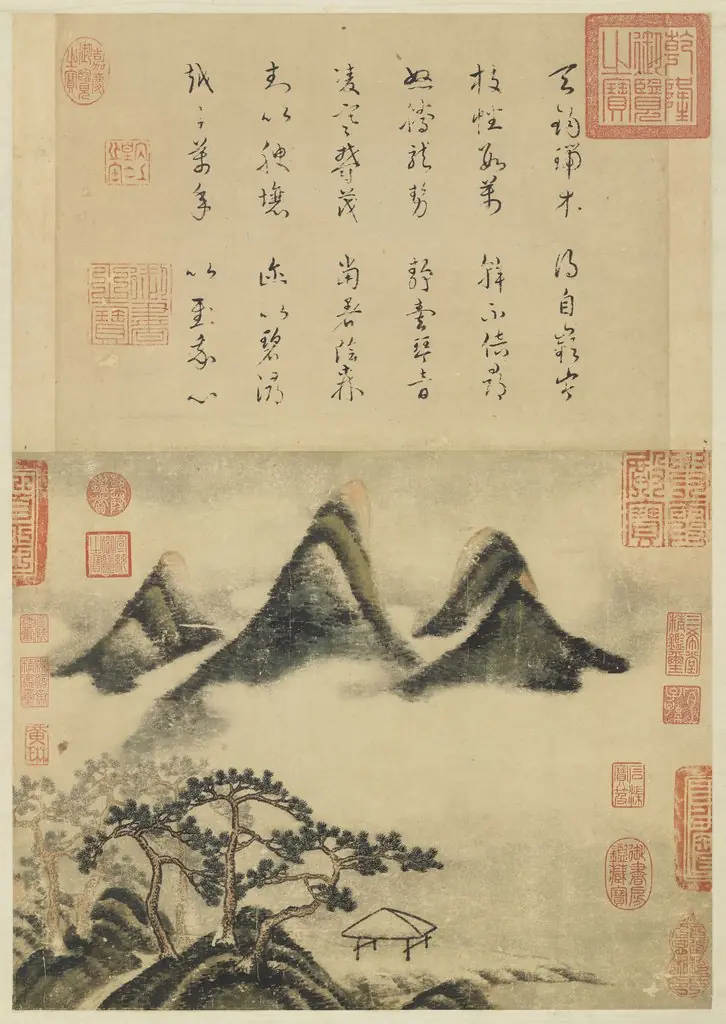 Spring Mountains and Auspicious Pines
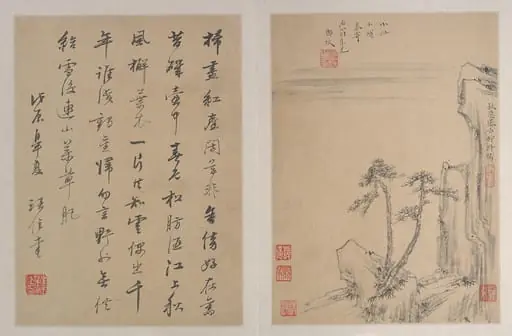 Untitled
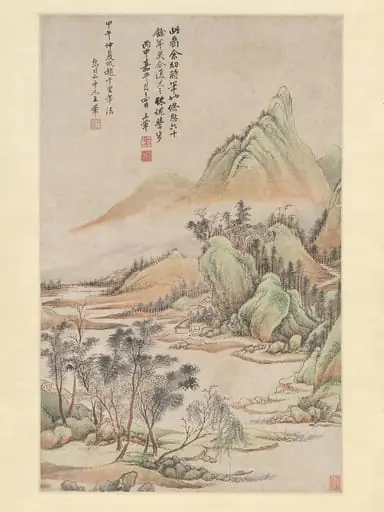 倣趙伯駒山水圖 軸|Landscape in the Style of Zhao Boju (Fang Zhao Boju shanshui)
- Shuyadō (Studio of Lofty Rusticity)
 Portrait of Basho