Artwork
Yang Pu Moving His Family
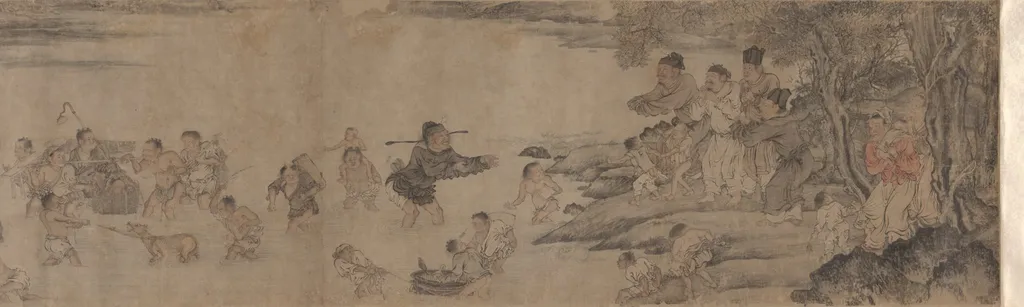
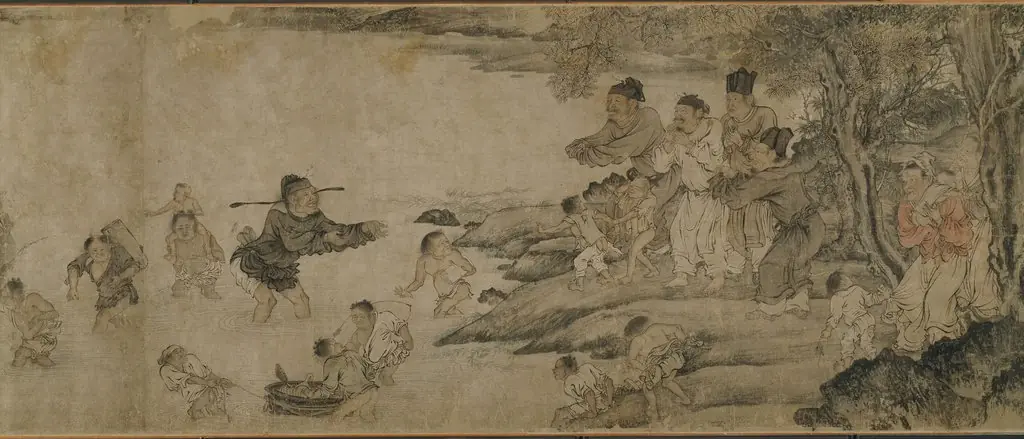
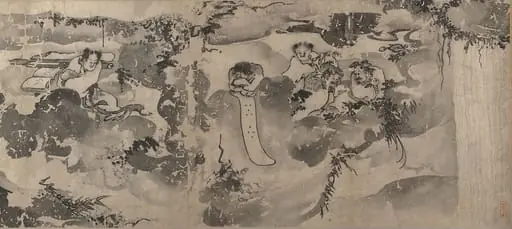
Yang Pu Moving His Family is an ink painting by the Song dynasty painting artist Unknown. It dates from 1324 and is held in the collection of the Art Institute of Chicago. The hand‑scroll illustrates a scholar, identified by his official cap with long streamers, leading his family across a narrow river.
- Accession no.
- 76279
- Credit line
- Kate S. Buckingham Endowment
About this work
Overview
The hand‑scroll illustrates a scholar, identified by his official cap with long streamers, leading his family across a narrow river. Servants accompany him, bearing children, household items, a chicken and other belongings. Rendered in ink and light colour on paper, the fragment captures a moment of departure that was a common motif in Chinese visual and literary culture.
Subject & Meaning
The central figure is thought to represent Yang Pu, a character from twelfth‑ and thirteenth‑century narratives who reluctantly accepts a bureaucratic posting far from his hometown. The scene conveys the melancholy of forced relocation, a practice mandated by law to curb regional bias, and subtly references the willow‑branch custom of offering small twigs to departing friends.
Technique & Style
Executed with delicate ink lines and muted washes, the artist blends realistic detail, such as the precise rendering of the cap’s tassels and the textures of the cargo, with exaggerated, almost caricatured gestures of the servants. This combination creates a lively yet restrained visual tone, characteristic of late‑Song or early‑Yuan scroll painting.
History & Provenance
The scroll is an anonymous work; no signature or colophon identifies its creator. It survives as a small segment of a larger composition, likely produced for a literati audience familiar with the Yang Pu anecdote. The fragment entered the museum’s collection through a 20th‑century acquisition, though its exact prior ownership remains undocumented.
Context
During the Song and Yuan periods, literature and painting frequently depicted the sorrow of officials sent to distant capitals, emphasizing the personal cost of state service. This piece reflects that tradition, aligning with poetic treatments of parting and the visual genre of journey scenes that populated private studios and album leaves.
Artist & collection









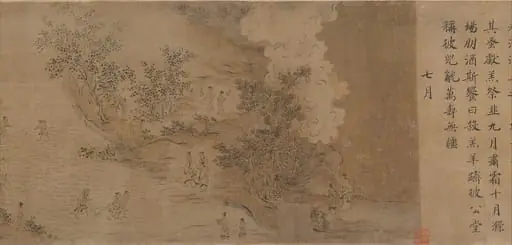 南宋 馬和之 詩經豳風圖 卷|Odes of the State of Bin
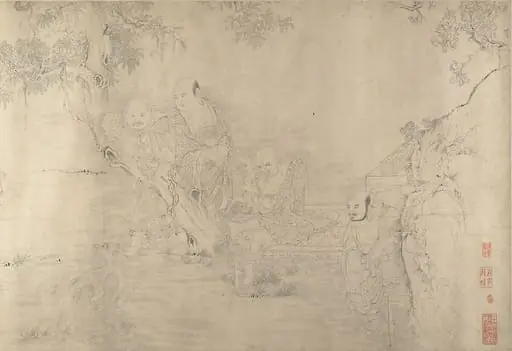 清 佚名 倣石濤 十六羅漢圖 卷|(Copy after) The Sixteen Luohans
 Greeting the Spring
 明 /清 佚名 李公麟 偽款 龍王請齋圖 卷|Buddhist luohans crossing the sea to the palace of the dragon king
 Untitled
 明/清 佚名 人物故事圖 卷|Family Visit
 Bian Zhuangzi Killing Tigers
 壺天聚樂圖|Merry Gatherings in the Magic Jar
 Evening Snow Blending River and Sky, from Eight Views of Xiao-Xiang