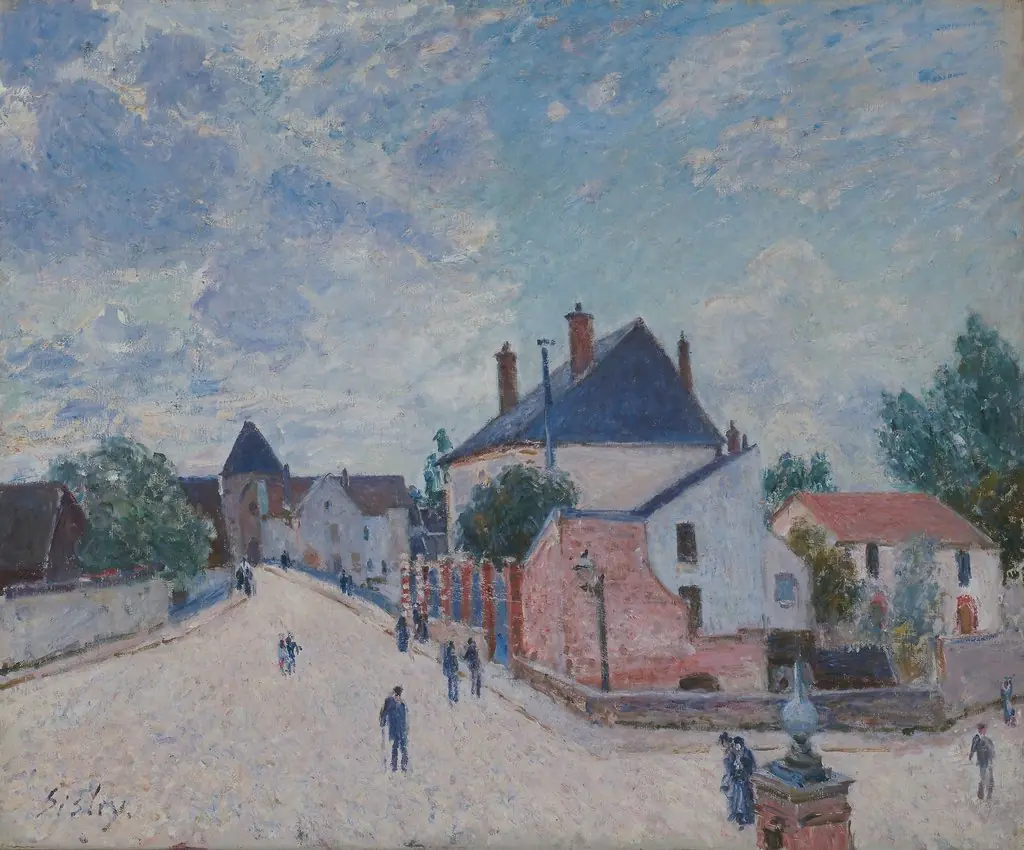
Artwork
Marly-le-Roi
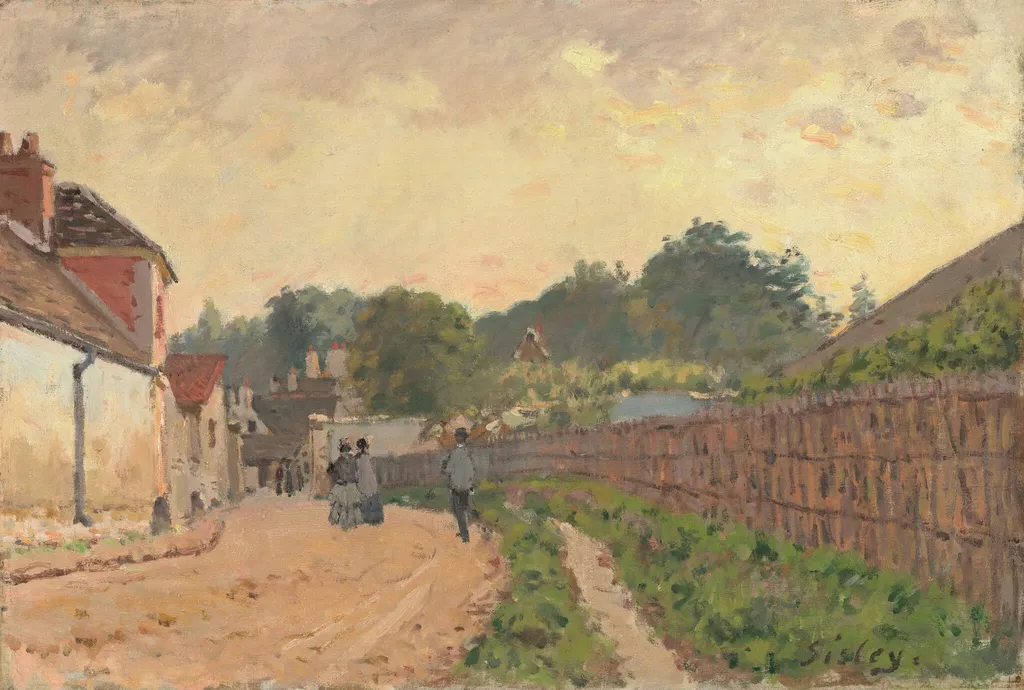
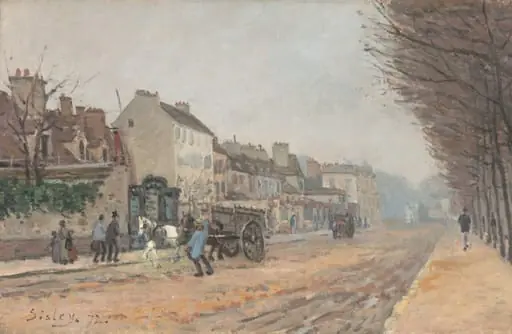
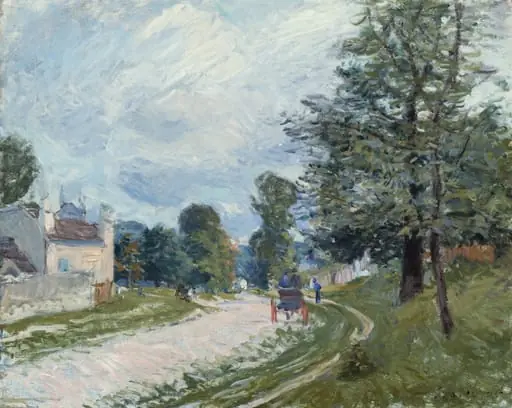
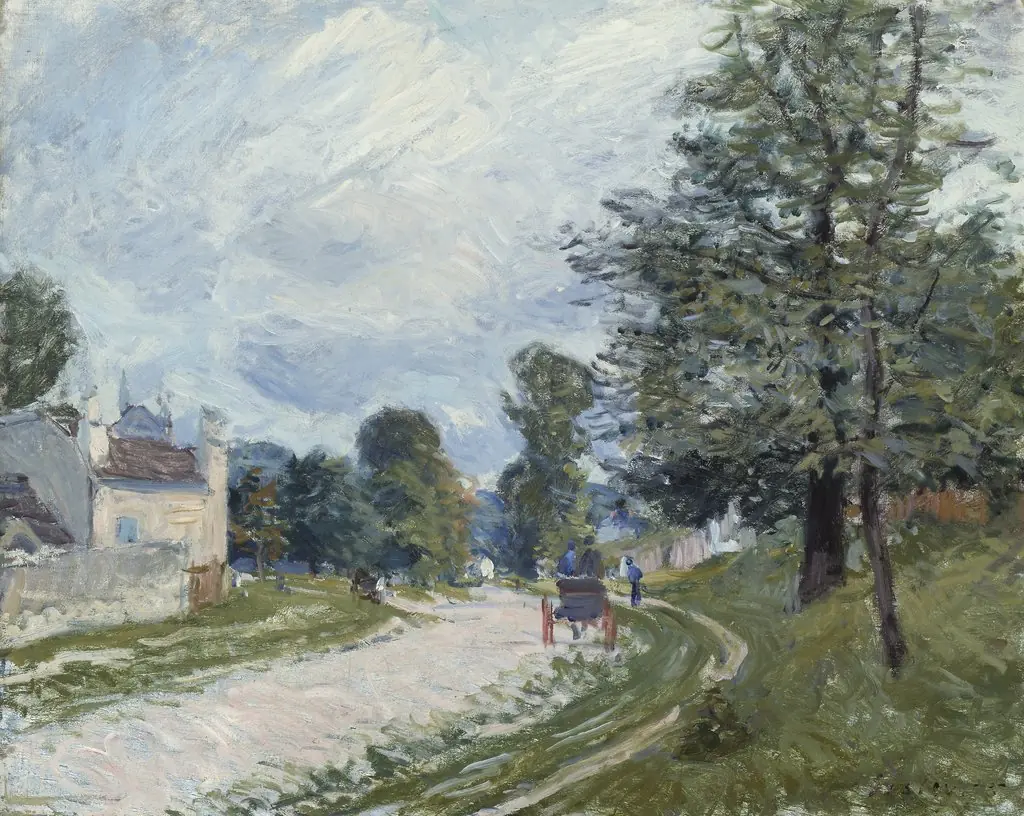
Marly-le-Roi is an oil painting by the Impressionist artist Alfred Sisley. It dates from 1875 and is held in the collection of the National Gallery of Art.
- Inscription
- Inscribed:lower right: Sisley.
About this work
Technique & Style
Classified as a landscape painting, the piece is held in the collection of the National Gallery of Art in Washington, D.
Alfred Sisley executed Marly-le-Roi in 1875 using oil paint on a canvas support. The work measures 38.1 cm in height and 56.2 cm in width. Classified as a landscape painting, the piece is held in the collection of the National Gallery of Art in Washington, D.C., having been acquired from the Corcoran Gallery of Art. The physical format and medium reflect the standard practices of the artist during this period.
History & Provenance
Alfred Sisley painted Marly-le-Roi in 1875. Edward C. Walker and his wife Mary Griffin owned the work, which remained in their collection until Mary Griffin's death in 1937. Mary Griffin bequeathed the painting to the Corcoran Gallery of Art in Washington, D.C., where it remained in the collection until its acquisition by the National Gallery of Art in 2014.
Marly-le-Roi is held by the National Gallery of Art in Washington, D.C. It previously belonged to the Corcoran Gallery of Art in Washington, having entered that collection as part of the bequest of Edward C. and Mary Griffin Walker of Willistead Manor, Walkerville, Ontario, and Washington, transferred on 4 May 1937. The National Gallery of Art acquired the painting in 2014 from the Corcoran.
The canvas measures 38.1 cm in height by 56.2 cm in width, and is catalogued as an oil on canvas landscape dated 1875.
Context
Alfred Sisley painted Marly-le-Roi in 1875, depicting a suburban landscape near Paris that reflects Impressionist interest in modern domestic scenery. The work entered the collection of the National Gallery of Art through the bequest of Edward C. and Mary Griffin Walker, who owned Willistead Manor in Ontario. Scholarship on the painting emphasizes its role within Sisley’s broader exploration of atmospheric effects and urban peripheries, situating it alongside contemporaries who examined leisure spaces on the edges of cities.
Its provenance and acquisition history illustrate mid-20th-century patterns of art collecting in North America, linking regional holdings to major national institutions. The painting’s dimensions, recorded as 38.1 cm by 56.2 cm, align with typical landscape formats of the period and support attributions to Sisley’s mature style.
Overview
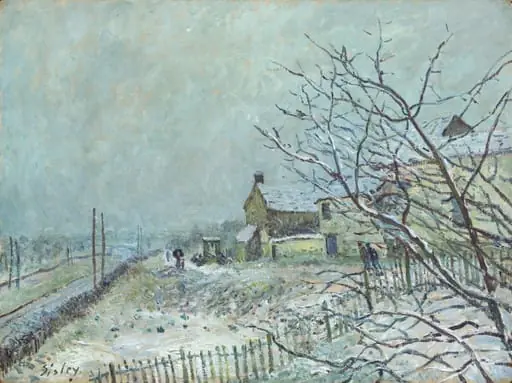
Alfred Sisley’s oil on canvas, titled Marlow‑le‑Roi, dates from around 1875. Executed during the artist’s mature period, the work presents a quiet countryside scene near the town of Marly‑le‑Roi, situated west of Paris. The composition is anchored by a winding dirt track that leads the eye through the middle of the picture, framed by modest structures and a low wooden fence.
Subject & Meaning
The painting captures a tranquil rural setting, where a modest road bisects a landscape dotted with small buildings on the left and a fence on the right. In the distance, a stand of trees and a few indistinct figures suggest everyday life, while a soft, overcast sky lends a gentle, atmospheric mood that emphasizes the ordinary beauty of the locale.
Own this work as a print
Artist & collection
Artist
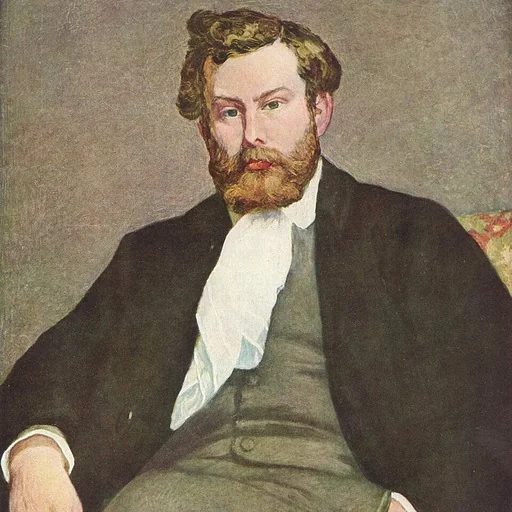
Alfred Sisley (; French:; 30 October 1839–29 January 1899) was a French-Born British Impressionist landscape painter who was born to British parents, but spent most of his life in France.