Artwork
A Merry Gentleman
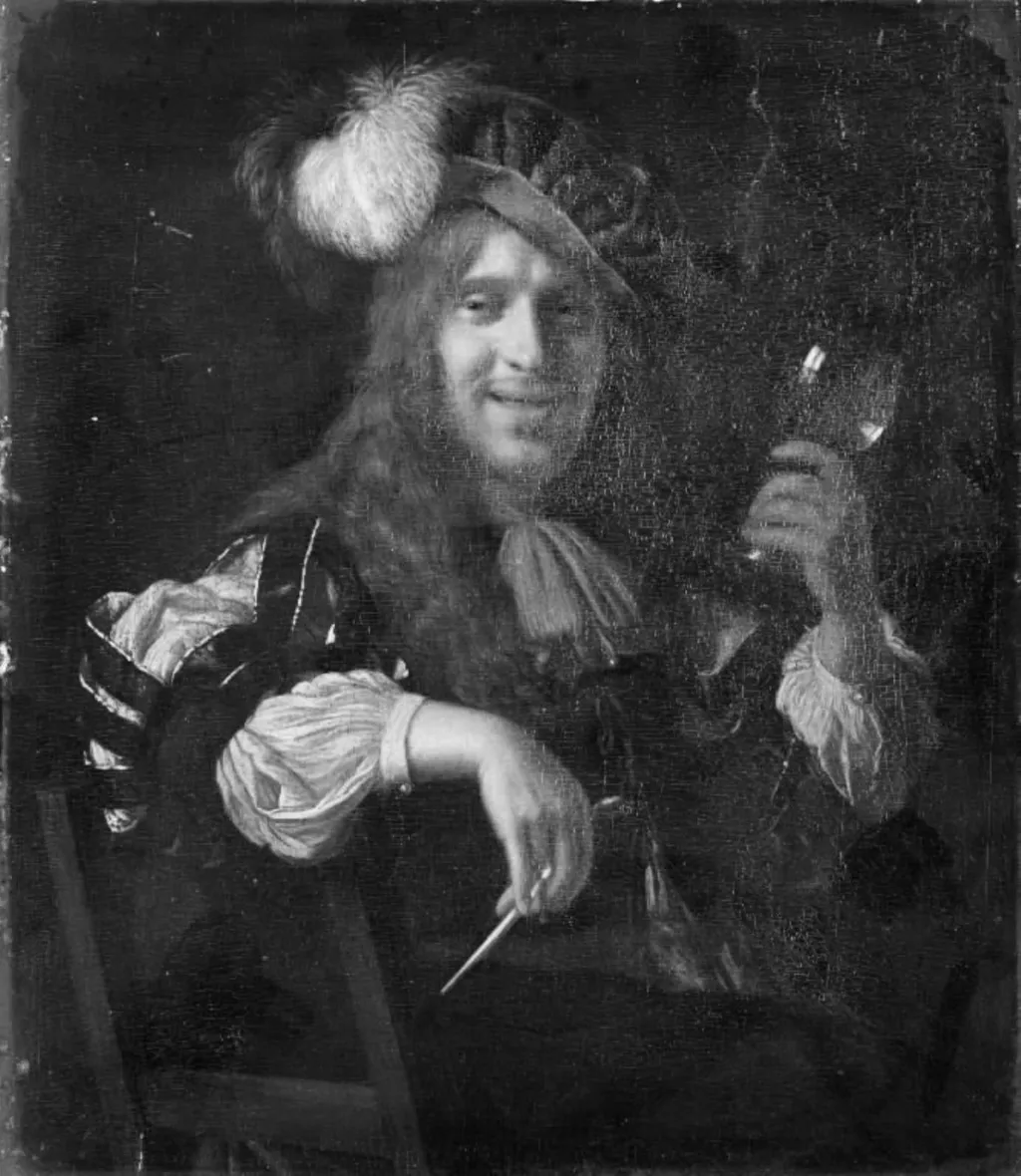
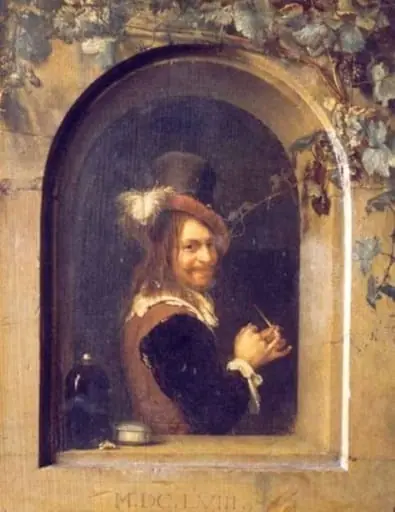
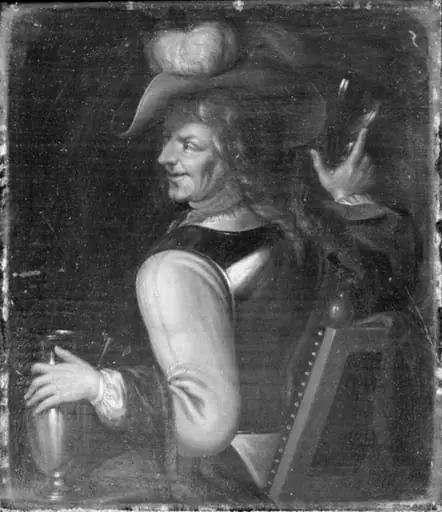
A Merry Gentleman is a photography by Unknown. It dates from 1650 and is held in the collection of the Statens Museum for Kunst. This black-and-white photograph, dated around 1650, portrays a man in elaborate historical dress, captured with dramatic lighting.
About this work
If you're interested in learning more about this technique, you might want to explore the works of 30789_person.
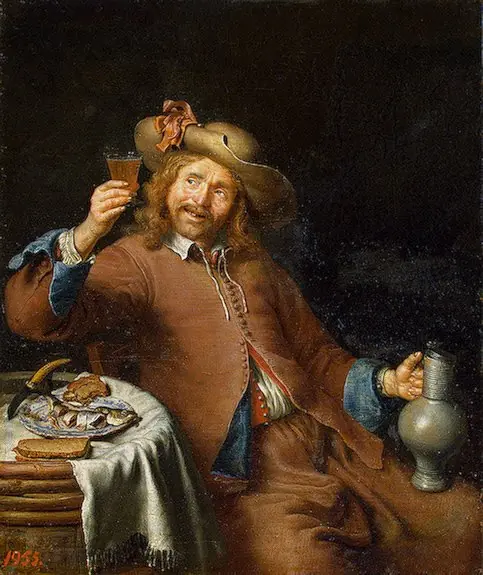
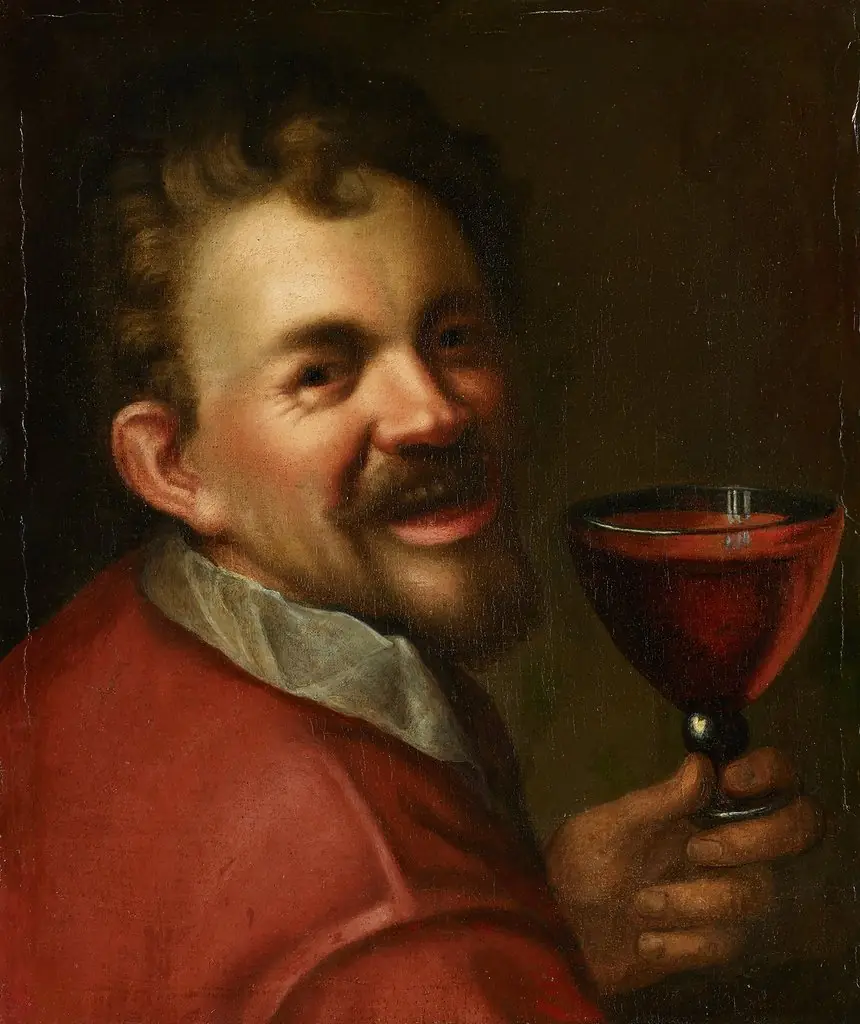
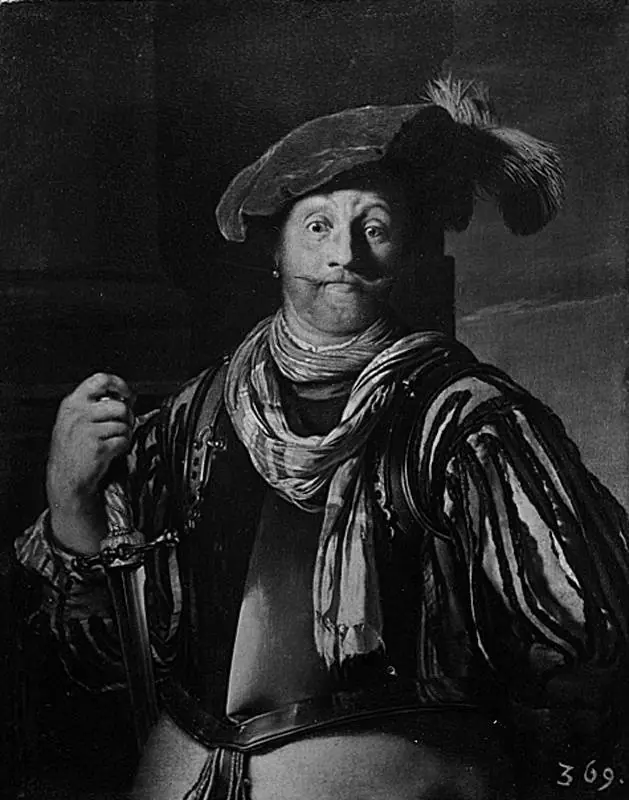
This black and white photograph depicts a man with long hair, wearing a hat adorned with a large feather. He is dressed in a dark jacket with puffy sleeves and a ruffled collar, and holds a pipe in his right hand.
The man's attire and accessories suggest that he is from a bygone era, possibly the 17th or 18th century. His expression is enigmatic, adding to the mystery of the image.
The photograph is a striking example of the use of chiaroscuro, a technique that uses strong contrasts between light and dark to create a sense of depth and volume. If you're interested in learning more about this technique, you might want to explore the works of 30789_person.
Overview
This black-and-white photograph, dated around 1650, portrays a man in elaborate historical dress, captured with dramatic lighting. Though labeled as an image by 30789_person, its origin as a photograph contradicts the period, suggesting it may be a later reproduction or studio reconstruction. It resides in the Museum of Ethnography, where it is presented as a representation of early modern European portraiture conventions.
Subject & Meaning
The figure wears a dark jacket with puffed sleeves, a ruffled collar, and a broad-brimmed hat crowned with a prominent feather. He holds a pipe, a common symbol of leisure in 17th-century visual culture. His gaze is indirect and ambiguous, avoiding direct engagement with the viewer.
The ensemble and demeanor evoke an idealized gentleman, perhaps a fictionalized or theatrical persona rather than a documented individual.
Technique & Style
The image employs chiaroscuro to model the figure’s form, using stark contrasts between light and shadow to define volume and texture. The lighting accentuates the folds of fabric, the sheen of the feather, and the contours of the face, creating a sculptural effect. This approach mimics the tonal strategies of painted portraiture from the period, suggesting the photograph was staged to emulate older artistic traditions.
History & Provenance
The photograph’s attribution to 30789_person is inconsistent with its medium and date, as photography did not exist in 1650. It is likely a 19th-century studio creation, possibly made to satisfy antiquarian interest in historical dress. The Museum of Ethnography acquired it as part of a collection documenting costume and social identity, valuing it for its visual representation rather than its historical authenticity.
Context
In the 17th century, portraits of gentlemen often emphasized status through clothing, accessories, and composed demeanor. This image, though photographic, draws from that tradition, reflecting 19th-century romanticism toward the past. It aligns with a broader trend of staging historical figures for aesthetic or educational purposes, blending fact and fiction to evoke a sense of bygone elegance.
Legacy
The image endures as a visual artifact of how later generations interpreted and reconstructed historical identity. It illustrates the intersection of early photography and historical reenactment, influencing how museums present costume and character. While not a contemporary record, it remains a useful document of 19th-century attitudes toward the past and the performative nature of portraiture.
Artist & collection