Artwork
Italian fish and lobsters
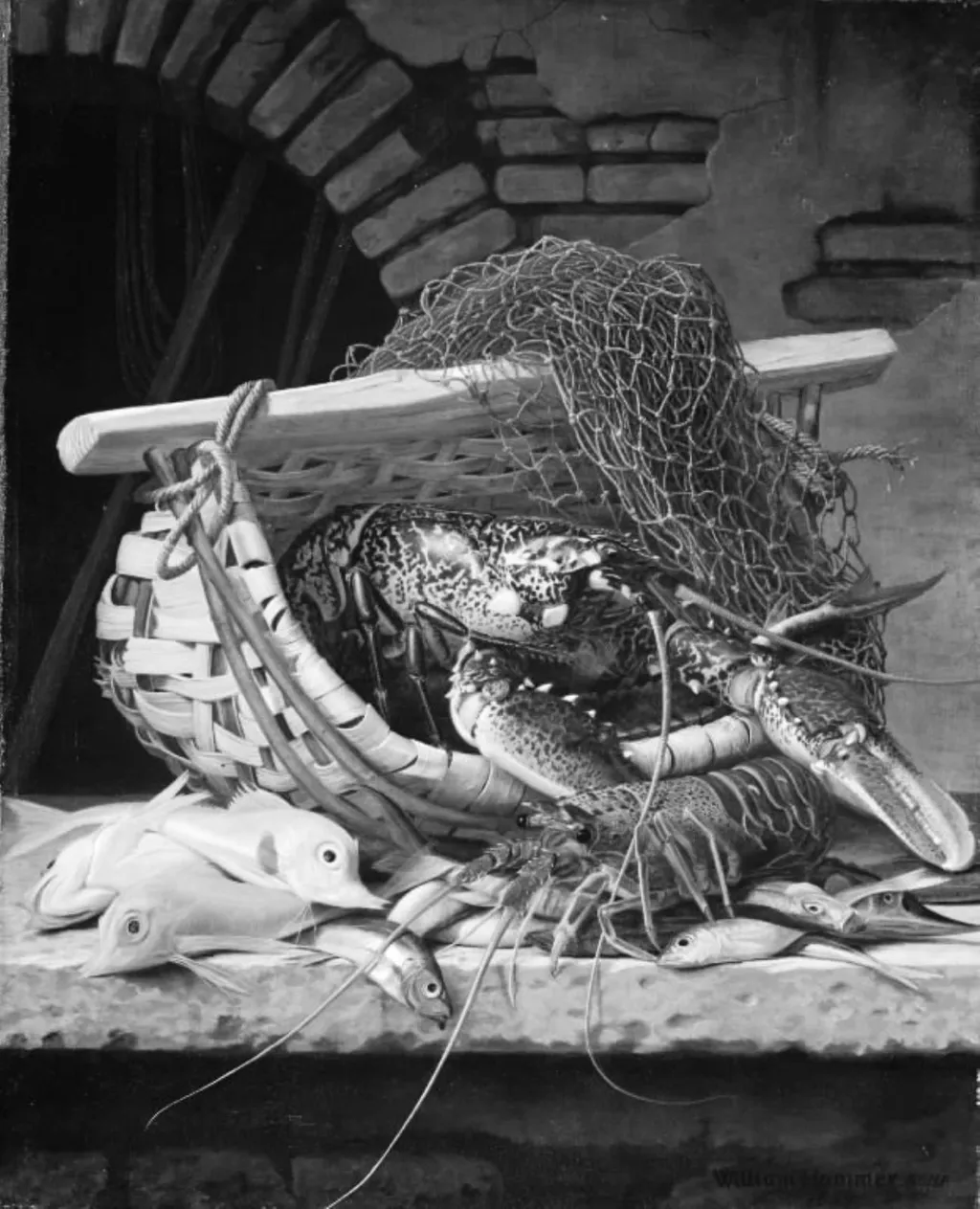
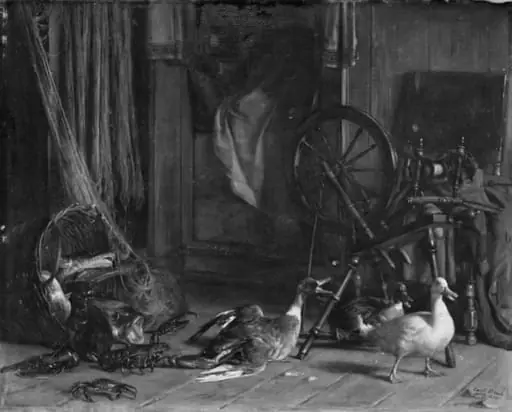
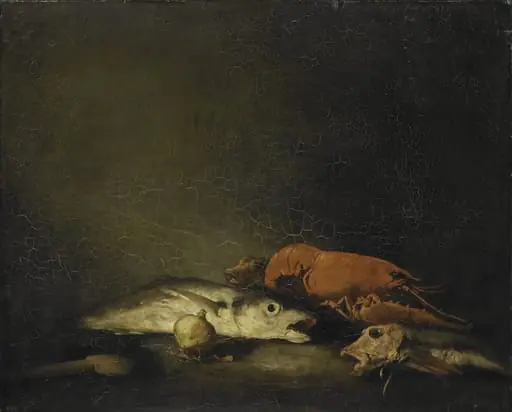
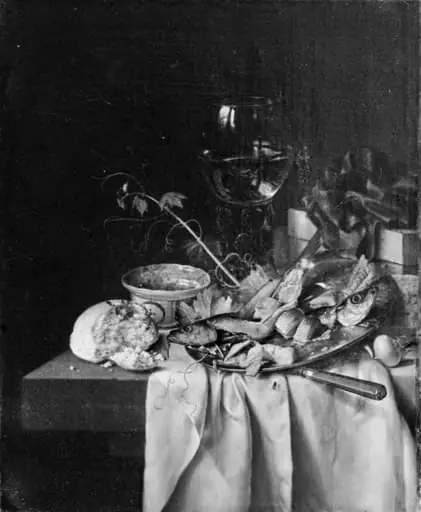
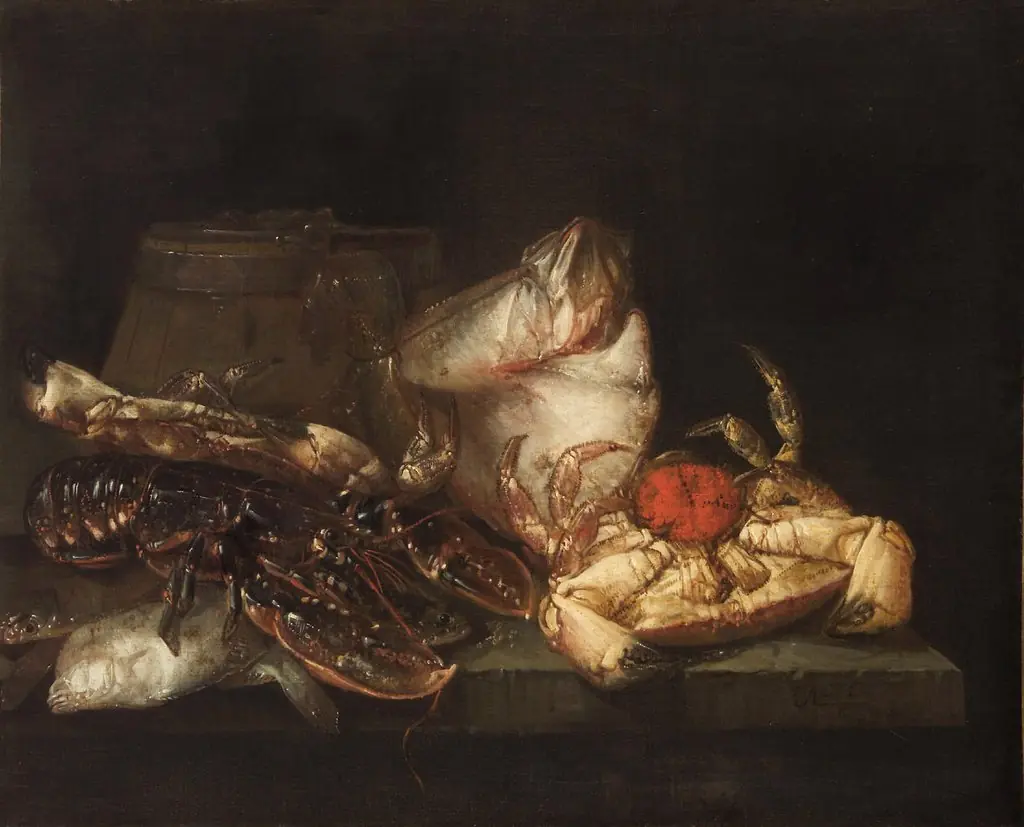
Italian fish and lobsters is a photography by the Impressionist artist Unknown. It dates from 1854 and is held in the collection of the Statens Museum for Kunst. Created in 1854, this still life depicts a wicker basket brimming with freshly caught fish and live lobsters.
About this work
Overview
The work is held in the collection of the Museum of Ethnography, where it is studied for its documentation of maritime harvests and domestic food preparation.
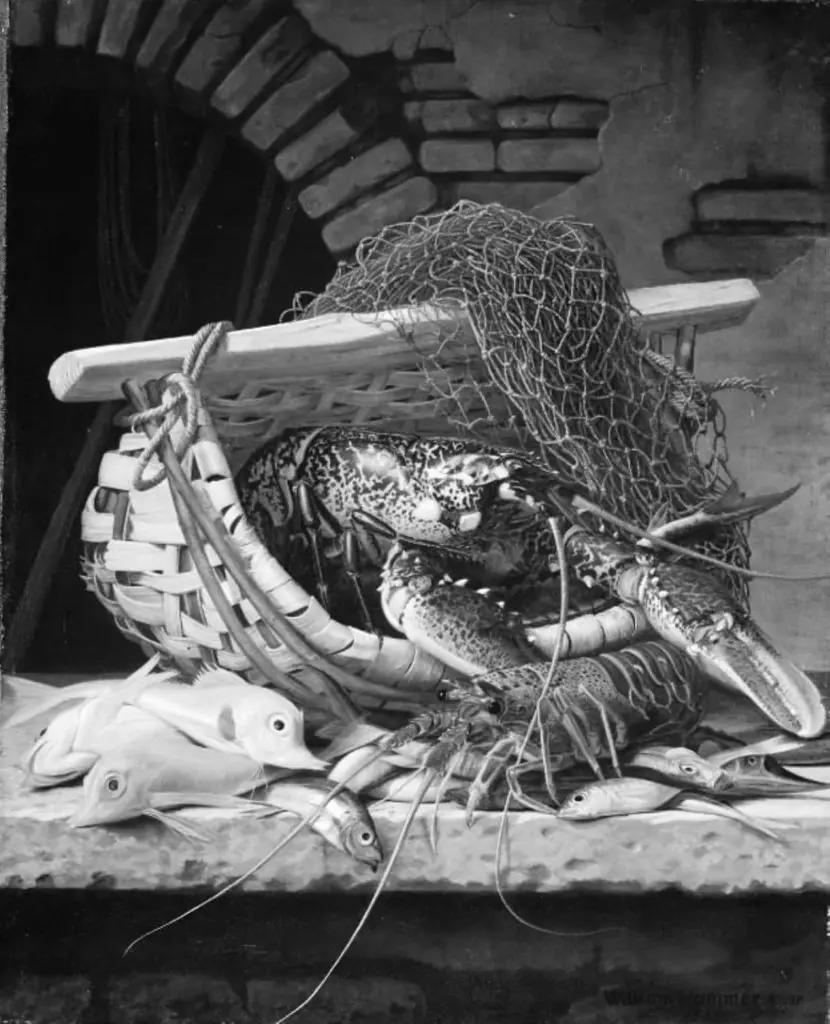
Created in 1854, this still life depicts a wicker basket brimming with freshly caught fish and live lobsters. Rendered with careful observation, the composition centers on the textures of scales, exoskeletons, and woven reeds. The scene is set against a plain brick wall, grounding the arrangement in a quiet, unadorned space.
The work is held in the collection of the Museum of Ethnography, where it is studied for its documentation of maritime harvests and domestic food preparation.
Subject & Meaning
The arrangement reflects the daily catch of coastal Italian communities, emphasizing abundance and labor. Lobsters, with their raised claws and articulated limbs, suggest vitality, while the fish, neatly stacked, imply order in preparation. The absence of human figures directs focus to the bounty itself, possibly conveying themes of sustenance, trade, or seasonal rhythms. The work functions as a visual record of regional foodways rather than a symbolic allegory.
Technique & Style
The artist employs chiaroscuro to model form and depth, using strong contrasts between light and shadow to define the curves of lobster shells and the wet sheen of fish skin. Brushwork is precise, capturing fine details like antennae, gills, and the weave of the basket. The palette is restrained, earthy tones dominate, with muted blues and grays enhancing the naturalism. The style aligns with 19th-century observational realism, prioritizing accuracy over ornamentation.
History & Provenance
The painting entered the Museum of Ethnography’s collection in the late 19th century, likely acquired as part of a broader effort to document material culture. Its attribution to 539_person is based on archival records and stylistic comparison with other known works. No evidence suggests it was exhibited publicly during the artist’s lifetime; its significance emerged later through scholarly interest in regional still-life traditions.
Context
In mid-19th century Italy, still lifes of seafood were common in coastal regions, often painted by artists connected to fishing communities. Unlike grand historical or religious subjects, these works captured everyday life with quiet dignity. The painting reflects a growing interest in ethnographic documentation during the period, as institutions sought to preserve visual records of local economies and customs.
Legacy
The work remains a reference for studies on Italian maritime livelihoods and the evolution of still-life painting beyond aristocratic conventions. It contributes to understanding how ordinary subjects were elevated through technical precision. While not widely reproduced, it continues to inform exhibitions on food, labor, and regional identity in 19th-century European art.
Artist & collection