Artwork
Palm Trees with a Domed Church
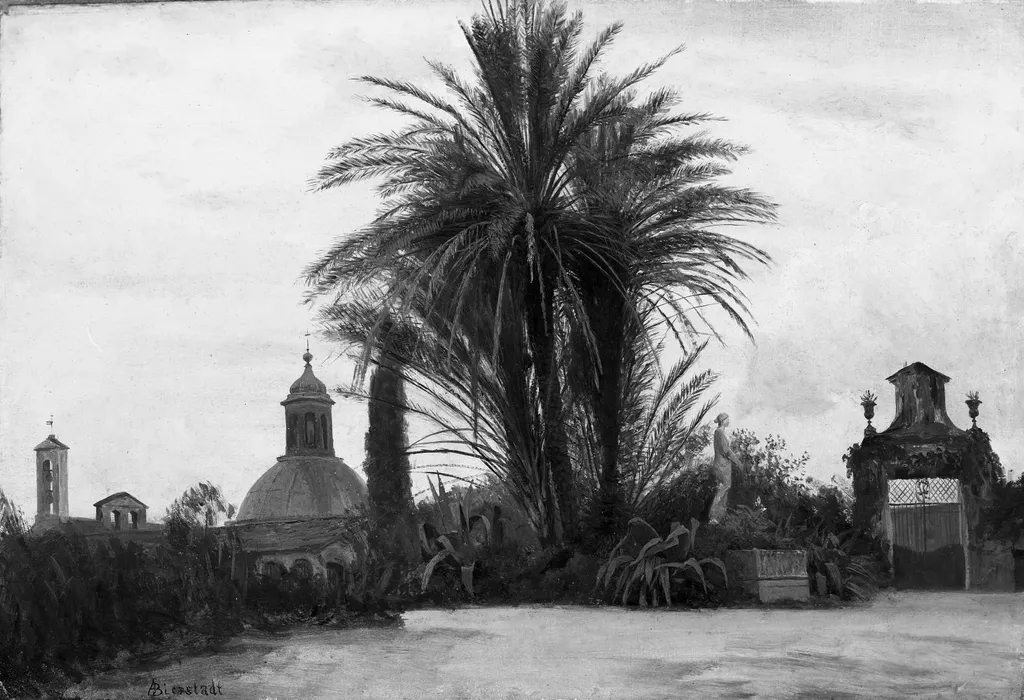
Palm Trees with a Domed Church is an unspecified painting by the American Impressionist artist Albert Bierstadt. It dates from 1890 and is held in the collection of the Museum of Fine Arts Boston.
About this work
Overview
It reflects a shift in subject matter during his later career, combining natural and built environments in a contemplative composition.
Painted in 1890 by Albert Bierstadt, Palm Trees with a Domed Church is a late work that diverges from his famed Western landscapes. Though trained in Düsseldorf and known for grand American vistas, this piece turns toward a quieter, southern setting. It reflects a shift in subject matter during his later career, combining natural and built environments in a contemplative composition. The painting resides in the Museum of Fine Arts, Boston.
Subject & Meaning
The scene presents a tranquil fusion of palm trees and a domed religious structure, suggesting a harmonious coexistence between nature and human spirituality. The absence of figures or narrative action invites quiet reflection. The choice of palms, uncommon in Bierstadt’s usual repertoire, may indicate an interest in exotic or Mediterranean motifs, possibly influenced by travel or contemporary artistic trends beyond the American frontier.
Technique & Style
Bierstadt employs subtle tonal gradations to model the forms of the palms and the church dome, using soft transitions of light and shadow to suggest depth. The brushwork is precise yet restrained, avoiding the dramatic contrasts of his earlier works. Colors are muted, emphasizing atmosphere over vividness, and the delicate rendering of foliage reveals a refined attention to botanical detail, aligning with academic traditions rather than Impressionist spontaneity.
History & Provenance
Created near the end of Bierstadt’s career, the painting entered the Museum of Fine Arts, Boston’s collection through documented acquisition. Unlike his large-scale Western canvases, this work was not widely exhibited during his lifetime, suggesting it was a personal or experimental piece. Its provenance remains relatively unaltered since its acquisition, preserving its original context within the artist’s late oeuvre.
Context
In the 1890s, American artists increasingly explored non-Western landscapes and domesticated nature, influenced by global travel and changing aesthetic tastes. Bierstadt, though rooted in Hudson River traditions, responded to these shifts by turning to more intimate, exoticized scenes. This painting reflects a broader cultural fascination with the Mediterranean and tropics, even as the artist’s reputation remained tied to earlier monumental works.
Legacy
While not central to Bierstadt’s public legacy, Palm Trees with a Domed Church offers insight into his artistic evolution. It demonstrates his adaptability and willingness to engage with quieter, less celebrated subjects late in life. The painting contributes to scholarly understanding of how established artists navigated stylistic change in the face of emerging modern movements, without fully embracing them.
Artist & collection

Artist
Albert Bierstadt (January 7, 1830 – February 18, 1902) was a German-American painter best known for his lavish, sweeping landscapes of the American West.

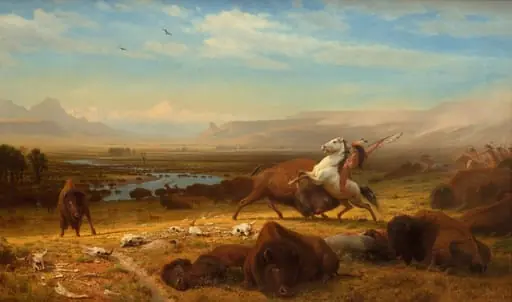


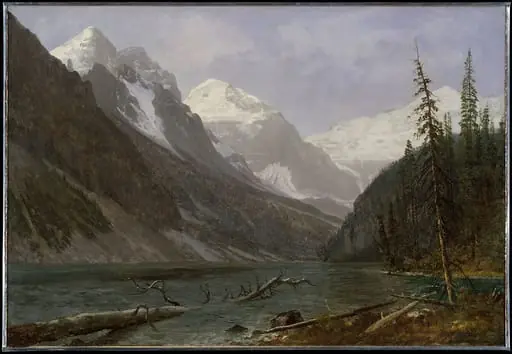


- Open Landscape with Low Hills. Summer
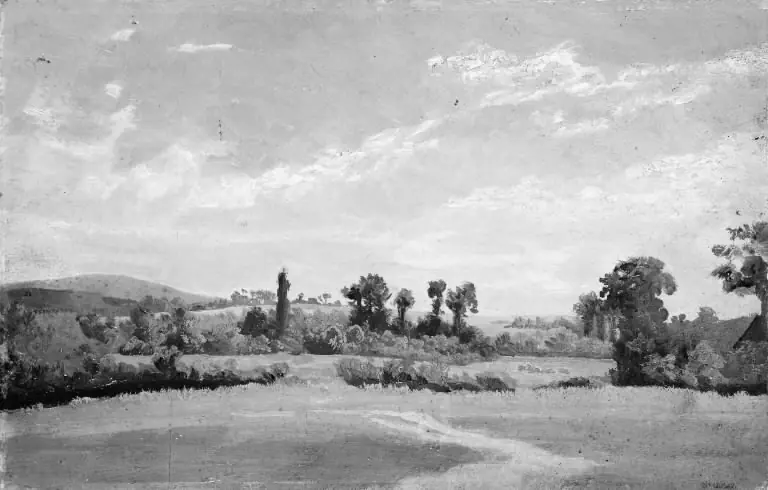 Open Landscape with Low Hills. Summer
 Aurora
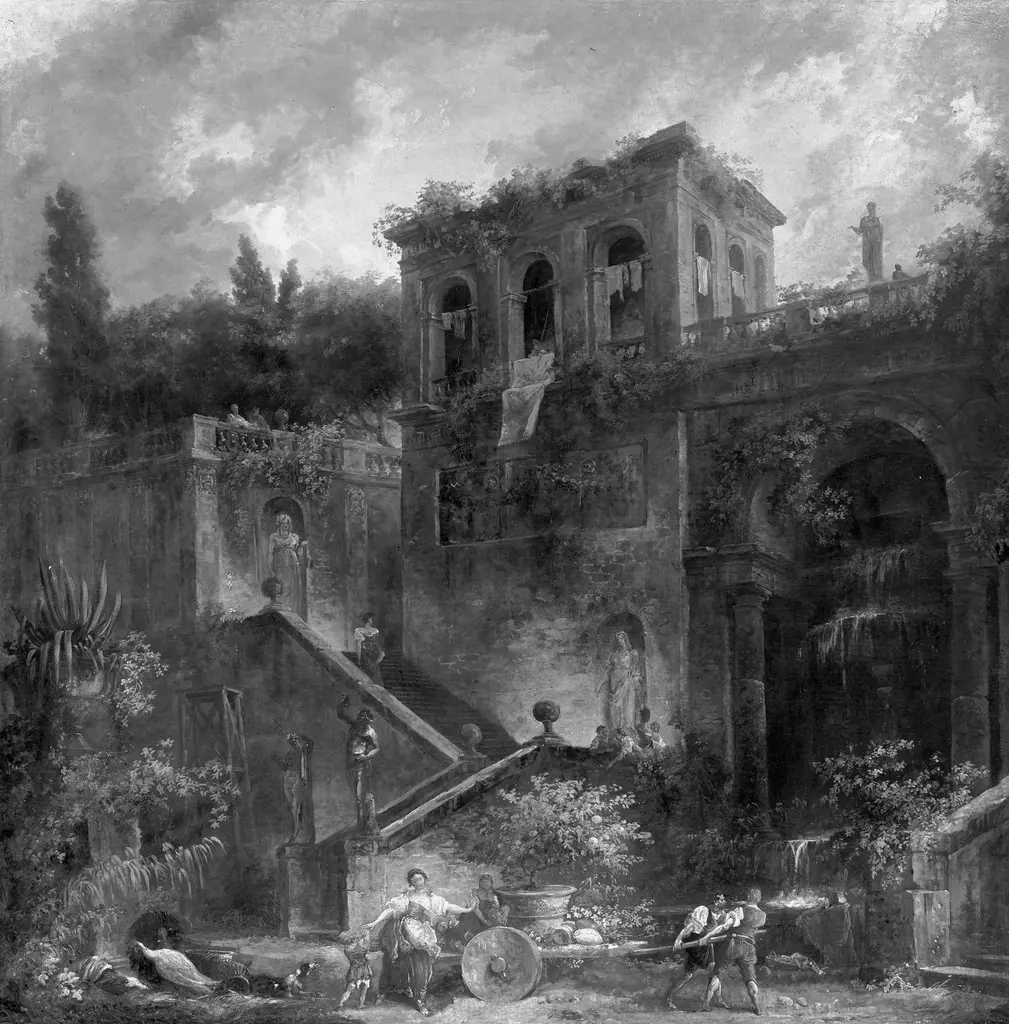 Ascent to the Farnese Gardens on the Palatine
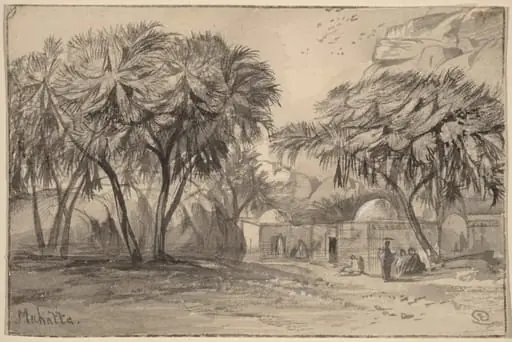 Mahatta
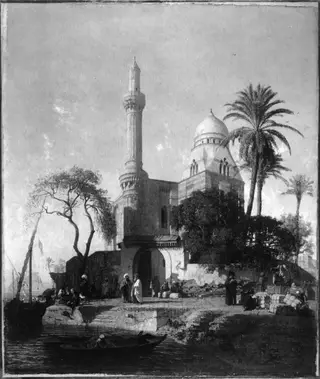 Landscape with Mosque
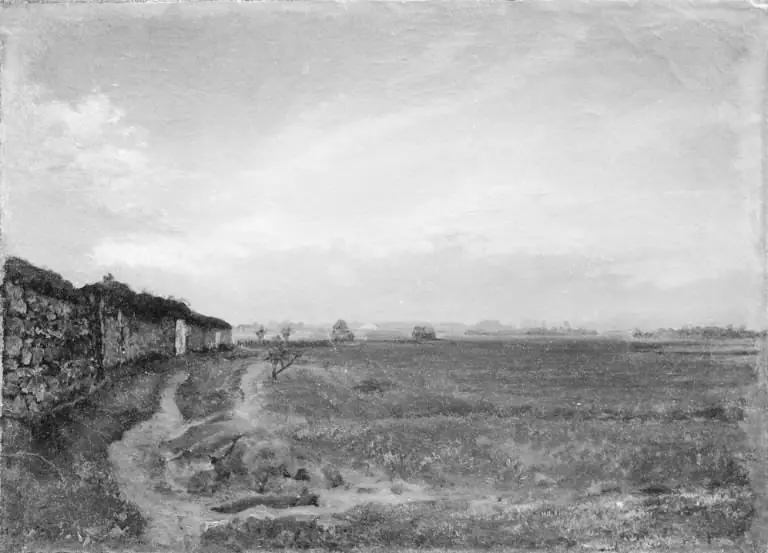 Landscape (in the Barbizon district?)
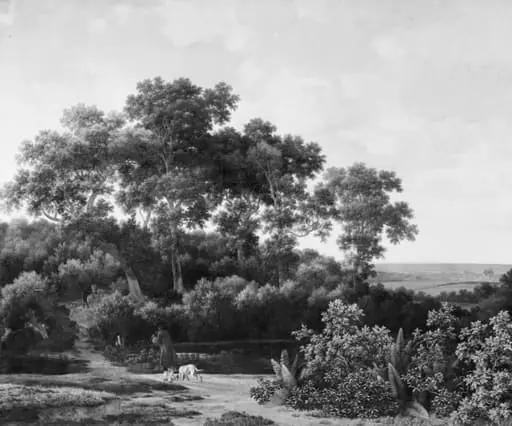 The Game Reserve near Arnheim
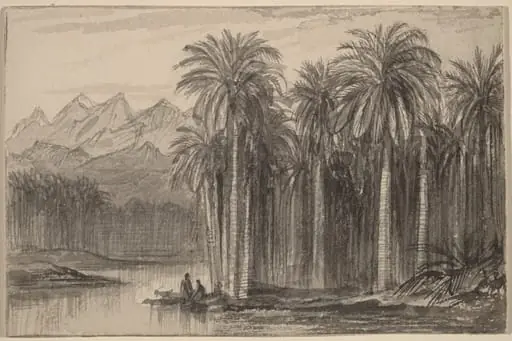 Figures Setting Out in Canoes from a Palm Grove (Wady Feiran)
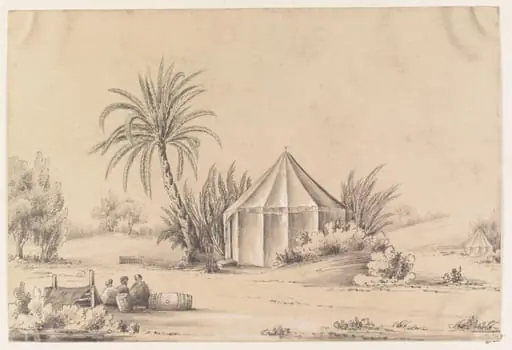 A Scene in the Desert Wady Gharendl
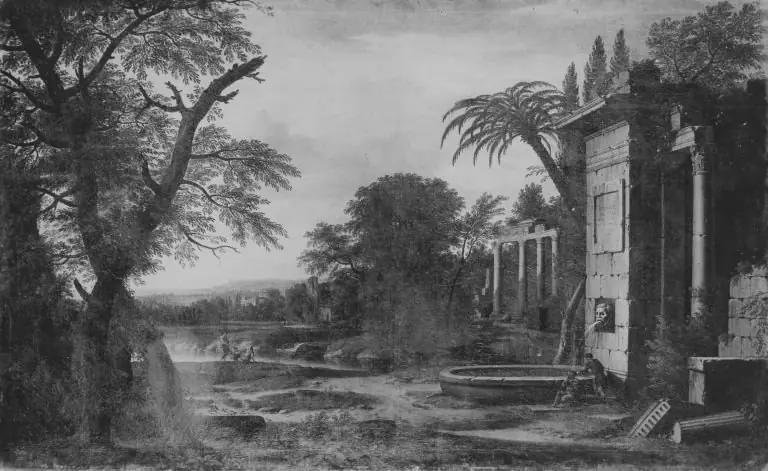 Landschaft mit Ruinen und Personenstaffagen
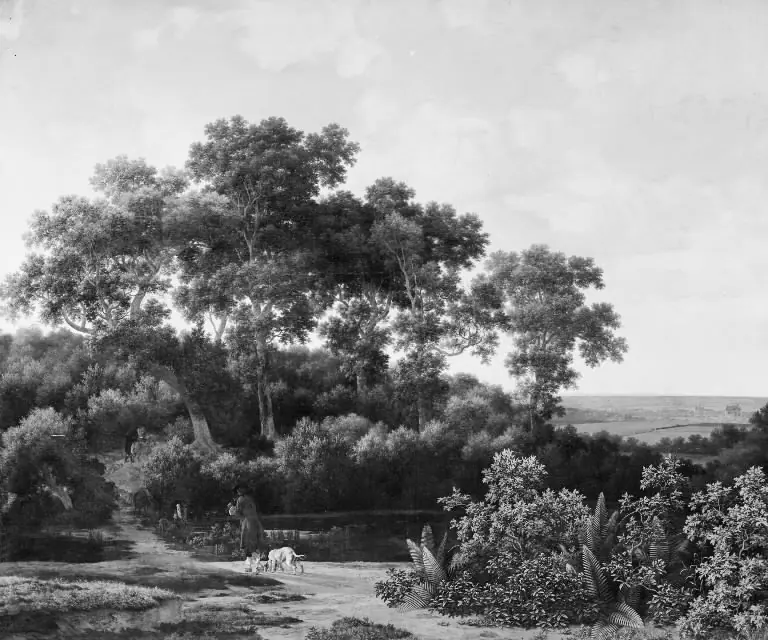 The Game Reserve near Arnheim