Artwork
Saint John the Evangelist in Patmos
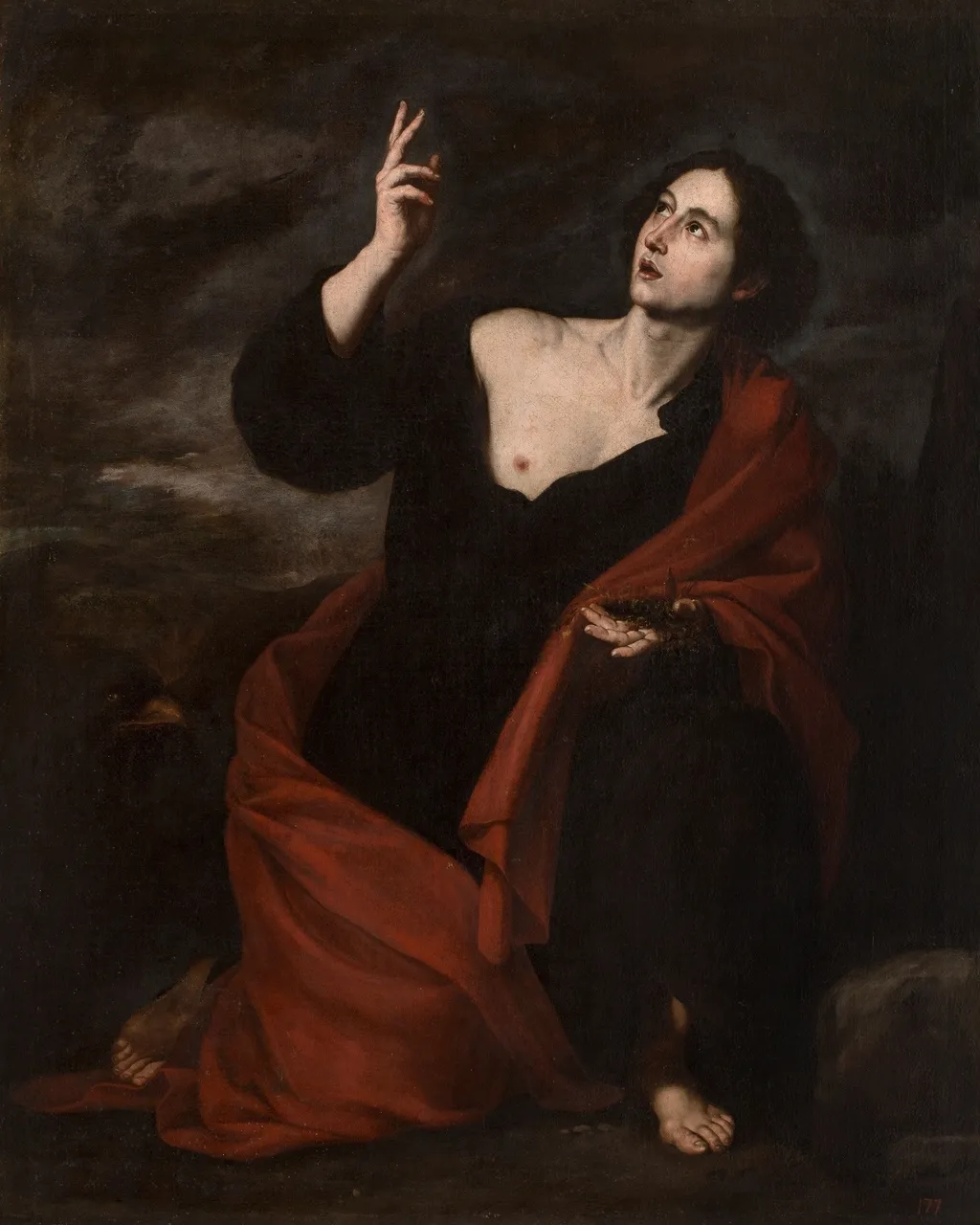
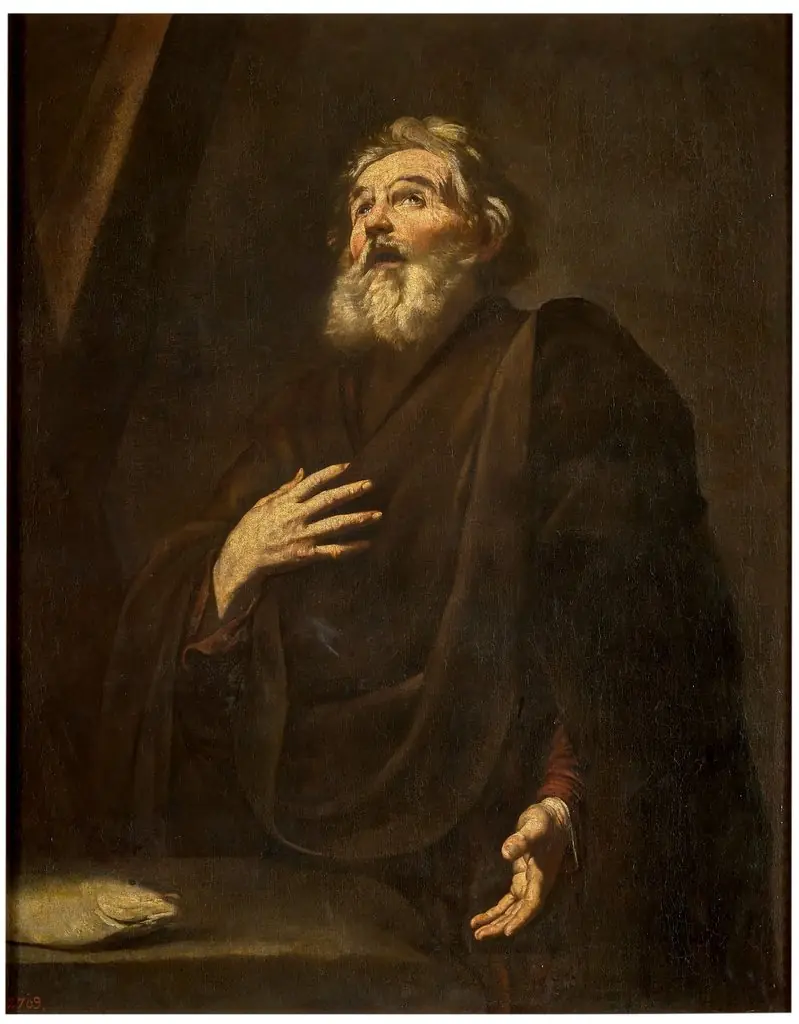
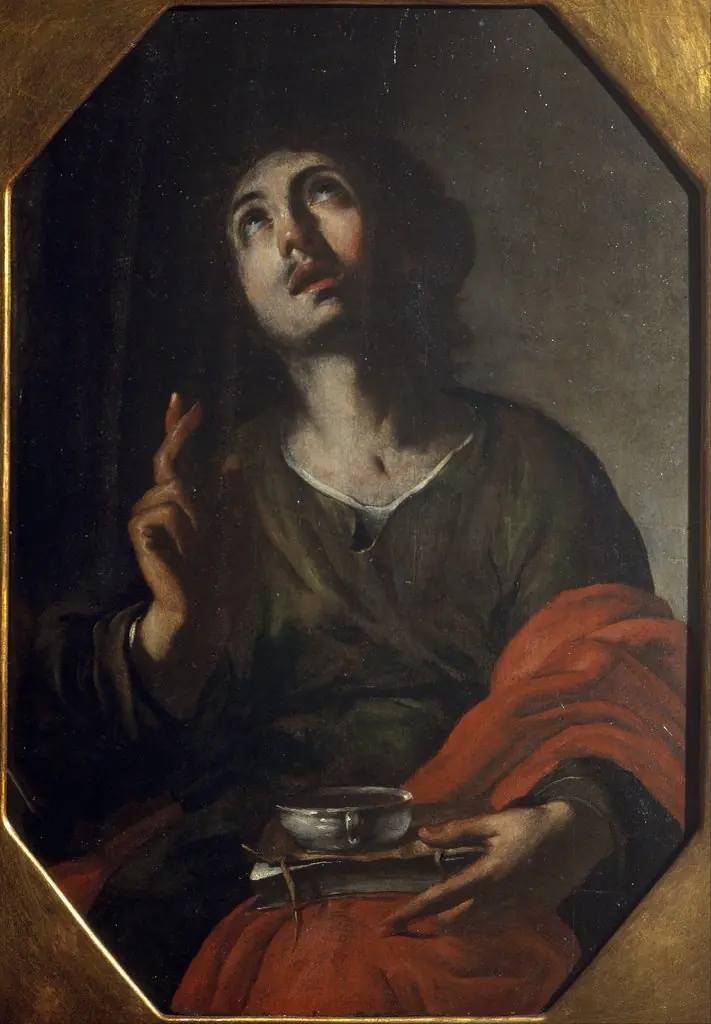
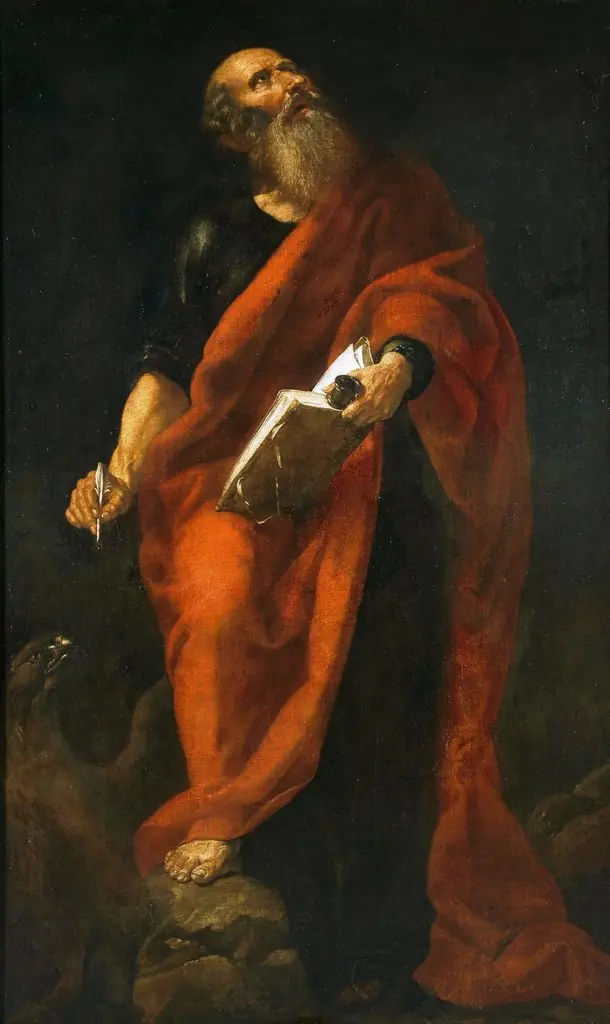
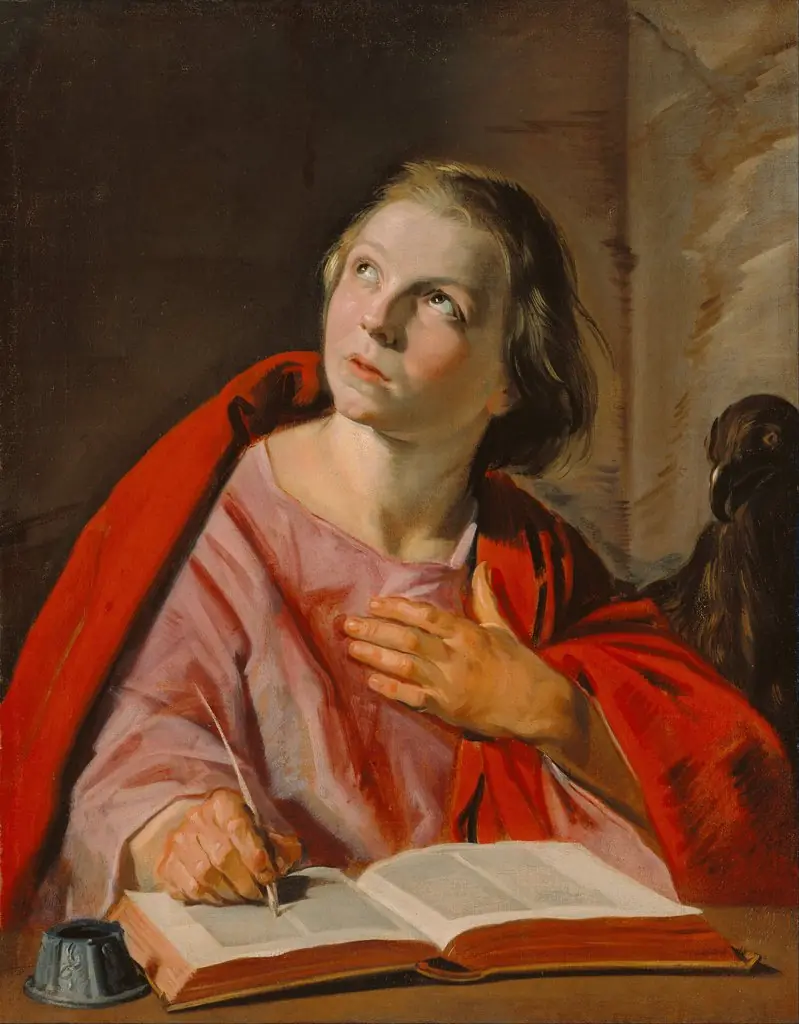
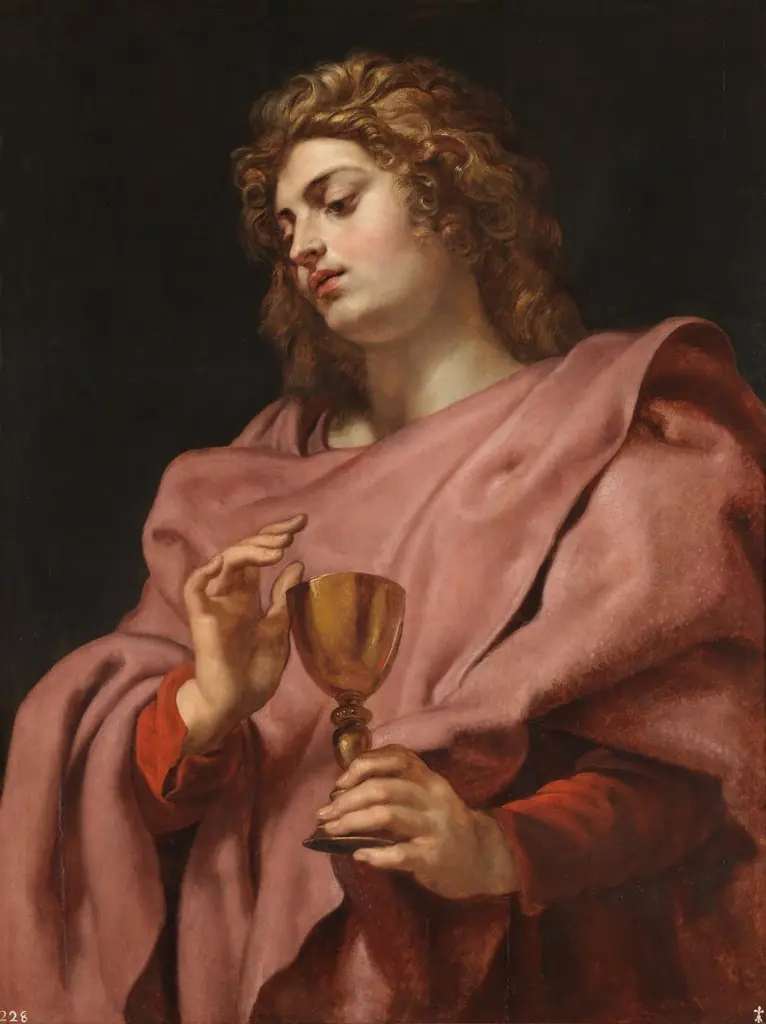
Saint John the Evangelist in Patmos is an oil painting by the Early Baroque Italian artist Jusepe de Ribera. It dates from 1601 and is held in the collection of the Museo del Prado.
About this work
Subject & Meaning
As a work of religious art, the composition focuses on the apostle as the primary subject, capturing the moment associated with his visionary experiences.
Jusepe de Ribera's painting depicts Saint John the Evangelist during his exile on the island of Patmos, a setting central to the biblical narrative of the Book of Revelation. As a work of religious art, the composition focuses on the apostle as the primary subject, capturing the moment associated with his visionary experiences. The iconography identifies the figure specifically as John of Patmos, emphasizing his role as the recipient of divine revelation while isolated on the Greek island.
This representation aligns with traditional depictions of the saint in contemplation or receiving the apocalyptic visions that define his hagiography.
Technique & Style
Jusepe de Ribera executed Saint John the Evangelist in Patmos using oil paint applied to a canvas support. The work measures 171 cm in height and 137 cm in width. As a religious painting, the composition depicts the biblical figure of John of Patmos, adhering to the conventions of religious art. The piece is currently held in the collection of the Museo del Prado.
History & Provenance
Jusepe de Ribera created the oil-on-canvas painting Saint John the Evangelist in Patmos in 1601. The work depicts John of Patmos and measures 171 cm in height by 137 cm in width. It is currently held in the collection of the Museo del Prado, having previously been part of the Museo de la Trinidad.
While some records indicate an inception date of 1650, the primary dating for the creation of this religious artwork is established as 1601.
Overview
Jusepe de Ribera’s oil painting Saint John the Evangelist in Patouts was completed in 1601. Executed during the early phase of the Italian Baroque, the work portrays the apostle John on the island of Patmos, a setting traditionally linked to the composition of the Book of Revelation. The canvas is part of the Museo del Prado’s permanent collection.
Context
Ribera, a Spanish-born artist who spent most of his career in Naples, was a leading exponent of the Baroque style in the region. Saint John the Evangelist in Patmos exemplifies his interest in religious subjects rendered with naturalistic detail and theatrical lighting, aligning with contemporary Counter‑Reformation aims to evoke piety through visual intensity.
Own this work as a print
Artist & collection
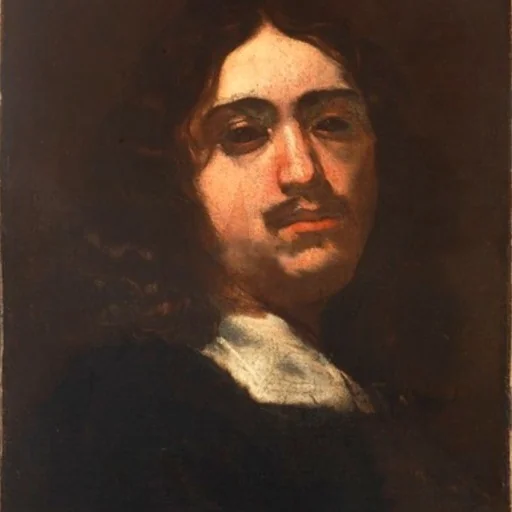
Artist
Jusepe de Ribera (Valencian:; baptised 17 February 1591 – 3 November 1652) was a Spanish painter and printmaker.