Artwork
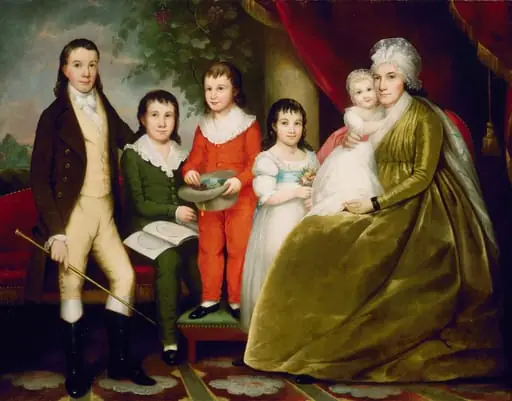
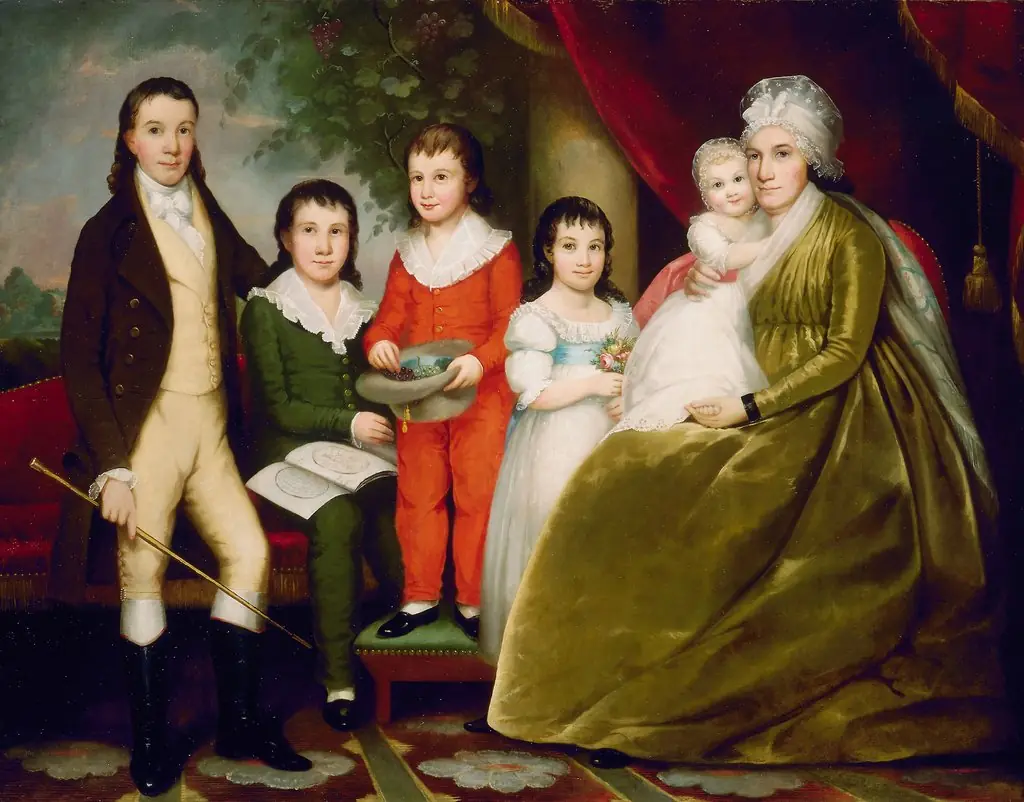
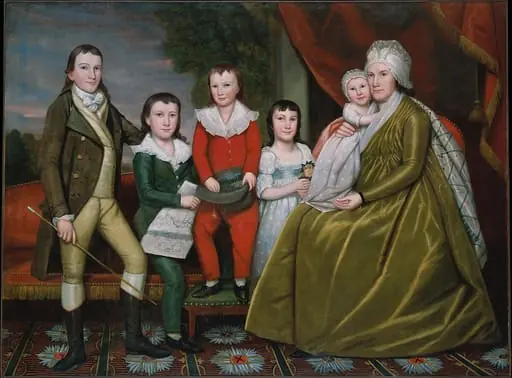
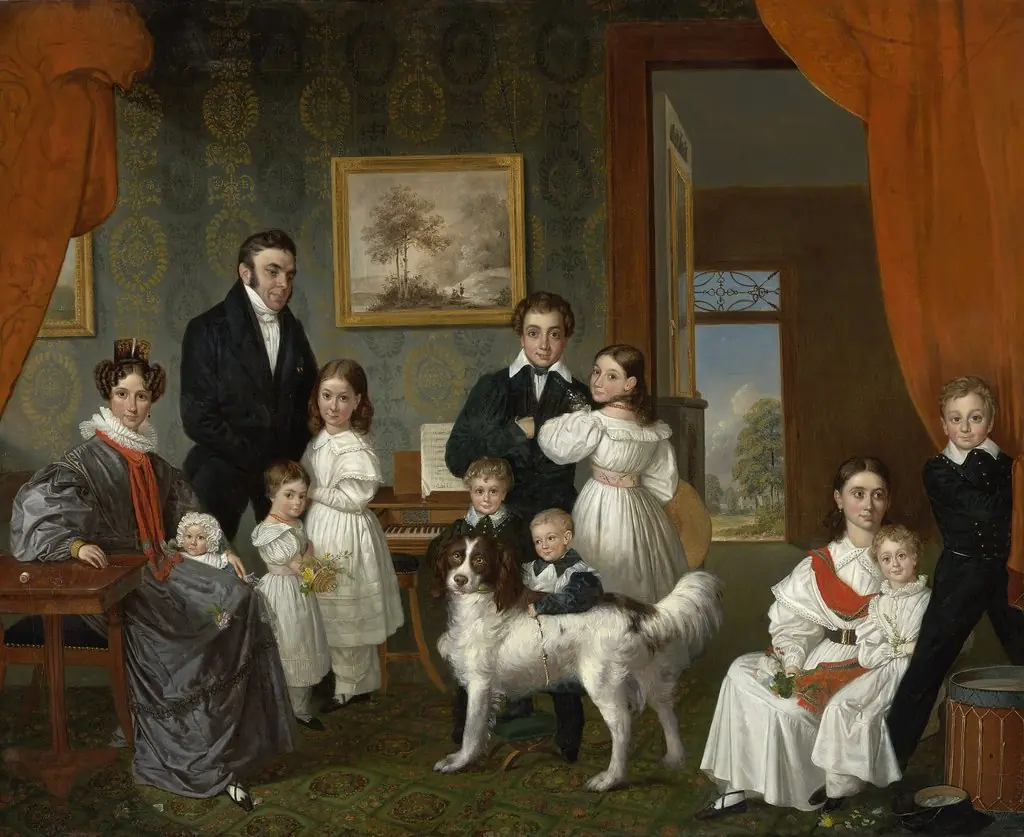
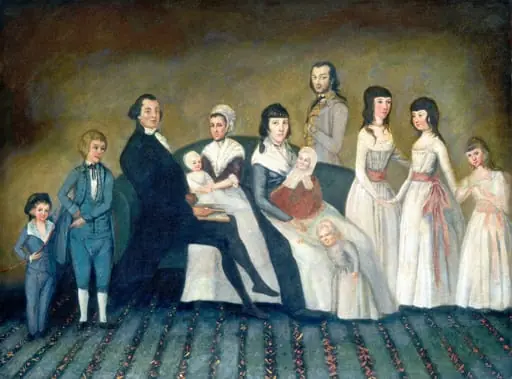
Dr. John Safford and Family
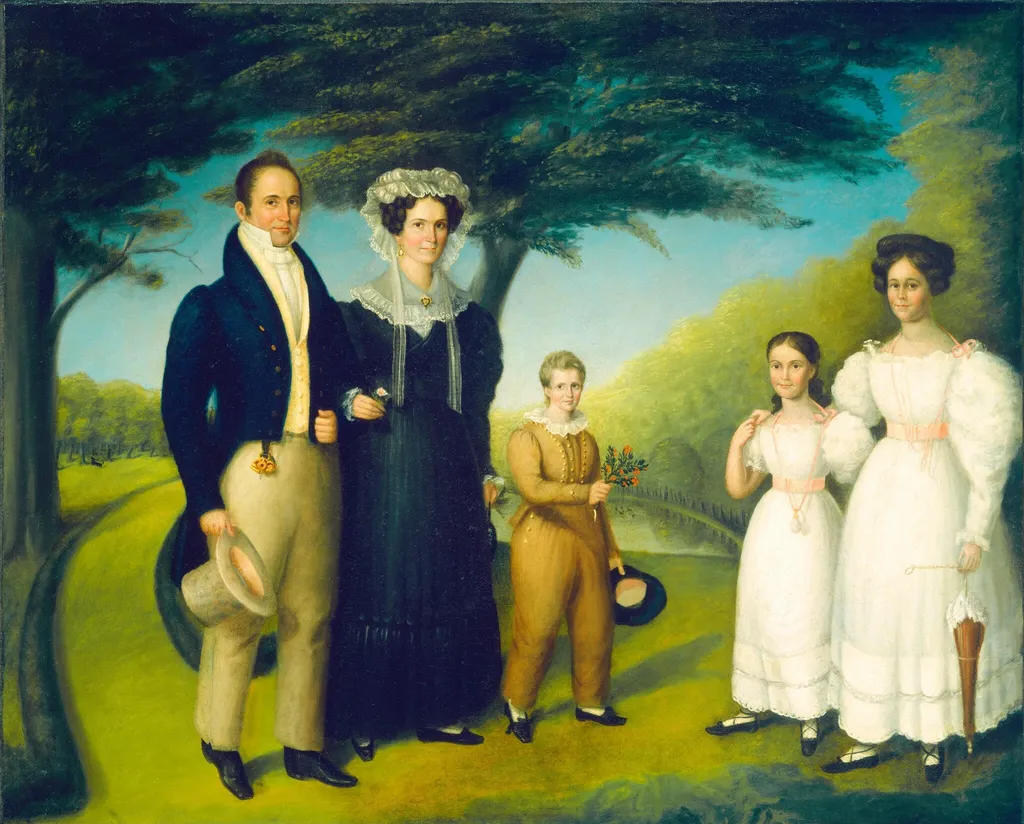
Dr. John Safford and Family is an oil painting by the Romanticist artist Reuben Rowley. It dates from 1830 and is held in the collection of the National Gallery of Art. Dr.
- Inscription
- Inscribed:on the lining fabric, in a later hand: DR JOHN SAFFORD / CLARISSA FRANCIS HULBERT / 2nd WIFE / JOHN + SUSAN MARTIN / MARY (ONLY CHILD OF / FIRST MARRIAGE) / WATERTOWN, N.Y. / C. 1830
About this work
Overview
John Safford and Family is an oil on canvas painting attributed to Reuben Rowley, an itinerant American portraitist active in the early nineteenth century.
Dr. John Safford and Family is an oil on canvas painting attributed to Reuben Rowley, an itinerant American portraitist active in the early nineteenth century. Dated circa 1830, the work measures 69.5 by 85 centimeters (27 3/8 by 33 7/16 inches) and depicts a family group posed outdoors in a landscape setting. The painting is held in the collection of the National Gallery of Art in Washington, D.C., where it entered in 1980 as part of the bequest of Edgar William and Bernice Chrysler Garbisch. As a characteristic example of American naive portraiture from the period, the painting offers valuable insight into the conventions of family representation among the middle class in upstate New York and the broader cultural practice of itinerant portrait painting in the decades before the rise of photography.
Subject & Meaning
The painting portrays five figures arranged in a horizontal row on a grassy path beneath a large, dark-leaved tree. At left stands Dr. John Safford, identified by inscriptions on the lining fabric, dressed in a navy coat and cream trousers and holding a light-colored hat. Beside him appears Clarissa Francis Hulbert, his second wife, wearing a long black dress with white lace collar and cap and holding a small flower. At center, a child in a tan suit grips a small bouquet and a dark hat. To the right, two females in white dresses with puffed sleeves and pink sashes complete the group; the taller figure holds a closed parasol. A later hand inscribed the lining fabric with the names and relationships of the sitters, noting Mary as the only child of Safford's first marriage, and recording the location as Watertown, New York. The outdoor setting, with rolling green hills, scattered trees, and a pale blue sky, together with the family's formal attire and props such as the parasol and flowers, conveys prosperity, domestic harmony, and connection to the land. The even light falling from the left and the careful attention to clothing details suggest the family's social standing, while the landscape background places them within a specifically American pastoral environment. A distant figure near a fence on the left horizon adds a subtle note of everyday rural life beyond the immediate family group.
Technique & Style
The painting is executed in oil on canvas, a standard medium for American portraiture of the period. The brushwork is notably smooth and flat, with particular care devoted to the rendering of clothing details and facial features, while the landscape background is handled more broadly. This differential treatment, precise in the figures and looser in the setting, is characteristic of naive or folk portraiture, where artists often worked from formulaic conventions for the environment while concentrating technical effort on the likenesses and costumes of paying clients. The palette is dominated by deep greens, blacks, and whites, with touches of tan and pink in the children's clothing providing visual accent. Light falls evenly from the left, casting soft shadows to the right, creating a sense of clarity and directness without the dramatic chiaroscuro of academic painting. The composition's rigid horizontal arrangement of figures, all standing and facing forward, reflects the conventions of early American group portraiture, where the priority was the clear presentation of each family member rather than naturalistic interaction or narrative depth. The work is unsigned, which is not uncommon for paintings by itinerant artists of this period.
History & Provenance
The painting originated in New York State, specifically in Watertown, as indicated by the inscription on the lining fabric and the Garbisch collection records. Its early history remains unknown until it surfaced in Washington, D.C., where it was offered at Adam A. Weschler and Son on October 8, 1972, as lot 875. At this sale, it was acquired by Edgar William and Bernice Chrysler Garbisch, with Henry Coger acting as agent. The Garbisches, prominent collectors of American naive painting, bequeathed the work to the National Gallery of Art in 1980. It entered the museum's collection with accession number 1980.62.46. The painting has been exhibited publicly on several occasions, including an extended loan to Ambassador Stephen Ledogar for use at the U.S. Mission to the Mutual Balanced Force Reduction talks in Vienna, Austria, from 1988 to 1990, and subsequently for his use as U.S. Ambassador to the Arms Control and Disarmament Agency in Geneva, Switzerland, from 1990 to 1997. In 2010, it was included in the exhibition American Naive Paintings from the Garbisch Collection at the National Gallery of Art at the Taubman Museum of Art in Roanoke, Virginia.
Context
Reuben Rowley worked as an itinerant portrait painter in New York and New England during the period 1820 to 1840, a time when traveling artists filled the demand for likenesses among a growing middle class before the widespread availability of photography. His practice forms part of what Perry Townsend Rathbone documented in his 1933 Harvard M.A. thesis, Itinerant Portraiture in New York and New England, 1820-1840, a foundational study of this phenomenon. Rowley's work is discussed in Deborah Chotner's 1992 systematic catalogue, American Naive Paintings, published as part of The Collections of the National Gallery of Art Systematic Catalogue series, which treats the Garbisch collection holdings at length. The attribution to Rowley, indicated as attributed to rather than firmly assigned, reflects the challenges of documenting the work of itinerant painters who often left unsigned pictures and sparse records. The painting exemplifies the broader category of American naive painting, a term used to describe work by self-taught or minimally trained artists working outside academic traditions, which experienced significant scholarly attention and collector interest during the mid-twentieth century, partly through the efforts of collectors such as the Garbisches.
Legacy
Dr. John Safford and Family has secured its place in the literature of American art through its inclusion in major institutional publications and its role in representing the category of naive portraiture at the National Gallery of Art. Its reproduction in Chotner's 1992 catalogue and in the museum's American Paintings: An Illustrated Catalogue has made it accessible to scholars studying early nineteenth-century American visual culture. The painting's extended diplomatic loans during the late 1980s and 1990s also gave it unusual visibility as a representative of American heritage abroad. As a work from the Garbisch collection, it benefits from the prominence of that assembly, which helped elevate the status of American naive painting within major museum collections. The painting continues to serve as a document of family structure, social aspiration, and regional identity in the period, as well as a tangible example of the material culture of itinerant artistic practice in the northeastern United States.
Own this work as a print
Artist & collection