Artwork
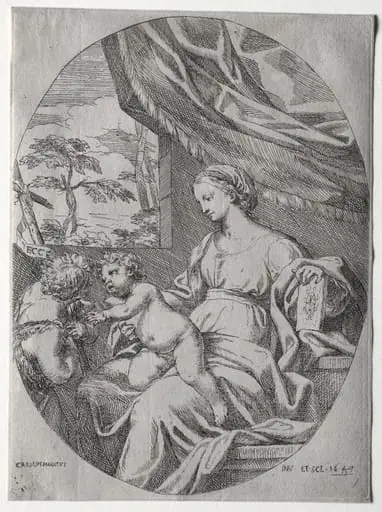
Madonna with the White Raven
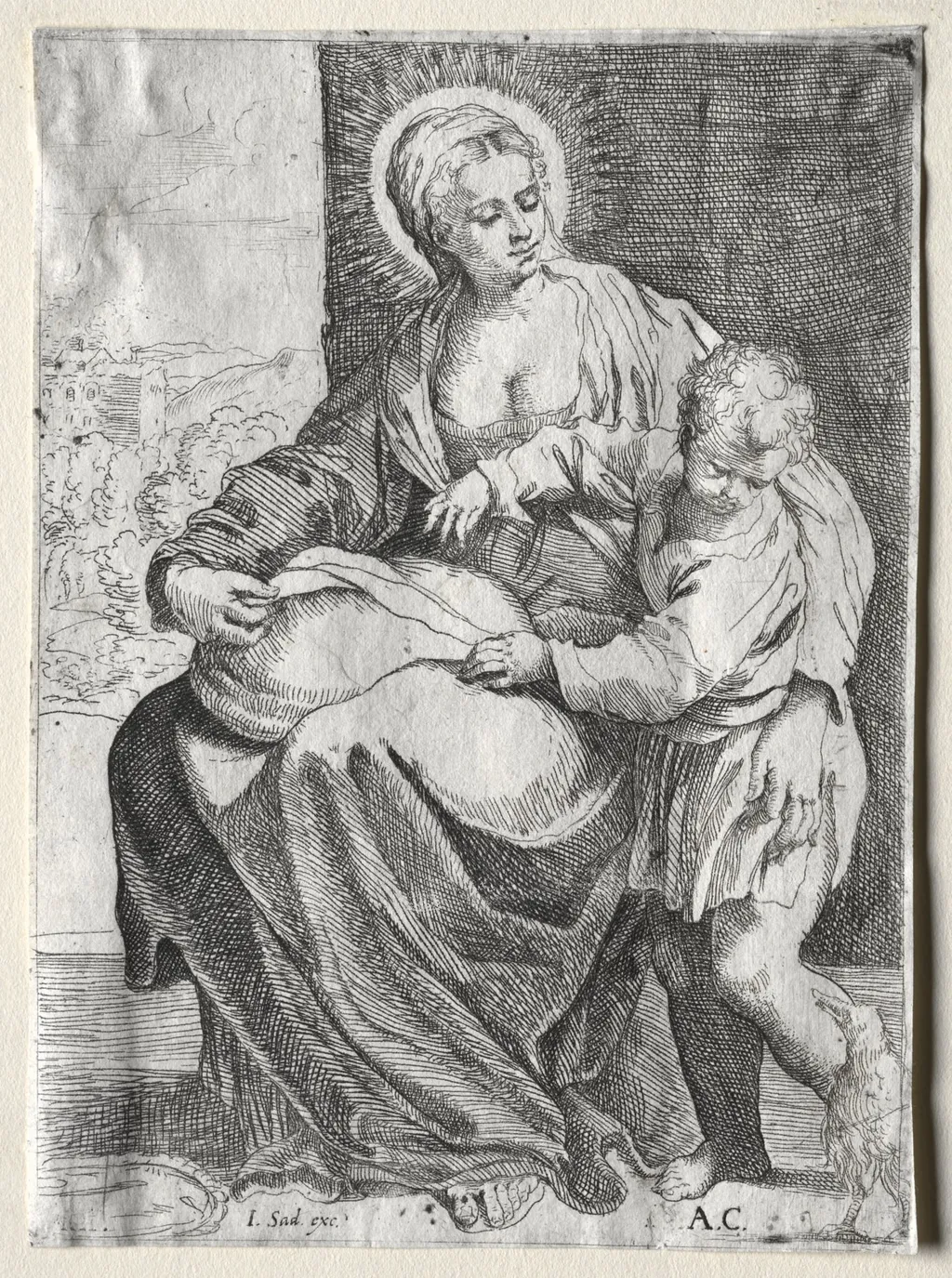
Madonna with the White Raven is a print by the Renaissance artist Annibale Carracci. It dates from 1504 and is held in the collection of the Cleveland Museum of Art.
- Accession no.
- 1925.53
- Credit line
- Gift of Ralph King
About this work
Overview
Madonna with the White Raven, created around 1504, is a religious print by Italian artist Annibale Carracci, a pivotal figure in the transition towards the Baroque style. The work features the Virgin Mary with the Christ Child and a white raven.
Subject & Meaning
The print depicts the Virgin Mary holding the Christ Child, accompanied by a white raven. The inclusion of the raven, often symbolizing prophecy or messengers in religious contexts, adds a layer of symbolic depth to the traditional Madonna and Child theme.
Technique & Style
Executed with precise lines and expressive shading, the etching utilizes chiaroscuro to create a sense of volume and depth, particularly in the draped robes and the figures' forms. The technique emphasizes the play of light from one side, accentuating the fabric's folds.
History & Provenance
Created by Annibale Carracci in circa 1504, the print is now part of the Cleveland Museum of Art's collection. Carracci worked in Bologna and Rome, influencing the development of Baroque through his blend of classical elements and dynamic energy.
Context
Produced during the early 16th century, Madonna with the White Raven reflects the artistic transitional period from the Renaissance to the Baroque. Carracci's work, often in collaboration with his brother Agostino and cousin Ludovico, contributed significantly to this stylistic evolution.
Own this work as a print
Artist & collection

Artist
Annibale Carracci ( kə-RAH-chee, UK also kə-RATCH-ee, Italian:; November 3, 1560 – July 15, 1609) was an Italian painter and instructor, active in Bologna and later in Rome.


 Virgin and Child with the Infant St. John
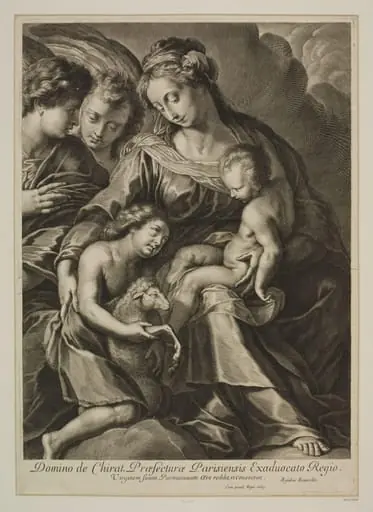 Virgin and Child with St. John
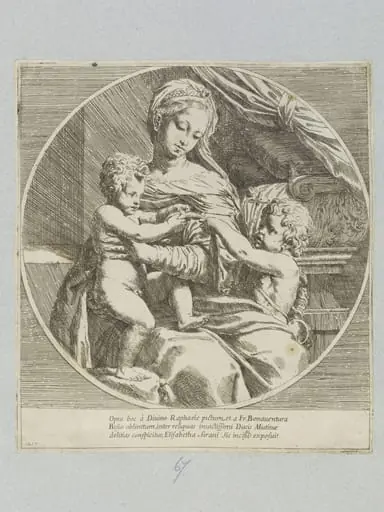 Untitled
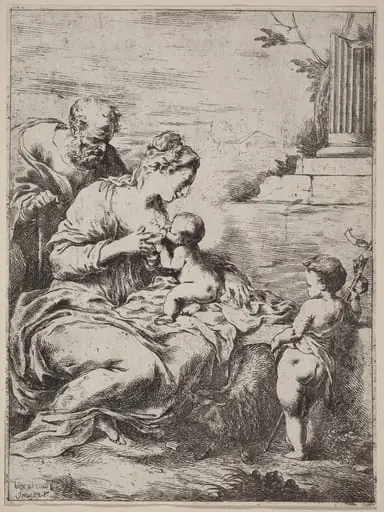 The Holy Family with Saint John
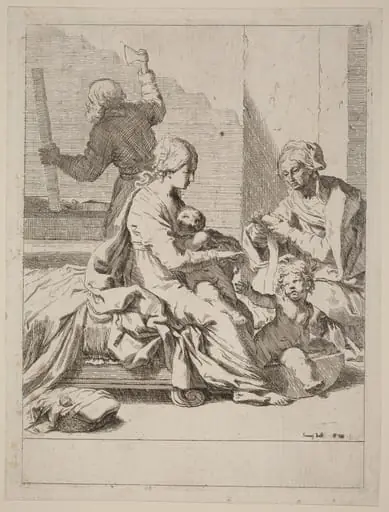 The Holy Family with Saint Elizabeth and Saint John the Baptist
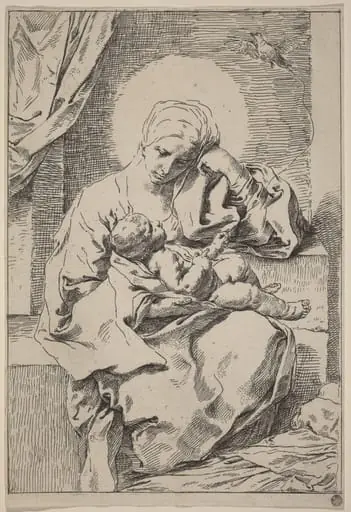 The Virgin and Child with a Bird
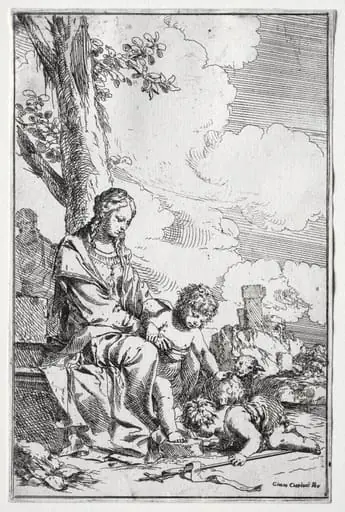 Holy Family with the Infant St. John
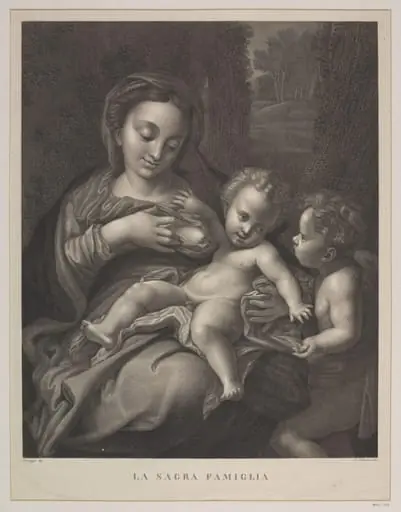 Holy Family
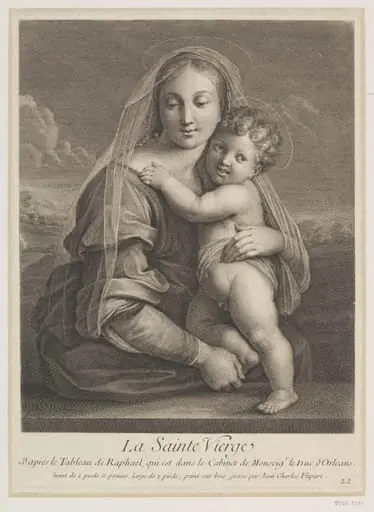 La Sainte Vierge
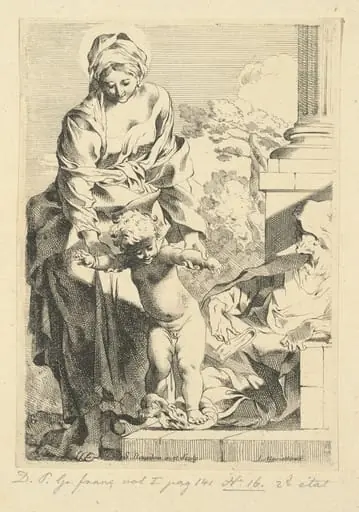 Virgin and Child Trampling Sin
- Madonna and Child with the Magdalen
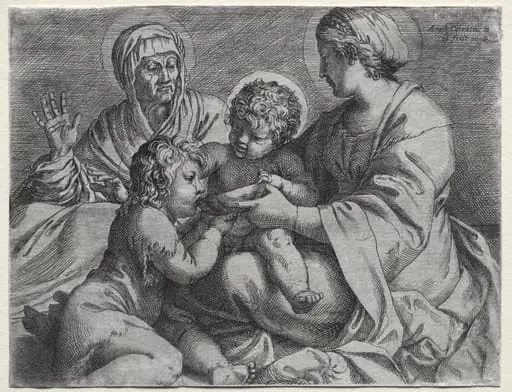 Madonna with the Bowl