Artwork
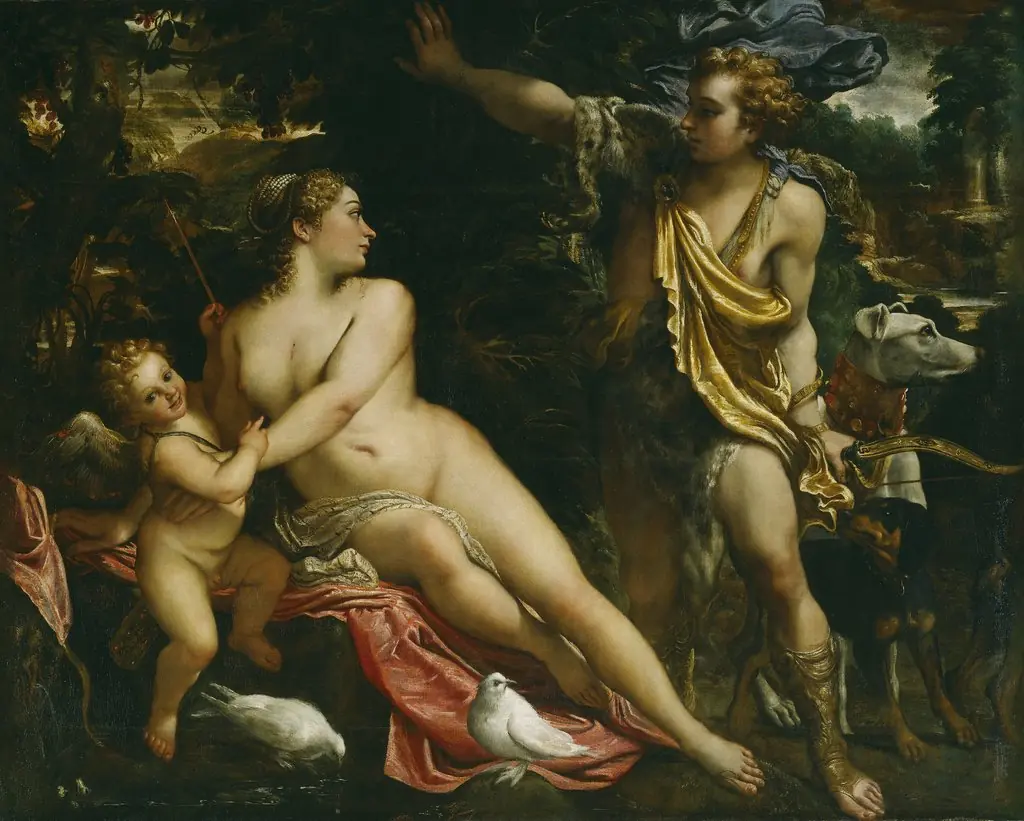
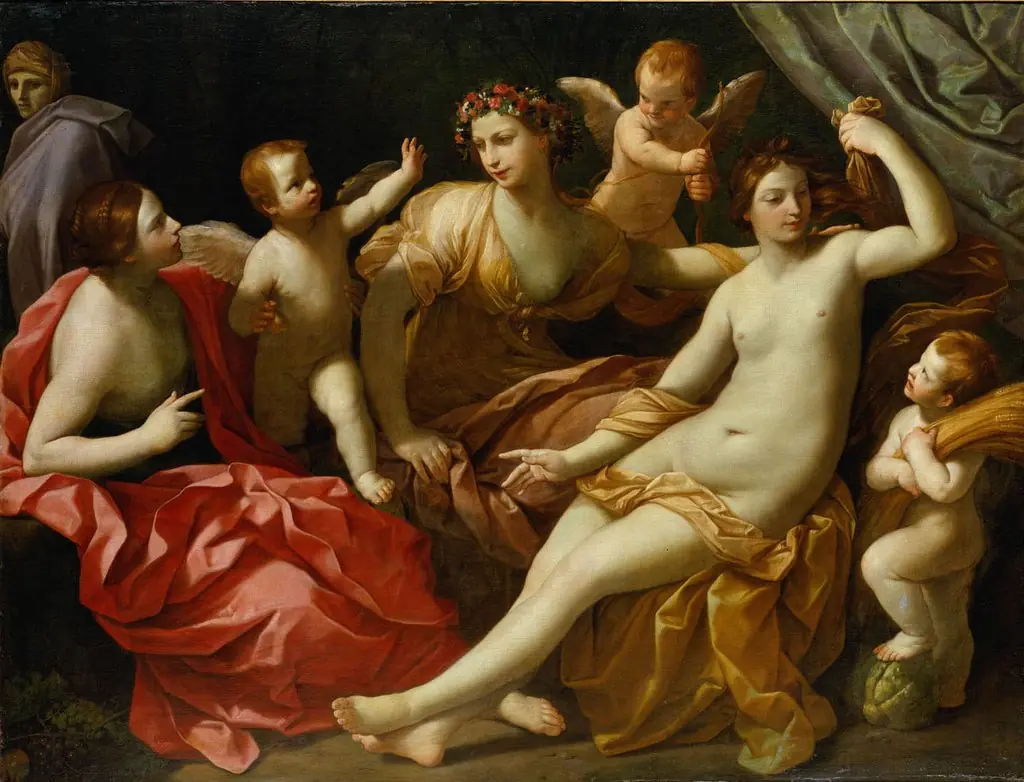
Venus Adorned by the Graces
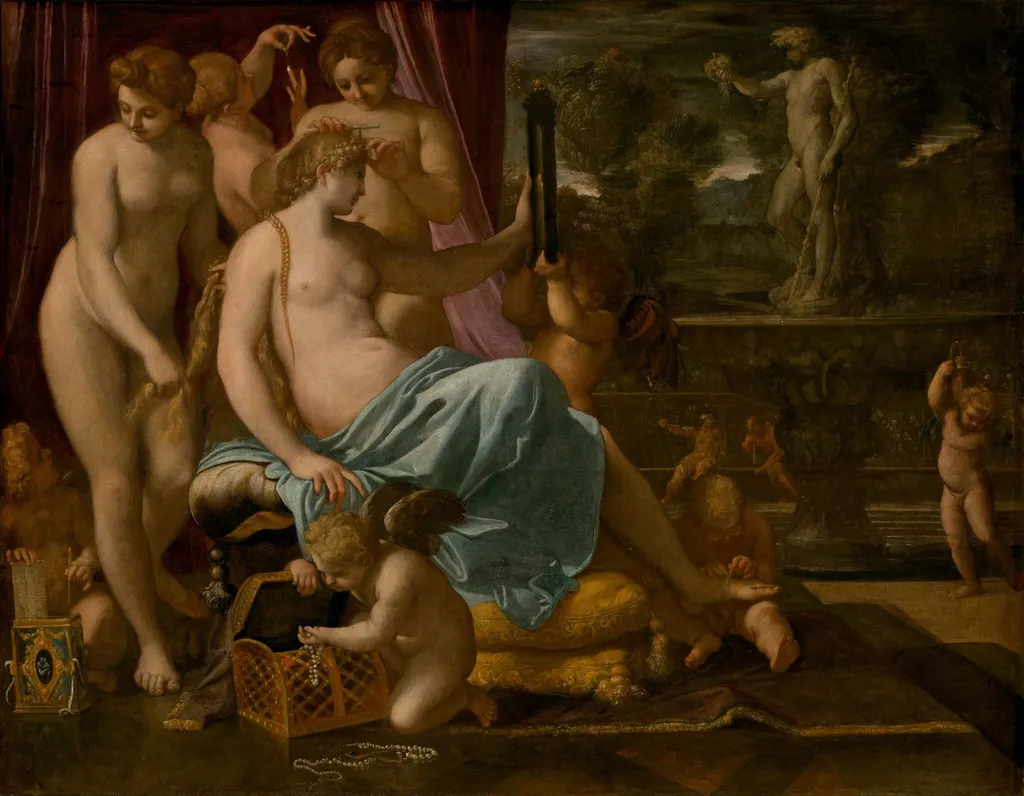
Venus Adorned by the Graces is an oil painting by the Early Baroque Italian artist Annibale Carracci. It dates from 1592 and is held in the collection of the National Gallery of Art.
About this work
Subject & Meaning
As a piece of mythological genre painting, the subject matter draws from classical antiquity, representing themes of beauty, divine favor, and preparation.
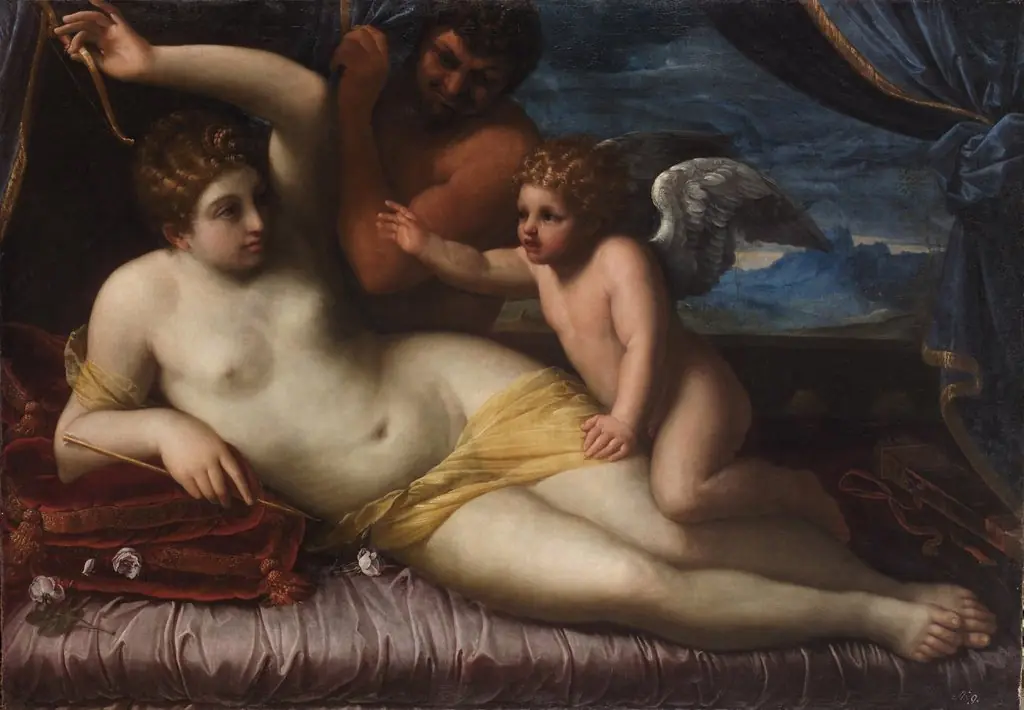
Painted by Annibale Carracci in 1590, this mythological work depicts Venus, the Roman goddess of love, as its central figure. The title, Venus Adorned by the Graces, indicates a specific narrative scene where the deity is attended and embellished by the Charites, or Graces, though the provided records primarily confirm the presence of Venus herself. As a piece of mythological genre painting, the subject matter draws from classical antiquity, representing themes of beauty, divine favor, and preparation.
The composition serves as an allegorical representation of idealized feminine beauty being enhanced by attendant virtues, a common motif in late Renaissance art that celebrates the harmonious interaction between major deities and their lesser divine companions.
Technique & Style
The painting Venus Adorned by the Graces is executed in oil on a canvas support that was originally a wooden panel and later transferred. Its material consists of oil paint applied to canvas, a technique typical of late‑16th‑century Bolognese practice. The work measures approximately 133 cm × 170.5 cm and dates to 1590, situating it within the mythological genre.
Stylistically, Carracci’s composition combines graceful figure modeling with a balanced arrangement of the three Graces, employing chiaroscuro to model forms and a luminous palette that emphasizes Venus’s centrality. The canvas remains stable within the National Gallery of Art’s collection, reflecting careful conservation of the transferred support.
History & Provenance
Annibale Carracci painted Venus Adorned by the Graces in 1590 in oil on panel, later transferred to canvas. The work's earliest documented owner was Alessandro Tanari of Bologna, in whose collection it was recorded by 1638 in an inventory of May 1640 compiled by Vincenzo Pisani. It remained with the Casa Tanari in Bologna until 1828, when it was purchased from the family by James Irvine, acting in London and Rome on behalf of Sir William Forbes, 7th Baronet of Pitsligo.
Forbes's pictures passed to his son, Sir John Stuart Hepburn Forbes, 8th Baronet, whose collection was sold at Alexander Rainey's in London on 2 June 1842 (lot 29). Hugh Andrew Johnstone Munro of Novar owned the painting by 1854; it was offered at Christie's on 1 June 1878 (lot 19), where it was acquired by a buyer identified as "Dyer," likely the dealer William Dyer, for Sir John Charles Robinson. Robinson sold it the same year to Sir Francis Cook, 1st Baronet, beginning its long residence at Doughty House, Richmond, Surrey.
It descended through the Cook baronetcy to Sir Frederick Lucas Cook, Sir Herbert Frederick Cook, and Sir Francis Ferdinand Maurice Cook, 4th Baronet, who also kept it at Cothay Manor, Somerset. In February 1948 it was sold through Gualtiero Volterra in London to Count Alessandro Contini Bonacossi of Florence. The Samuel H. Kress Foundation, New York, purchased it in 1949 and gave it to the National Gallery of Art in 1961.
Venus Adorned by the Graces is currently held in the collection of the National Gallery of Art in Washington, D.C., specifically within the Samuel H. Kress Collection. The work entered the museum's holdings in 1961 as a gift from the Samuel H. Kress Foundation, which had purchased the painting in 1949. Prior to this acquisition, the panel (later transferred to canvas) resided at Doughty House in Richmond, Surrey, as part of the Cook family collection for several generations.
While specific public exhibition records are not detailed in the provided texts, the painting's provenance includes notable private viewings and sales, such as its appearance in the 1842 sale of Sir William Forbes's pictures in London and the 1878 Christie's auction of Hugh Munro's collection. The inventory history traces back to an early record in Bologna by 1638 within the Tanari family holdings.
Legacy
The painting remained in private collections before entering the National Gallery of Art in 1961 as a gift from the Samuel H. Kress Foundation, underscoring its recognized significance within the canon of Baroque mythological painting. Its documented provenance through the Cook family and subsequent acquisitions reflects its esteemed reputation among European art collectors. The work's inclusion in major exhibitions and scholarly catalogues, as recorded in its Wikidata entry, highlights its enduring influence on the study of Carracci's oeuvre.
Overview
Annibale Carracci, a prominent Bolognese painter, completed Venus Adorned by the Graces in 1592. This oil painting, originally on panel and later transferred to canvas, exemplifies the early Italian Baroque style. It presents a mythological subject, characteristic of the period's artistic interests and Carracci's evolving aesthetic.
Own this work as a print
Artist & collection

Artist
Annibale Carracci ( kə-RAH-chee, UK also kə-RATCH-ee, Italian:; November 3, 1560 – July 15, 1609) was an Italian painter and instructor, active in Bologna and later in Rome.