Artwork
The Burial of Christ
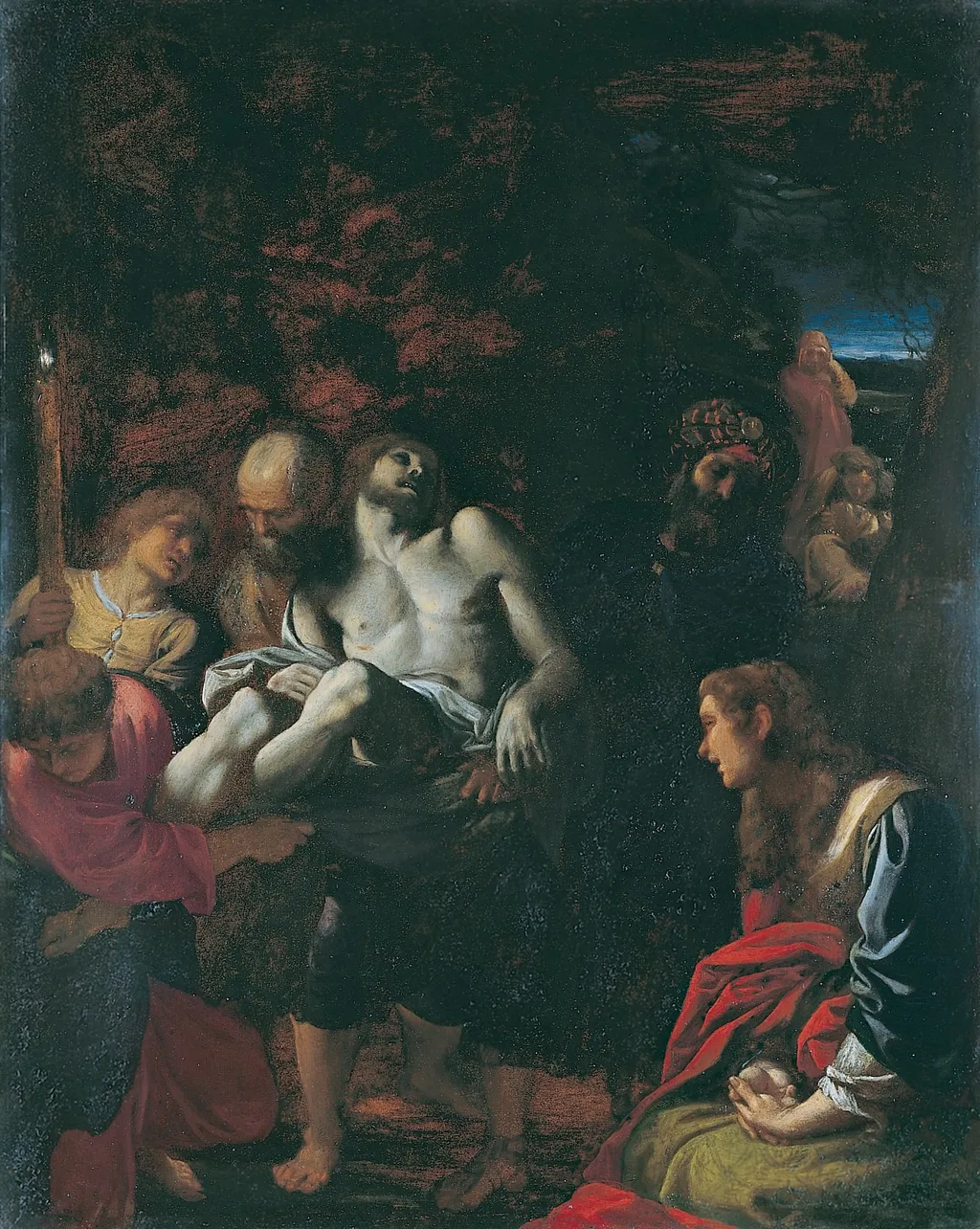
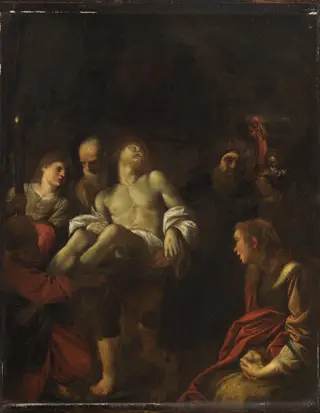
The Burial of Christ is an oil painting by the Mannerist artist Annibale Carracci. It dates from 1598 and is held in the collection of the Metropolitan Museum of Art.
About this work
Subject & Meaning
The painting depicts the Entombment of Christ, illustrating the moment Jesus's body is carried into a dark cave for burial.
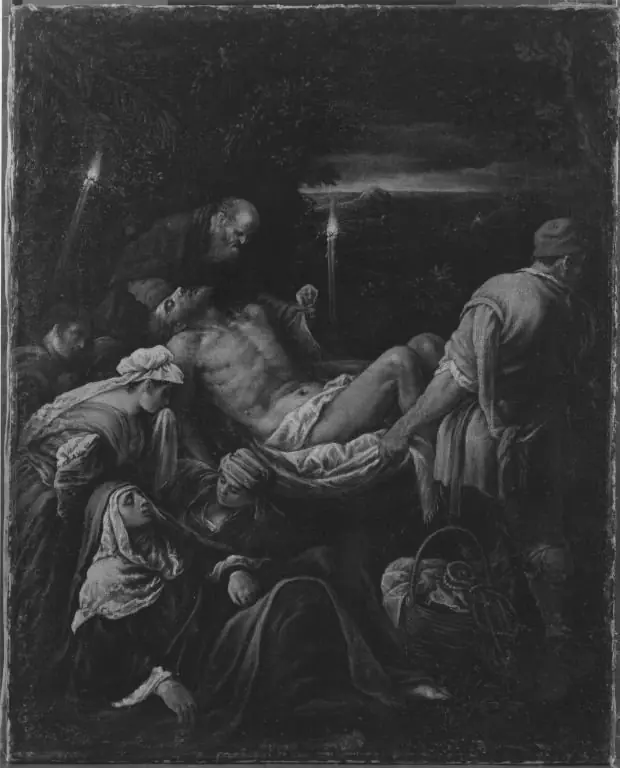
The painting depicts the Entombment of Christ, illustrating the moment Jesus's body is carried into a dark cave for burial. The composition places the viewer inside the tomb, facing the foreshortened figure of Christ, a perspective designed to foster full participation in the sorrowful event. Iconographically, the scene is defined by dramatic chiaroscuro; the only interior illumination comes from a single candle held by a bystander, casting a reddish glow on the rock walls and the mourners.
In the right corner, Mary Magdalene sits with clasped hands, painfully contemplating the scene. Symbolism is conveyed through the contrast between the enclosing darkness of the cave and the light of dawn breaking in the distance outside, where pious women stand. This interplay of light and shadow, alongside the positioning of the semi-erect body, heralds the emotional intensity of Baroque painting while referencing earlier works by Federico Barocci and Ludovico Carracci.
Technique & Style
Executed on copper in oil in 1598, The Burial of Christ employs a small, reflective metal support that heightens the painting's luminous effects. Carracci's handling combines sharp chiaroscuro with a carefully controlled, directional light source, the candle held by one of the bearers, casting a reddish glow across the rocky interior and the figures' faces, while a distant dawn breaks through the cave's opening. The composition arranges the foreshortened body of Christ frontally within a shallow space, drawing the viewer into the scene; Mary Magdalene kneels to the right in a posture of grief. Stylistically, the work anticipates Baroque naturalism through its dramatic lighting, dynamic grouping of figures, and psychological immediacy.
History & Provenance
Annibale Carracci created The Burial of Christ in 1598 on copper for the Bolognese cleric Astorre Sampieri, who commissioned the work to present to a prominent Roman patron; Sampieri retained the original and later ordered a copy by Guido Reni. The painting remained in Sampieri's collection until it resurfaced on the art market, where a version was bought by the Metropolitan Museum of Art in 1998 and initially catalogued as a copy by Sisto Badalocchio. Subsequent study of its style and provenance led to its reattribution to Carracci, establishing its status as an original work of the late 16th-century Bolognese school.
The work remains in the museum's permanent collection; the sources do not record any later exhibitions or loans, and no specific accession number is cited.
Context
Annibale Carracci's The Burial of Christ (1598) holds a significant place in art history as a precursor to Baroque composition, using a viewer's perspective from within a dark cave to create dramatic immersion. Contemporary biographers Giovanni Pietro Bellori and Carlo Cesare Malvasia recorded that the work was commissioned by Astorre Sampieri, who ultimately retained the original copper painting rather than gifting it to a Roman dignitary. The painting's high status is evidenced by numerous copies, including those by Sisto Badalocchio and Guido Reni, which initially obscured the identification of the original.
Acquired by the Metropolitan Museum of Art in 1998 under the mistaken attribution of a copy, the work was later reattributed to Carracci based on its quality. Scholars note its stylistic connections to Federico Barocci's earlier altarpiece and Ludovico Carracci's Trinity with Dead Christ, highlighting Annibale's synthesis of lighting effects and emotional intensity.
Legacy
The Burial of Christ exerted a lasting influence on Baroque religious painting. Its dramatic candlelit chiaroscuro and frontal, participatory composition anticipated later treatments of the entombment, and the work was copied by other artists, including Guido Reni and Sisto Badalocchio. Contemporary biographers Bellori and Malvasia recorded the painting's commission for Astorre Sampieri and its subsequent reattribution after a 1998 market appearance, confirming the existence of the lost original.
The discovery of multiple copies and the Metropolitan Museum's acquisition cemented the work's reputation as a pivotal prototype for later artists.
Overview
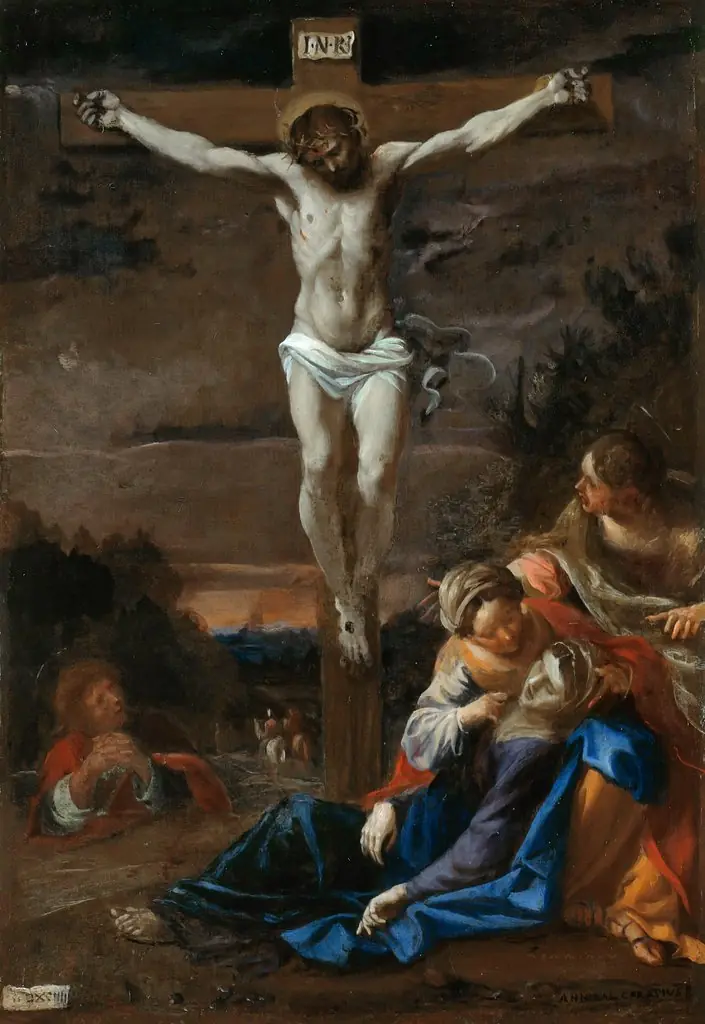
Annibale Carracci's "The Burial of Christ," painted around 1595, is an oil on copper work now housed at the Metropolitan Museum of Art. This intimate painting depicts the somber moment following Christ's crucifixion, as his body is prepared for entombment. The composition gathers several figures around the deceased, emphasizing the gravity and sorrow of the scene through its focused arrangement and dramatic lighting.
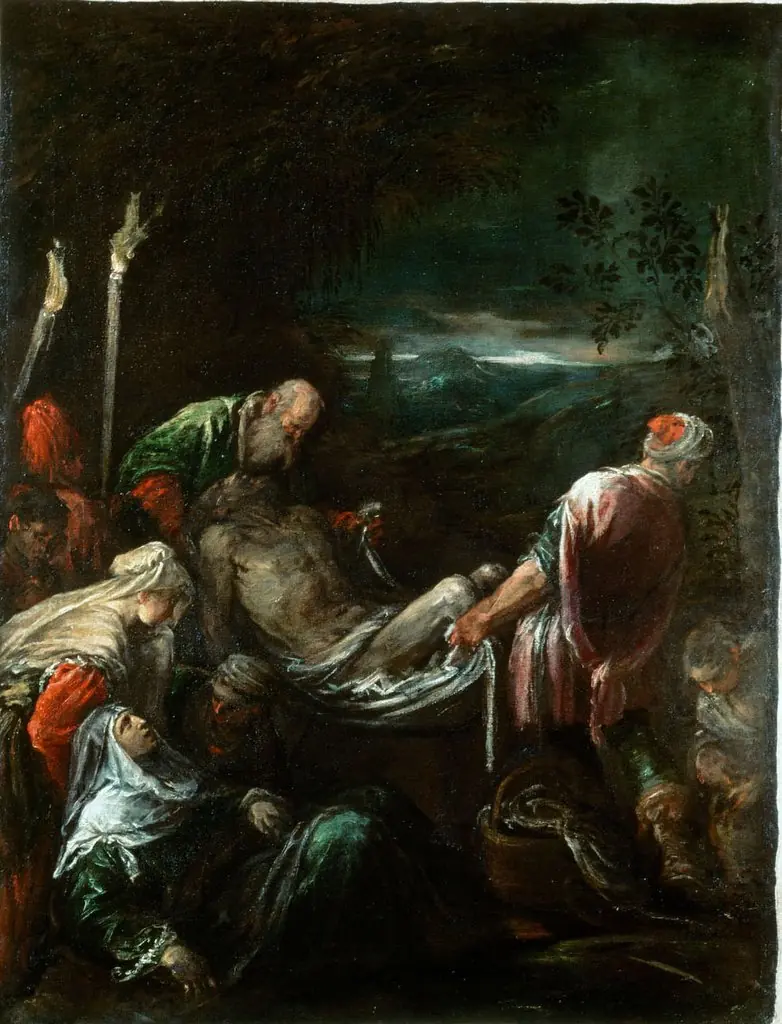
Own this work as a print
Artist & collection
Artist
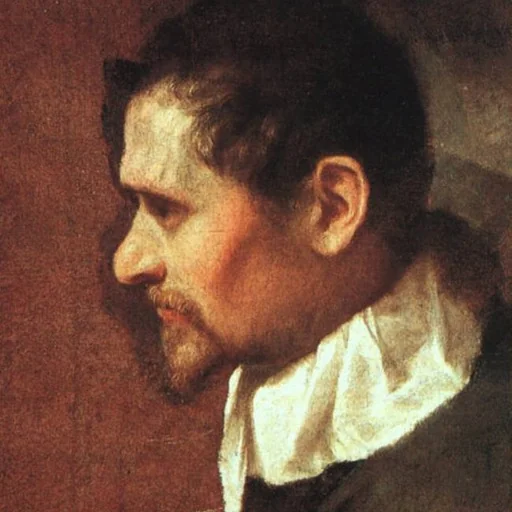
Annibale Carracci ( kə-RAH-chee, UK also kə-RATCH-ee, Italian:; November 3, 1560 – July 15, 1609) was an Italian painter and instructor, active in Bologna and later in Rome.