Artwork
River Landscape
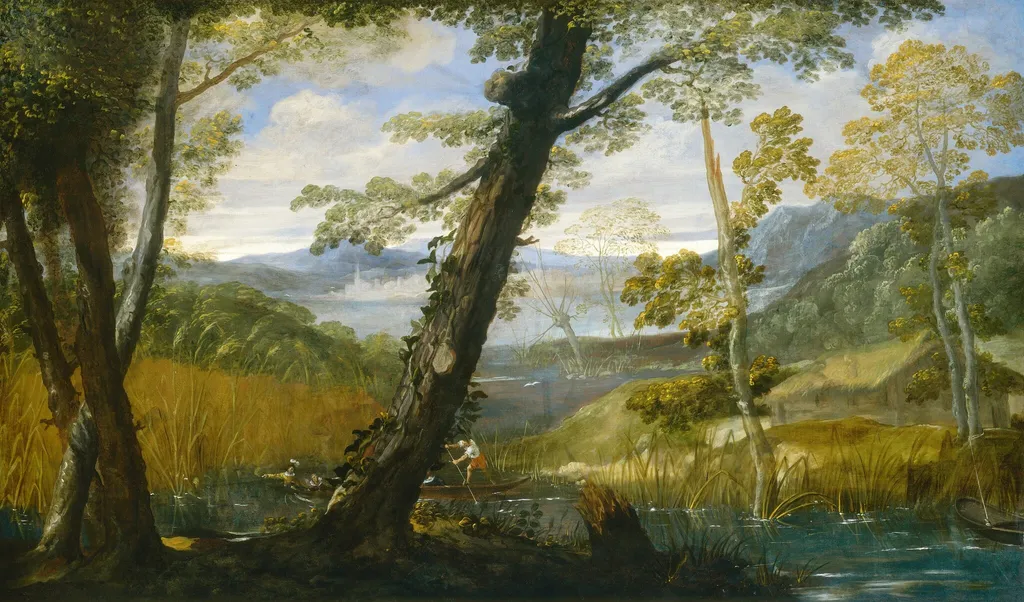
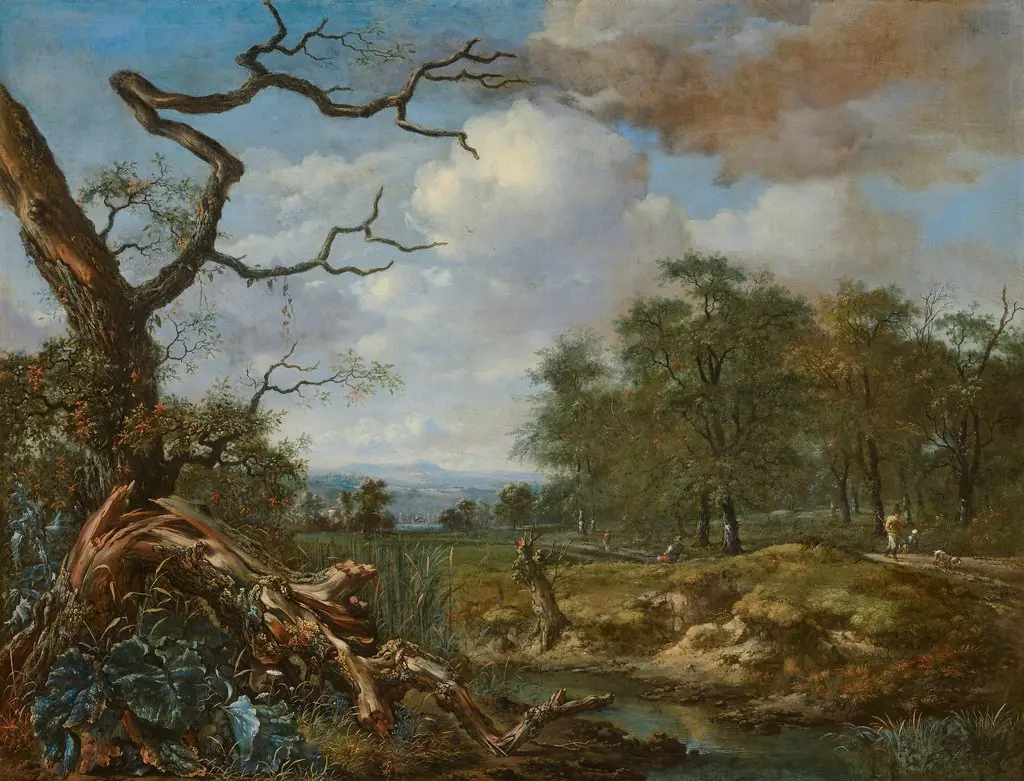
River Landscape is an oil painting by the Early Baroque Italian artist Annibale Carracci. It dates from 1590 and is held in the collection of the National Gallery of Art.
About this work
Subject & Meaning
This approach reflects broader trends in Bolognese art of the period, where landscape emerged as a genre distinct from its traditional function as a backdrop.
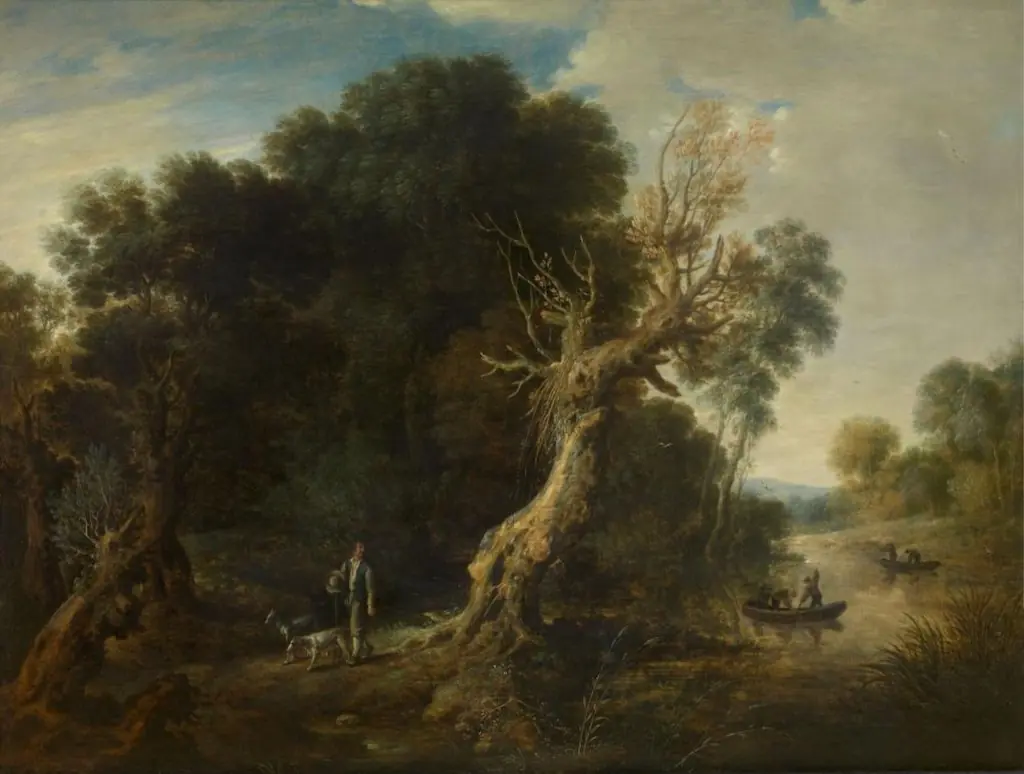
Annibale Carracci's River Landscape (c. 1590) depicts a quiet river scene framed by a dark foreground of trees and foliage, with a punt carrying two figures navigating the waterway. The composition emphasizes naturalism, avoiding overt religious or mythological narrative, aligning with Carracci's role in pioneering autonomous landscape painting in late sixteenth-century Italy. The river's winding path and the orderly recession of trees create a measured, atmospheric perspective, guiding the viewer's eye into the distance.
The absence of explicit iconography suggests the work's purpose as a celebration of the rural environment itself, rather than a symbolic or allegorical statement. This approach reflects broader trends in Bolognese art of the period, where landscape emerged as a genre distinct from its traditional function as a backdrop.
Technique & Style
River Landscape is an oil on canvas painted circa 1590 by Annibale Carracci, executed in a naturalistic idiom that foregrounds the countryside as an independent subject rather than a backdrop. The composition employs a dark foreground to frame a distant riverine vista, with receding trees of diminishing height guiding the viewer's eye into depth. The handling combines fluid, atmospheric brushwork in the middle ground with tighter detailing along the riverbank, where a punt and figures are rendered with careful observation. After the painting's acquisition, conservation removed discolored varnish and retouched abrasions and losses.
History & Provenance
River Landscape was painted around 1590 in Italy, probably worked up in Carracci's studio from on-site sketches, embodying a naturalistic view of the countryside independent of religious narrative. It entered the English collection of Sir John Rushout, 2nd Baron Northwick, who displayed it at Thirlestaine House; after his death in 1859 it was sold at Phillips (Thirlestaine House, 26 July–16 August 1859, lot 412), then attributed to Velázquez. It subsequently passed through Mrs. Garcia, William Heathcote, and a Sotheby's, London sale (24 June 1931, lot 31) before entering the stock of F. Kleinberger & Co.
A half-interest was acquired on 25 November 1947 by Durlacher Brothers, New York, and the full work was purchased on 19 May 1948 by the Samuel H. Kress Foundation, which gave it to the National Gallery of Art, Washington, in 1952 (accession no. 1952.2.9), where it remains as part of the Samuel H. Kress Collection.
Context
Annibale Carracci's River Landscape (c. 1590) emerged as a landmark in the evolution of autonomous landscape painting during the late sixteenth century. Alongside his Fishing and Hunting in the Louvre, this work exemplifies the Carracci workshop's departure from idealized backdrops toward naturalistic, topographically credible scenes rendered from field sketches. By the mid-nineteenth century, the painting entered British aristocratic collections under Sir John Rushout, 2nd Baron Northwick, where it remained until the 1859 dispersal of his holdings.
Misattributed at sale to Velázquez, its correct authorship was restored only after decades of connoisseurship debates. Acquired by the Samuel H. Kress Foundation in 1948 and subsequently gifted to the National Gallery of Art, Washington, it has since been subject to conservation that removed discolored varnish and repaired abrasions, clarifying its luminous palette and atmospheric recession. Scholarship positions the work within the foundational moment when Italian Renaissance landscape emancipated itself from narrative subordination, establishing a paradigm that would influence later European landscape traditions.
Legacy
River Landscape entered the modern canon as a keystone of Carracci's naturalistic landscape practice, recognized for elevating rural scenery to an independent subject rather than a backdrop for narrative. Its later reputation was shaped by a prolonged misattribution to Velázquez following its sale in 1859 from the Northwick collection, an error corrected only in the twentieth century. Acquired in 1948 by the Samuel H. Kress Foundation and subsequently gifted to the National Gallery of Art, Washington, it became a touchstone for connoisseurship and conservation, notably after cleaning removed discolored varnish and retouched abrasions.
Its influence persists in studies of early modern landscape theory and in curatorial narratives that trace the genre's emancipation from heroic or religious frameworks.
Overview
Annibale Carracci's River Landscape, an oil on canvas from approximately 1590, is housed within the Samuel H. Kress Collection at the National Gallery of Art in Washington D.C. This work represents a significant moment in art history, as Carracci and his family members began to explore landscape painting as a genre in its own right, moving beyond its traditional role as mere background scenery for other subjects.
Own this work as a print
Artist & collection
Artist
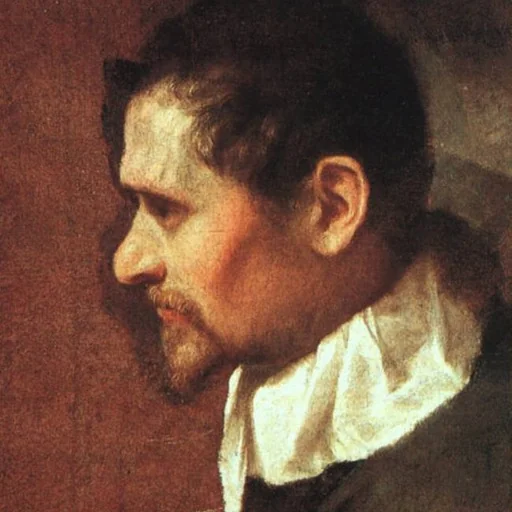
Annibale Carracci ( kə-RAH-chee, UK also kə-RATCH-ee, Italian:; November 3, 1560 – July 15, 1609) was an Italian painter and instructor, active in Bologna and later in Rome.