Artwork
Sleeping Beauty (Dornröschen)
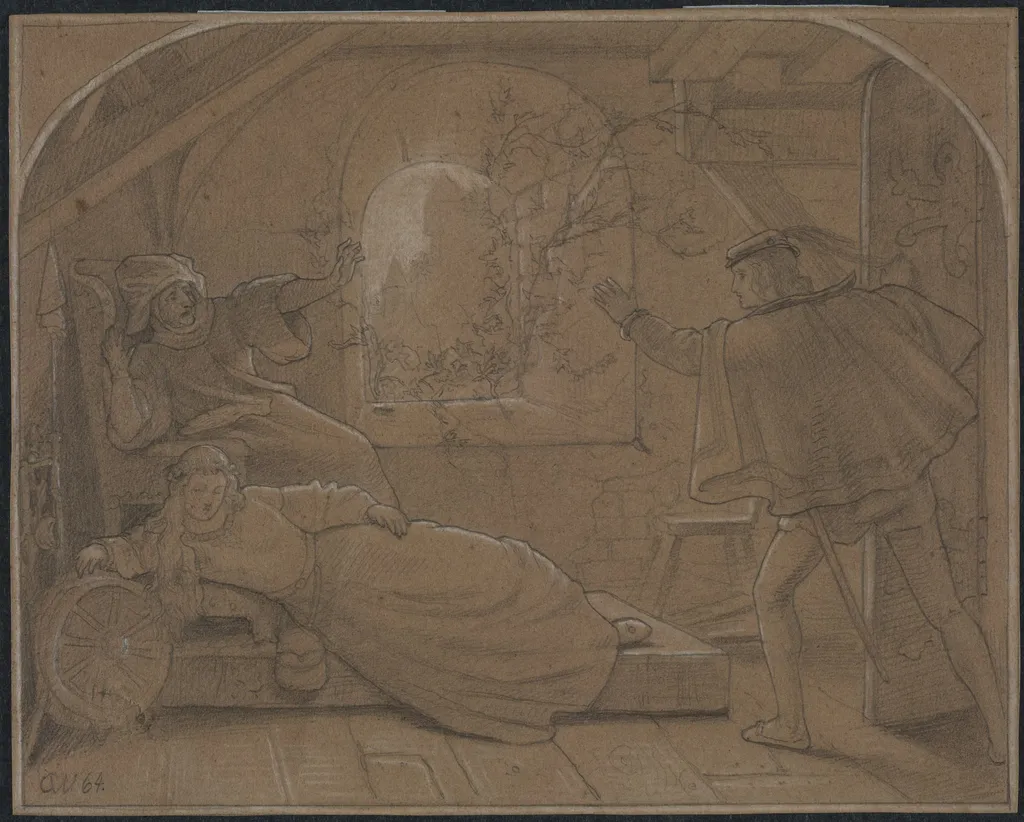
Sleeping Beauty (Dornröschen) is a drawing by the Impressionist artist Unknown. It dates from 1864 and is held in the collection of the Cleveland Museum of Art.
- Accession no.
- 2013.245
- Credit line
- Gift in memory of Helen Borowitz
About this work
Overview
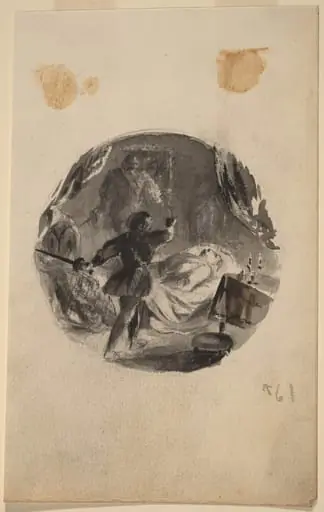
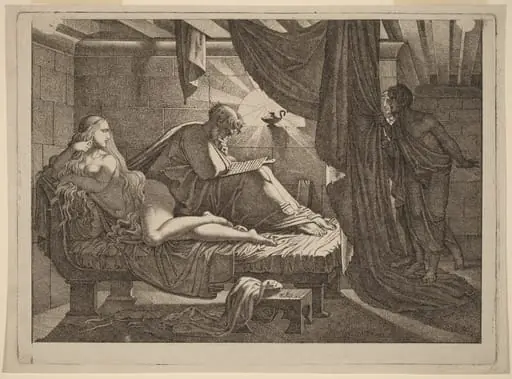
This drawing depicts a quiet, intimate scene: a man leans over a reclining woman on a bed, while two winged forms float nearby beside a soft, luminous orb. The interior is sparsely furnished, with a window revealing trees and a small table holding a closed box. The composition balances naturalistic detail with ethereal elements, suggesting a moment suspended between reality and myth.
Subject & Meaning
The figures appear to reference the fairy tale of Sleeping Beauty, with the man possibly a prince or guardian and the woman in enchanted slumber.
The figures appear to reference the fairy tale of Sleeping Beauty, with the man possibly a prince or guardian and the woman in enchanted slumber. The hovering winged beings and glowing orb imply supernatural intervention, not human action. The stillness of the scene and the absence of dramatic action emphasize contemplation over resolution, aligning with the quiet mystery of the tale rather than its climax.
Technique & Style
The drawing employs delicate linework and subtle tonal gradations to render the figures and furnishings with restrained realism. The orb emits a diffuse glow, achieved through careful shading rather than bold highlights, enhancing its otherworldly presence. The background remains minimal, directing focus to the central figures and the ambiguous light source that unites the earthly and the mystical.
History & Provenance
The work is attributed to a 19th-century artist associated with narrative illustration, though its exact origin and early ownership remain undocumented. It was likely created as a standalone piece rather than an illustration for a published text, suggesting personal or symbolic intent. No exhibition history or collector records are publicly available prior to its modern acquisition.
Context
Created during a period when literary fairy tales were being reimagined in visual art, the drawing reflects a broader interest in mythic themes through intimate, domestic settings. Unlike theatrical depictions of the Sleeping Beauty story, this work avoids spectacle, instead favoring quietude and psychological ambiguity, paralleling trends in Symbolist and early Modernist approaches to narrative.
Legacy
The drawing contributes to a quieter strand of 19th-century fantasy art that prioritizes mood over spectacle. Its restrained use of magical elements influenced later illustrators seeking to evoke wonder without overt fantasy tropes. Though not widely reproduced, it remains a quiet example of how mythic subjects were internalized in private artistic practice.
![View up a Street in Sorrento [verso]](https://artifactworldgallery.com/img/francois-edouard-bertin--view-up-a-street-in-sorrento-verso--d628dffbf459271a-w320.webp)
Artist & collection