Artwork
The Western Architectural Court
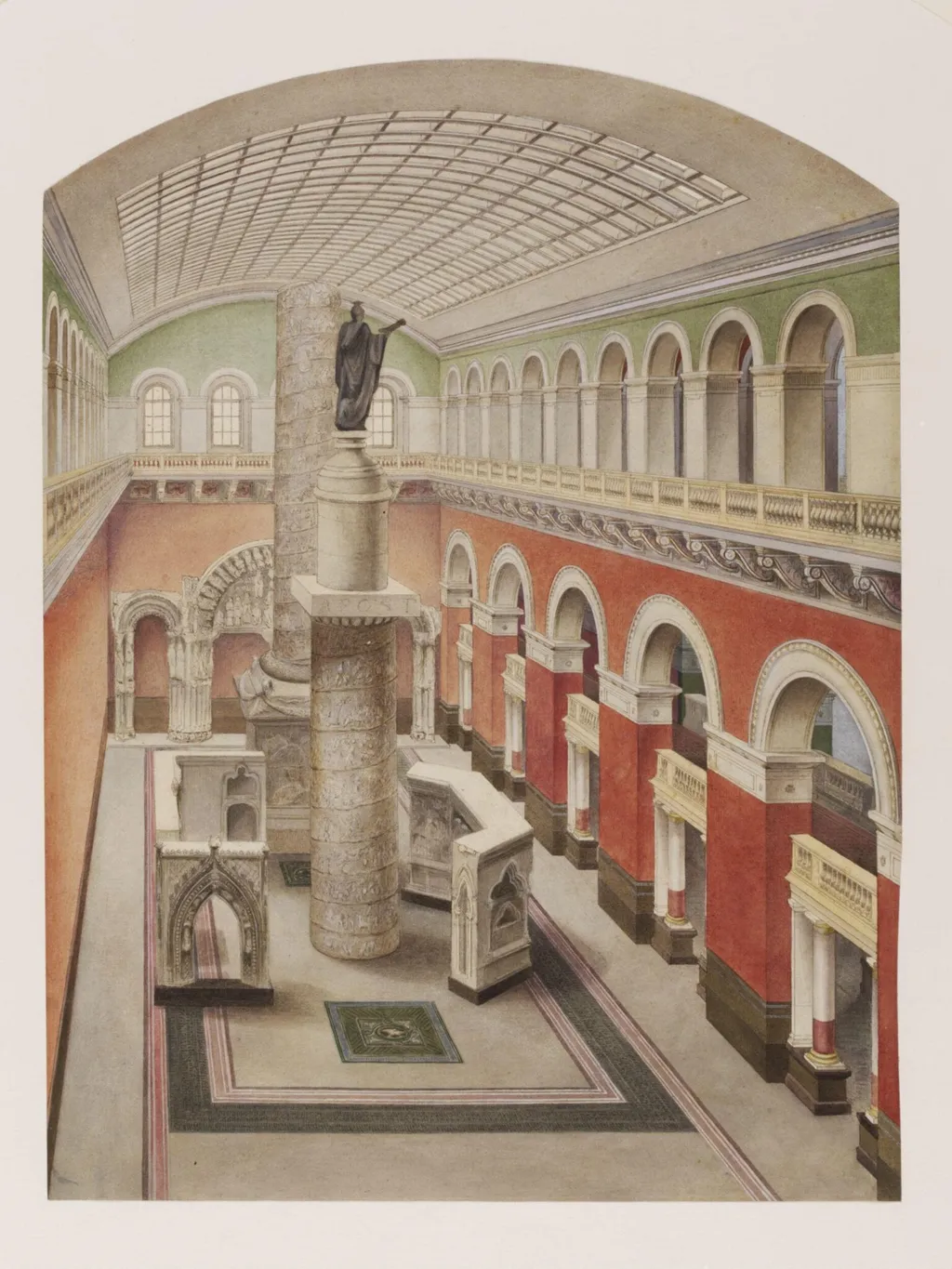
The Western Architectural Court is a watercolor work on paper by the Impressionist artist Unknown. It dates from 1873 and is held in the collection of the Victoria and Albert Museum.
About this work
Overview
This watercolour captures the interior of the Western Architectural Court at the Victoria and Albert Museum, viewed from the South Gallery.
This watercolour captures the interior of the Western Architectural Court at the Victoria and Albert Museum, viewed from the South Gallery. The composition presents a two-level space with architectural elements rendered in precise detail. Light enters through a glass dome above, illuminating polished stone flooring and sculptural features. The work exemplifies a careful observation of spatial relationships and material surfaces, typical of 19th-century architectural studies.
Subject & Meaning
The scene portrays a museum gallery designed to display architectural fragments, reinforcing the institution’s role in preserving historical design. Central fluted columns and arched doorways evoke classical antiquity, while the statue atop the column suggests a reverence for classical ideals. The arrangement invites contemplation of form and function, reflecting the museum’s educational mission rather than narrative storytelling.
Technique & Style
Executed in watercolour, the painting employs transparent washes to suggest the sheen of stone and the diffused quality of daylight. Fine brushwork defines the texture of marble columns and the grain of wood balustrades. The artist avoids overt stylization, favoring accurate representation of light and surface, aligning the work with a restrained realism rather than impressionistic abstraction.
History & Provenance
Created during the late 19th century, the piece likely served as a documentary record of the museum’s evolving galleries. It may have been produced by a staff artist or a visitor commissioned to document architectural features. The work remains part of the V&A’s collection, consistent with its practice of preserving visual records of its own spaces and exhibitions.
Context
The Western Architectural Court was designed to house casts of significant European monuments, reflecting Victorian interests in comparative architectural history. Watercolours like this were commonly made to aid scholarly study or public education, bridging the gap between museum collections and academic audiences. The medium’s portability and clarity made it ideal for recording interior details before photography became widespread.
Legacy
This watercolour contributes to a broader archive of museum interiors from the period, offering insight into how cultural institutions presented historical artifacts. Its preservation underscores the value placed on visual documentation in 19th-century museology. While not widely exhibited today, it remains a quiet testament to the era’s commitment to recording architectural heritage with precision and care.
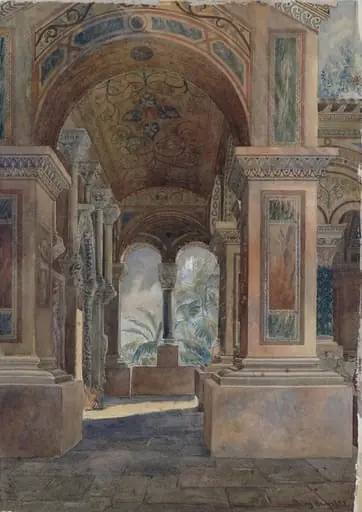
Artist & collection









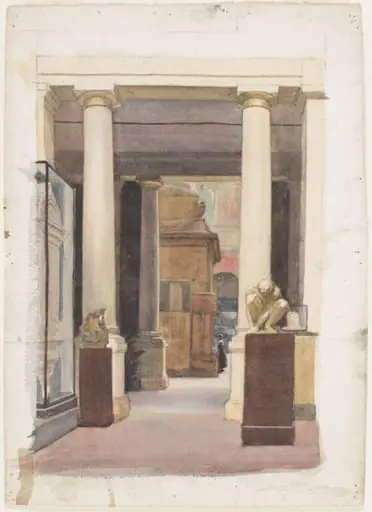 The entrance to the Cast Court containing Trajan's Column at the Victoria and Albert Museum
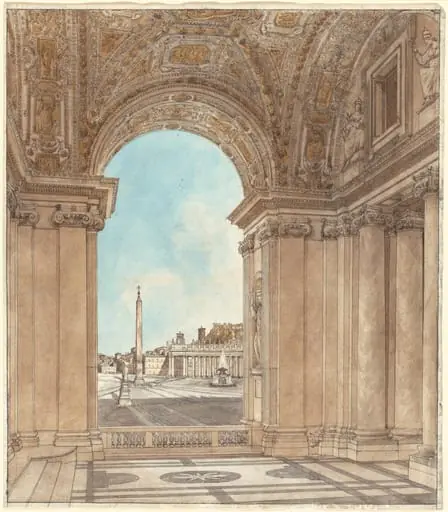 The Piazza of Saint Peter's Seen through an Arch of the Basilica
 View across the Bridge of Magnificence
 Marbled room with statues at Crystal Palace
 Architectural Fantasy
 H Beard Print Collection
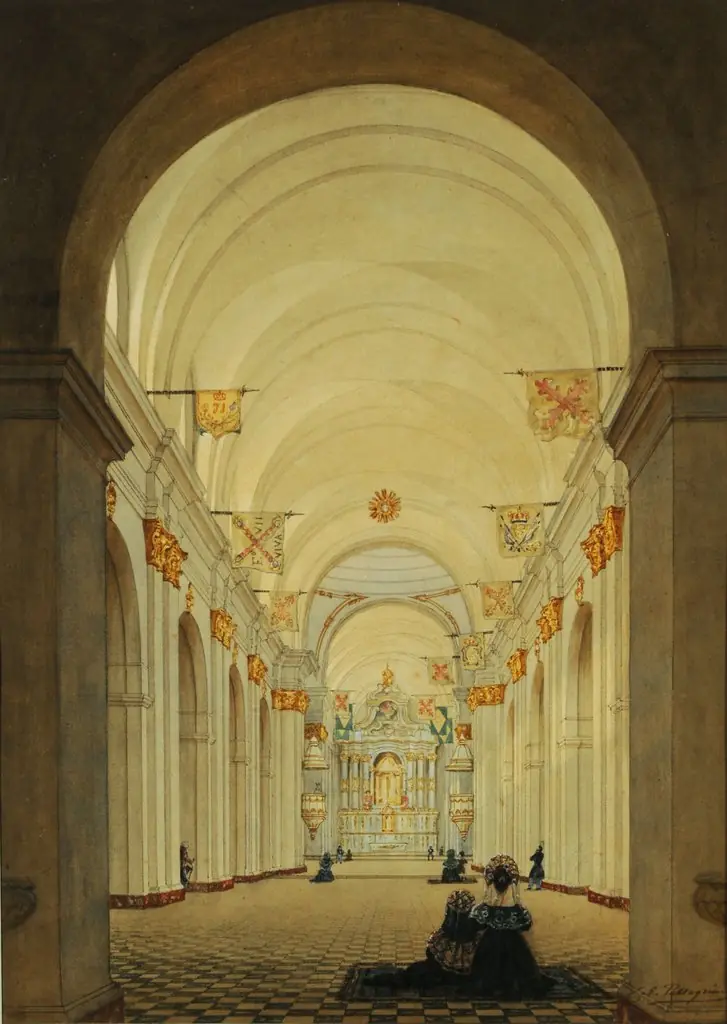 Interior of the Cathedral of Buenos Aires
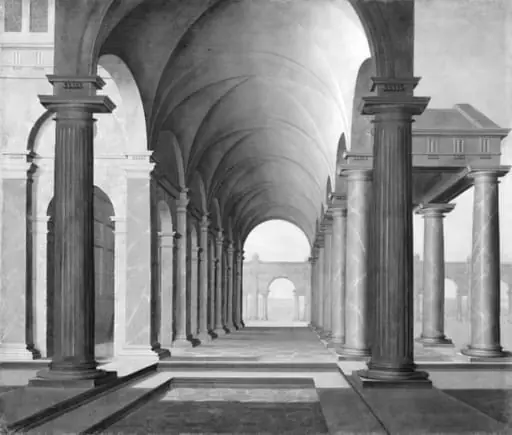 Architectural Fantasy
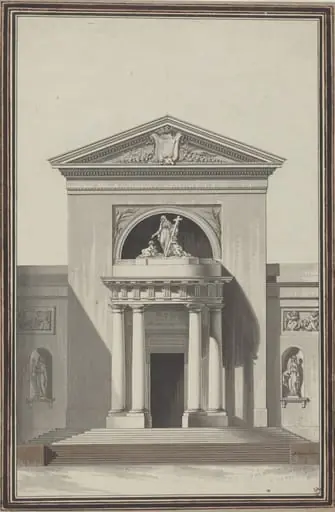 Facade for a Church with a Sculpture Representing Faith
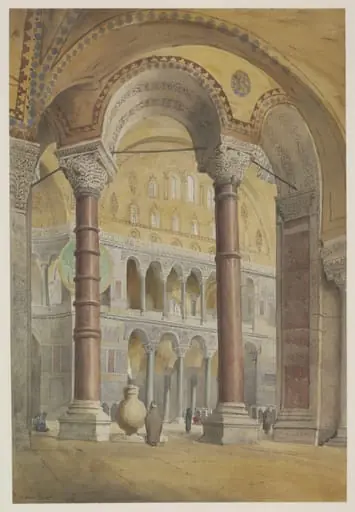 Interior of Santa Sophia, Constantinople