Artwork
Three Studies of a Woman Wearing an Elaborate Headdress
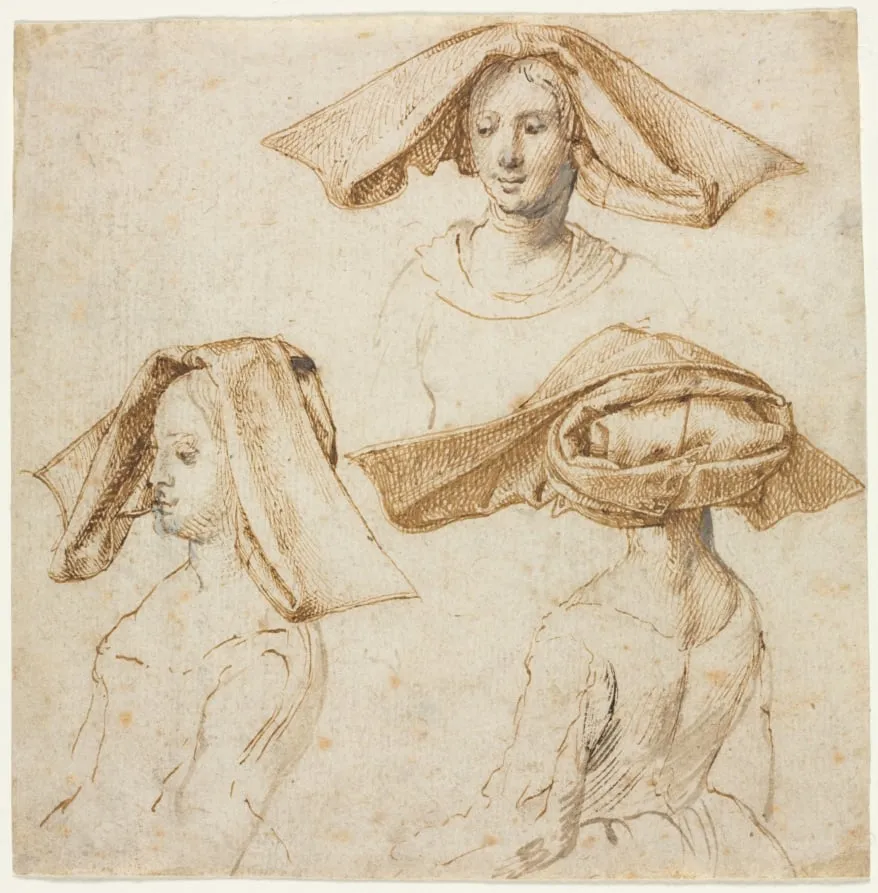
Three Studies of a Woman Wearing an Elaborate Headdress is a drawing by the Renaissance artist Unknown. It dates from 1500 and is held in the collection of the Cleveland Museum of Art.
- Accession no.
- 1987.31
- Credit line
- John L. Severance Fund
About this work
You see three quick sketches of the same woman, her head wrapped in a tall, pointy hood with stiff flaps that stick out like wings.
You see three quick sketches of the same woman, her head wrapped in a tall, pointy hood with stiff flaps that stick out like wings.
This hood wasn’t just for looks, it started as practical workwear, then became a fashion trend. The artist probably drew it as a reference for other painters, so they’d get the folds right. Over a century later, Rubens owned this very sheet.
Look up subject: netherlands(?), 16th century to see more of these quirky hats.
Overview
The sheet contains three rapid studies of a single female figure whose head is encircled by a tall, conical headdress with broad, folded flaps. Each sketch captures the same costume element from slightly different angles, emphasizing the volume and drapery of the fabric.
Subject & Meaning
The headdress, originally a functional hood designed to shield laborers from weather, had by the mid‑15th century been transformed into a stylised accessory for women of the middle and upper classes. Its exaggerated, starched form signified status and fashion rather than practicality.
Technique & Style
Executed in a light, gestural drawing style, the artist uses quick, confident strokes to delineate the folds and structure of the hood. The sketches serve as a visual reference, focusing on the interplay of line and shadow to convey the stiff, wing‑like flaps.
History & Provenance
Created around 1475 as part of a model book for a workshop, the drawing was later incorporated into the personal collection of the Antwerp painter Peter Paul Rubens in the early 17th century. Rubens added his own markings to the sheet, indicating its continued use as a reference tool.
Context
The depiction reflects a broader trend in the Low Countries during the late medieval period, when everyday workwear was appropriated by the affluent as a fashionable statement. Similar headdresses appear in contemporary portraiture and costume inventories of the era.
Artist & collection









- Man in Cloak, Seen from Behind
 Head of a Young Woman
 Man in Cloak, Seen from Behind
![Three Studies of a Woman's Head and a Study of Hands [recto], by Jean Antoine Watteau](https://artifactworldgallery.com/img/jean-antoine-watteau--three-studies-of-a-woman-s-head-and-a-study-of-hands-recto--e8d8dc404a1e0512-w320.webp) Three Studies of a Woman's Head and a Study of Hands [recto]
Three Studies of a Woman's Head and a Study of Hands [recto]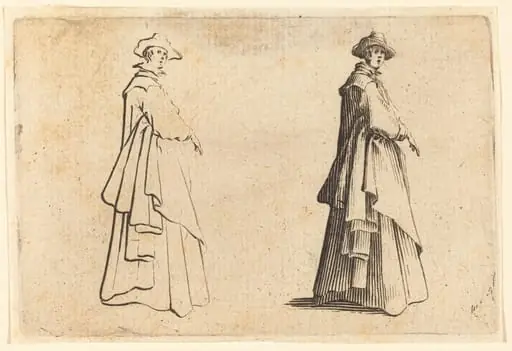 Lady in a Large Coat
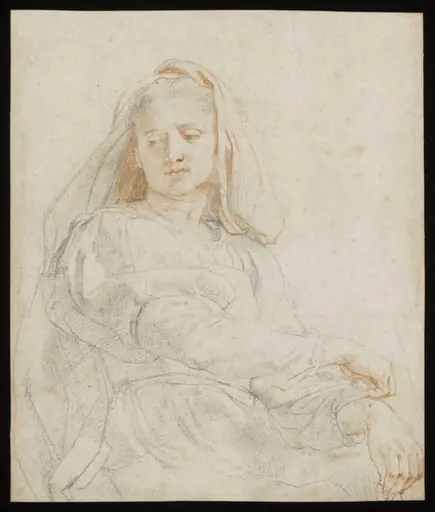 Study of a seated woman (The Virgin)
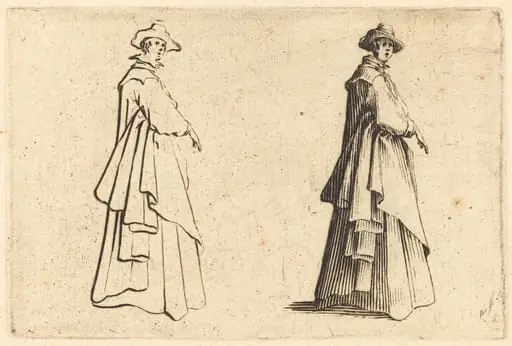 Lady in a Large Coat
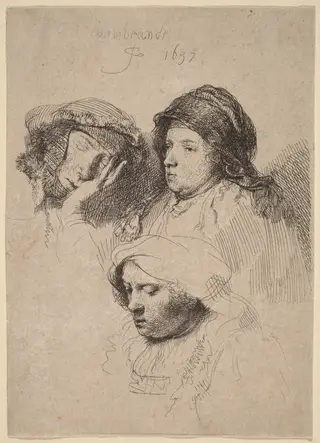 Three Heads of Women, One Asleep
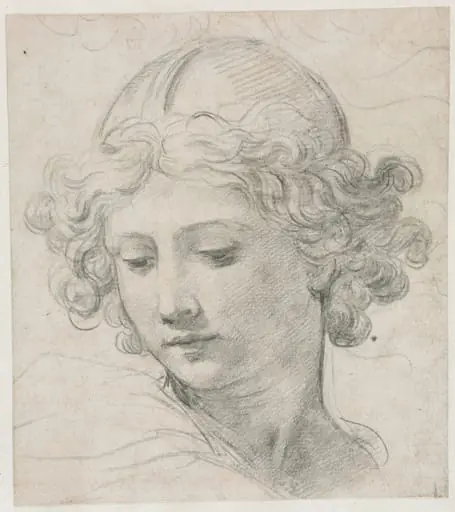 Study for the Head of St. Michael
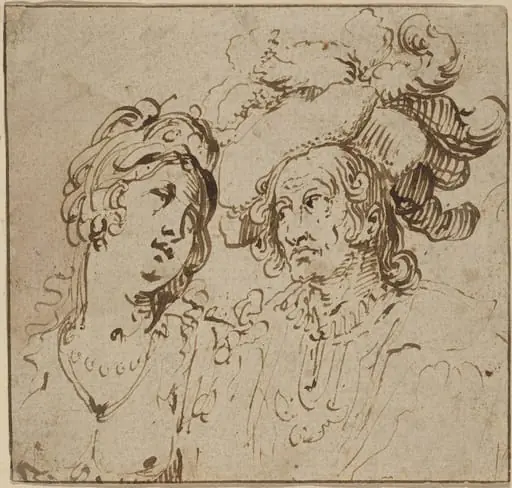 Cavalier with a Harlot
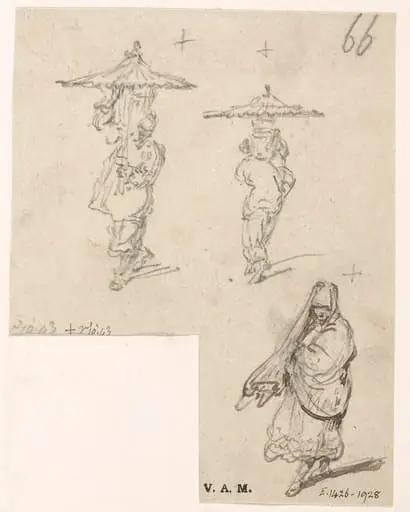 Three figure drawings
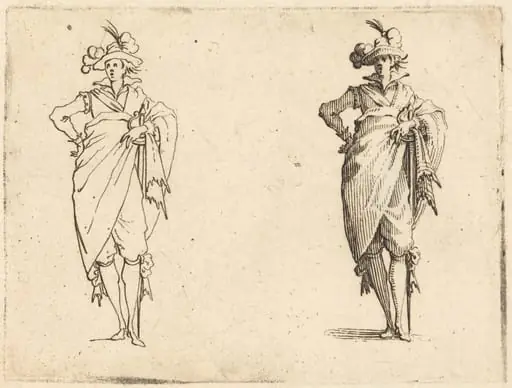 Gentleman Viewed from the Front with Hand on Hip