Artwork
Christ on the Cross
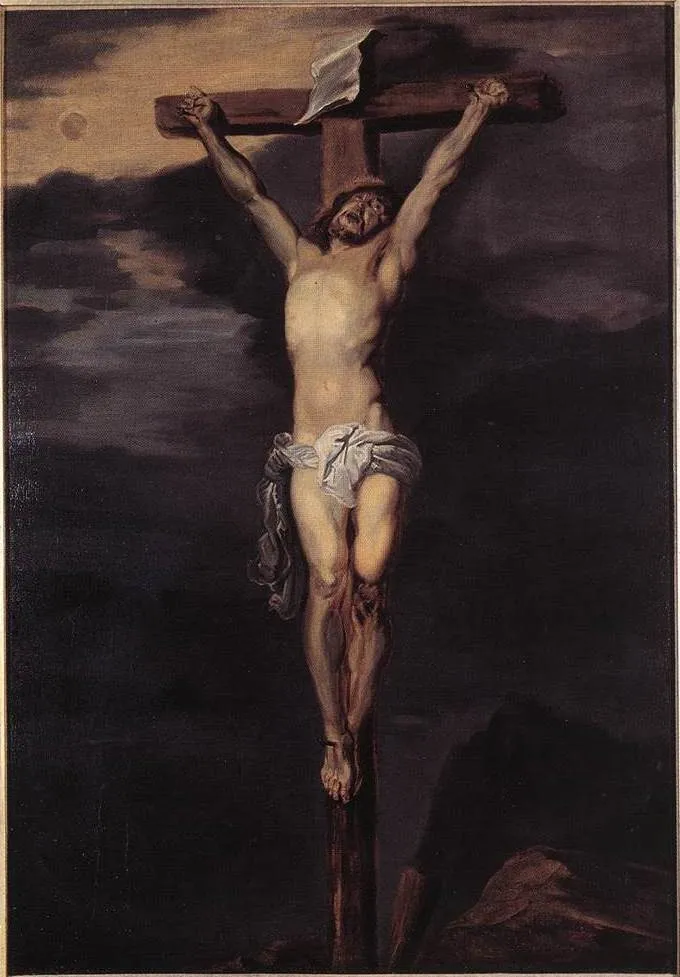
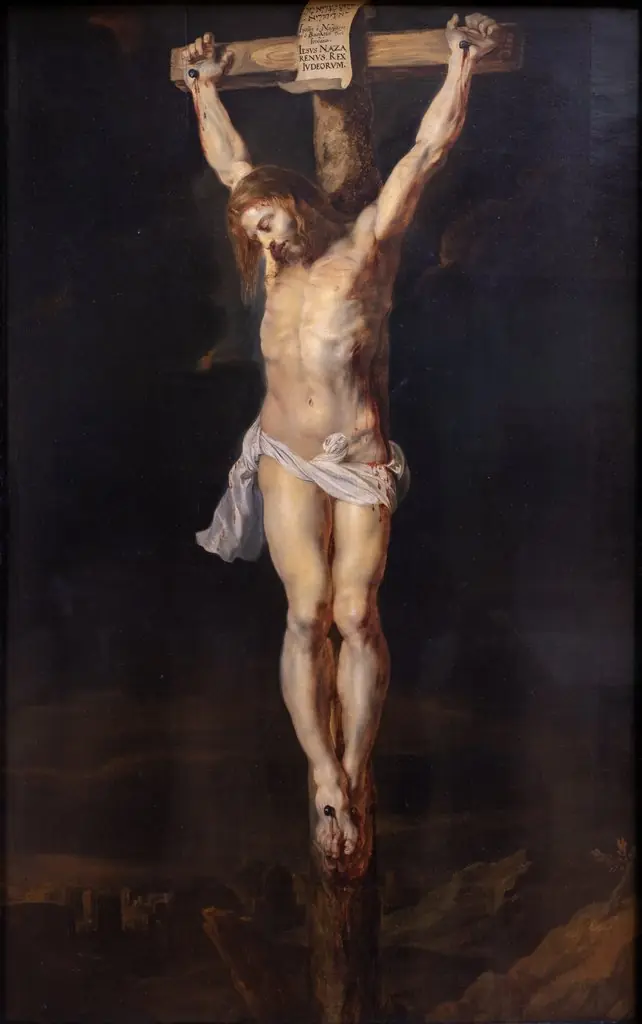
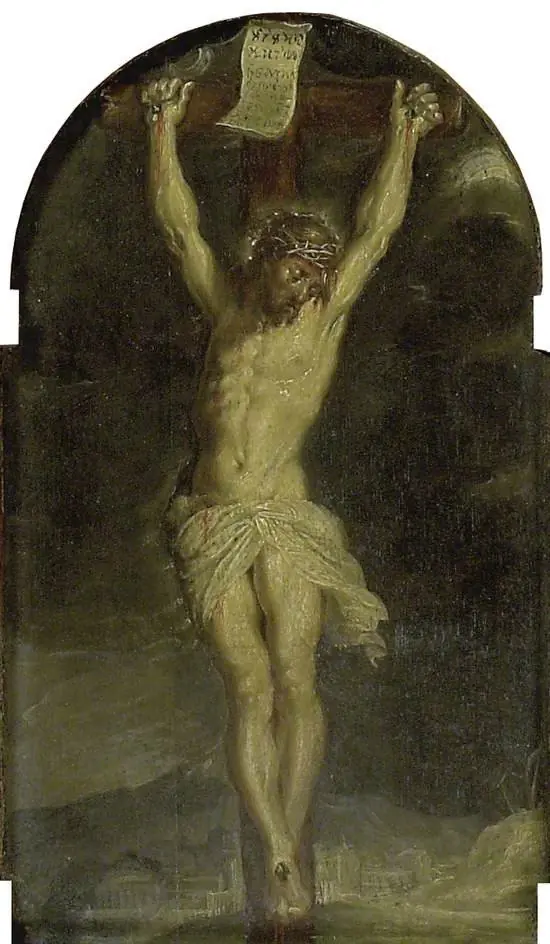
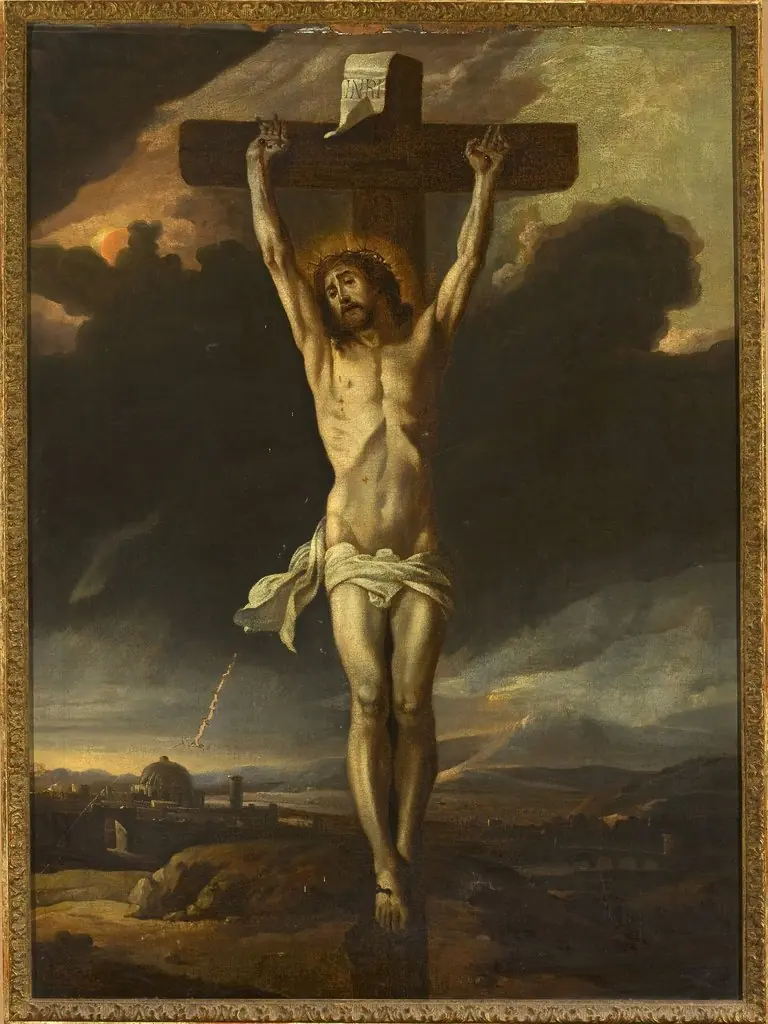
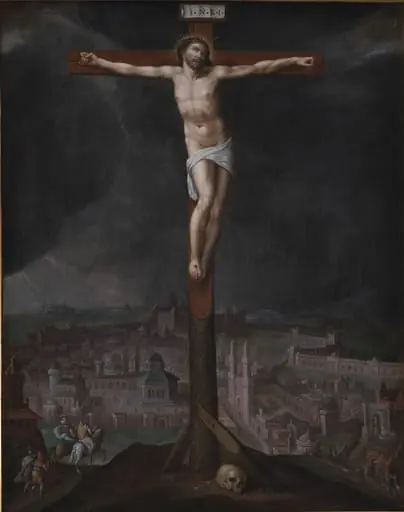
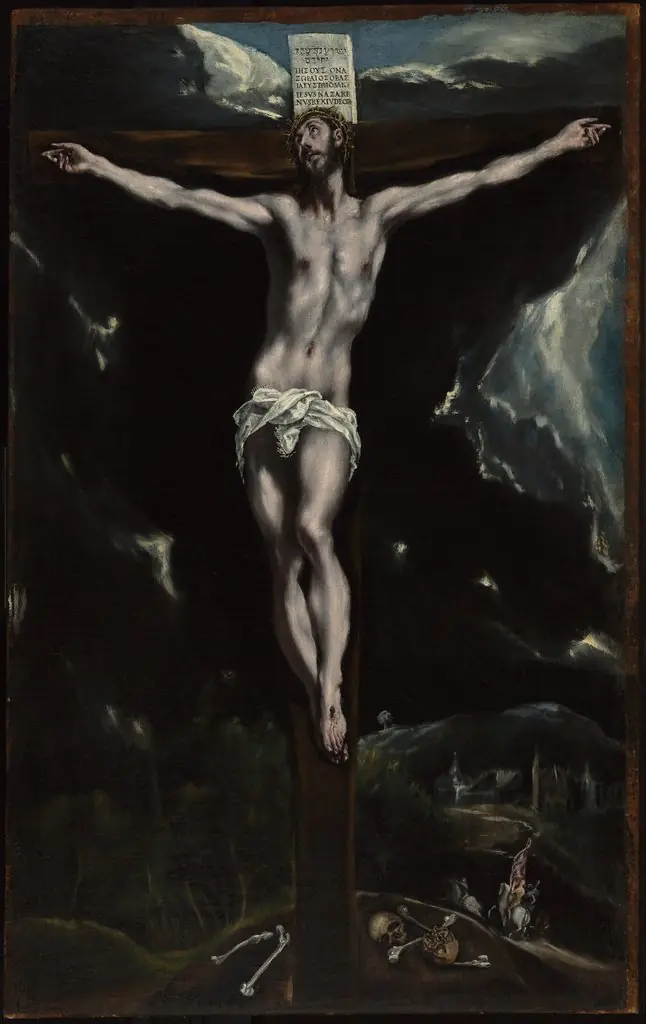
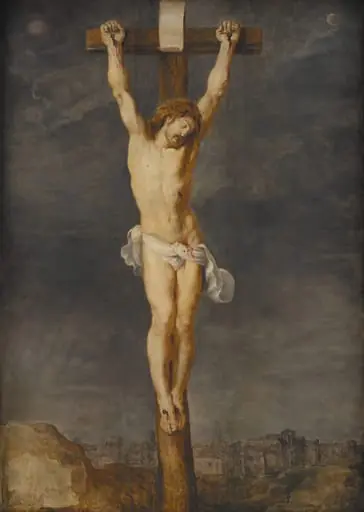
Christ on the Cross is an oil painting by the Flemish Baroque painting artist Anthony van Dyck. It dates from 1627 and is held in the collection of the St. James' Church, Antwerp.
About this work
Subject & Meaning
As a religious image, it directs the viewer’s attention to the theological themes of sacrifice, atonement, and divine love embodied in Christ’s death.
The painting shows Jesus Christ affixed to the cross, depicting the crucifixion, the pivotal moment of the Christian Passion narrative. As a religious image, it directs the viewer’s attention to the theological themes of sacrifice, atonement, and divine love embodied in Christ’s death. The solitary figure against a stark background underscores the gravity of the event and invites reflection on its meaning for faith and salvation.
By focusing on this moment, the work operates as a devotional aid that reinforces belief in the redemptive power of the crucifixion.
Technique & Style
Created in 1627, Christ on the Cross is an oil painting executed on a panel support. The work depicts the crucifixion of Jesus Christ, adhering to the religious art genre characteristic of Anthony van Dyck's early period. Measuring 105.3 cm in height and 73 cm in width, the piece is currently associated with the Royal Museum of Fine Arts Antwerp and St. James' Church in Antwerp.
The medium combines oil paint with a rigid wooden panel, a common technical choice for Flemish artists of the era to ensure durability and fine detail in religious subjects.
History & Provenance
Anthony van Dyck executed the oil painting Christ on the Cross in 1627. The work was created on a wooden panel and depicts the crucifixion of Jesus Christ. Historically, the painting has been associated with St. James' Church in Antwerp.
It is currently held within the collection of the Royal Museum of Fine Arts Antwerp, which manages the piece as part of the Flemish Art Collection.
The painting is held in the Royal Museum of Fine Arts Antwerp (KMSKA), part of the Flemish Art Collection, and is displayed at St James’ Church, Antwerp.
It is inventoried as accession 805 (oil on panel, 105.3 × 73 cm).
The work has been exhibited at the Royal Museum of Fine Arts Antwerp in the 2010 display “Anthony van Dyck: The Early Years.”
Overview
Christ on the Cross is an oil painting executed in 1627 by the Flemish Baroque artist Anthony van Dyck. The canvas presents the crucifixion scene, with the figure of Jesus suspended on a wooden cross against a turbulent sky. The work belongs to the religious genre and is presently displayed in the Royal Museum of Fine Arts in Antwerp.
Context
Created during the height of the Flemish Baroque, the painting reflects the period’s emphasis on dramatic lighting and emotional intensity. Van Dyck’s approach aligns with Rubens’s influence yet anticipates his later, more refined portraiture. The work illustrates the era’s devotional art, intended to evoke piety through vivid, theatrical representation of biblical events.
Artist & collection
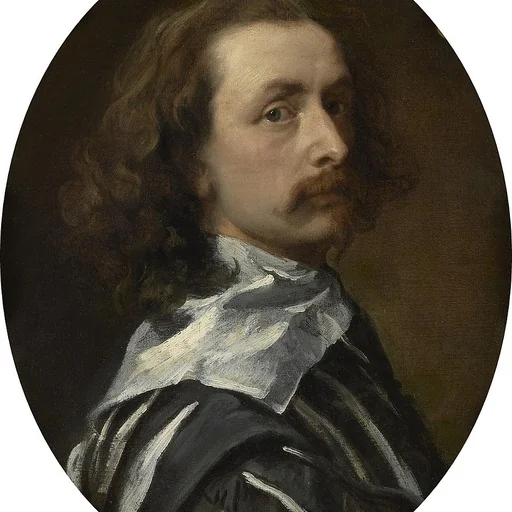
Artist
Sir Anthony van Dyck (; Dutch: Antoon van Dijck; 22 March 1599 – 9 December 1641) was a Flemish Baroque artist, who became the leading court painter in England after success in the Spanish Netherlands and Italy.