Artwork
Saint Rosalia introduced to the Holy Trinity
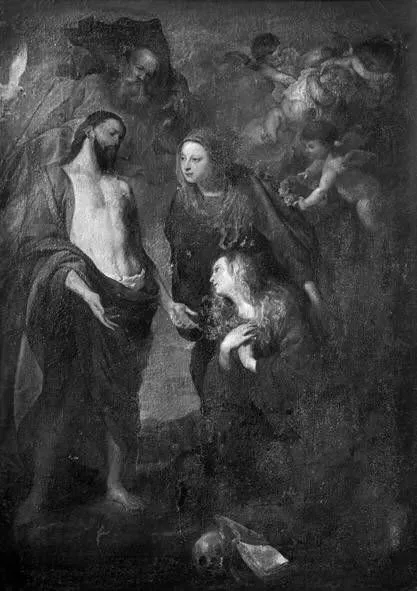
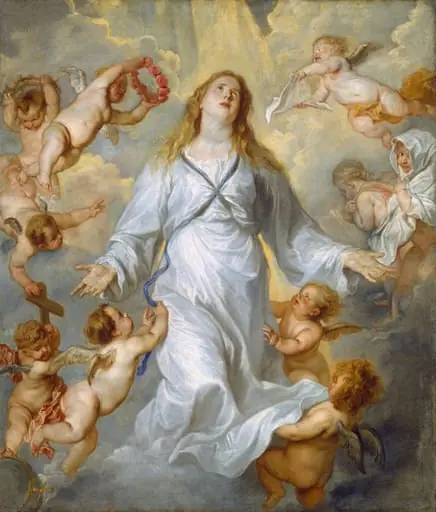
Saint Rosalia introduced to the Holy Trinity is an unspecified painting by the Flemish Baroque painting artist Anthony van Dyck. It dates from 1620 and is held in the collection of the Bavarian State Painting Collections. The canvas, executed in oil, depicts a solemn encounter between a female saint and the Holy Trinity.
About this work
Subject & Meaning
The subject reflects the Baroque devotional tradition of intercession, wherein a saint is introduced to the divine for protection or veneration.
The painting depicts Saint Rosalia being presented to the Holy Trinity. The central figures include Saint Rosalia, Jesus Christ, and God the Holy Spirit, with the Virgin Mary also understood to play a mediating role in the presentation. The subject reflects the Baroque devotional tradition of intercession, wherein a saint is introduced to the divine for protection or veneration.
The work's religious genre and its specific focus on Saint Rosalia, a Sicilian saint venerated as a protector against plague, connect it to the intense devotional climate of early seventeenth-century Catholic Europe. The Holy Trinity imagery would have served both liturgical and private contemplative purposes, emphasizing the believer's access to divine grace through saintly intercession.
Technique & Style
Executed in oil on canvas, the painting measures 116.5 cm in height and 82.6 cm in width.
Stylistically, the work aligns with van Dyck’s early Sicilian period, characterized by fluid drapery, delicate modeling of light, and a restrained palette that emphasizes the spiritual encounter. The composition centers on a kneeling Saint Rosalia presented by the Virgin Mary to the Holy Trinity, Christ, God the Father, and the Holy Spirit, rendered with luminous, ethereal figures.
Recent scholarship notes the painting’s compromised condition, which has complicated definitive attribution despite its generally accepted placement in van Dyck’s oeuvre.
History & Provenance
The painting is held in the collection of the Bavarian State Painting Collections and is located at the Alte Pinakothek in Munich. While the work is dated to 1620, some scholarship places its creation during the artist's Sicilian period between 1624 and 1625, noting that its poor condition complicates definitive attribution. The provided sources do not list specific inventory numbers or detail any past exhibitions for this work.
Context
Critical reception of Saint Rosalia introduced to the Holy Trinity remains limited due to its poor condition and contested attribution, though it is generally regarded as part of van Dyck's Sicilian period (1624–1625). Scholarship situates the work within van Dyck's early religious output, emphasizing its stylistic and iconographic significance in the development of Counter-Reformation devotional painting. The painting's placement in the Alte Pinakothek underscores its recognized importance within the artist's broader oeuvre and the transmission of Baroque religious imagery in 17th-century Central Europe.
Overview
The canvas, executed in oil, depicts a solemn encounter between a female saint and the Holy Trinity. Now housed in Munich’s Alte Pinakothek, the work dates to the mid‑1620s and is generally linked to Anthony van Dyck’s brief Sicilian sojourn. Its present state is compromised, which complicates scholarly consensus about its authorship.
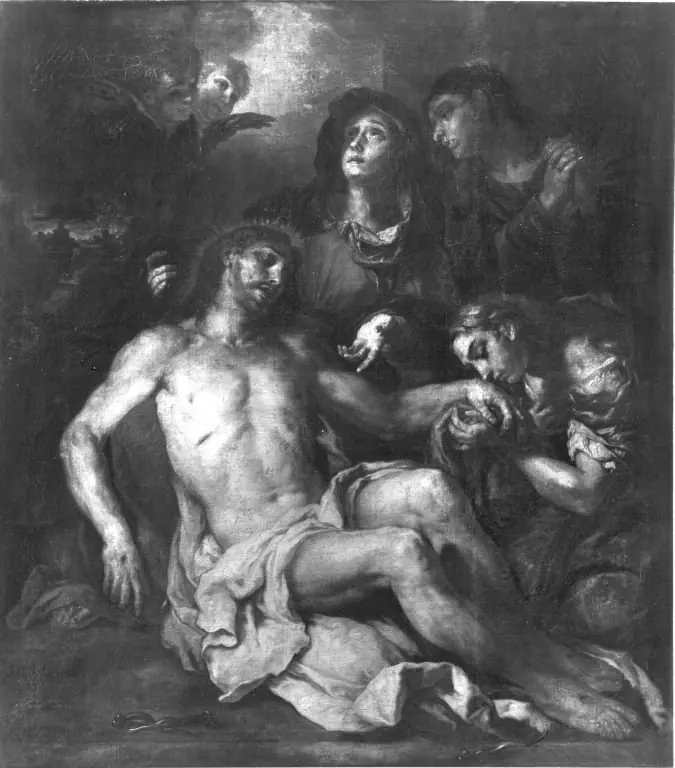
Artist & collection
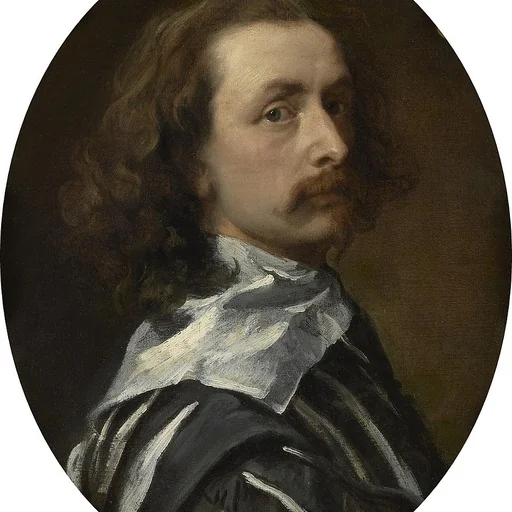
Artist
Sir Anthony van Dyck (; Dutch: Antoon van Dijck; 22 March 1599 – 9 December 1641) was a Flemish Baroque artist, who became the leading court painter in England after success in the Spanish Netherlands and Italy.