Artwork
Portrait of a Woman
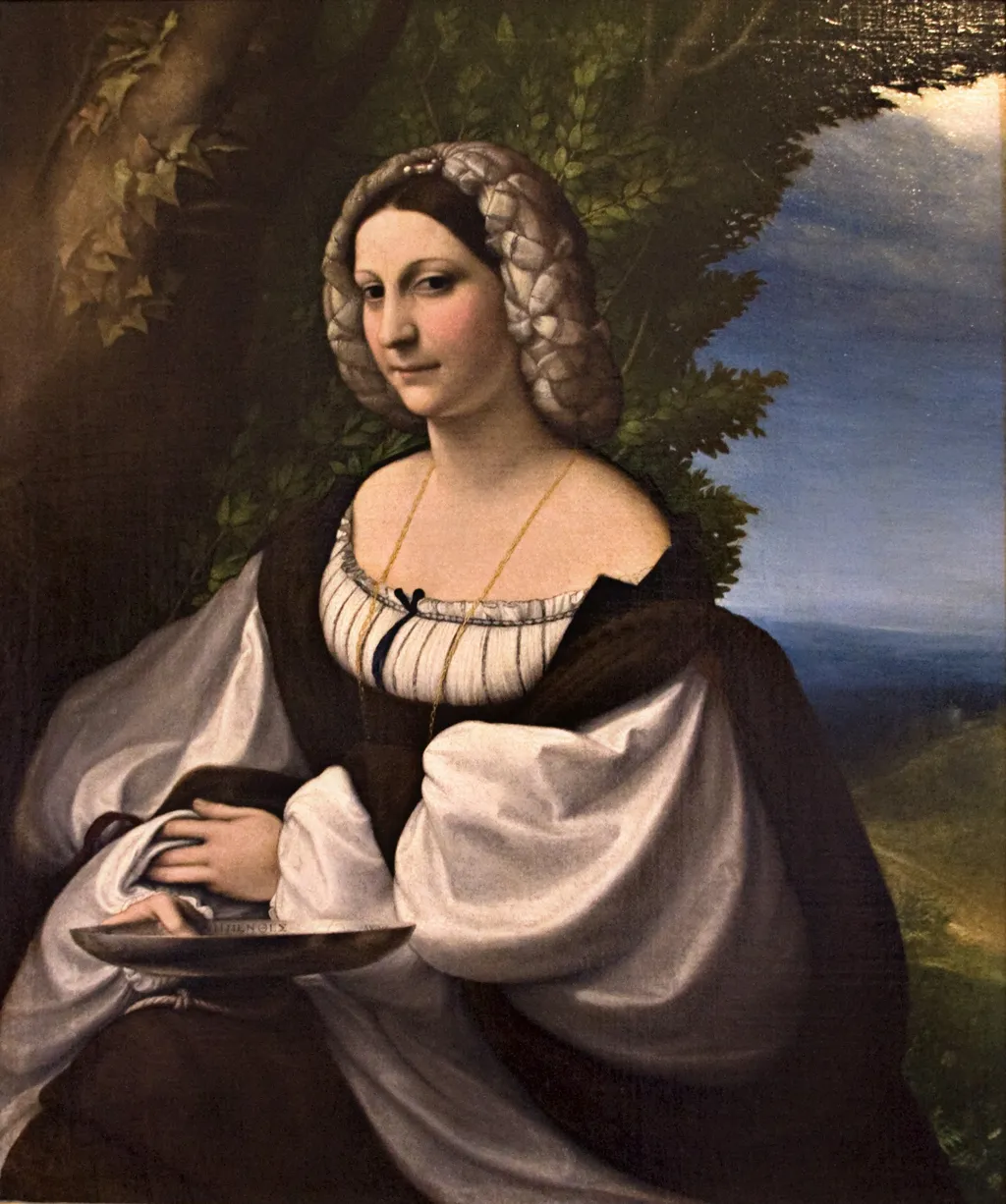
Portrait of a Woman is an oil painting by the High Renaissance artist Antonio da Correggio. It dates from 1520 and is held in the collection of the Hermitage Museum.
About this work
Overview
Its large scale, classical learning, and refined execution place it among the most culturally elevated portraits of the early Cinquecento.
Portrait of a Woman is an oil on canvas painting by the Italian Renaissance artist Antonio da Correggio, dated to approximately 1520. Measuring 103 by 87.5 centimetres, it is the only known work signed with the artist's latinised name, "ANTON LAET(US)". The painting has been held by the Hermitage Museum in Saint Petersburg since 1925 and is widely regarded as one of Correggio's most sophisticated and enigmatic portraits. Its large scale, classical learning, and refined execution place it among the most culturally elevated portraits of the early Cinquecento.
Subject & Meaning
The painting depicts an unidentified woman in three-quarter pose, her face tilted toward the viewer with what sources describe as an enigmatic gaze. She wears a low-cut black and white dress in the Spanish style, with voluminous white sleeves and a dark overgarment draped across her shoulders. Her elaborate braided coif, secured by a precious brooch, follows a fashion popular among northern Italian aristocracy in the early decades of the sixteenth century, reportedly launched by the Duchess of Mantua. A thin gold chain hangs at her chest. In her right hand she holds a shallow silver bowl bearing a Greek inscription: "NHΠENΘΕΣ" (nepenthes), a quotation from Book IV of Homer's Odyssey. In the epic, Helen mixes this grief-allaying drug into wine for guests mourning lost loved ones. A knotted rope, interpreted as a Franciscan cincture, appears at her lap or leg. The bowl's inscription and her offering gesture suggest identification with Helen herself, presenting the remedy for sorrow to the viewer or to someone close to her who has suffered loss.
Technique & Style
The work is executed in oil on canvas, a medium that allowed Correggio the smooth, blended brushwork and seamless transitions between light and shadow evident throughout the surface. Light falls from the upper right, illuminating the woman's face, chest, and white sleeves while shadows gather in the dense foliage behind her and in the folds of her dark drapery. The modelling of flesh and fabric is carefully handled, with a polished finish that accords with the painting's monumental scale and representative function. To the left, ivy climbs a tree trunk, while the right side opens onto a distant landscape dominated by deep atmospheric blues. The slightly lowered viewpoint and perspectival devices connect the work stylistically with the Camera di San Paolo frescoes. Former comparisons with Lorenzo Lotto's portraiture and Raphael's La Velata underscore Correggio's engagement with contemporary portrait conventions, even as his soft atmospheric handling distinguishes his approach.
History & Provenance
The early history of the painting remains unknown. It entered the Hermitage Museum in 1925, where it remains today. The work was formerly attributed to Lorenzo Lotto until the discovery of Correggio's signature on the tree trunk to the left shifted attribution. Stylistic analysis suggests a date close to the Camera di San Paolo frescoes, with the monumental arrangement, fullness and freedom of modelling, and perspectival artifices supporting a dating around 1517 to 1520. The painting has been compared to Caravaggio's Madonna of the Stairs and to Raphael's La Velata. No documentation of commission or early ownership has survived, though scholarly proposals have linked the portrait to specific historical figures and occasions, discussed below.
Context
Scholarship has proposed two principal identifications for the sitter. Veronica Gambara, widowed in 1518 by the death of Giberto VII da Correggio, has been suggested based on the poetic laurel and the context of loss. More substantially, Ginevra Rangoni, widowed in 1517 of Giangaleazzo da Correggio and a Franciscan tertiary, has been proposed. The knotted rope in the portrait corresponds to the Franciscan cincture, and Ginevra's second marriage to Aloisio Gonzaga, Marquis of Castel Goffredo, on 24 July 1519 provides a plausible occasion for which the portrait might have been commissioned. However, scholars caution that the sitter need not represent someone who personally suffered loss. The attribute of the silver bowl and her direct, complicit gaze toward the viewer suggest she presents herself as Helen offering nepenthe, making the portrait a gift or message to a bereaved recipient. The dawn landscape visible at right reinforces this reading, echoing Pisistratus's words in the Odyssey: "but Aurora, daughter of light, will come again." The work's classical literacy, rare Greek inscription, and sophisticated iconography mark it as a product of the highest humanist culture of the Emilian Renaissance.
Legacy
As the only painting signed with Correggio's latinised name and one of the few Italian Renaissance portraits to incorporate a Greek literary inscription, Portrait of a Woman occupies a singular position in the artist's oeuvre and in sixteenth-century portraiture more broadly. Its enigmatic quality, combining aristocratic representation with complex classical allusion, has sustained scholarly interest across generations. The work's attribution history, from Lorenzo Lotto to Correggio, illustrates evolving methods of connoisseurship. Its permanent residence in the Hermitage since 1925 has made it a fixture of that museum's Italian Renaissance holdings, though its early history remains opaque. The portrait continues to generate debate regarding identity, occasion, and meaning, testimony to the enduring challenge of interpreting Renaissance portraits that deploy sophisticated literary and symbolic programmes for private, now lost contexts.
Own this work as a print
Artist & collection

Artist
Antonio Allegri da Correggio, usually known as just Correggio, was an Italian Renaissance painter who was the foremost painter of the Parma school of the High Renaissance, who was responsible for some of the most…

- Portrait of Maddalena Doni
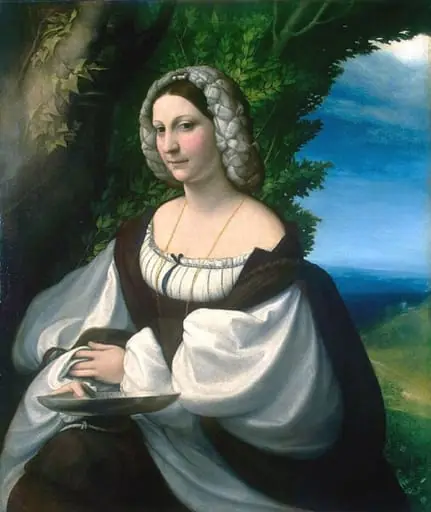 Portrait of a lady (Veronica Gambara?)
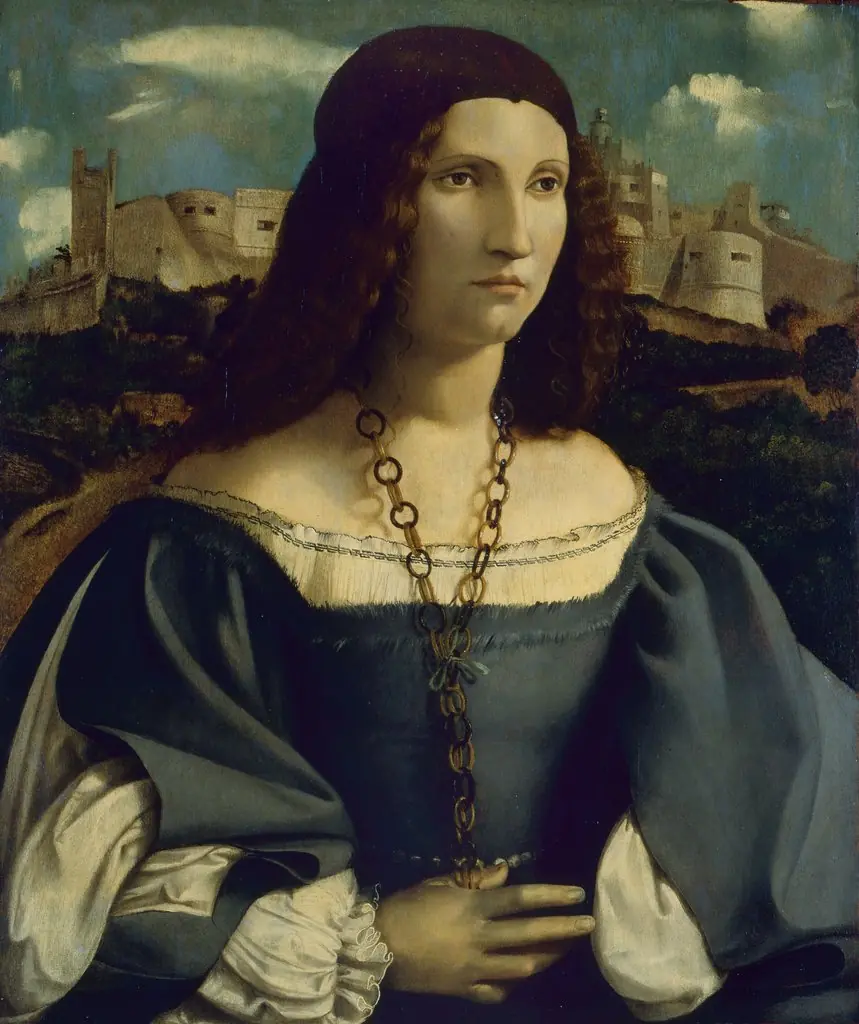 Portrait of a Lady
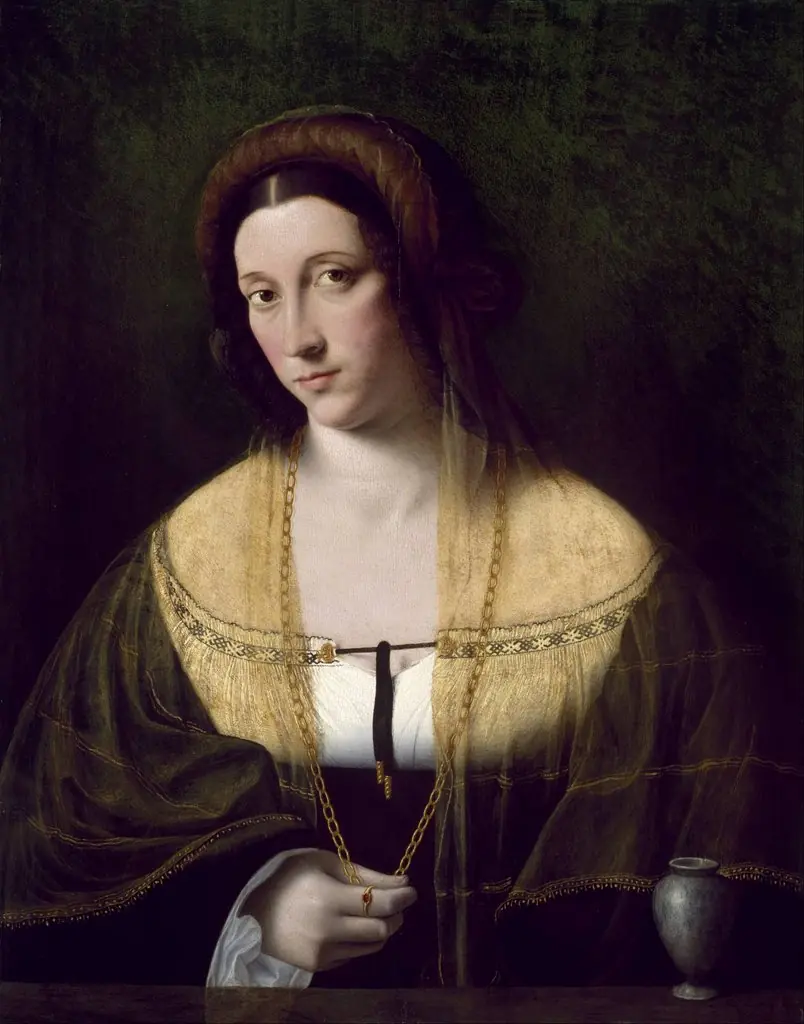 Portrait of a Lady
![Vittoria Colonna [?], by Sebastiano del Piombo](https://artifactworldgallery.com/img/sebastiano-del-piombo--vittoria-colonna--2bf72498c1ca4c50-w320.webp) Vittoria Colonna [?]
Vittoria Colonna [?]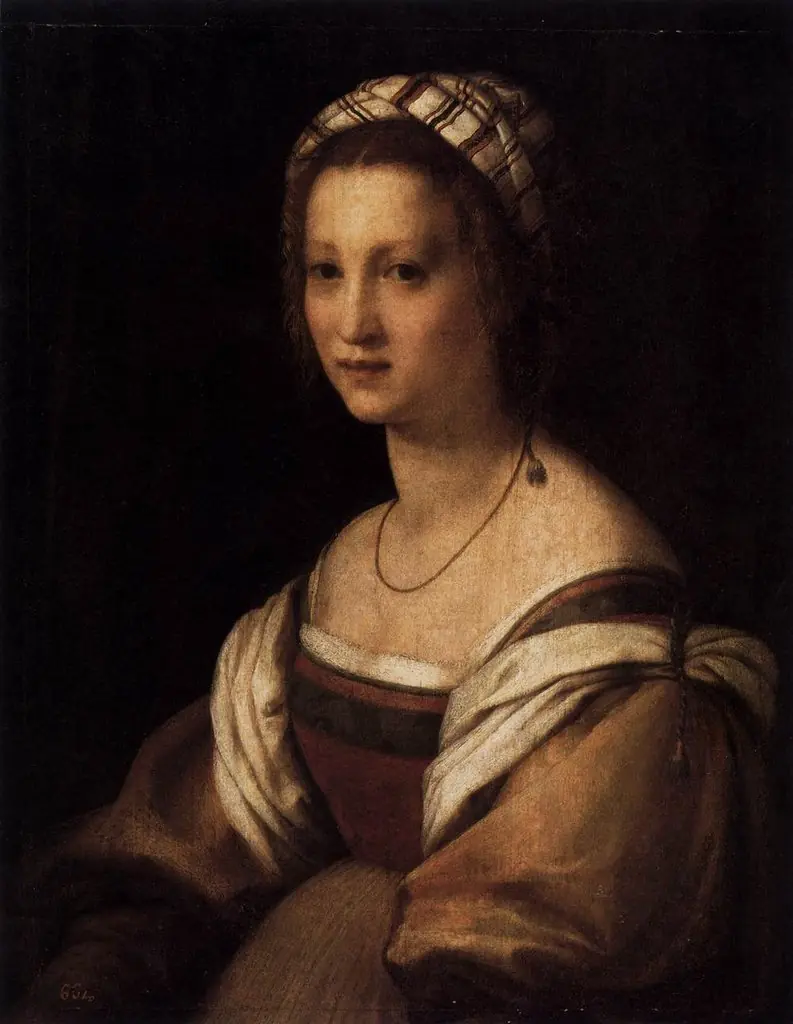 Portrait of a Woman
 Lucrezia Sommaria
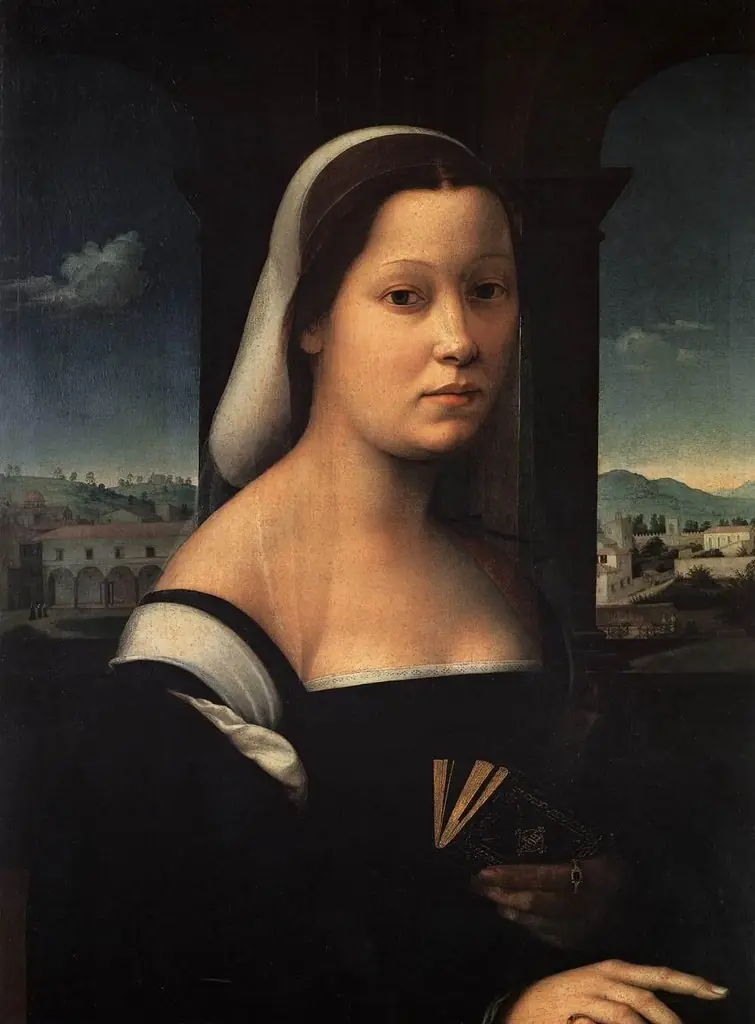 Portrait of a Woman, called "The Nun"
 Young Woman in Green Dress
 Portrait of a young woman
 Salome with the head of John the Baptist
 A Young Roman Woman