Artwork
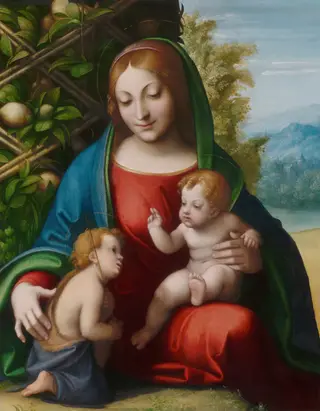
Virgin and Child with the Young Saint John the Baptist
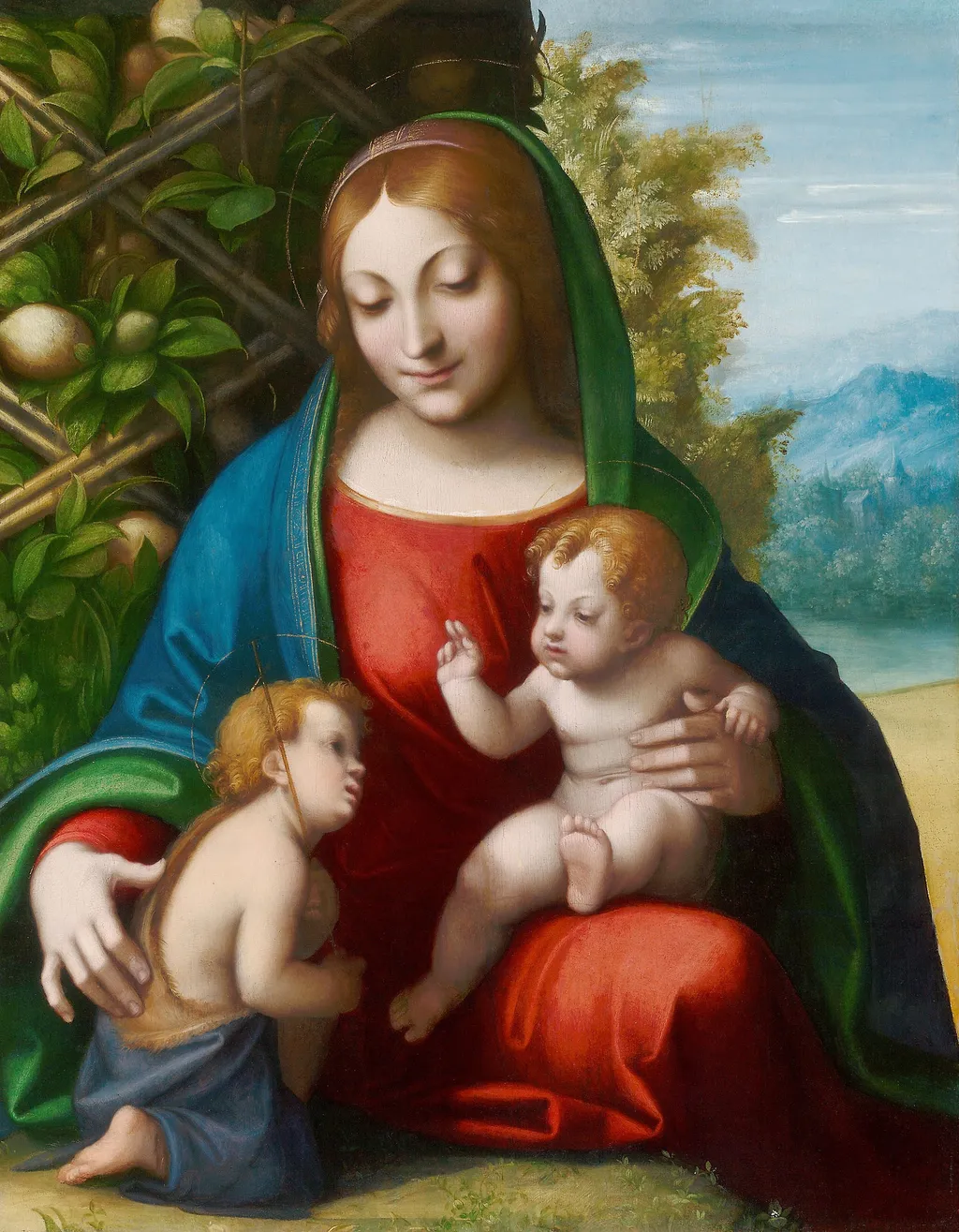
Virgin and Child with the Young Saint John the Baptist is an oil painting by the High Renaissance artist Antonio da Correggio. It dates from 1515 and is held in the collection of the Art Institute of Chicago.
About this work
Subject & Meaning
This interaction conveys a tender emotional exchange among the three holy figures.
The painting depicts the Virgin Mary seated on the ground with the Christ Child resting on her right thigh, while the young Saint John the Baptist kneels before them on one knee. The Christ Child extends a gesture of blessing toward the infant Baptist, who is associated with a cross and protected by Mary's welcoming hand and gentle smile. This interaction conveys a tender emotional exchange among the three holy figures.
The setting reinforces the sacred narrative: a fruit-laden trellis of citrus stands behind the group on the left, while the right side opens onto a rolling, wooded landscape that recedes into blue distance. A turreted, Gothic-style castle appears in that distant scenery. The contrast between Mary's monumental, solemn presence and the deliberately reduced scale of the two children emphasizes her quiet authority within the composition.
The blessing gesture echoes similar poses found in Leonardesque Madonna compositions, while the soft modeling of faces and the atmospheric landscape reflect Leonardesque influence, lending the scene a mood of calm serenity.
Technique & Style
Executed in oil on panel, this vertical composition measures 64.2 by 50.2 cm. Correggio employs sfumato and chiaroscuro to soften the figures' features, creating an emotional interplay reminiscent of Leonardesque stylization. The artist demonstrates a masterful command of color, applying delicate touches in the distant landscape while using dense, enamel-like layers for the foreground figures and the lemon trellis backdrop.
The painting is noted for its powerful volumetric definition, particularly in the Virgin's form, which dominates the scene with solemn naturalism. Unusually, the composition features a close framing that highlights the Virgin's bent knee, adding spatial depth. While the work suffered a theft shortly after its 1965 acquisition, it was recovered, restored, and currently remains in excellent condition.
History & Provenance
Created by Antonio da Correggio, this painting is dated to approximately 1513–1514, though some sources specify 1515. The work was executed early in the artist's career while he was in Parma, displaying stylistic influences from Leonardo da Vinci and Raphael.
In 1965, the dealers Messrs Wildenstein purchased the panel for the Art Institute of Chicago. Shortly after its acquisition, the artwork was stolen but was subsequently recovered and restored. It remains in the collection of the Art Institute of Chicago today.
The painting is held by the Art Institute of Chicago. It was acquired in 1965 through the dealers Messrs Wildenstein. Shortly after the purchase it was stolen, but it was recovered and subsequently restored; the work is reported to be in excellent condition and remains in the Chicago collection.
The painting is an oil on panel measuring 64.2 × 50.2 cm, and it has been on public view at the Art Institute of Chicago since its acquisition.
Context
Painted around 1513–1515, the work belongs to Correggio's early production in Parma, a city geographically removed from the principal centers of Renaissance art. Despite this isolation, the painting absorbs influences from Raphael, Leonardo da Vinci, and emerging Northern masters. Correggio's handling of sfumato and chiaroscuro softens the Virgin's features and the children, evoking Leonardesque stylization while conveying an emotional exchange between the figures.
Among Correggio's early Madonna and Child with the Infant Saint John compositions, the Chicago panel is regarded as the most mature and, in many respects, the most successfully resolved. The Virgin's face and the blue-toned landscape recall Leonardo's Madonna of the Yarnwinder and Bernardino Luini's Madonna of the Rose Garden, while the blessing gesture of the Christ Child echoes Leonardo's two versions of the Virgin of the Rocks. The composition's solemn yet natural authority has been compared to Raphael's Aldobrandini Madonna, and the turretted Gothic castle in the background invites comparison with the youthful work of Dosso Dossi. The painting was acquired by the Art Institute of Chicago in 1965 through the firm Wildenstein.
Overview
This painting, created by Correggio between 1513 and 1514, depicts a serene scene of the Virgin Mary with the Christ Child and the young Saint John the Baptist. Executed in oil on wood, the work measures approximately two feet in height.
Legacy
Now housed at the Art Institute of Chicago, the painting offers a warm, human-scale example of early 16th-century Italian art, notable for its emotional depth and technical achievement.
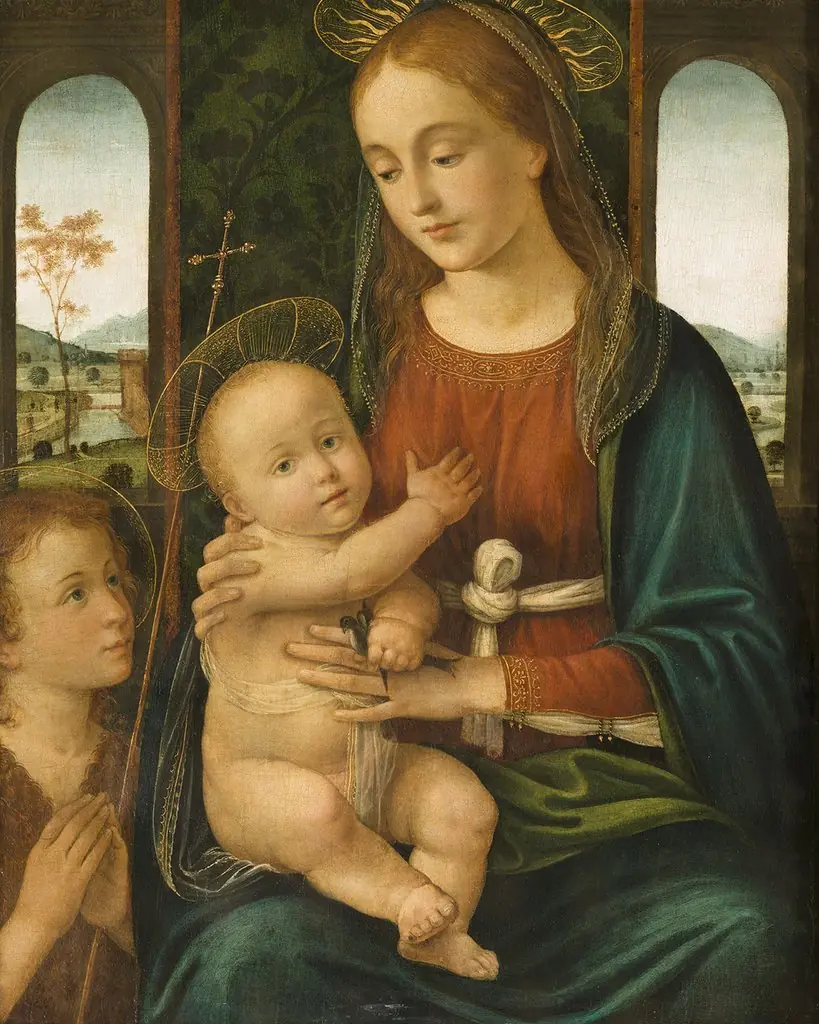
Own this work as a print
Artist & collection

Artist
Antonio Allegri da Correggio, usually known as just Correggio, was an Italian Renaissance painter who was the foremost painter of the Parma school of the High Renaissance, who was responsible for some of the most…

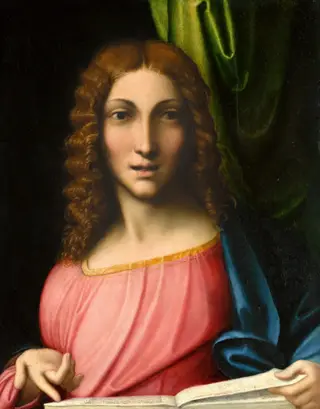
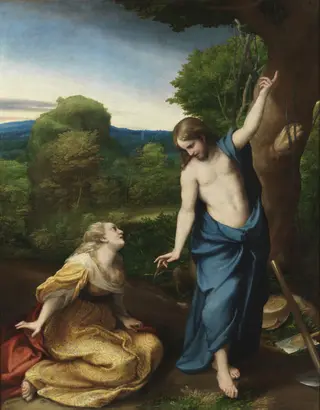
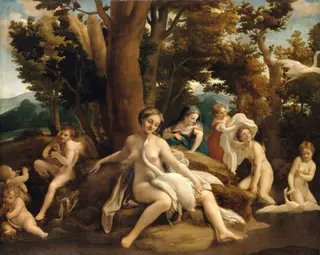
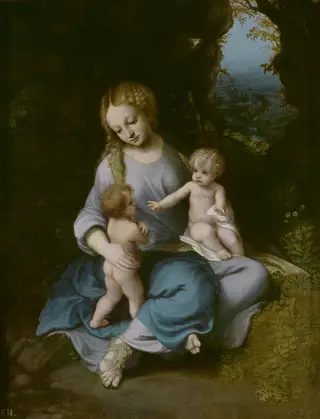
 Virgin and Child with the Young Saint John the Baptist
 Madonna and Child with the Infant Saint John
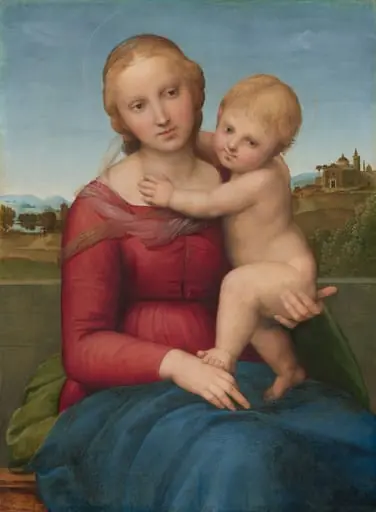 The Small Cowper Madonna
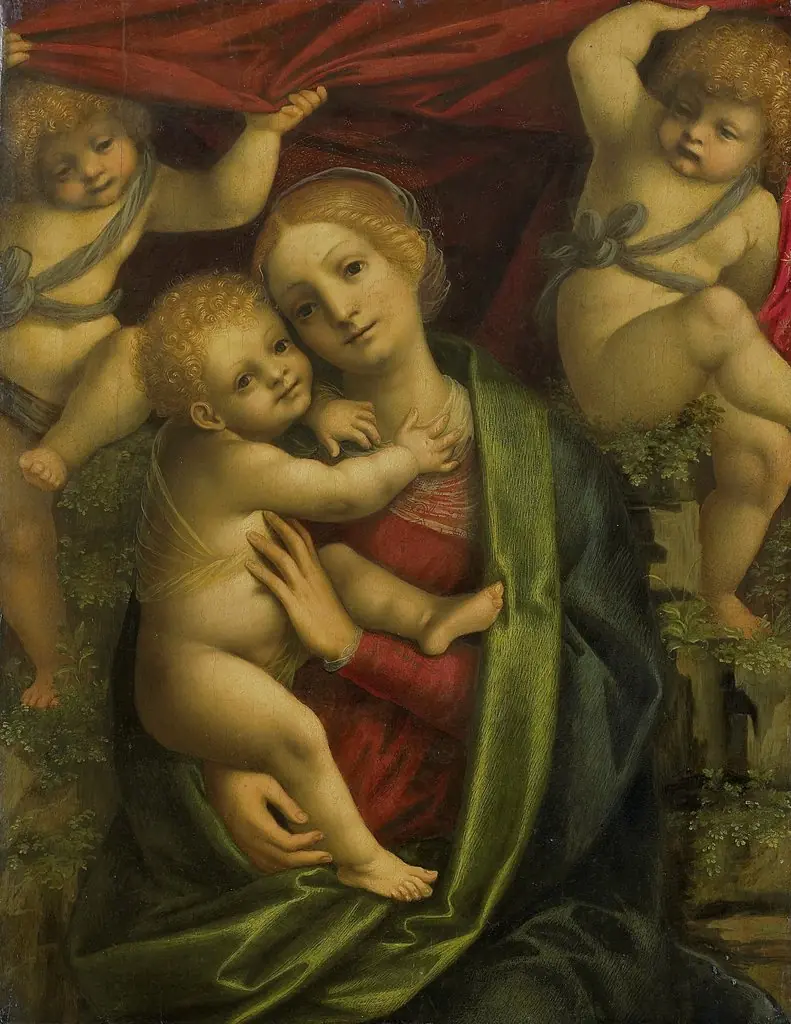 Virgin and Child
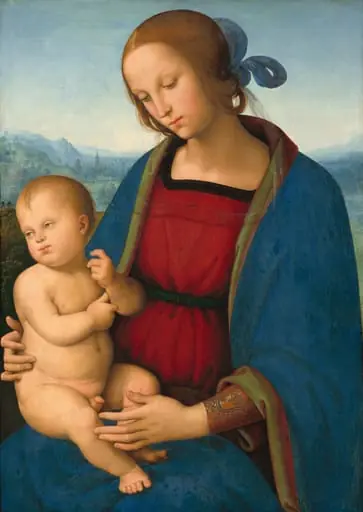 Madonna and Child
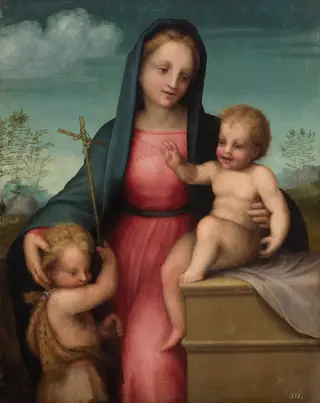 Maria mit Kind und Johannesknaben
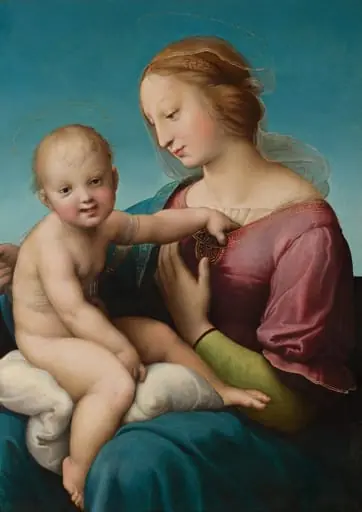 The Niccolini-Cowper Madonna
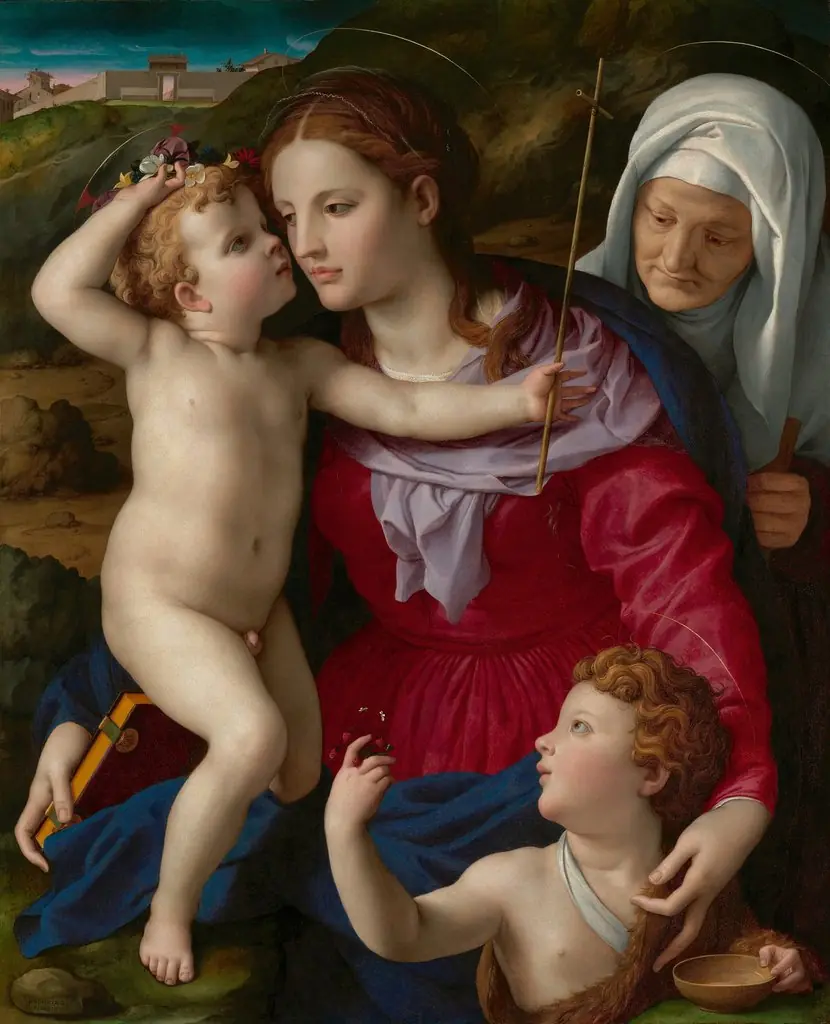 Virgin and Child with Saint Elizabeth and Saint John the Baptist
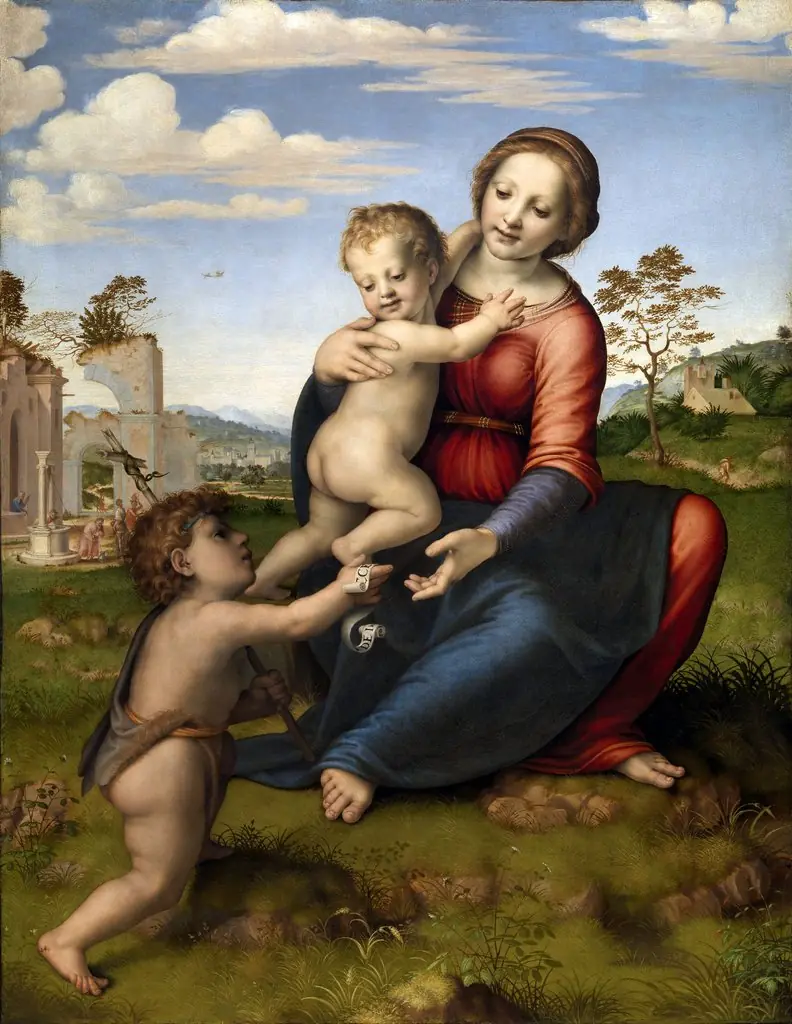 Madonna of the Well or Madonna and Child with the young St. John the Baptist
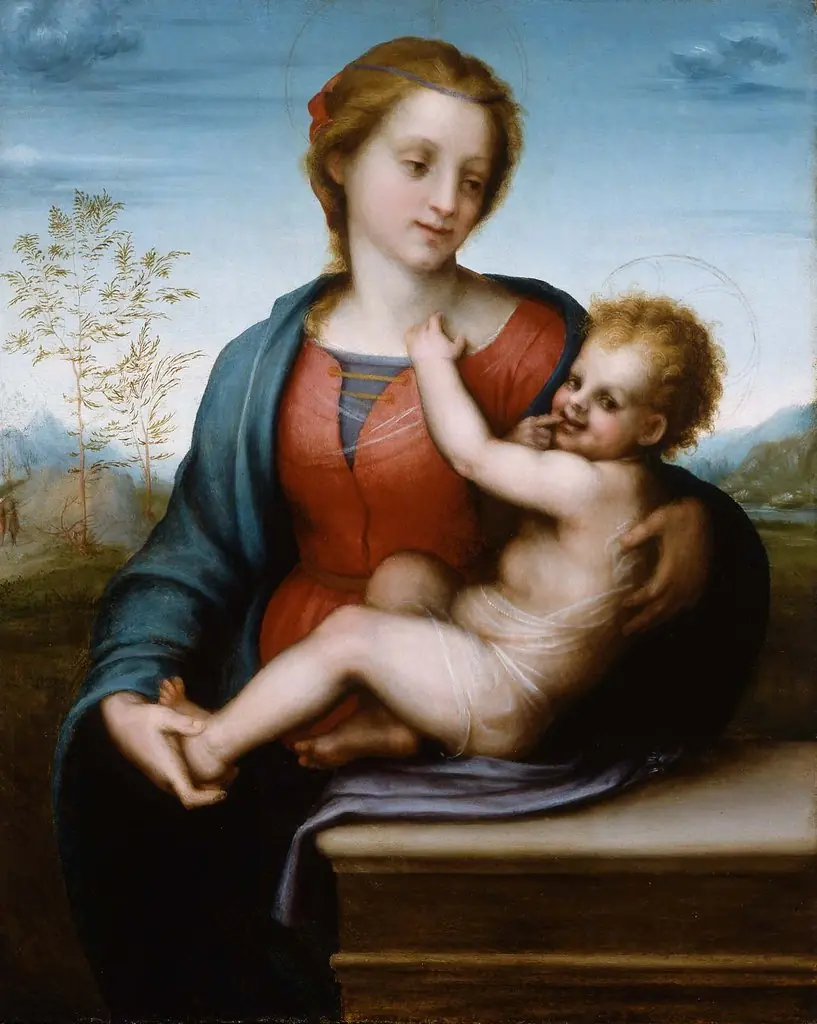 Virgin and Child
 Madonna Dudley
- Virgin and Child with Saint John the Baptist