Artwork
The Mystic Marriage of Saint Catherine
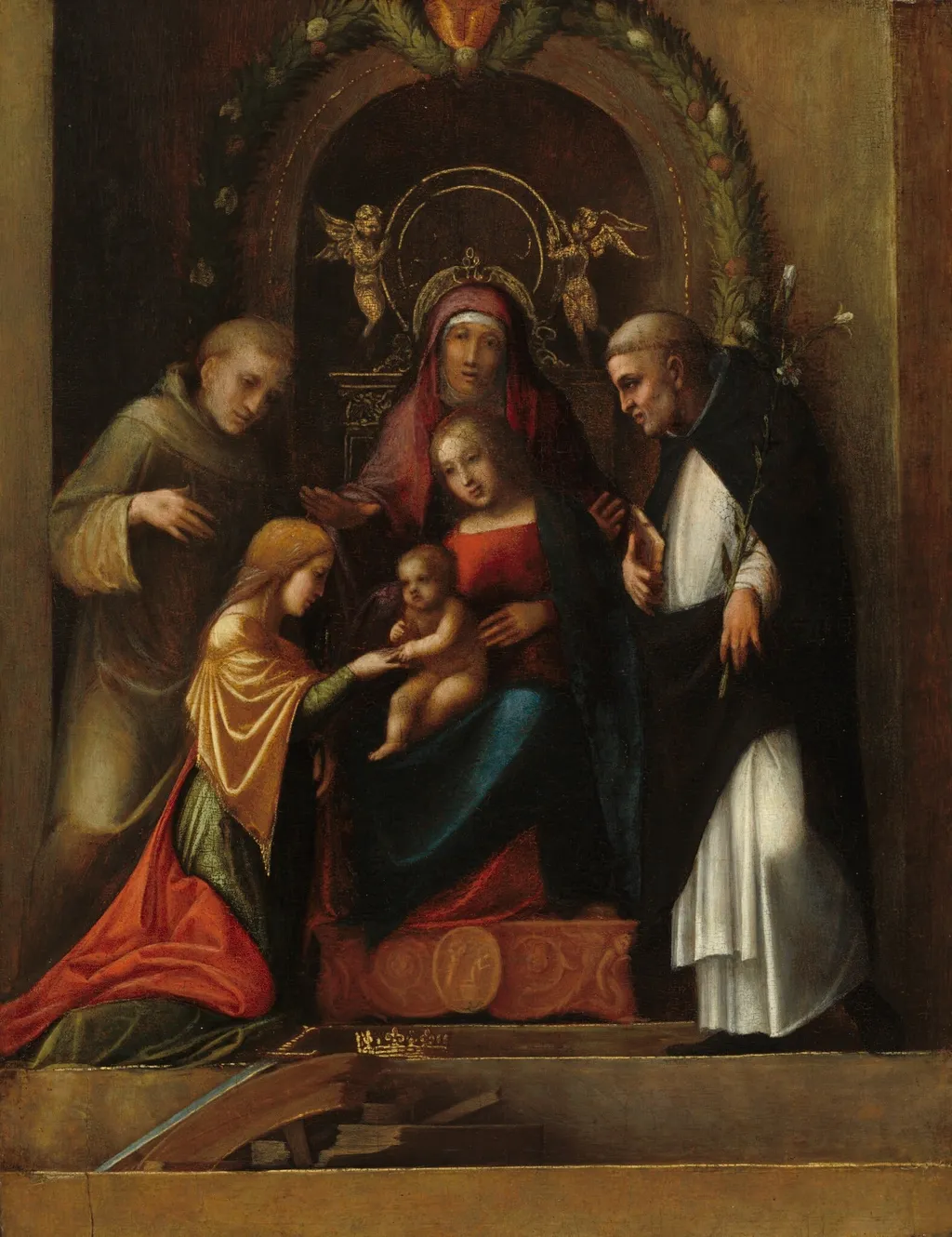
The Mystic Marriage of Saint Catherine is an oil painting by the Mannerist artist Antonio da Correggio. It dates from 1512 and is held in the collection of the National Gallery of Art.
About this work
In a shallow niche framed by garlands of lemons and oranges, the infant Christ leans from the Virgin's lap to slip a ring onto Saint Catherine's finger.
In a shallow niche framed by garlands of lemons and oranges, the infant Christ leans from the Virgin's lap to slip a ring onto Saint Catherine's finger. The kneeling saint wears a golden crown and crimson mantle, while Saint Anne raises her hands in blessing behind the throne and Saints Francis and Dominic look on. Painted around 1510 to 1515, this palm-sized panel is Correggio's first known treatment of the subject.
Subject & Meaning
The painting depicts the Mystic Marriage of Saint Catherine of Alexandria, a subject rooted in the medieval legend of Catherine's spiritual betrothal to Christ. In a compact devotional scene, the Christ Child, seated on the Virgin Mary's lap with Saint Anne behind her (a Metterza grouping), places a ring on Catherine's finger, symbolizing her perpetual dedication to virginity and union with Christ. Catherine kneels at left, identifiable by her attributes, a broken wheel, sword, and crown.
Saints Francis of Assisi and Dominic witness the scene. At the base of the throne, a bas-relief shows Catherine's martyrdom by decapitation. The mystic marriage iconography represents Catherine as the Bride of Christ and served as a model for Christian women taking vows of chastity or embracing conjugal continence. The work's small size and precious detailing indicate its use for private devotion.
Technique & Style
The painting is executed in oil on panel, with small dimensions of approximately 27.8 × 21.3 cm, suggesting a devotional function. The paint surface has sustained damage, notably in the mantle and faces of the Virgin and Saint Anne, as recorded since the late 19th century. Stylistically, the work belongs to Correggio's early youth: drapery appears still somewhat rigid, and the brown tonalities of the Lombard tradition are enlivened by bright colour accents in the saints' garments and the garland of leaves, flowers, and fruit adorning the throne, a motif derived from Mantegna.
The throne's base features a low relief imitating an antique gem, depicting the beheading of Saint Catherine. The broken wheel is rendered with swift, confident brushstrokes. Golden decorations include two angels holding a clipeo behind Saint Anne. Despite the damage, the small panel retains a precious, intimate quality.
History & Provenance
Painted around 1510–1511 by Correggio, the work likely incorporates saints Francis and Dominic at the request of an unidentified commissioner. It first appears in the collection of Count Giovanni Battista Costabili Containi of Ferrara (d. 1841) and remained with his heirs until at least 1858. By 1877 it was owned by Dr. Gustavo Frizzoni in Milan, and later passed to Alberto Ginoulhiac, Luigi Bonomi, and then Count Alessandro Contini Bonacossi.
Contini Bonacossi sold it to the Samuel H. Kress Foundation in March 1932, and Kress donated it to the National Gallery of Art in 1939. Early attribution to Correggio by Giovanni Morelli in 1875 confirmed local scholarly opinion placing it in the artist's youth.
Context
The painting's attribution to Correggio was first championed in scholarly circles by Giovanni Morelli in 1875, though local Ferrarese scholars had already recognized it as a youthful work. Late 19th-century accounts noted surface damage to the Virgin's mantle and faces. Stylistic analysis places it in Correggio's early phase, around 1510–1511, showing influences from Mantegna's decorative motifs and the Lombard tradition's brown tonalities.
The composition's rigid drapery and the predella-like monochrome relief are hallmarks of this period. Art historians consider the Washington panel a direct precursor to Correggio's larger Madonna di San Francesco, sharing figural poses and decorative elements, thus securing its place in the artist's early development and the broader Renaissance altarpiece tradition.
Legacy
The painting's attribution to Correggio was championed by Giovanni Morelli in 1875, establishing it as an early work in the artist's canon. During the late 19th century, Constant-Louis-Antoine Lorichon produced an engraving of the composition, extending its visual influence. Art historians have identified specific details, such as the pose of Saint Francis, as a direct precedent for similar solutions in Correggio's later altarpiece the Madonna of San Francesco.
Overview
Correggio's The Mystic Marriage of Saint Catherine, painted around 1510–1515, is an early example of the artist's engagement with this popular devotional theme. Rendered in oil on a small panel measuring just 27.7 by 21.4 centimeters, this intimate work is now housed in the National Gallery of Art in Washington. It represents the artist's initial known depiction of Saint Catherine's symbolic union with Christ.

Own this work as a print
Artist & collection

Artist
Antonio Allegri da Correggio, usually known as just Correggio, was an Italian Renaissance painter who was the foremost painter of the Parma school of the High Renaissance, who was responsible for some of the most…





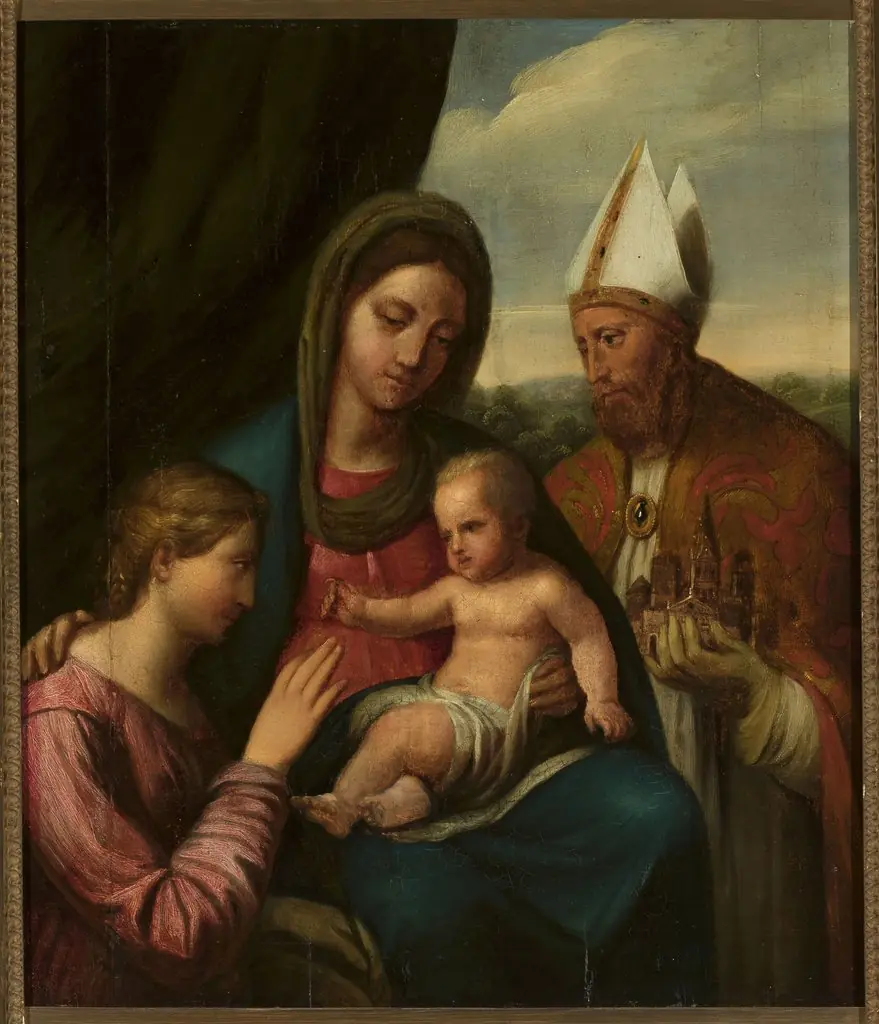 Mystical marriage of St. Catherine
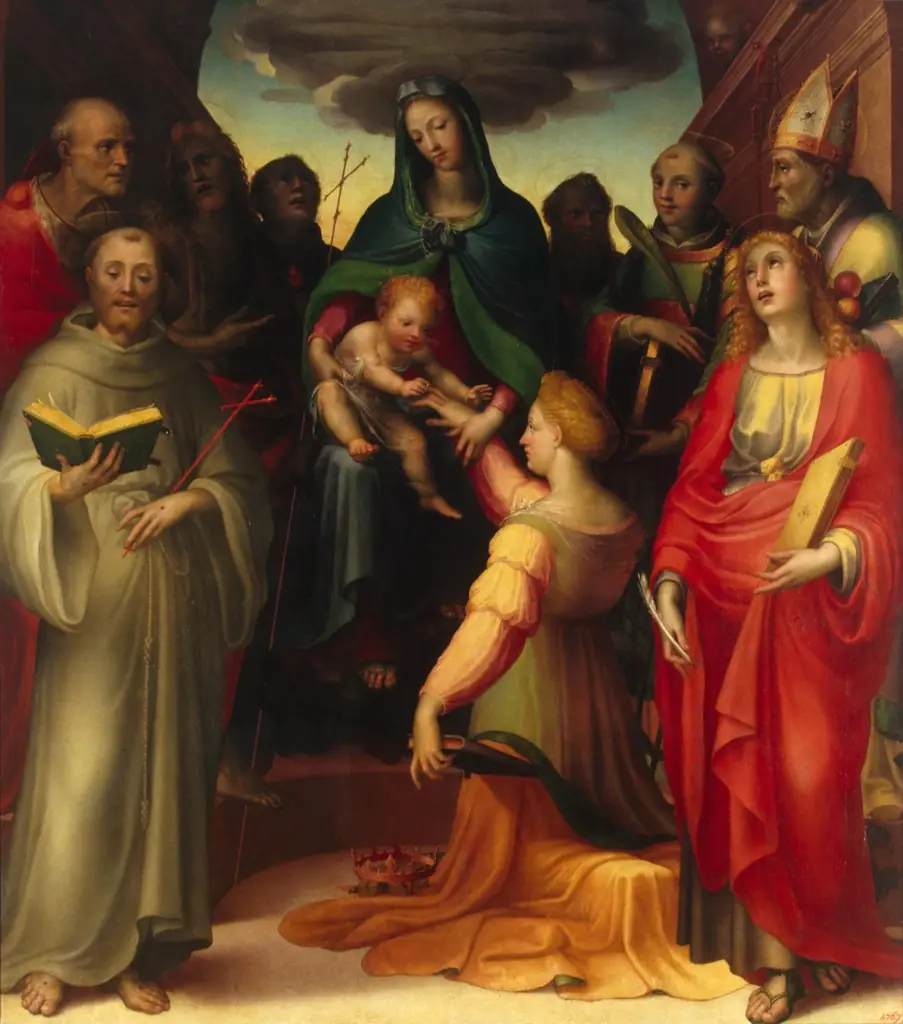 Mystic Marriage of St Catherine
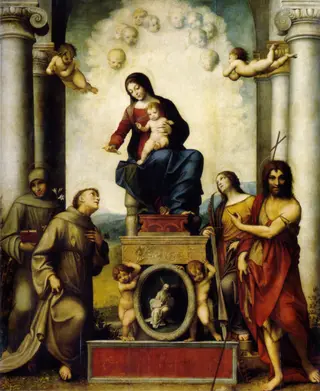 Madonna with St. Francis
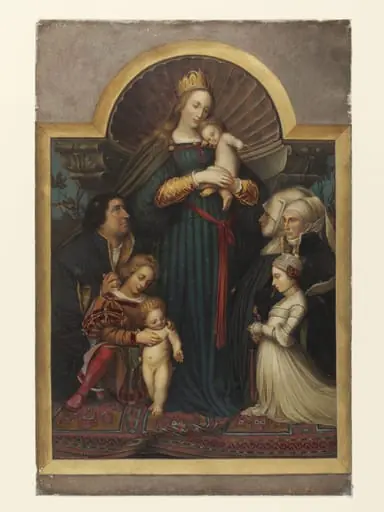 Copy after the painting Virgin and Child and Meyer Family by Hans Holbein in Darmstadt
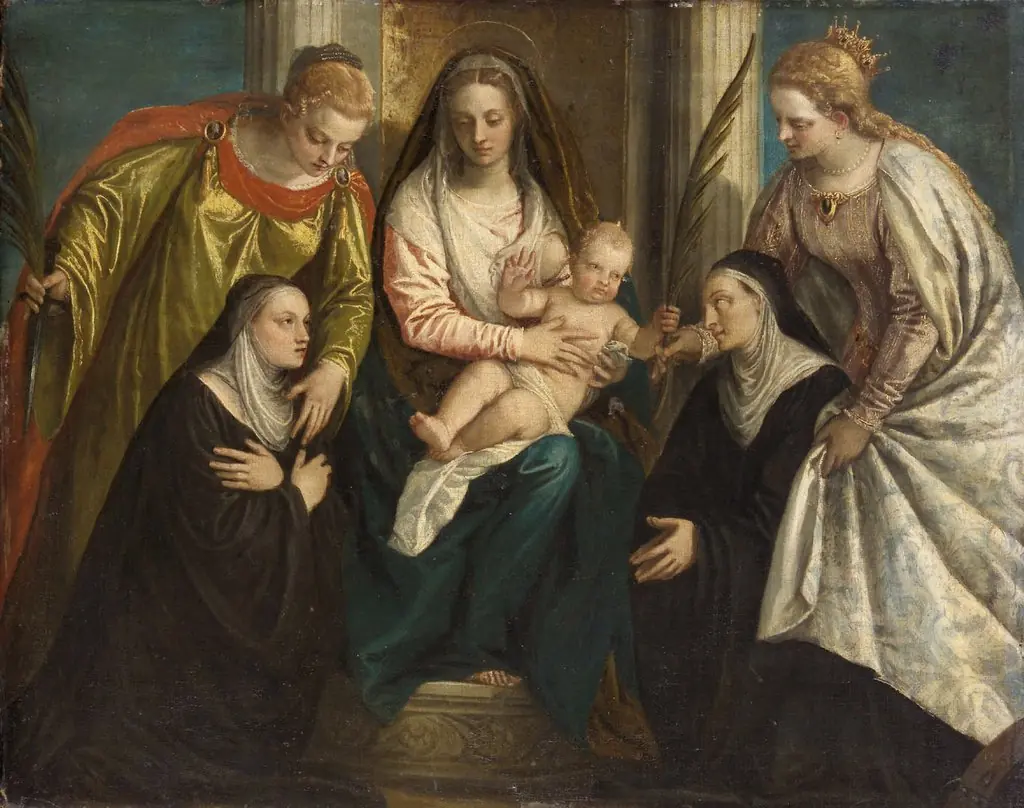 Madonna and Child with Saints Lucy and Catherine and 2 Nuns
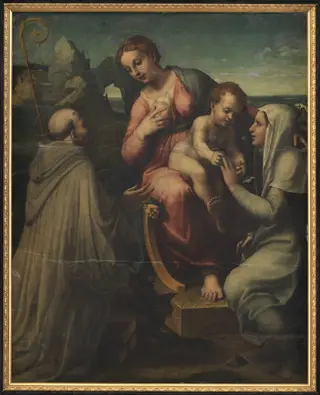 The Madonna and Child with Saints
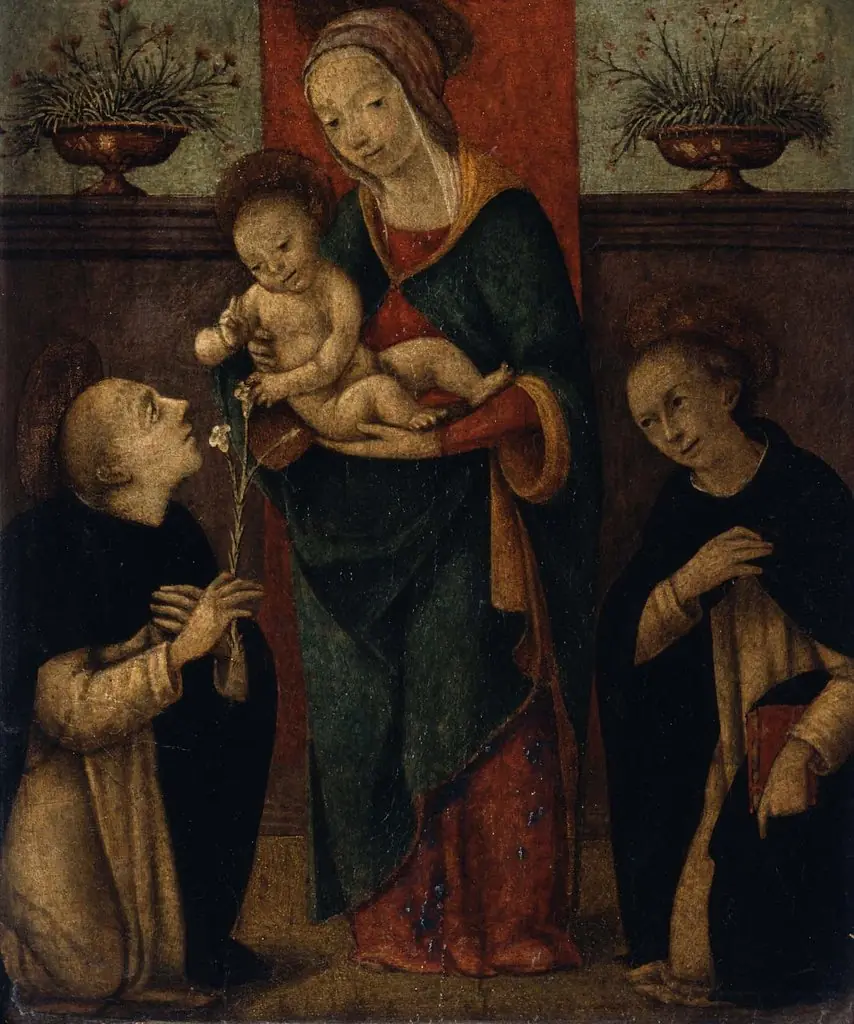 Virgin and Child with Saints Dominic and Thomas Aquinas (?)
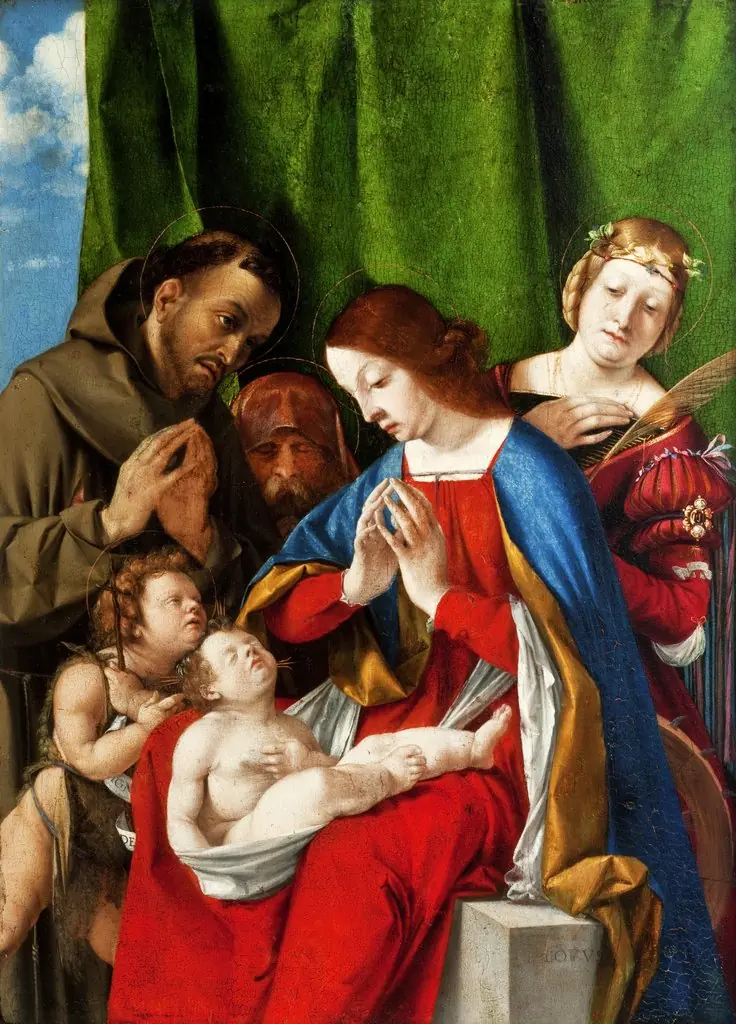 Adoration of the Christ Child
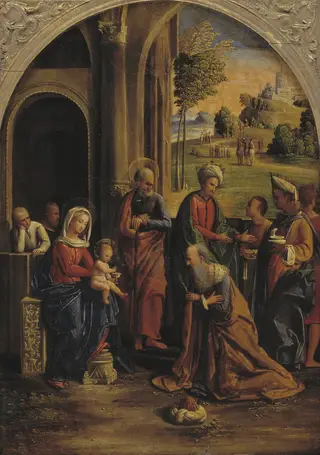 The Adoration of the Kings
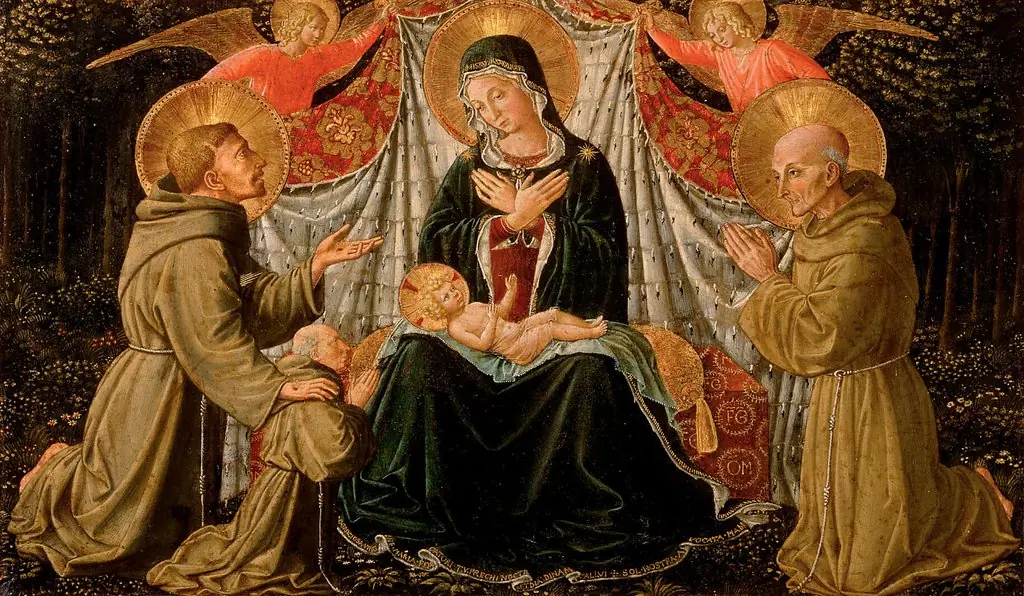 Madonna and Child with St Francis and the donor Father Jacopo da Montefalco (left) and St Bernard of Siena (right)