Artwork
Mary and Child
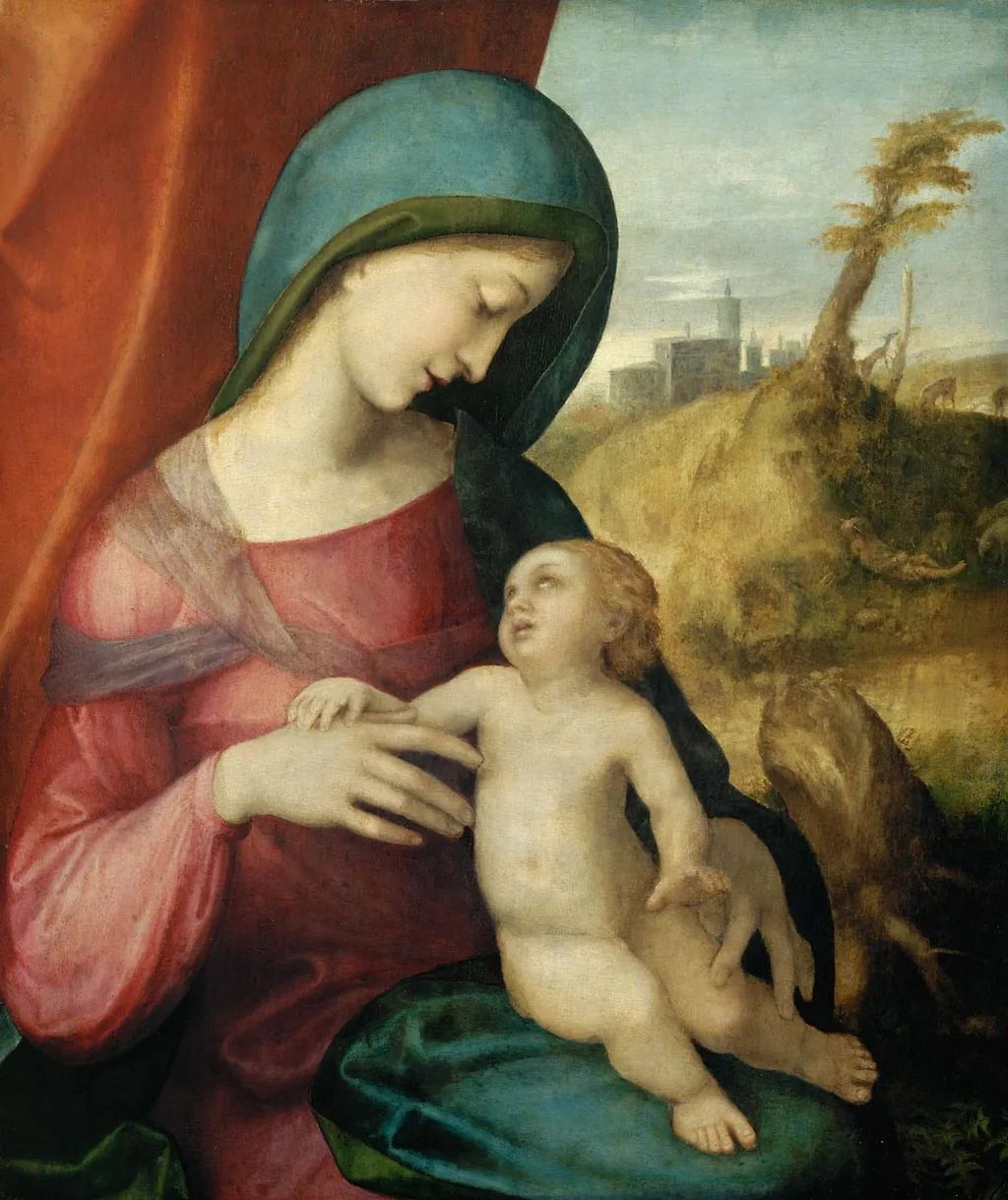
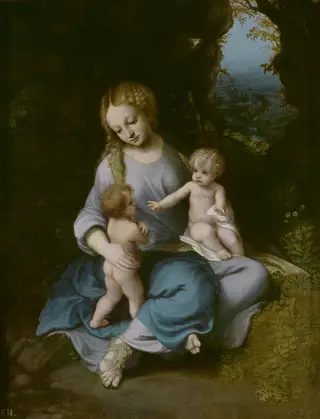
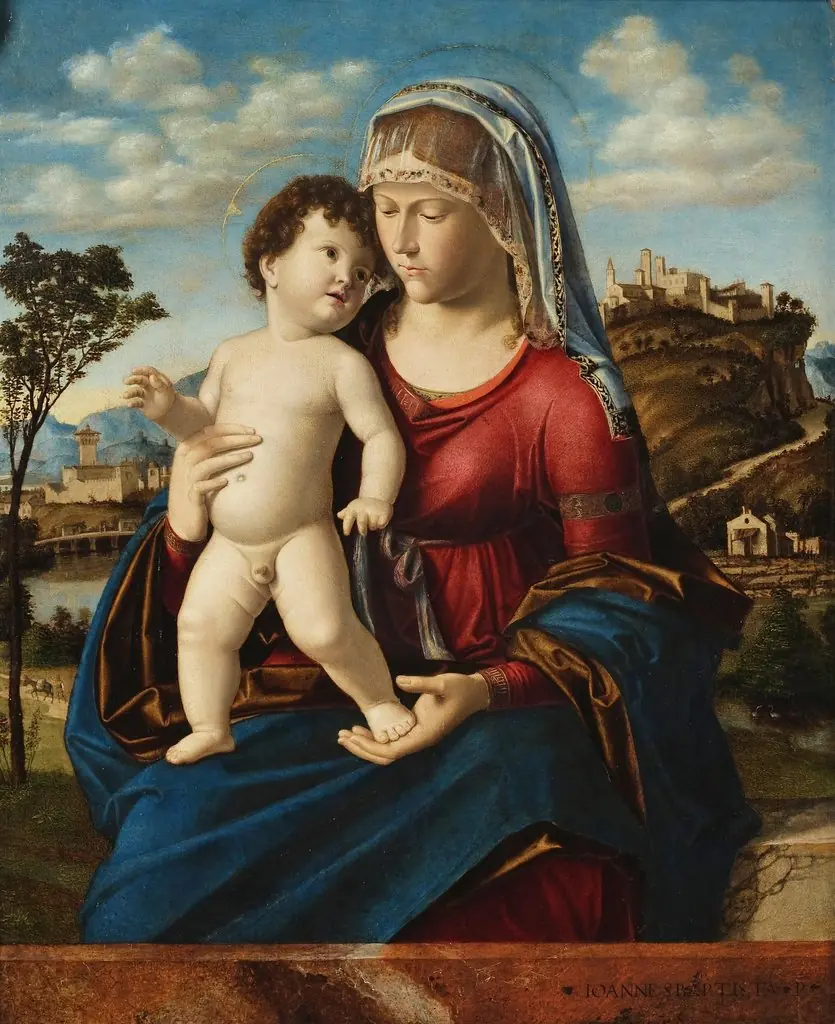
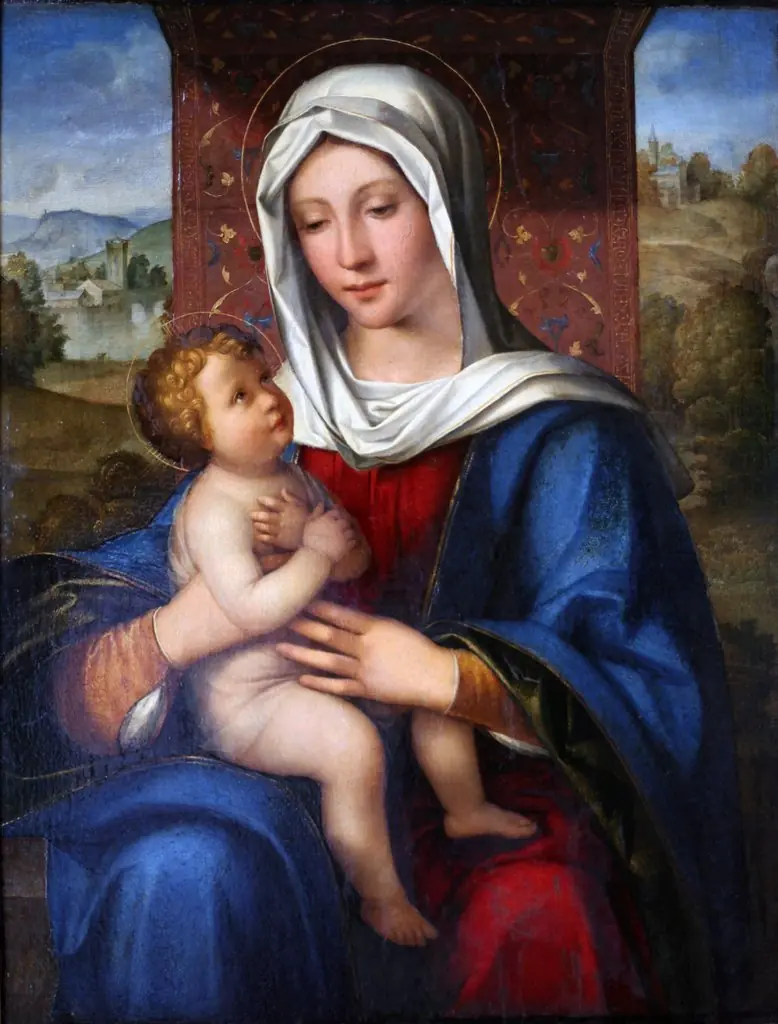
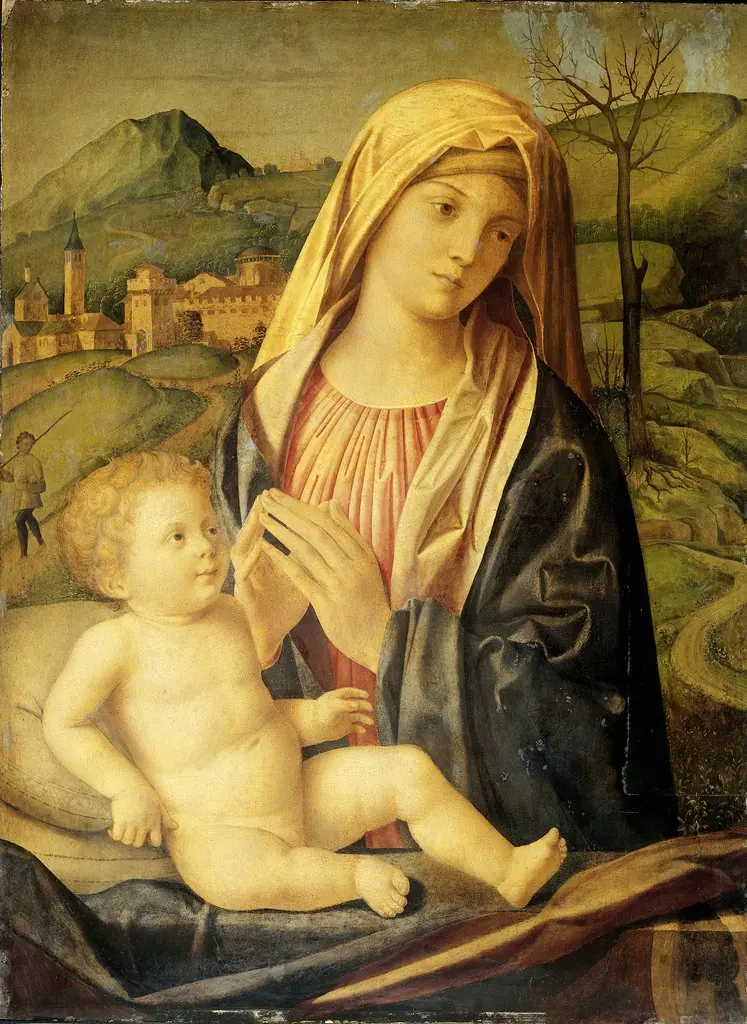
Mary and Child is an oil painting by the High Renaissance artist Antonio da Correggio. It dates from 1512 and is held in the collection of the Kunsthistorisches Museum. Measuring roughly 65 by 45 centimeters, this oil on canvas presents a seated woman and a child within a modest landscape.
About this work
Subject & Meaning
The work depicts the Madonna and Child, a central subject in religious art representing the Virgin Mary holding the infant Jesus.
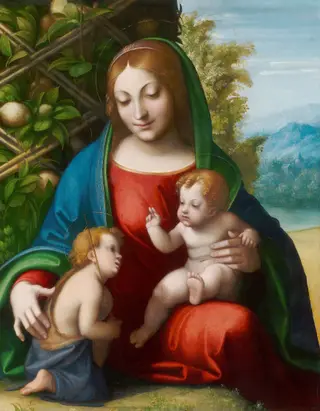
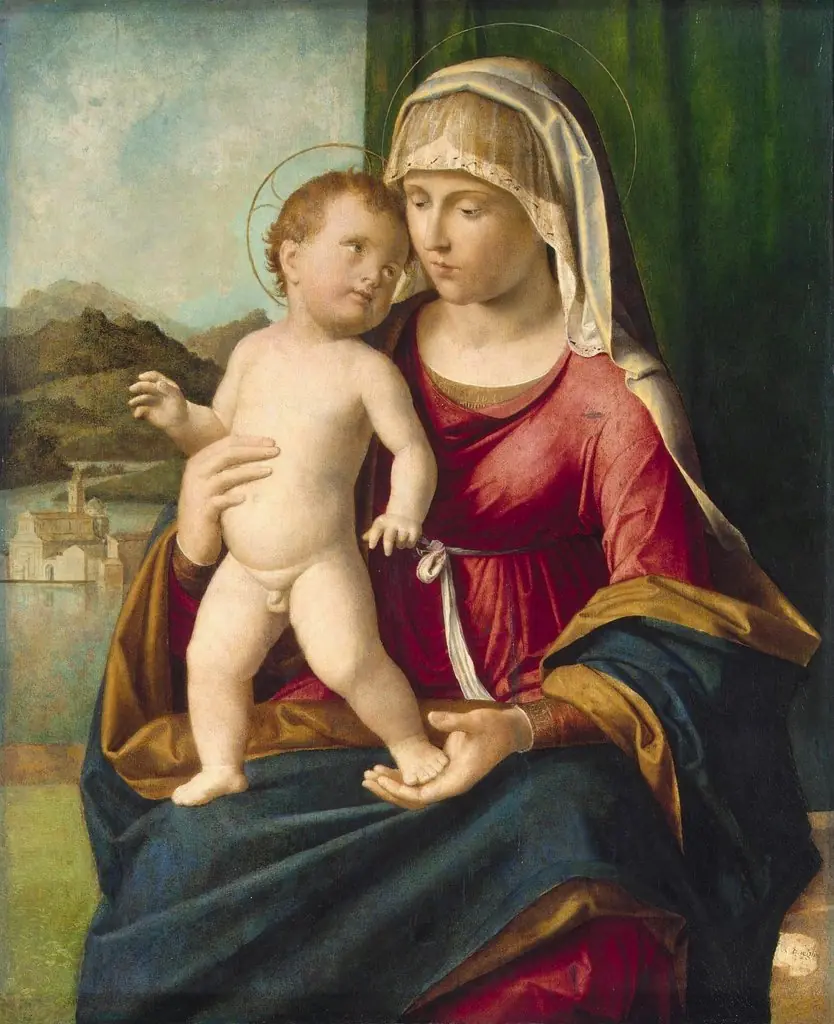
The work depicts the Madonna and Child, a central subject in religious art representing the Virgin Mary holding the infant Jesus. The composition presents a half-length view of the mother with the boy seated on an intense blue cushion resting on her lap. A red curtain drawn aside and a distant landscape form the backdrop.
The child turns an intense gaze toward his mother, who reciprocates while shown in profile. This arrangement likely references the models of Andrea Mantegna, while the luminous background featuring anthropomorphic trees and a mist-shrouded castle recalls the Venetian masters active around the turn of the sixteenth century, such as Cima da Conegliano.
Technique & Style
The painting is executed in oil on canvas, measuring 65 by 55 cm and dated to 1512-1514. It depicts the Virgin Mary holding the Christ Child, seated on a blue cushion and gazing directly at her while she turns in profile, a composition drawing on Mantegna's influence but enriched with Venetian coloristic sensibilities evident in the luminous landscape featuring anthropomorphic trees and a distant veiled castle. The work was rediscovered in Hohensalzburg Castle in 1928 and transferred to the Kunsthistorisches Museum in Vienna, where it remains on display.
History & Provenance
The painting dates to 1512–1514 and is attributed to Correggio, though the attribution remains uncertain. It was rediscovered in 1928 at Hohensalzburg Castle and subsequently donated to the Kunsthistorisches Museum in Vienna, where it has been housed since. The work entered the museum’s collection after its rediscovery, with no earlier provenance documented in the available sources.
The painting is held by the Kunsthistorisches Museum in Vienna, where it was donated after being rediscovered in Hohensalzburg Castle in 1928. While the work is currently attributed to Antonio da Correggio, this attribution remains uncertain according to available records. The specific inventory or accession number for the piece is not provided in the source material. No exhibition history is documented in the provided texts.
Context
Scholarship regarding this painting notes that its attribution to Antonio da Correggio remains uncertain, despite being dated to approximately 1512–1514. Art historical analysis places the work within the artist's formative period, identifying compositional debts to Andrea Mantegna, a significant model for the young painter. Simultaneously, the work's rich chromatic palette and luminous background landscape suggest the influence of Venetian masters active around the turn of the sixteenth century, particularly Cima da Conegliano.
These stylistic elements reflect a synthesis of Mantuan structure and Venetian colorism characteristic of Correggio's early development. The painting's modern critical context is defined by its rediscovery in 1928 at Hohensalzburg Castle before its transfer to the Kunsthistorisches Museum in Vienna.
Overview
Measuring roughly 65 by 45 centimeters, this oil on canvas presents a seated woman and a child within a modest landscape. The woman, clothed in a red garment and a blue veil, supports the child’s right arm as he sits nude on her lap, his gaze directed upward toward her. The background includes a tree, distant structures, and a few animals, framing the intimate scene.
Artist & collection
Artist
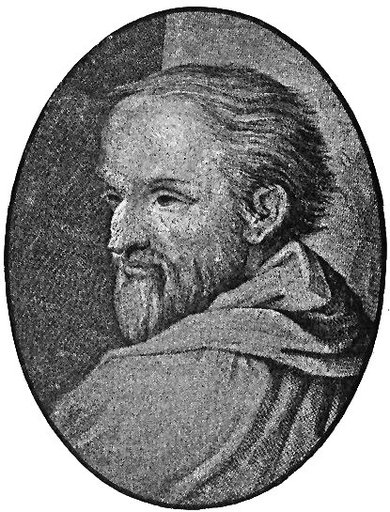
Antonio Allegri da Correggio, usually known as just Correggio, was an Italian Renaissance painter who was the foremost painter of the Parma school of the High Renaissance, who was responsible for some of the most…