Artwork
The Madwoman
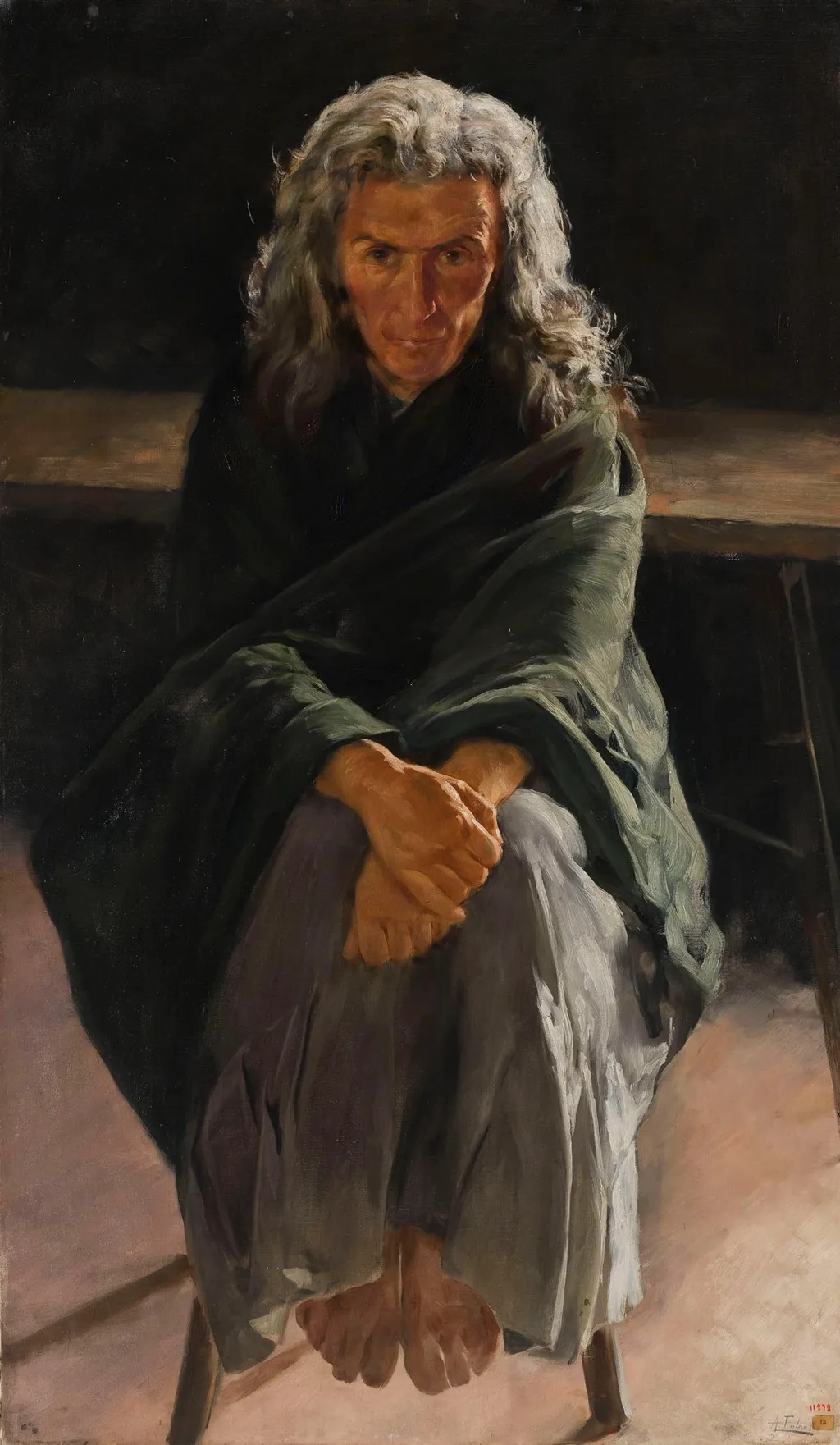
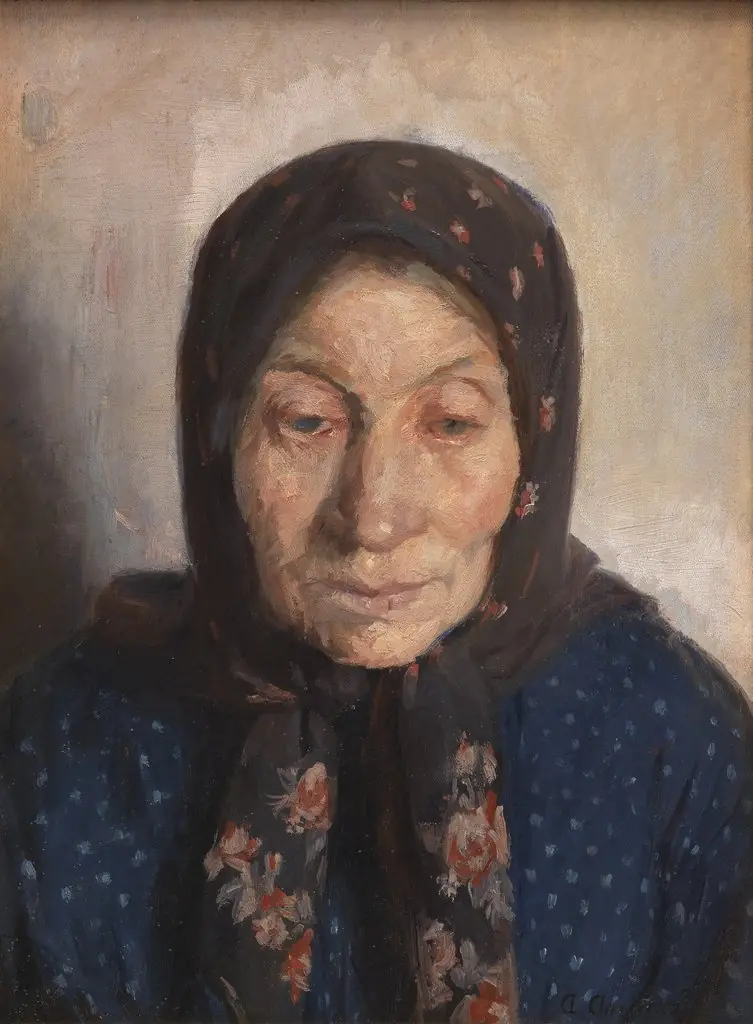
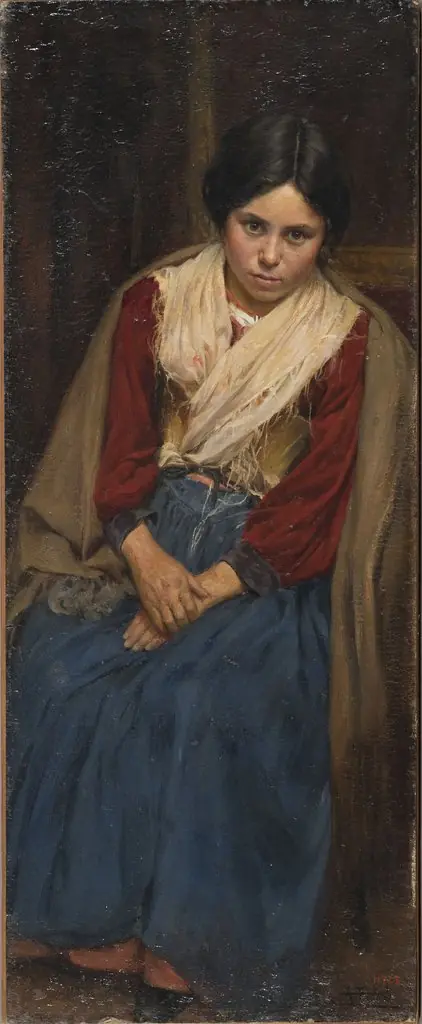
The Madwoman is an oil painting by the Art Nouveau artist Antonio Fabrés. It dates from 1908 and is held in the collection of the Museu Nacional d'Art de Catalunya.
About this work
Overview
Antonio Fabrés painted The Madwoman in 1908 using oil on canvas. It is classified as a genre scene, portraying an ordinary individual in a private, introspective moment. The work is part of the collection at the Museu Nacional d'Art de Catalunya, where it remains one of the few paintings by Fabrés that diverges from his more common Orientalist and historical themes.
Subject & Meaning
Her clasped hands and solemn expression suggest inner turmoil or resignation, inviting contemplation rather than narrative explanation.
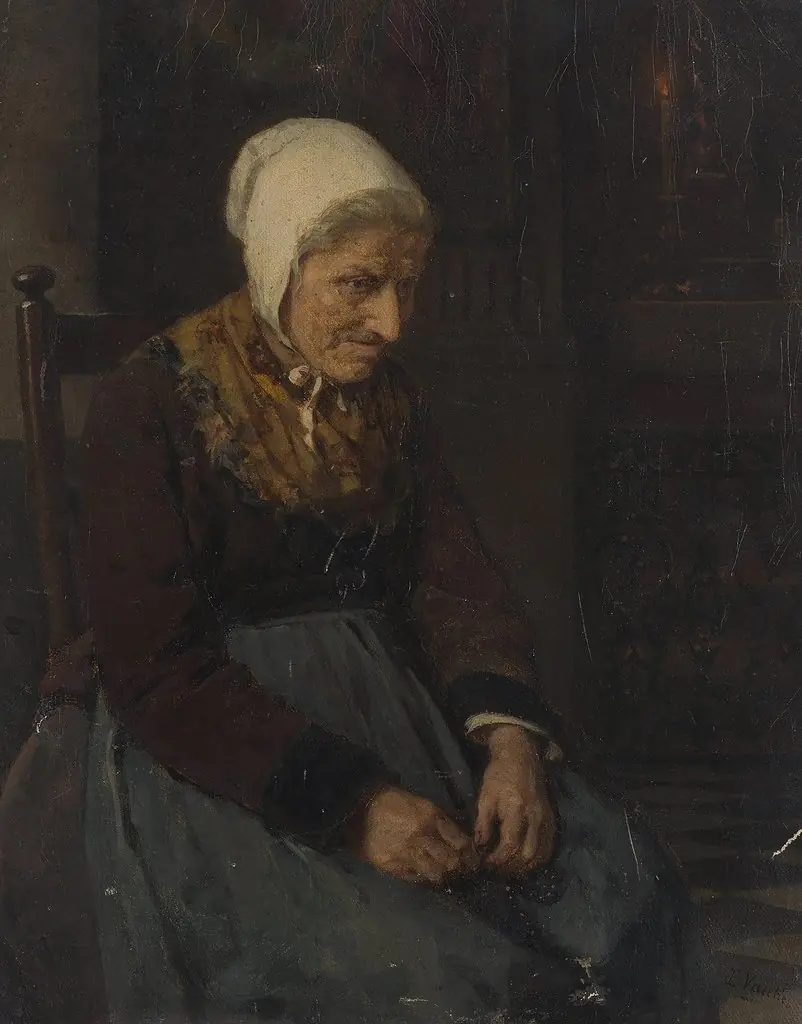
The subject is an elderly woman, her gray hair loose and her bare feet resting on the floor, seated rigidly in a plain wooden chair. Dressed in a dark robe and gray trousers, she meets the viewer’s gaze with unflinching stillness. Her clasped hands and solemn expression suggest inner turmoil or resignation, inviting contemplation rather than narrative explanation. The title implies psychological depth, though the painting resists overt interpretation.
Technique & Style
Fabrés employs chiaroscuro to isolate the figure against a dim background, focusing attention on the woman’s face and hands. The brushwork is precise but not overly refined, emphasizing texture in fabric and skin without idealization. The palette is muted, grays, browns, and deep shadows, reinforcing the quiet gravity of the scene. This approach aligns with late 19th-century realism, tempered by the atmospheric sensitivity of Art Nouveau.
History & Provenance
The painting entered the Museu Nacional d'Art de Catalunya’s collection in the early 20th century, likely acquired during a period of institutional expansion focused on Catalan artists. Fabrés, though born in Barcelona, spent much of his career abroad, making this work a rare example of his domestic subject matter. Its preservation reflects the museum’s commitment to documenting regional artistic diversity beyond grand historical narratives.
Context
While Fabrés was known for exoticized and theatrical scenes, The Madwoman stands apart as a restrained study of psychological presence. Created during a time when European art increasingly turned toward inner life and psychological realism, the painting echoes contemporaneous interest in mental states, though without the symbolism or stylization typical of Symbolism or Expressionism.
Legacy
The painting is not widely reproduced or discussed in broader art historical narratives, yet it remains a quietly significant work within Catalan modernism. It demonstrates Fabrés’s capacity for empathy and observation beyond his more popular genres. Its enduring presence in the museum underscores its value as a nuanced portrait of solitude, unmediated by spectacle or sentimentality.
Artist & collection
Artist
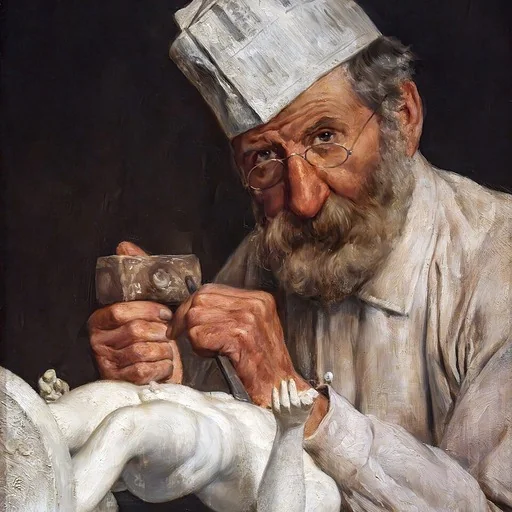
Antoni Maria Fabrés i Costa (Spanish: Antonio Maria Fabrés y Costa; 1854–1938), also known as Antoni Fabrés, was a Catalan sculptor and painter known especially for his depictions of Orientalist and period subjects.