Artwork
Under the arbor
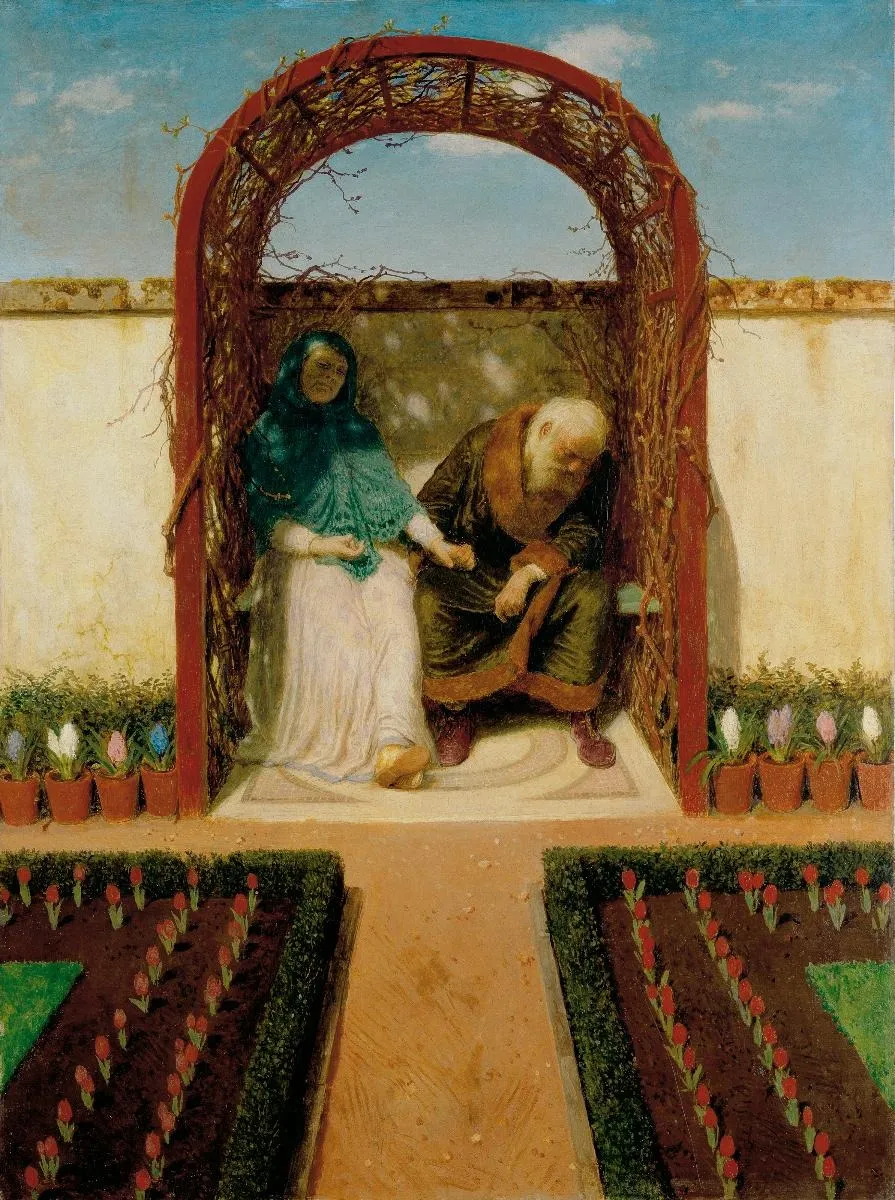
Under the arbor is a tempera painting by the Symbolist artist Arnold Böcklin. It dates from 1896 and is held in the collection of the Kunsthaus Zürich.
About this work
Overview
Arnold Böcklin’s tempera work titled Under the Arbor was completed in 1896. The composition presents an intimate garden scene in which an elderly couple shares a moment beneath a vine‑covered wooden arbor. The tranquil setting, framed by a low wall and a clear blue sky, conveys a quiet, contemplative atmosphere.
Subject & Meaning
The painting focuses on an aged man and woman seated together on a bench. The man, clad in dark attire with white hair, leans forward, while the woman in a white dress and blue shawl gazes downward, suggesting a shared, reflective pause. The surrounding garden and the sheltering arbor may symbolize shelter, continuity, or the passage of time.
Technique & Style
Executed in tempera, the work displays Böcklin’s precise handling of color and detail. The red wooden frame of the arbor is rendered with crisp lines, while the vine’s foliage is painted in layered, translucent washes that give a sense of depth. The overall palette balances muted earth tones with bright sky blue, creating a harmonious visual rhythm.
History & Provenance
Under the Arbor entered the collection of the Kunsthaus Zürich, where it remains on display. The painting’s acquisition by the museum reflects its inclusion in the institution’s broader representation of late‑19th‑century Swiss art and Böcklin’s contribution to Symbolist and landscape traditions.
Context
Created toward the end of Böcklin’s career, the work aligns with his recurring interest in mythic and natural settings, though here the focus shifts to a more personal, domestic scene. The late 1890s saw a renewed interest in tempera among European artists seeking a matte finish and greater control over color, a practice Böcklin embraced in this piece.
Artist & collection
Artist
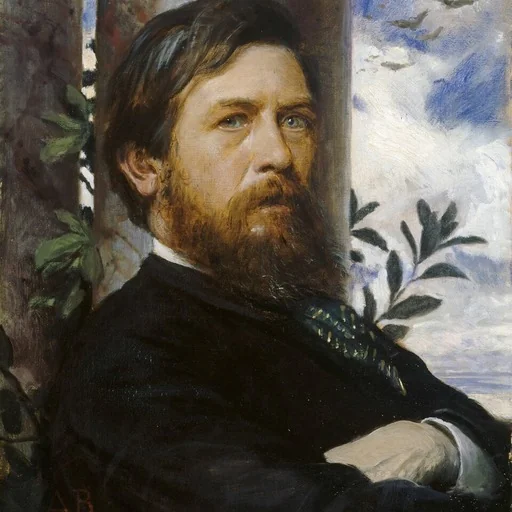
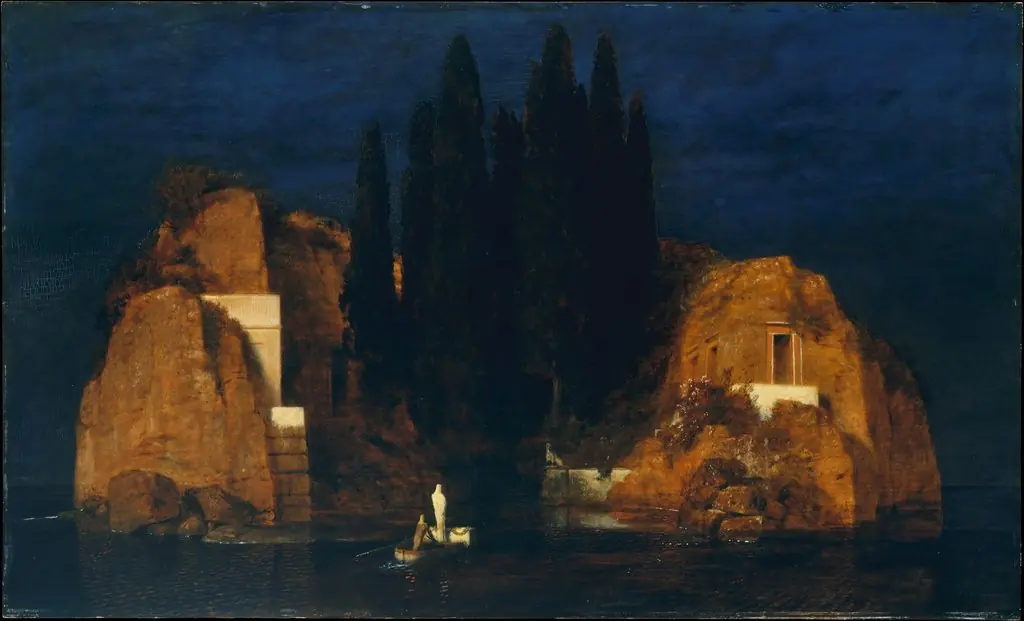
Arnold Böcklin was a Swiss Symbolist painter. His five versions of the Isle of the Dead inspired works by several late Romantic composers.

- Salome at the Prison
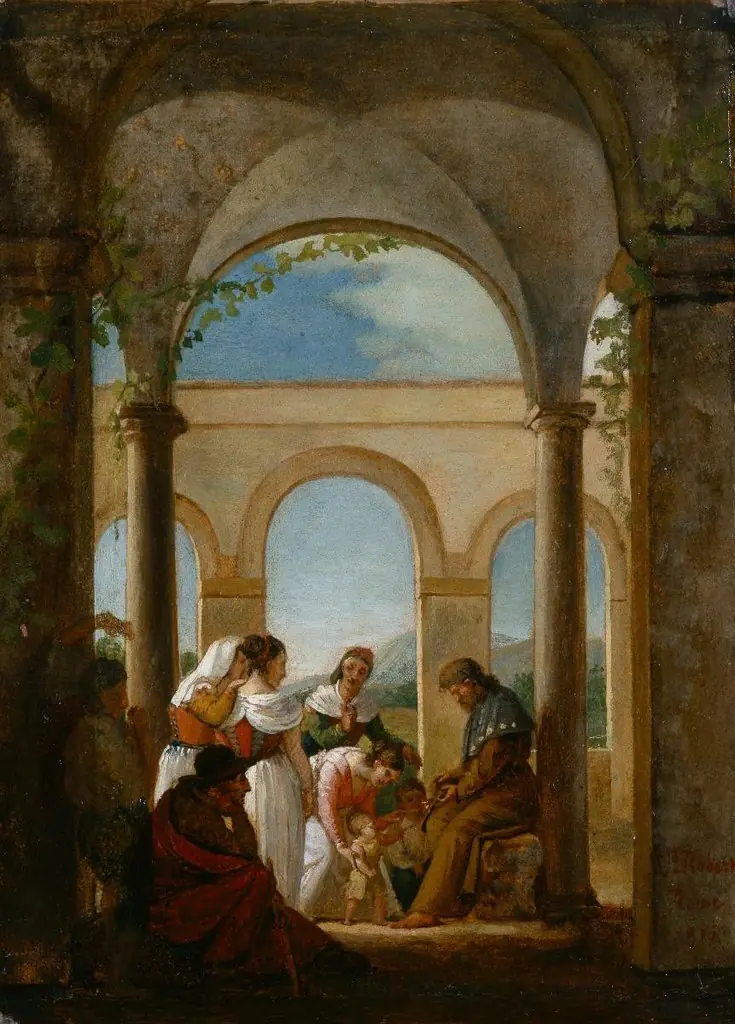 Frauen und Kinder vor einem Pilger in einem Portikus
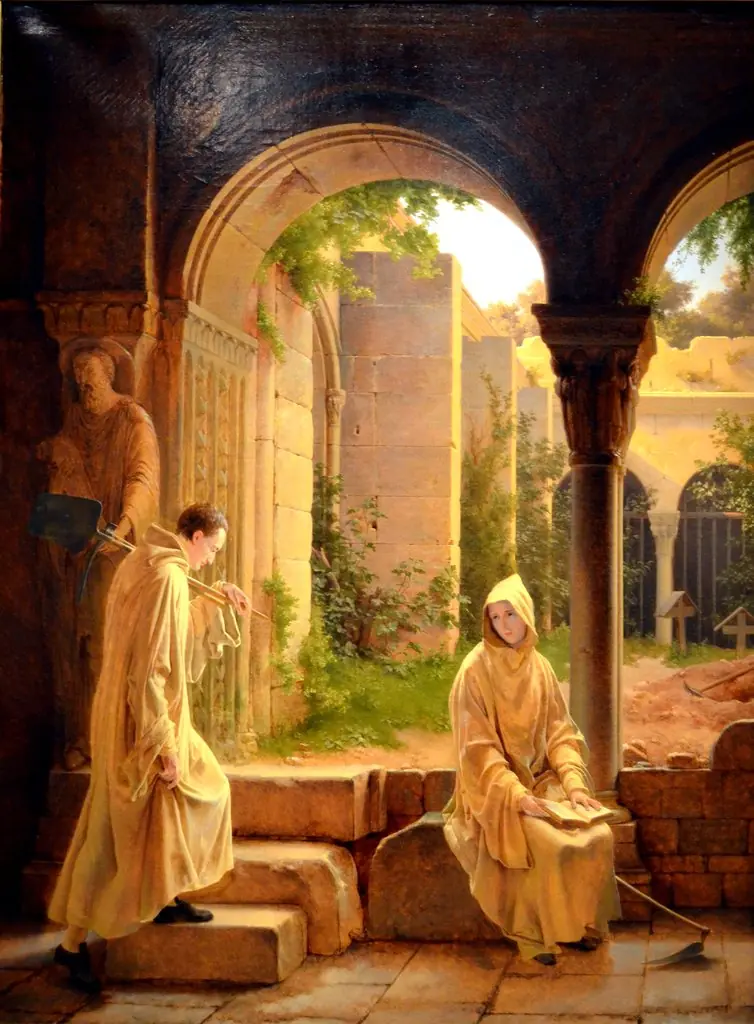 Comminges and Adelaide in the Trappist Monastery
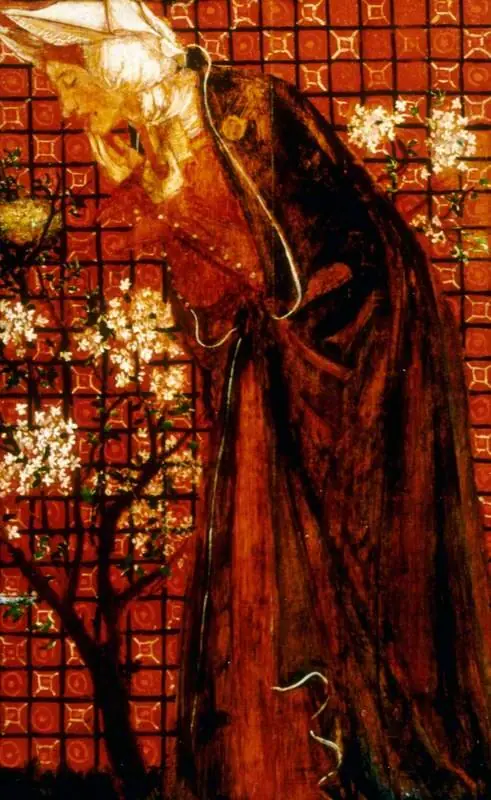 Woman Holding a Small Book
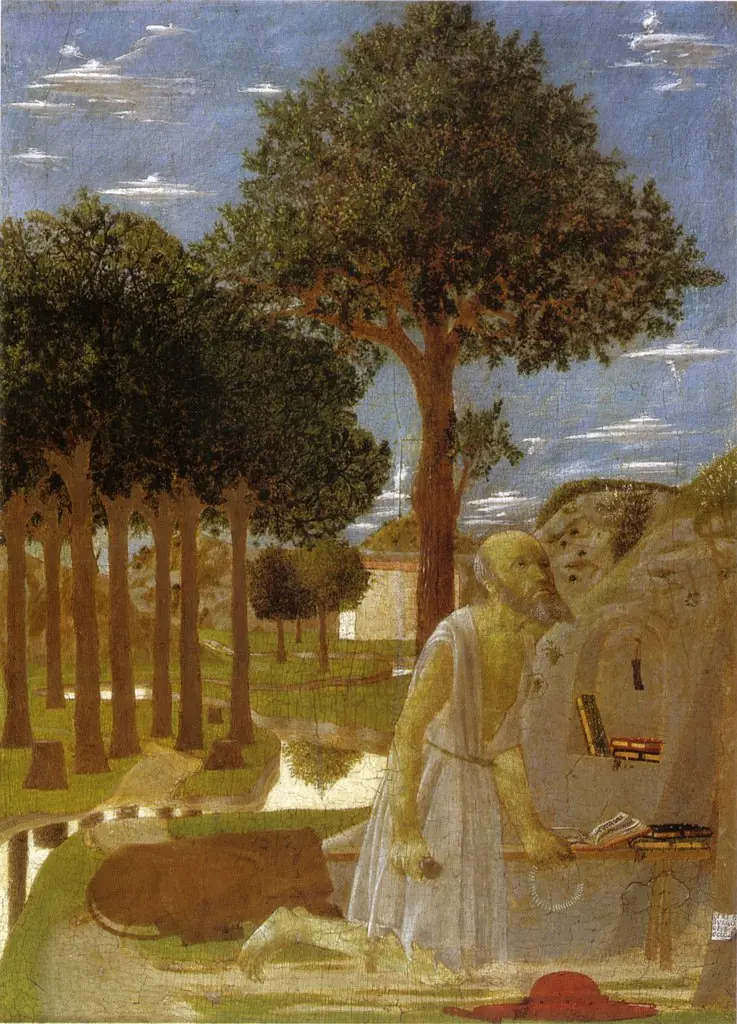 Saint Jerome penitent
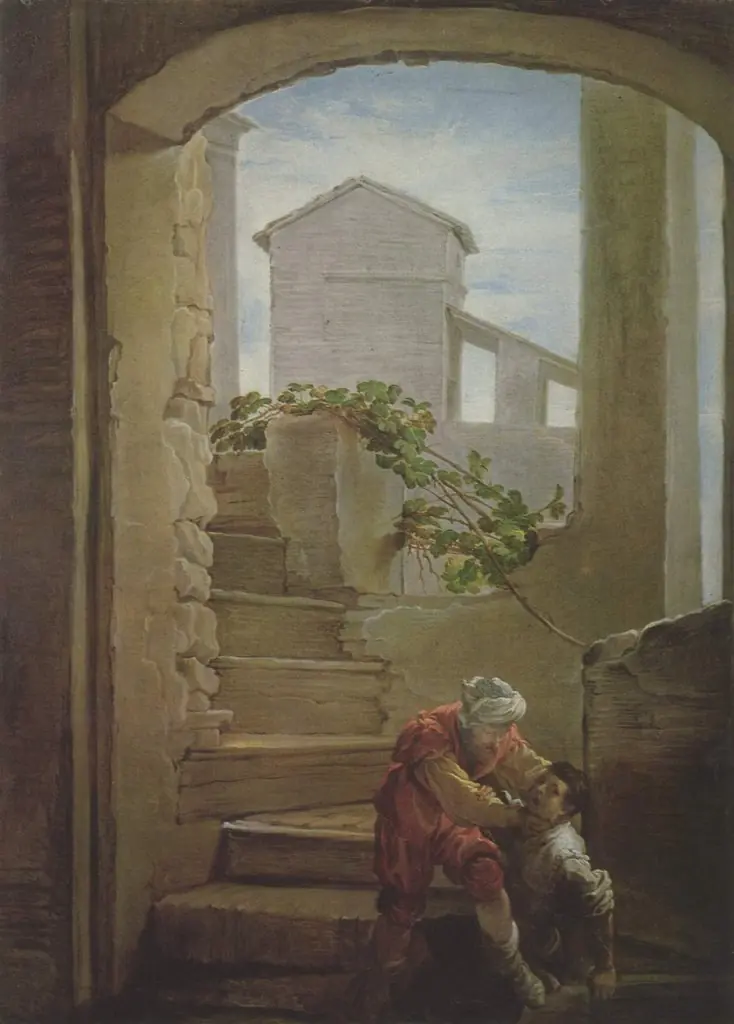 Parable of the Wicked Servant
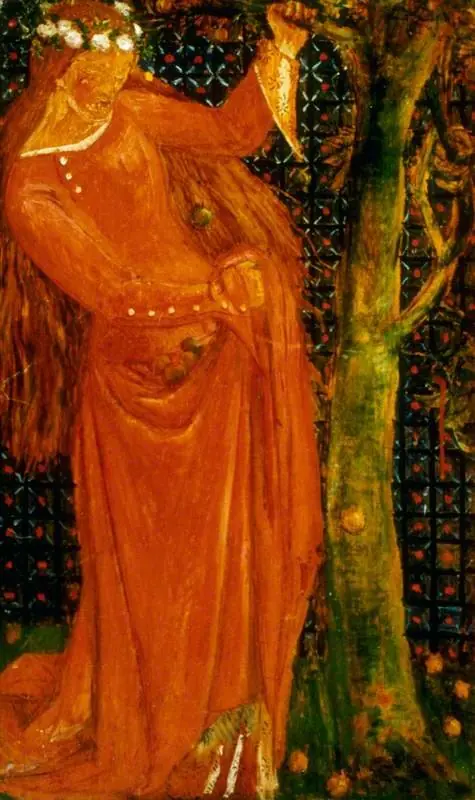 Woman Gathering Fruit
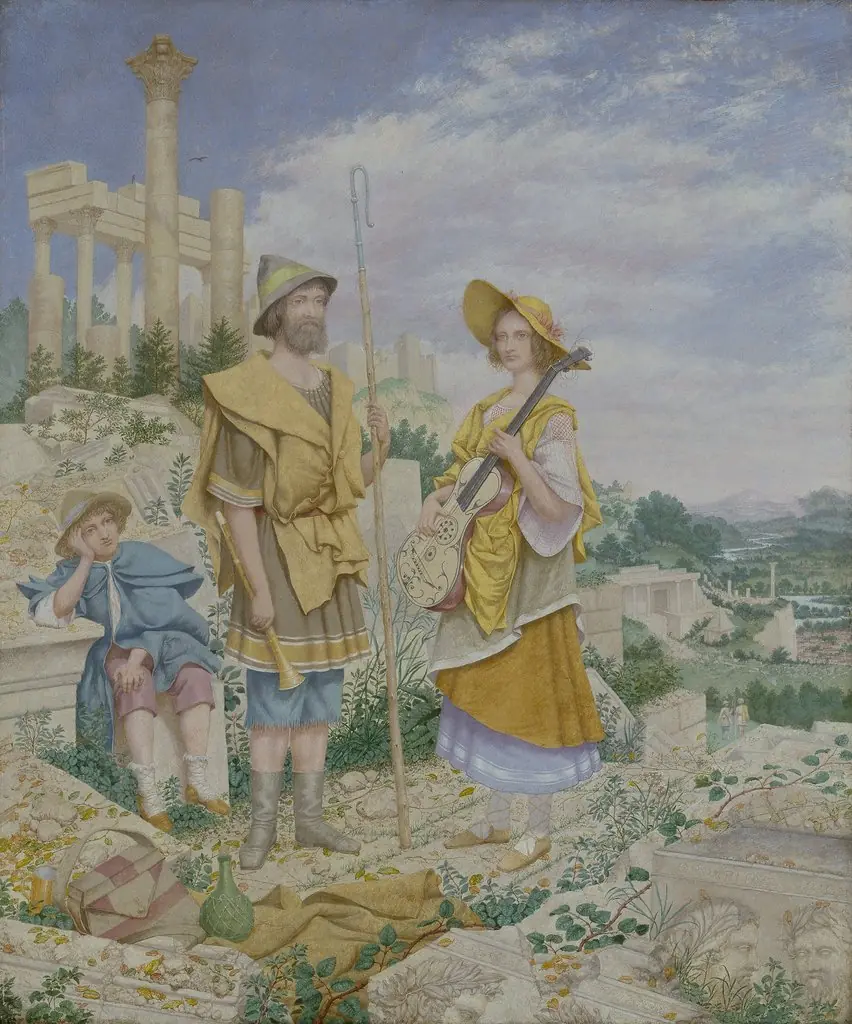 Wandering Musicians
 Manoah's Sacrifice
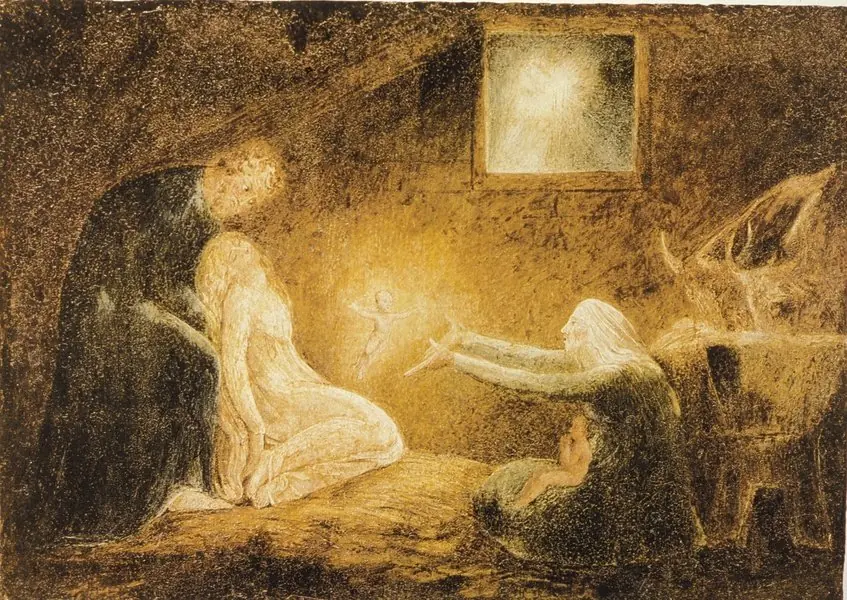 The Nativity
 Young Woman at a Fountain
 Christ in the House of His Parents