Artwork
Silhouet portret van een man in officiersuniform
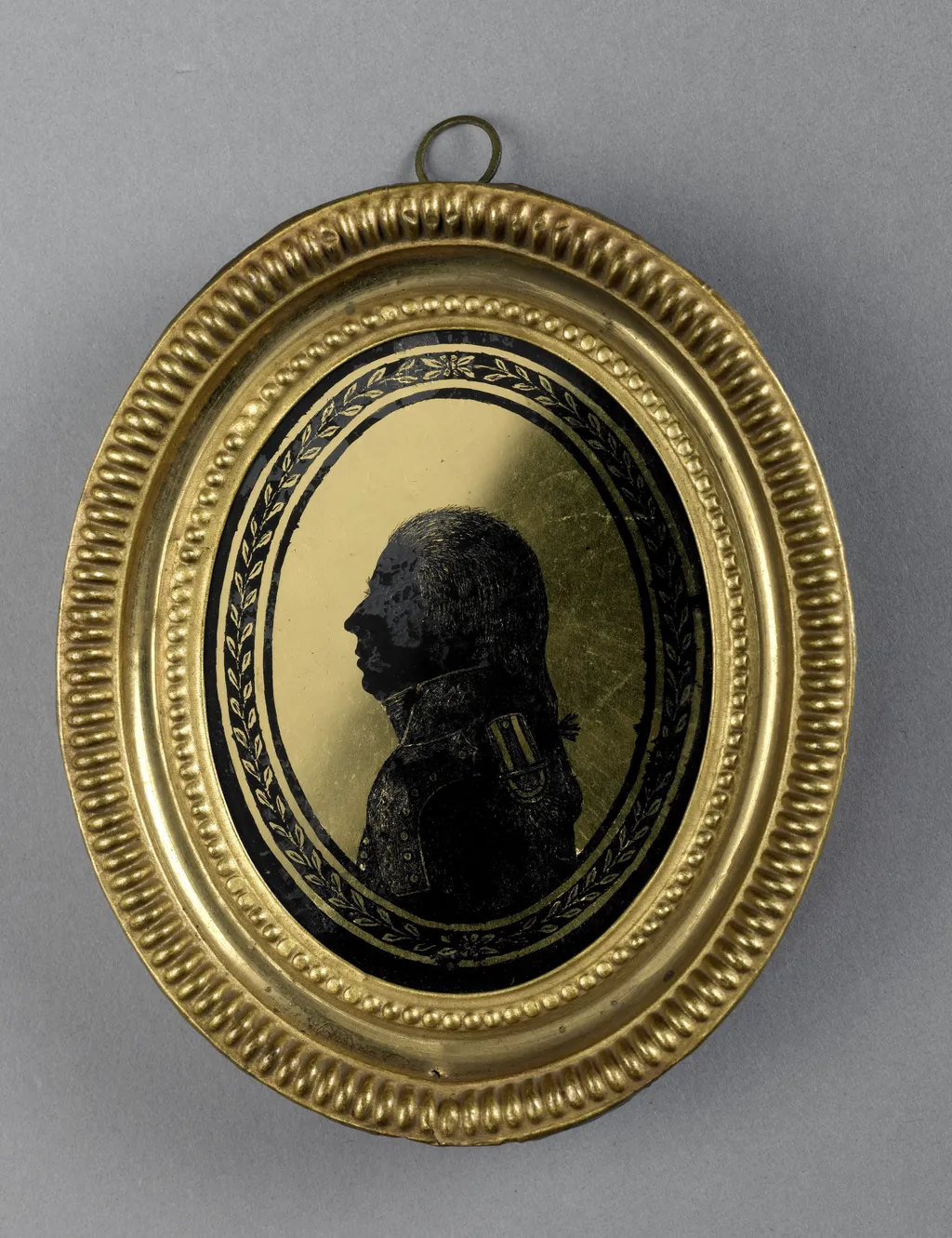
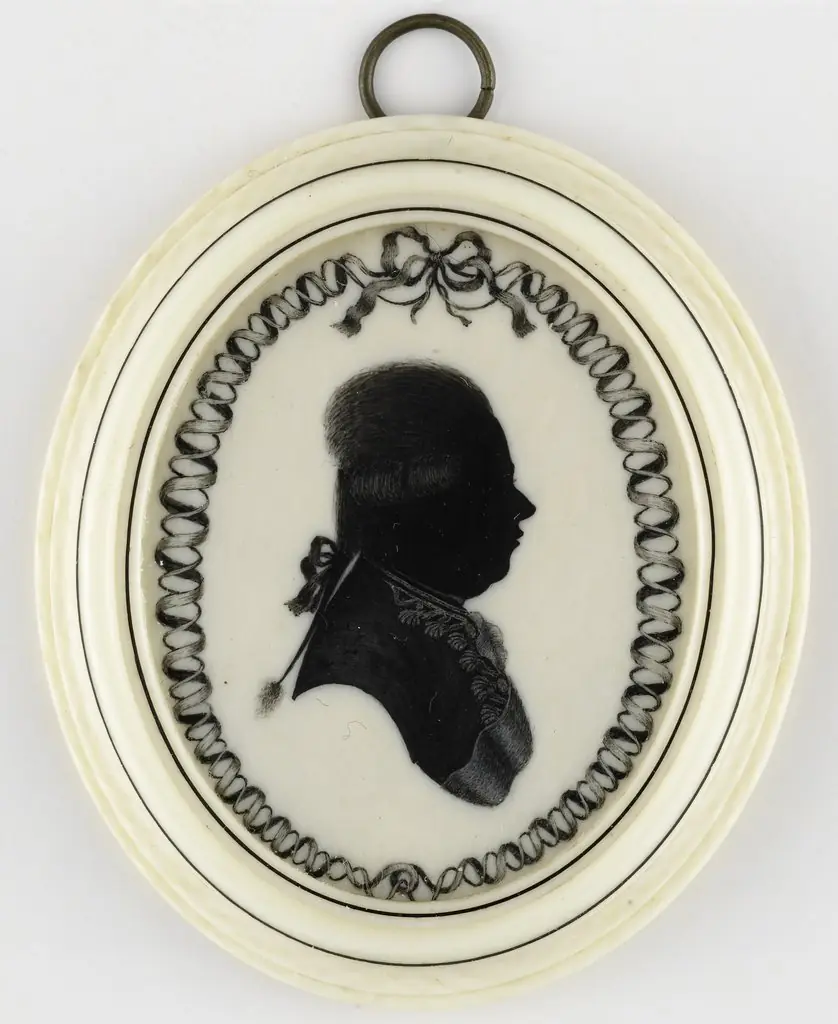
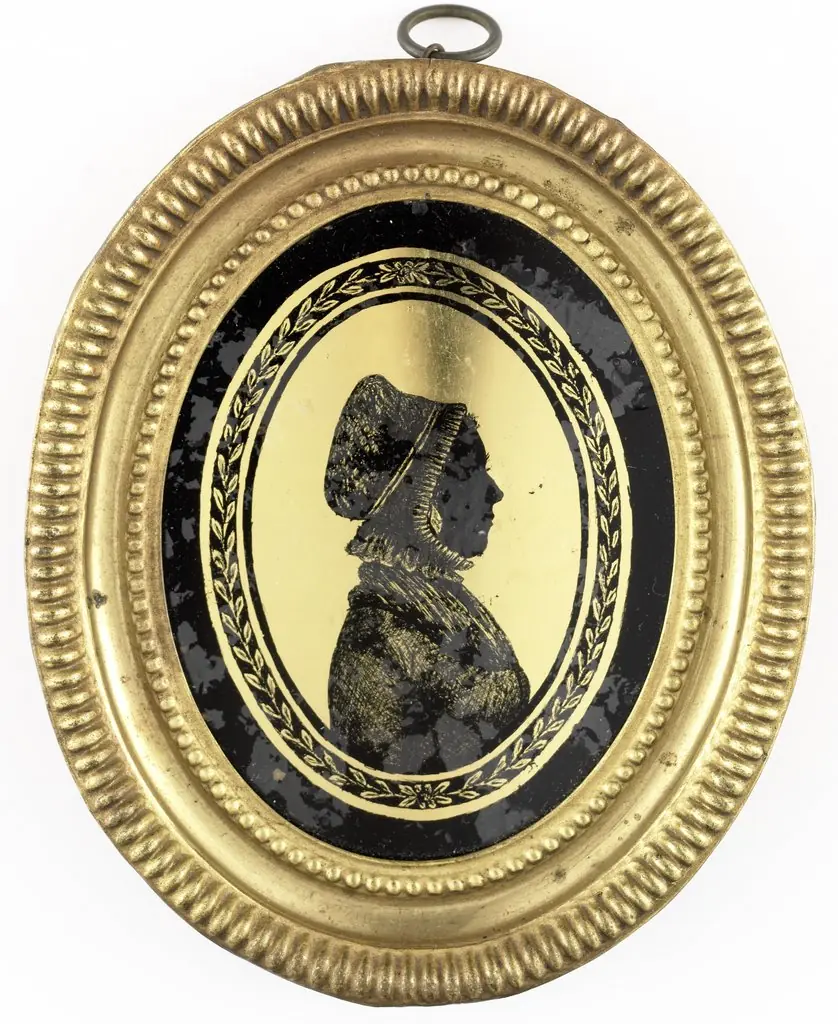
Silhouet portret van een man in officiersuniform is an unspecified painting by the Neoclassicist artist August Forberger. It dates from 1798 and is held in the collection of the Rijksmuseum.
About this work
Technique & Style
Handling emphasizes linear precision and tonal contrast, characteristic of late-eighteenth-century profile miniatures intended for intimate display.
Executed in verre églomisé in 1796, the miniature presents a reverse-painted glass technique in which the opaque ground layer is incised to reveal the portrait beneath. The support is glass, measuring 7.5 cm in height and 5.7 cm in width, with the sitter’s profile rendered in a sharply cut silhouette against a dark ground. Handling emphasizes linear precision and tonal contrast, characteristic of late-eighteenth-century profile miniatures intended for intimate display.
History & Provenance
The silhouette portrait of a man in an officer's uniform was created by August Forberger in 1796. Executed in verre églomisé, this small-scale portrait measures 7.5 cm in height and 5.7 cm in width. The work entered the collection of the Rijksmuseum, where it is currently housed.
No specific details regarding the original commission, the identity of the sitter, or the intermediate ownership chain prior to the museum acquisition are provided in the available records.
Overview
August Forberger’s 1798 portrait, titled Silhouet portret van een man in officiersuniform, is a small oval work executed in verre églomisé. The piece is part of the Rijksmuseum’s collection and presents a solitary male figure in a military coat, rendered as a dark silhouette against a luminous background within an ornate gold frame.
Subject & Meaning
The lone figure is shown in profile, turned to the left, dressed in an officer’s uniform that suggests a military identity. The stark contrast between the dark silhouette and the radiant background emphasizes the individual’s presence while abstracting personal details, inviting viewers to contemplate the role of rank and anonymity in the period’s portraiture.
Context
During the late eighteenth century, verre églomisé enjoyed popularity among European artisans for its luxurious finish and ability to mimic precious materials. Forberger’s work reflects this trend, combining decorative ornamentation, evident in the gold frame’s leafy motif and scalloped edge, with a restrained, almost abstracted portraiture that aligns with contemporary tastes for refined, ornamental objects.
Own this work as a print
Artist & collection