Artwork
Saint Barbera and the donor Sibylla Rinck-Kannegießer
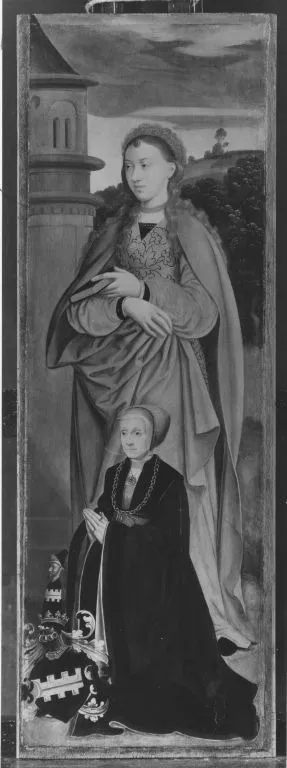
Saint Barbera and the donor Sibylla Rinck-Kannegießer is a paint painting by the Early Baroque Italian artist Bartholomaeus Bruyn the Elder. It dates from 1550 and is held in the collection of the Bavarian State Painting Collections.
About this work
Subject & Meaning
The composition places the saint and the layperson together on an oak panel, visually linking the earthly devotee with the heavenly protector.
This religious painting depicts Saint Barbara alongside a donor figure identified as Sibylla Rinck-Kannegießer. Created in 1550 by Bartholomaeus Bruyn the Elder, the work functions as a devotional image where the holy figure is presented in conjunction with a specific patron. The inclusion of the donor within the sacred scene signifies a personal act of piety, representing the individual's spiritual dedication and desire for intercession.
The composition places the saint and the layperson together on an oak panel, visually linking the earthly devotee with the heavenly protector.
Technique & Style
The painting employs oil on oak panel, executed in 1550 by Bartholomaeus Bruyn the Elder. The vertical format measures 75.5 cm in height and 26 cm in width, with the support cut to a narrow, elongated shape.
The handling shows Bruyn’s characteristic precision in rendering fine details, particularly in the donor’s costume and the saint’s drapery, using smooth, blended brushwork to define textures and volumes. The palette is restrained, emphasizing earth tones and muted hues, with subtle glazes to model forms and suggest depth. The linear clarity and restrained modeling align with Bruyn’s mature style, which emphasizes clarity and devotional focus over dramatic effect.
History & Provenance
The painting Saint Barbara and the donor Sibylla Rinck-Kannegießer was created by Bartholomaeus Bruyn the Elder in 1550. Executed in oil on an oak panel, the work depicts Saint Barbara alongside the donor Sibylla Rinck-Kannegießer. The piece is currently held by the Bavarian State Painting Collections at the Alte Pinakothek in Munich.
While the specific commission details are not elaborated in the provided records, the work's creation is firmly dated to 1550, aligning with the artist's mature period of religious portraiture.
The work is housed in the Bavarian State Painting Collections at the Alte Pinakothek.
It bears the inventory number 2663.
The painting was included in the exhibition "German Paintings of the 16th Century" held at the Alte Pinakothek in 1923.
Context
Saint Barbara and the donor Sibylla Rinck-Kannegießer, painted by Bartholomaeus Bruyn the Elder in 1550, exemplifies Northern Renaissance religious art through its donor portraiture and devotional composition. The work is housed in the Bavarian State Painting Collections at the Alte Pinakothek, reflecting the institutional preservation of Reformation-era imagery. Scholarship emphasizes its significance within Bruyn's oeuvre as a key example of donor-centric piety in 16th-century German painting, situated amid contemporary debates on saintly intercession and visual devotion.
The painting's material execution on oak panel and stylistic treatment of the donor figure reveal regional artistic practices while contributing to broader narratives of Counter-Reformation visual culture and donor representation in sacred spaces.
Legacy
The painting's enduring presence in the Alte Pinakothek has cemented its status as a representative example of 16th-century Bavarian religious art. Its depiction of Saint Barbara alongside Sibylla Rinck-Kannegießer offers valuable insight into donor portraiture traditions of the period, influencing scholarly understandings of devotional imagery in German Renaissance painting.
The work's composition and iconography have been frequently referenced in studies of Bruyn's workshop practices and the evolution of saintly representations in Southern German art, contributing to broader narratives about regional artistic identities within the Holy Roman Empire.
Overview
Saint Barbara and the donor Sibylla Rinck-Kannegießer is a painting created circa 1550 by Bartholomaeus Bruyn the Elder, a prominent German Renaissance artist based in Cologne. The work combines religious and portrait elements, characteristic of Bruyn's style.
Artist & collection

Artist
Bartholomäus Bruyn (1493–1555), usually called Barthel Bruyn or Barthel Bruyn the Elder, was a German Renaissance painter active in Cologne. He painted altarpieces and portraits, and was Cologne's foremost portrait painter of his day.

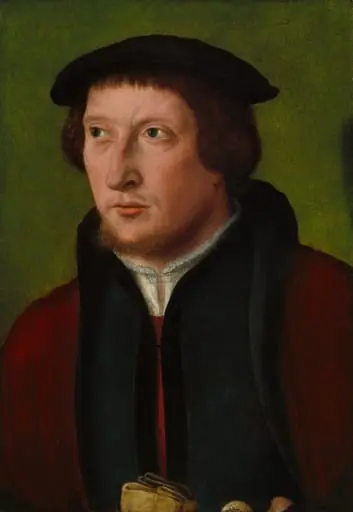 Portrait of a Man
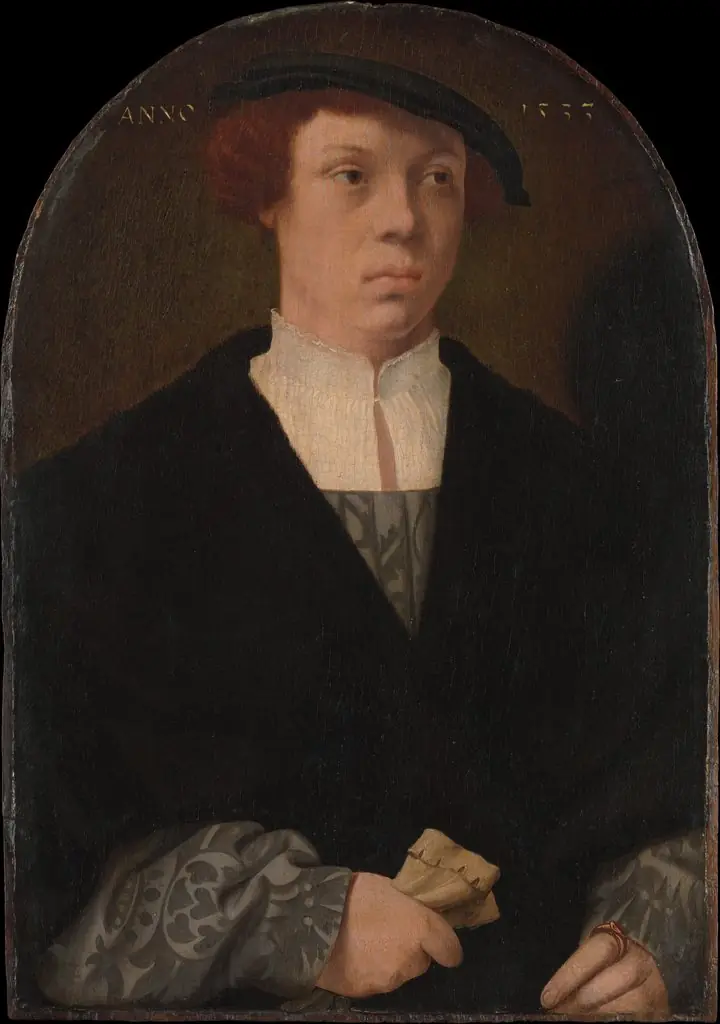 Portrait of a Man
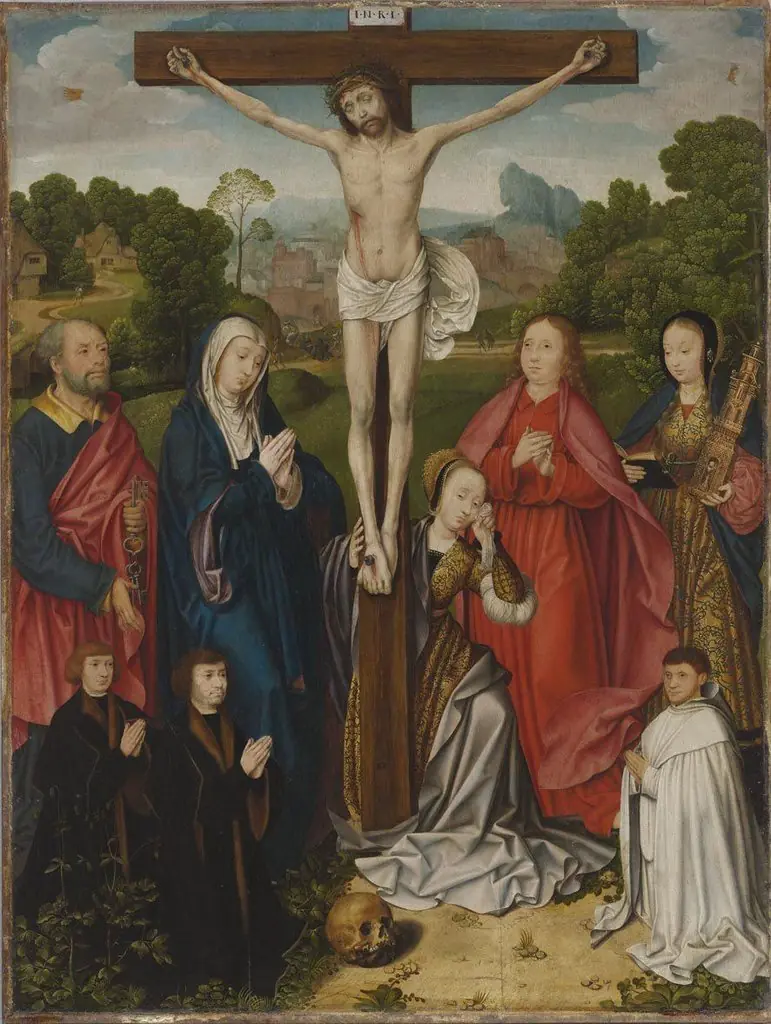 Christ on the cross with the saints Peter, Mary, Mary Magdalene, John the Evangelist and Barbara, with three donors
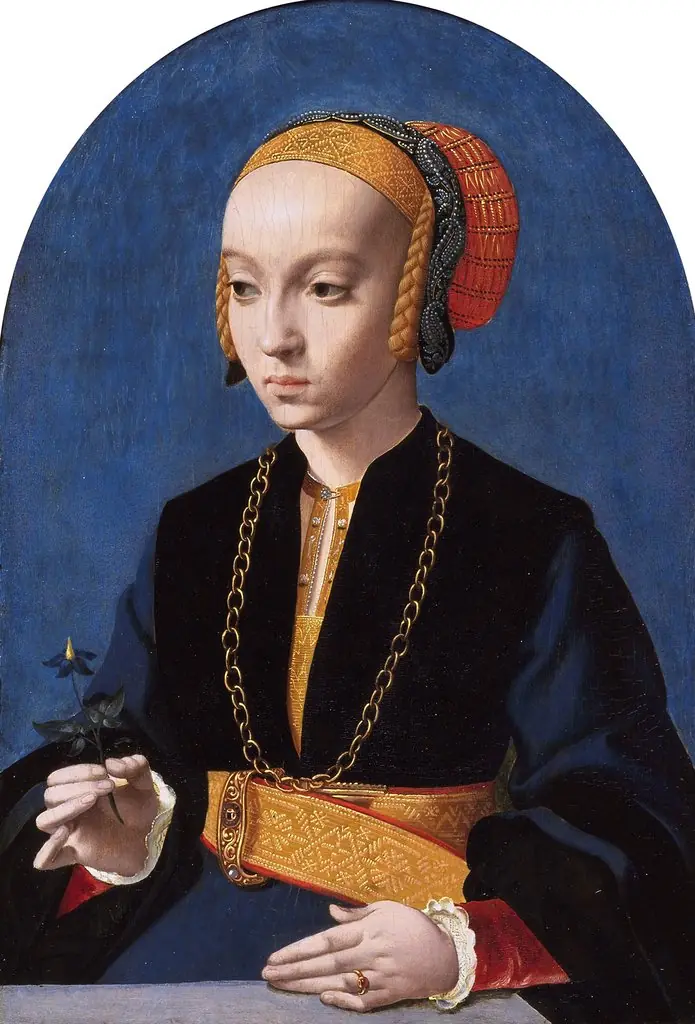 Portrait of Elisabeth Bellinghausen
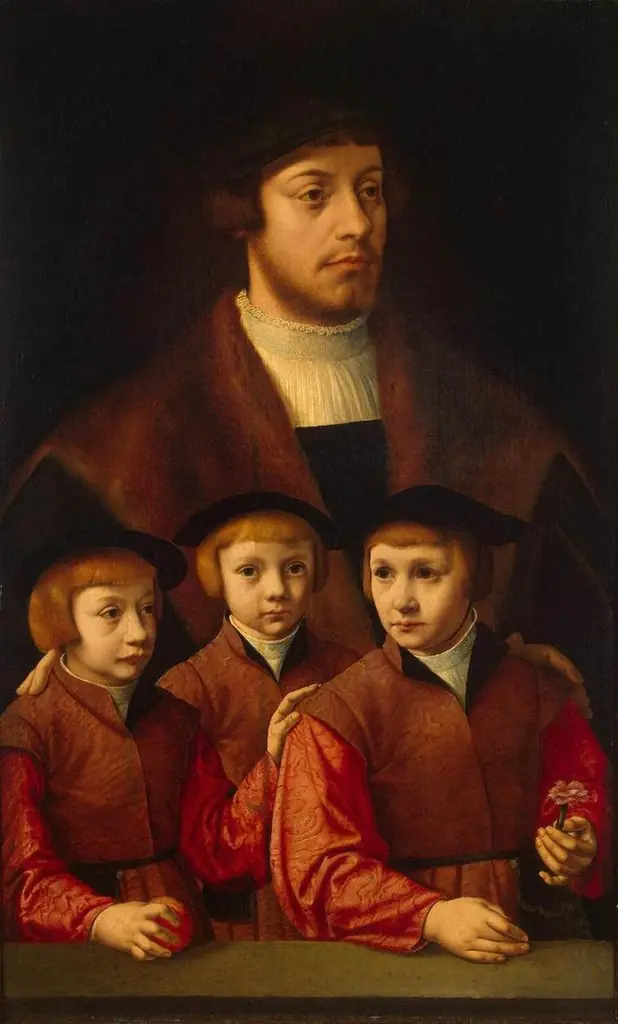 Portrait of a Man and His Three Sons
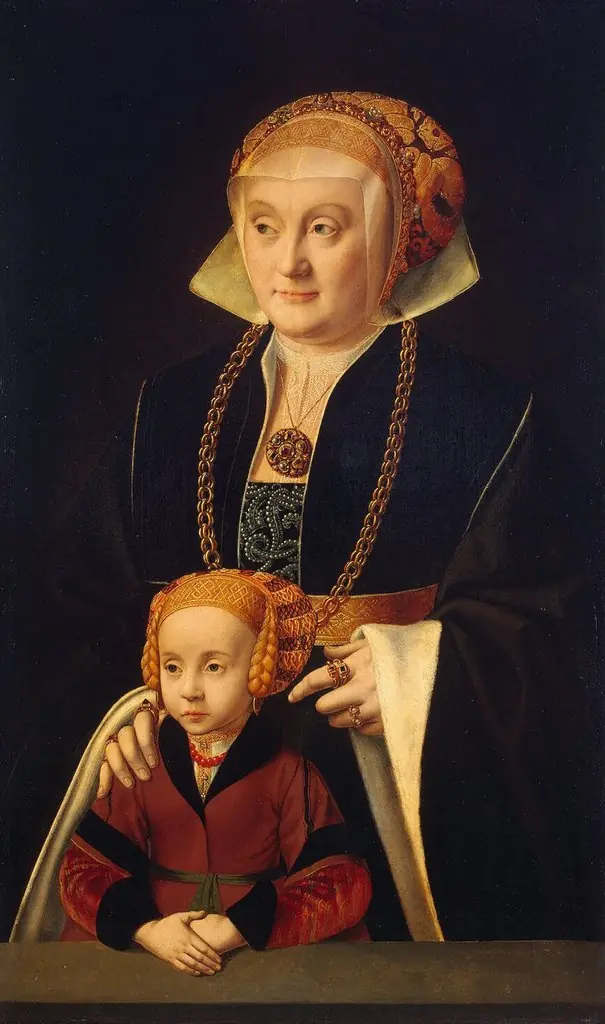 Portrait of a Lady and Her Daughter
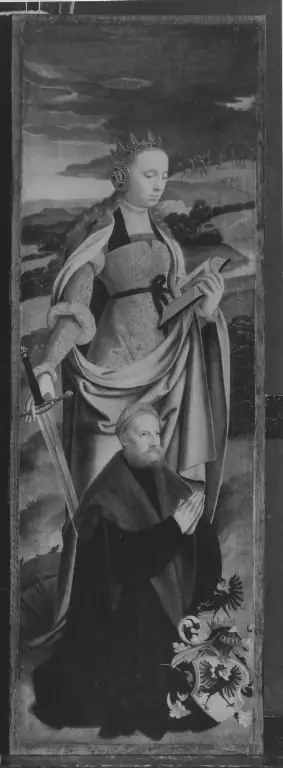
- Rinck-Altar II:Saint Catherine with donor Hermann Rinck
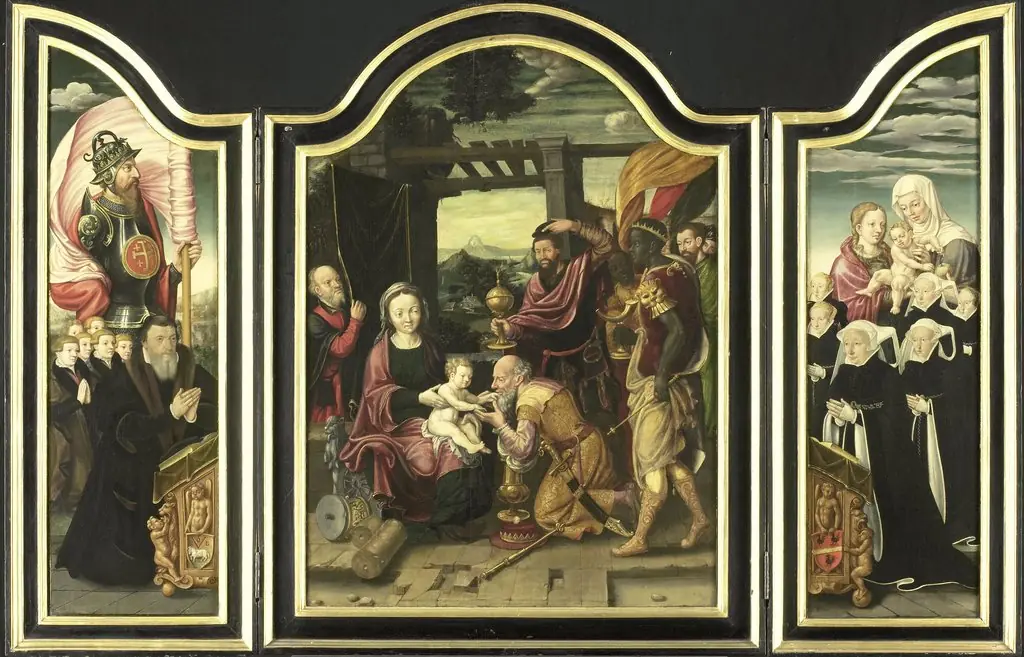 Triptych with the Adoration of the Magi
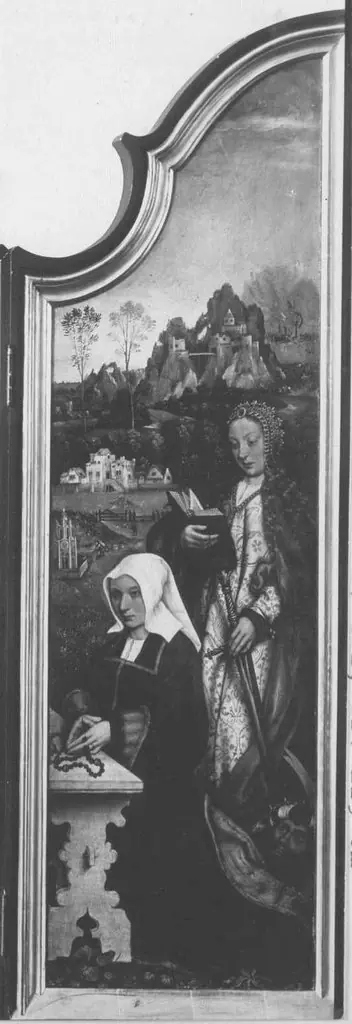 Beweinungsaltar: Hl. Katharina mit Stifterin
 Madonna and Child with Saint Anne (Back: Remnant of a halo)
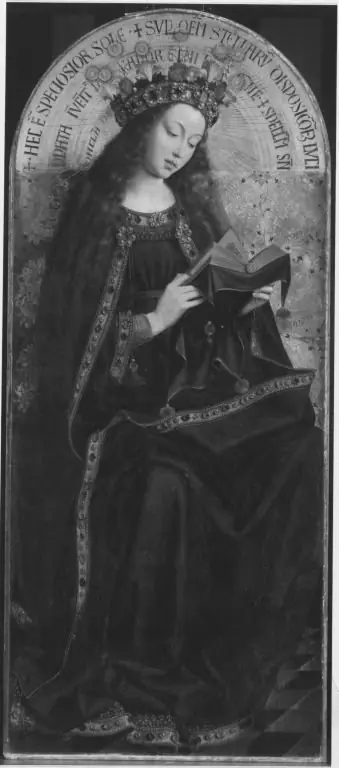 Mary (after The Ghent Altarpiece)
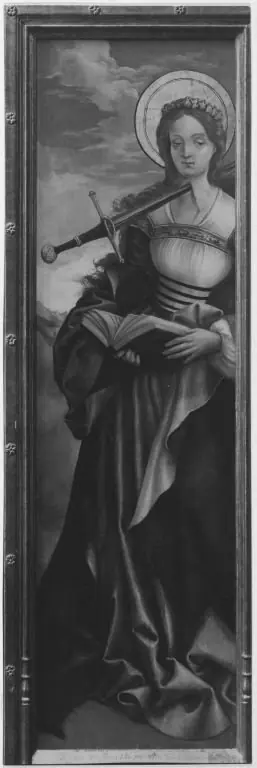 St. Lucy
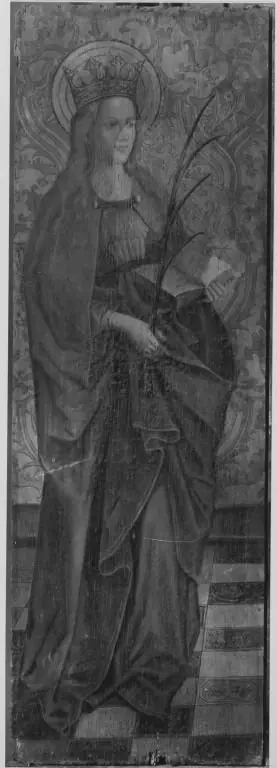 Hl. Barbara
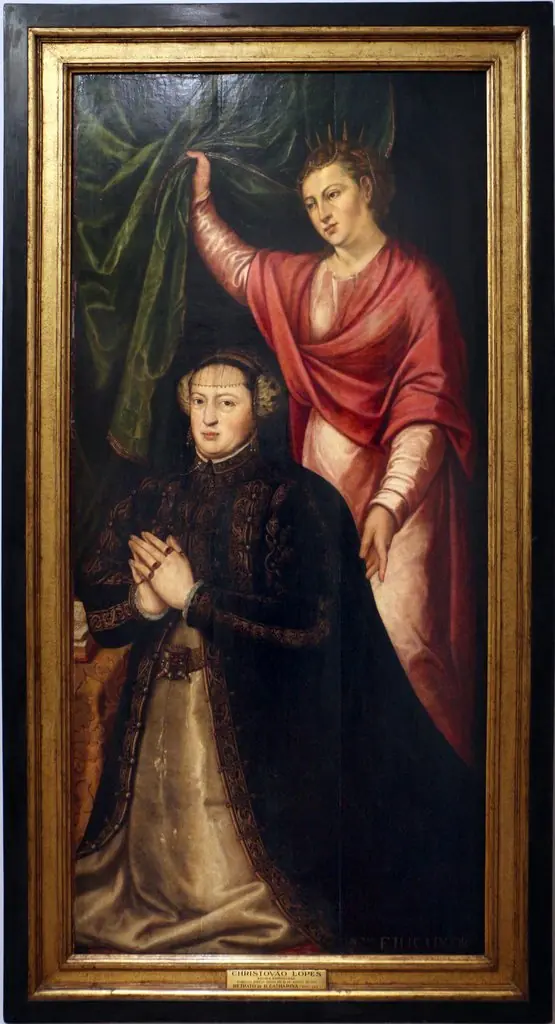 Catherine of Habsberg and St. Catherine of Alexandria altar piece
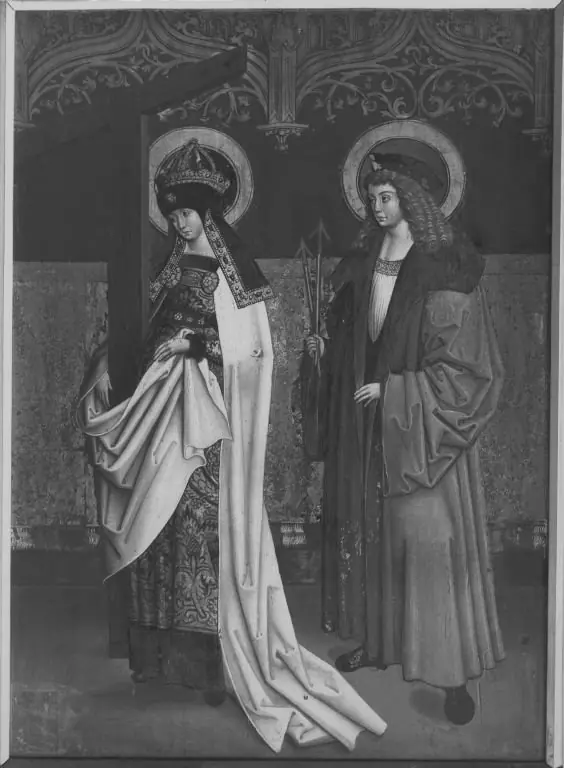 Flügel eines Kreuzaltares, Außenseite: Die hll. Helena und Sebastian
 Teile eines Altares: Hl. Anna Selbdritt
 Wing of Lazarus tritptych with donor and Saint Catharine
 Altarflügel: Hl. Katharina (?)