Artwork
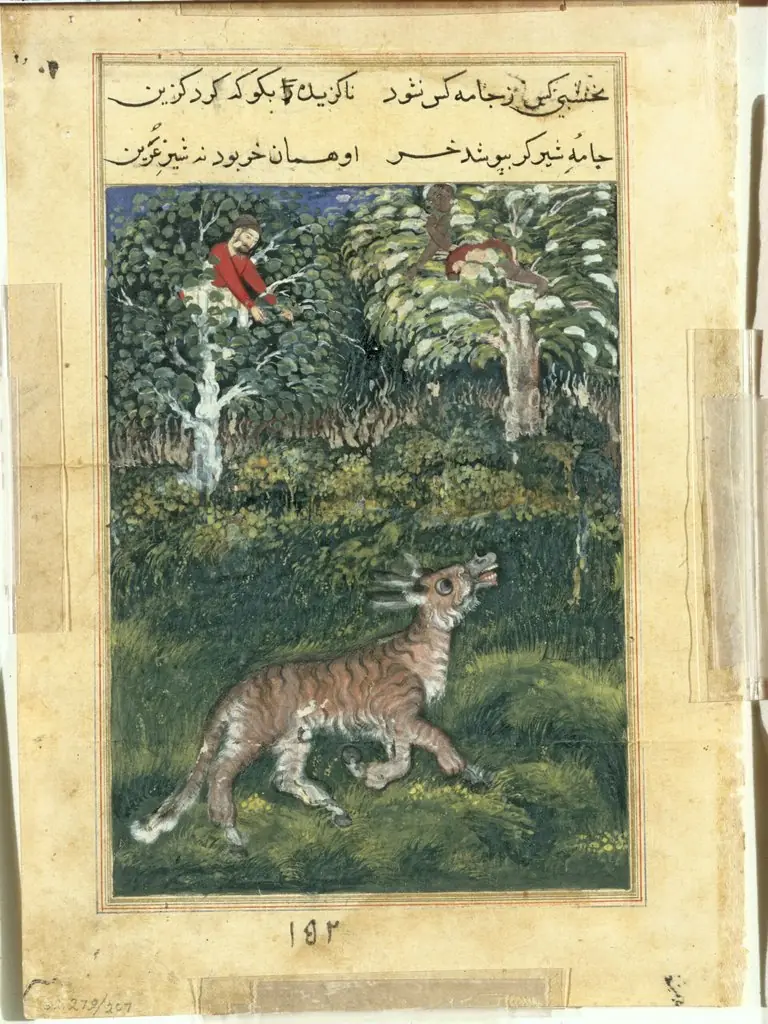
The donkey, in a tiger’s skin, reveals his identity by braying aloud, from a Tuti-nama (Tales of a Parrot): Thirty-first Night
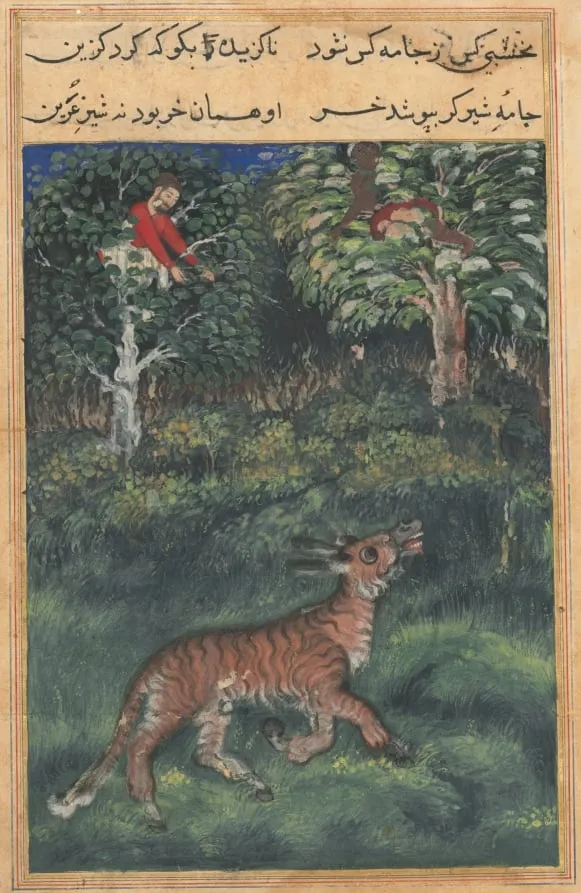
The donkey, in a tiger’s skin, reveals his identity by braying aloud, from a Tuti-nama (Tales of a Parrot): Thirty-first Night is an unspecified painting by the Patna School of Painting artist Basawan. It dates from 1560 and is held in the collection of the Cleveland Museum of Art. This painting depicts a scene from the Tuti-nama, a collection of tales.
- Accession no.
- 1962.279.207.a
- Credit line
- Gift of Mrs. A. Dean Perry
About this work
You see a donkey in a striped tiger skin, braying at the sky while two men cling to tree branches above him.
You see a donkey in a striped tiger skin, braying at the sky while two men cling to tree branches above him.
This painting tells a funny story from a book called the Tuti-nama, or Tales of a Parrot. The donkey’s owner dressed him as a tiger to scare people away so he could eat their crops. It worked, until another donkey’s call gave him away.
If you like this kind of storytelling art, look up Mughal India, court of Akbar (reigned 1556–1605).
Overview
This painting depicts a scene from the Tuti-nama, a collection of tales. It shows a donkey disguised in a tiger skin, braying loudly, and two men fleeing in fright.
Subject & Meaning
The image illustrates a story about a resourceful merchant who dresses his donkey as a tiger to forage in fields without being detected, until the donkey's braying reveals his true identity.
Technique & Style
The painting showcases a vivid and humorous scene, with the donkey in a striped tiger skin and the frightened men clinging to tree branches, demonstrating the artist's skill in narrative illustration.
Context
The artwork is associated with the Mughal Indian court, specifically during the reign of Akbar (1556–1605), a period known for its rich cultural and artistic production.
Artist & collection
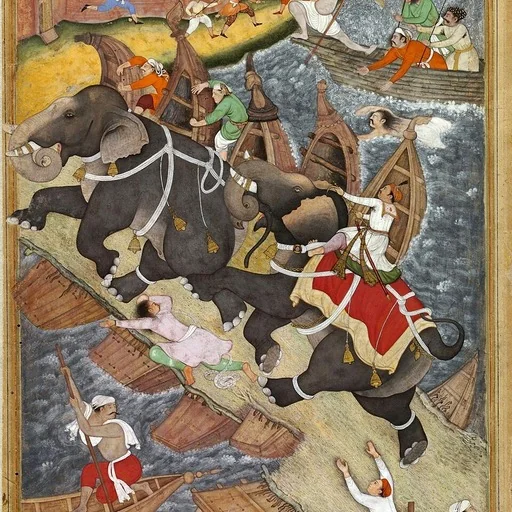
Artist
Basāwan, or Basāvan, was an Indian miniature painter in the Mughal style. He was known by his contemporaries as a skilled colorist and keen observer of human nature, and for his use of portraiture in the illustrations…

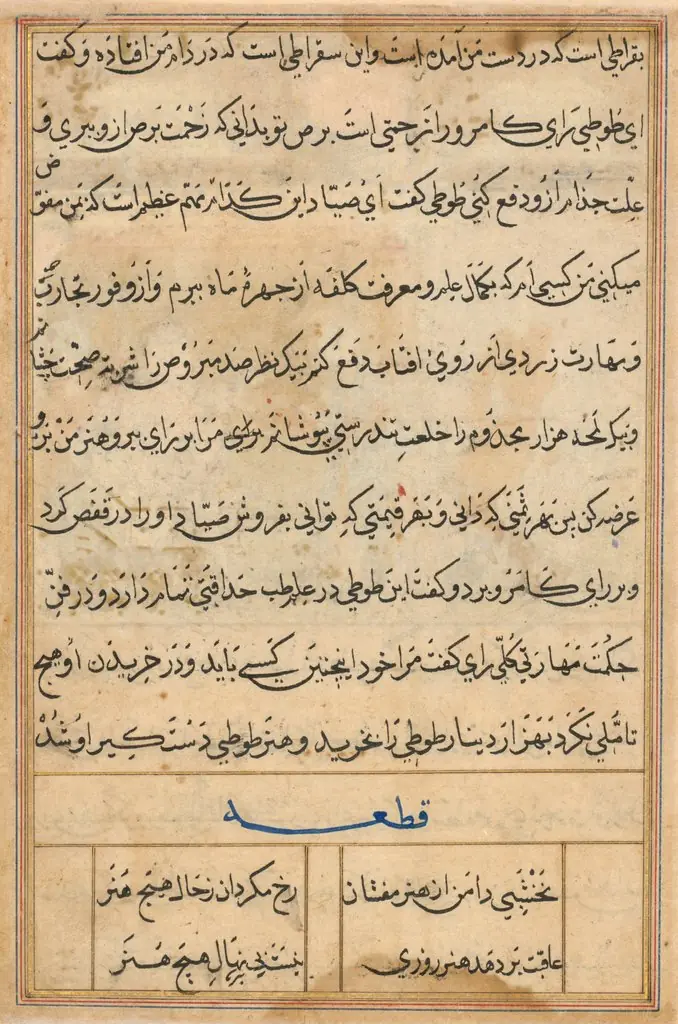 Page from Tales of a Parrot (Tuti-nama): text page
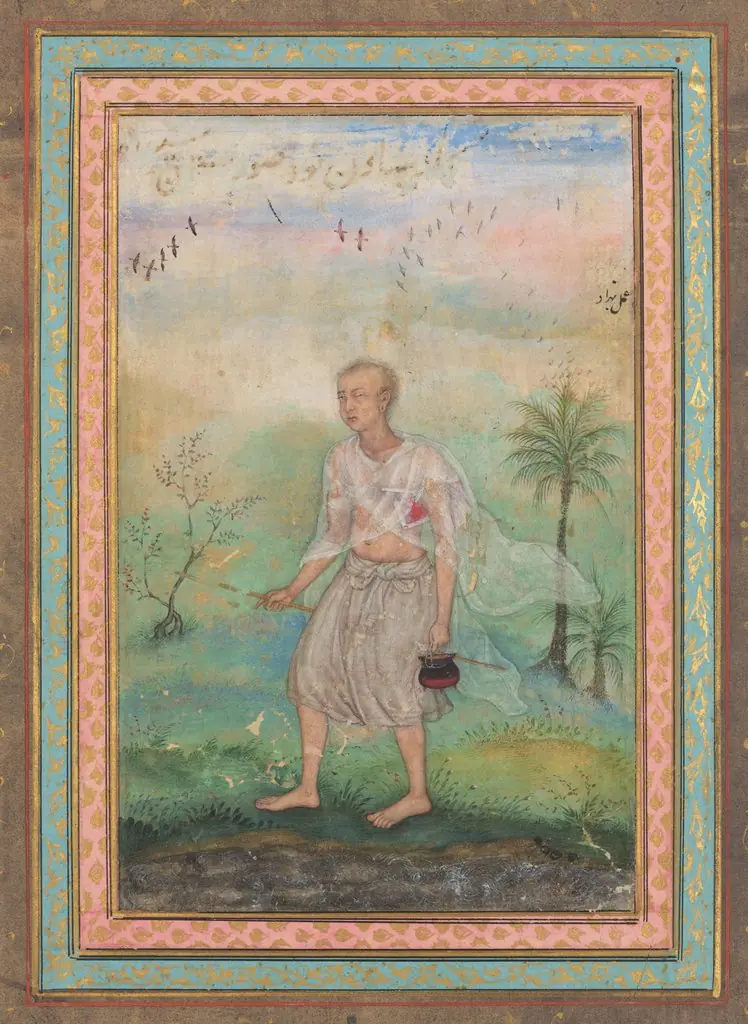 Jain Ascetic Walking Along a Riverbank
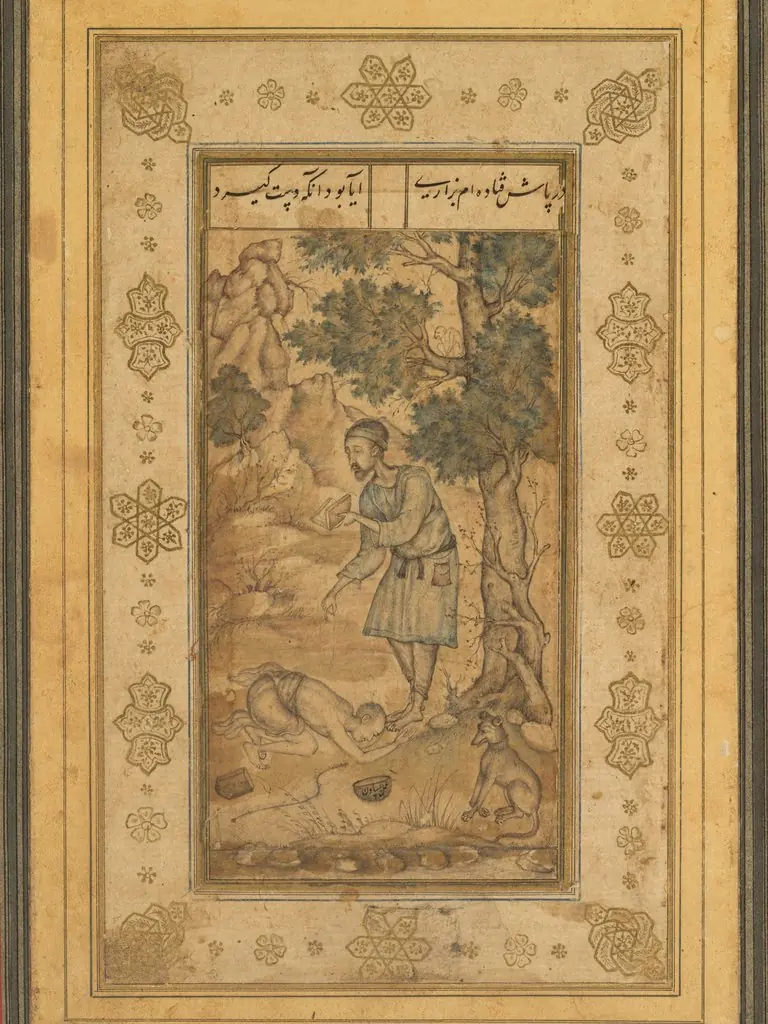 A mendicant bowing before a holy man, from the Prince Salim Album
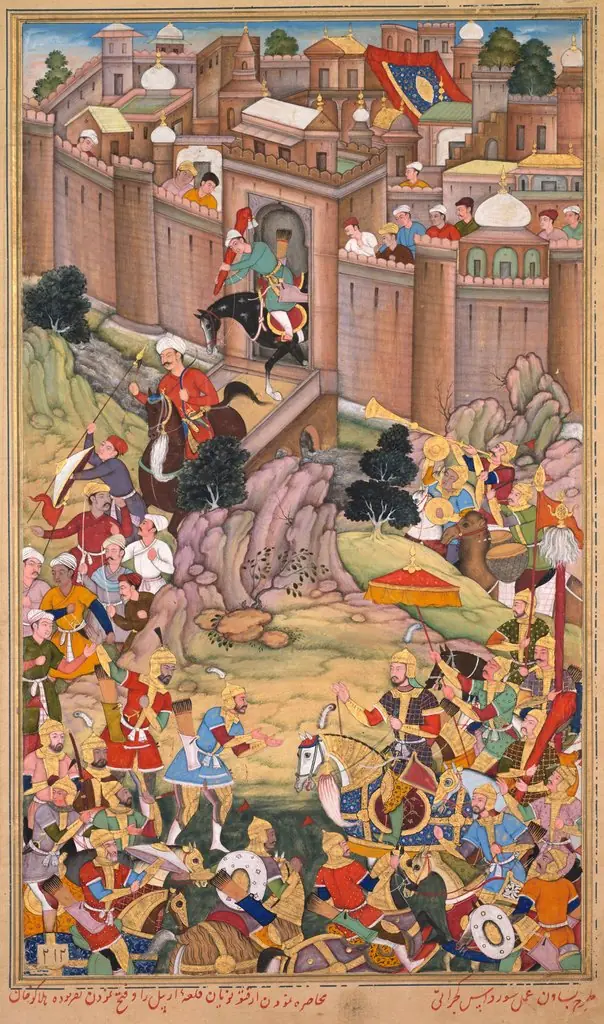 The siege of Arbela in the era of Hulagu Khan, from a Chingiz-nama (Book of Chingiz Khan) of the Jami al-tavarikh (Compendium of Chronicles) of Rashid al-Din (Persian, 1247–1318)
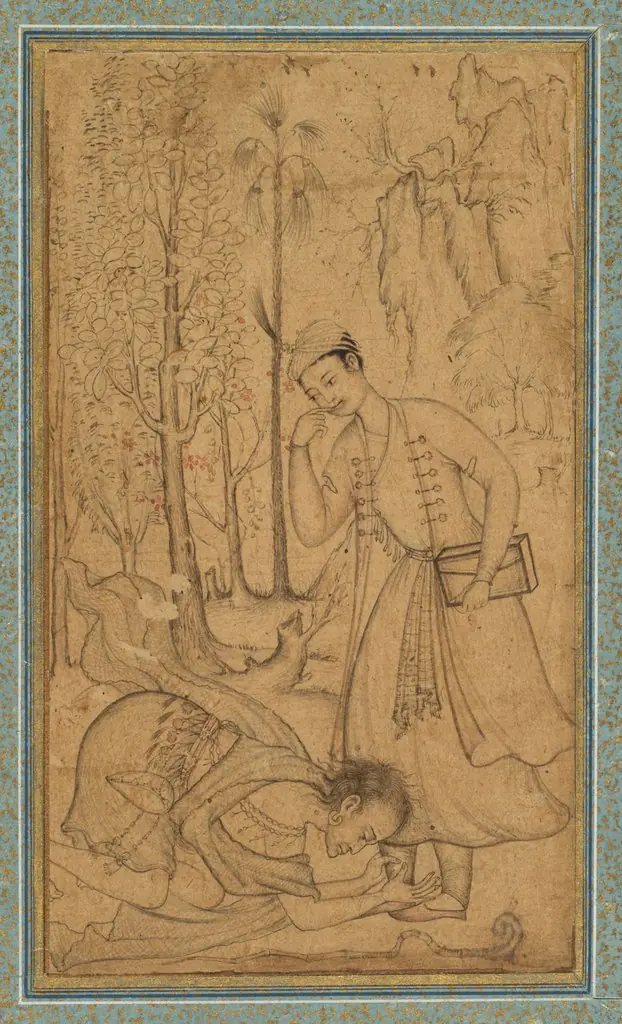 A holy man prostrating himself before a learned prince
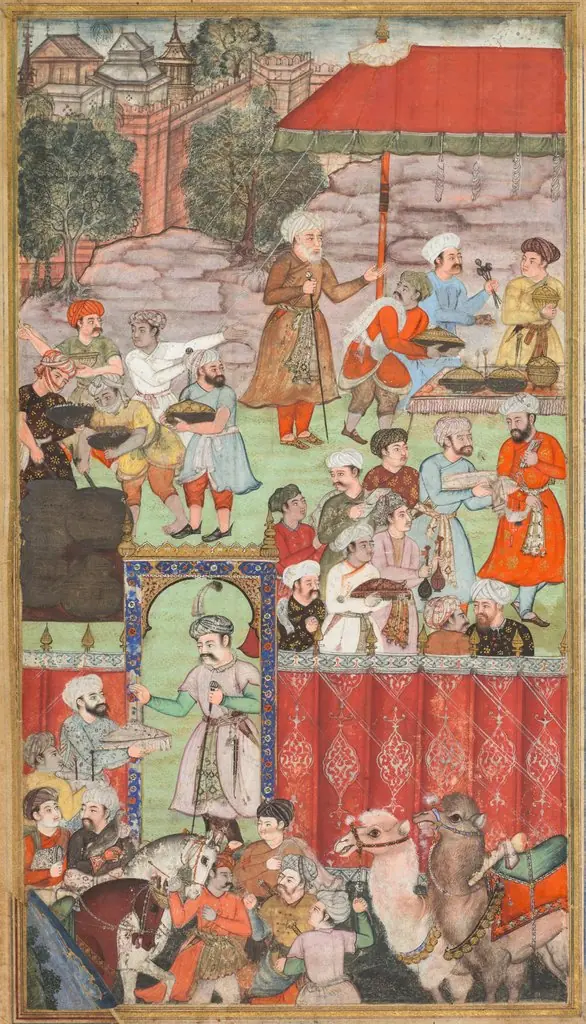 A feast for Babur hosted by his half-brother Jahangir Mirza in Ghazni in May 1505, from a Babur-nama (Memoirs of Babur)
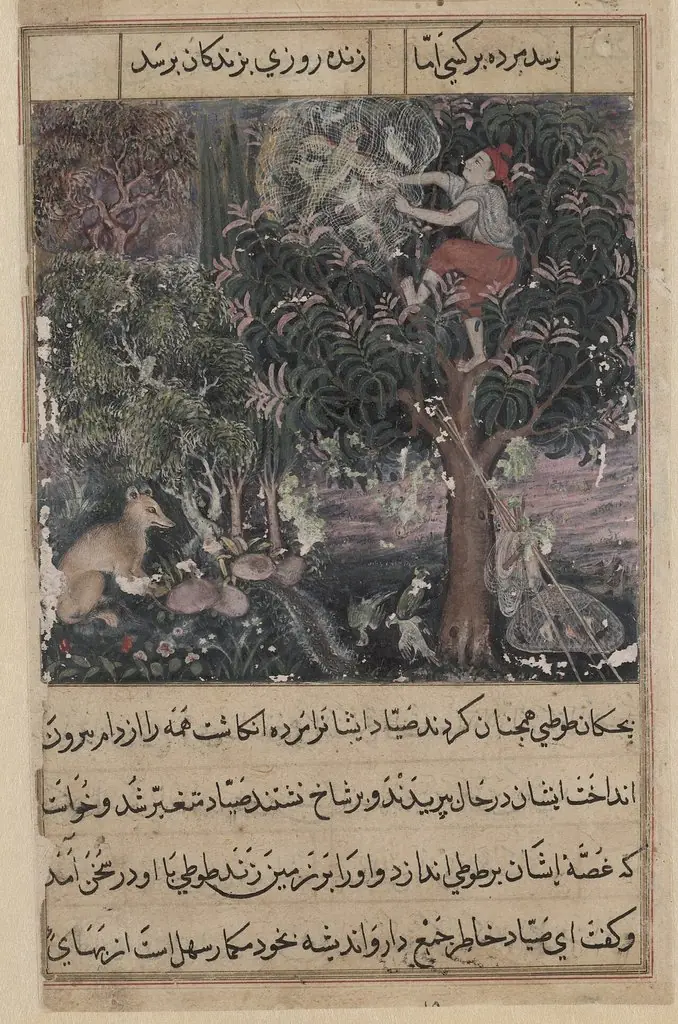 The hunter throws away the baby parrots, who pretend to be dead, and captures the mother, from a Tuti-nama (Tales of a Parrot): Fifth Night
 Page from Tales of a Parrot (Tuti-nama): text page
 The donkey, in a tiger’s skin, reveals his identity by braying aloud, from a Tuti-nama (Tales of a Parrot): Thirty-first Night
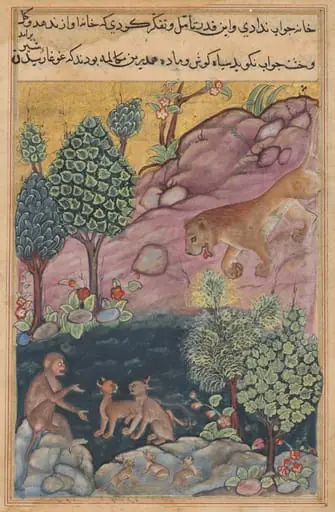 The lion returns to his territory and sees the monkey conversing with the lynx, from a Tuti-nama (Tales of a Parrot): Twenty-ninth Night
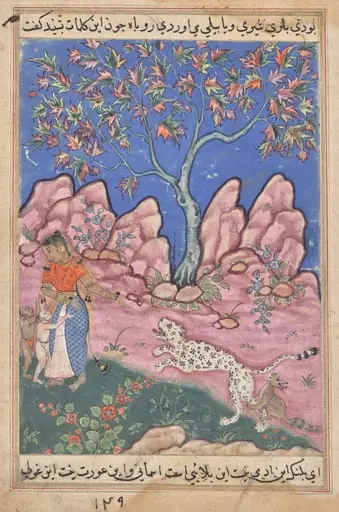 The woman conversing with her children, as the leopard returns, egged on by a fox who is tied to his leg, from a Tuti-nama (Tales of a Parrot): Thirtieth Night
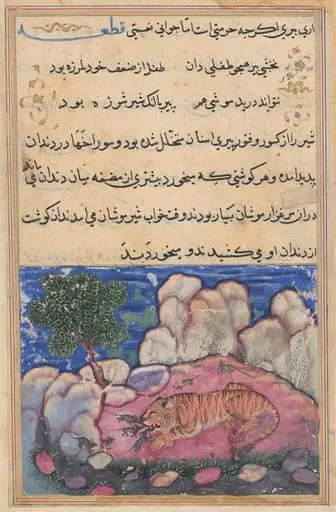 The lion disturbed by mice who eat the food trapped in his aging teeth, from a Tuti-nama (Tales of a Parrot): Fifteenth Night
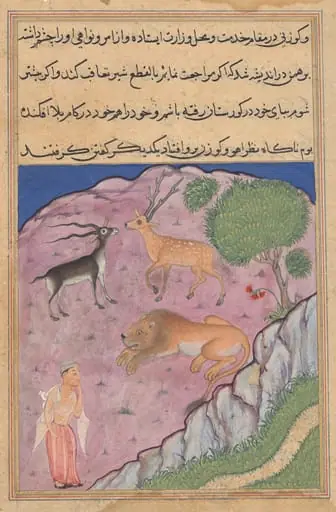 The Brahman comes upon a lion who has a deer and a gazelle as his viziers, from a Tuti-nama (Tales of a Parrot): Twenty-first Night
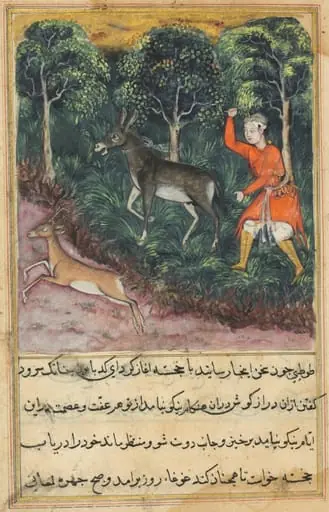 The gardener seizes and beats a donkey who insisted on braying, while the deer, its companion flees to safety, from a Tuti-nama (Tales of a Parrot): Forty-first Night
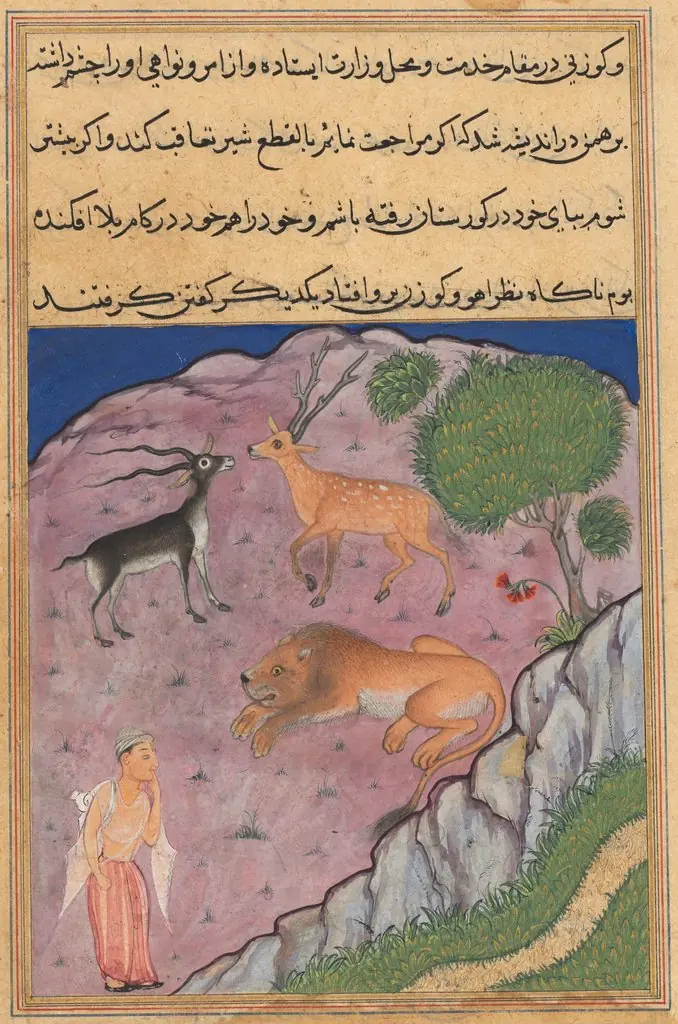 The Brahman comes upon a lion who has a deer and a gazelle as his viziers, from a Tuti-nama (Tales of a Parrot): Twenty-first Night