Artwork
The Metals Fleeing from Vulcan
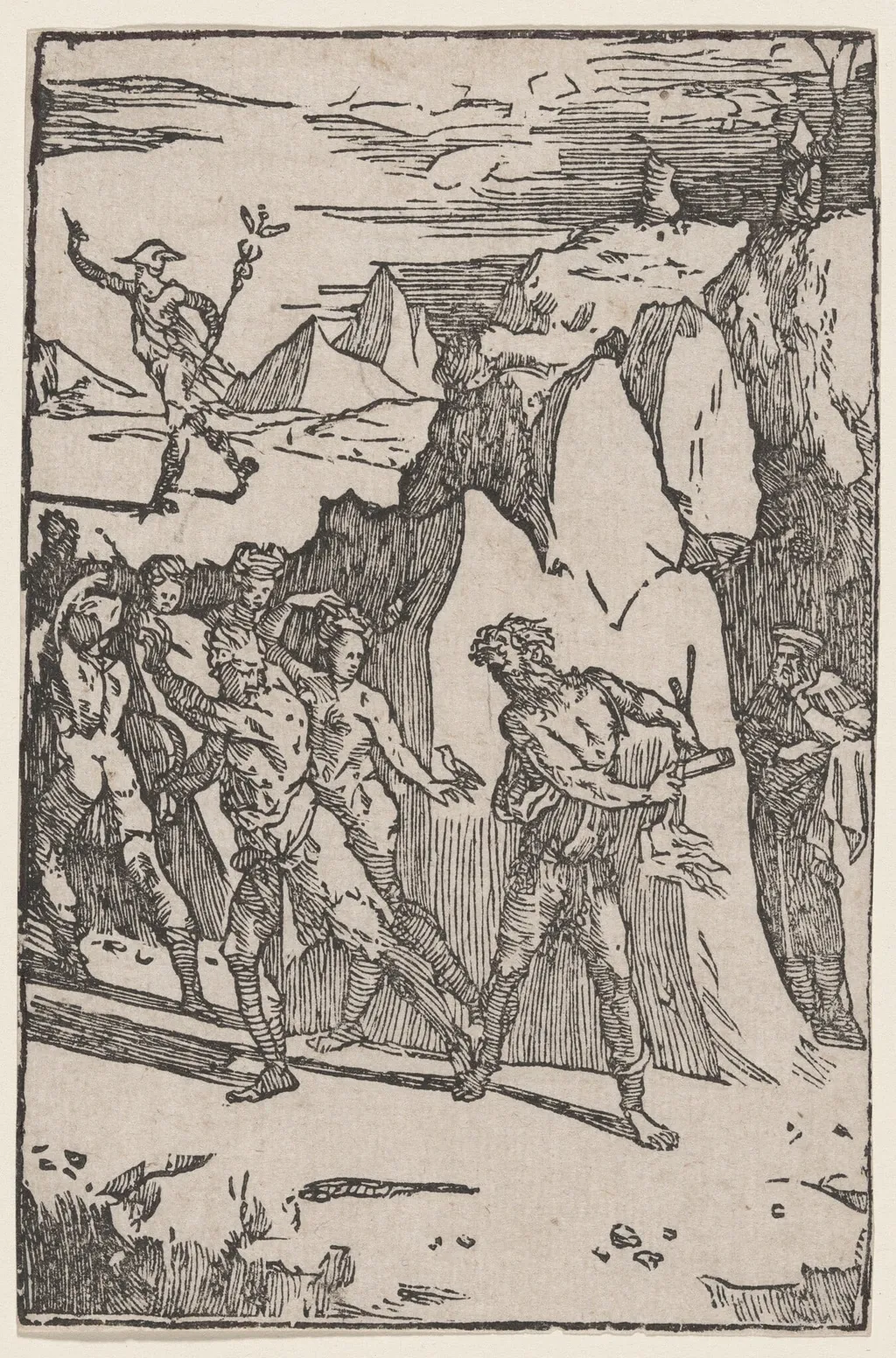
The Metals Fleeing from Vulcan is an ink print by the Renaissance artist Domenico Beccafumi. It dates from 1532 and is held in the collection of the National Gallery of Art. Created in 1532 by Domenico di Pace Beccafumi, this woodcut on laid paper is one of the few surviving prints by the Sienese artist.
About this work
Overview
Unlike his more common panel paintings, this work demonstrates his engagement with printmaking, a medium that allowed broader dissemination of his imagery.
Created in 1532 by Domenico di Pace Beccafumi, this woodcut on laid paper is one of the few surviving prints by the Sienese artist. Unlike his more common panel paintings, this work demonstrates his engagement with printmaking, a medium that allowed broader dissemination of his imagery. The piece reflects the stylistic shift in early 16th-century Tuscany, where local traditions met the expressive freedoms of Mannerism.
Subject & Meaning
The scene illustrates a mythological allegory in which personified metals flee from Vulcan, the Roman god of fire and forge. Figures representing gold, iron, and other metals are shown in flight through a dense woodland, each carrying tools associated with their properties. The fleeing forms suggest a narrative of elemental resistance to human control, possibly symbolizing the tension between nature and craftsmanship.
Technique & Style
Beccafumi employed the woodcut technique, carving directly into a wooden block to create a relief image. The resulting lines are sharp, irregular, and densely packed, conveying urgency and movement. The rough texture and lack of fine detail reflect the medium’s limitations and the artist’s deliberate embrace of its graphic immediacy, contrasting with the smoother finishes of contemporary engravings.
History & Provenance
The print was produced during Beccafumi’s active years in Siena, where he served as a court artist and fresco painter. Few of his prints survive, making this work rare. Its early provenance is undocumented, but it likely circulated among collectors and artists familiar with classical themes. The paper type and watermark suggest it was printed in Italy shortly after its creation.
Context
In the 1530s, Siena remained culturally distinct from Florence and Rome, preserving a more intimate, expressive aesthetic. Beccafumi’s interest in mythological subjects aligned with humanist interests but was rendered with a local intensity. This print stands apart from the idealized forms of central Italian art, offering a more visceral, almost chaotic interpretation of classical narrative.
Legacy
Though not widely reproduced or imitated, the woodcut reveals Beccafumi’s willingness to experiment beyond painting. Its raw energy and unconventional composition influenced later Sienese printmakers who sought to break from classical harmony. Today, it remains a key example of how regional artists adapted Mannerist ideas through the accessible medium of print.
Own this work as a print
Artist & collection
Artist
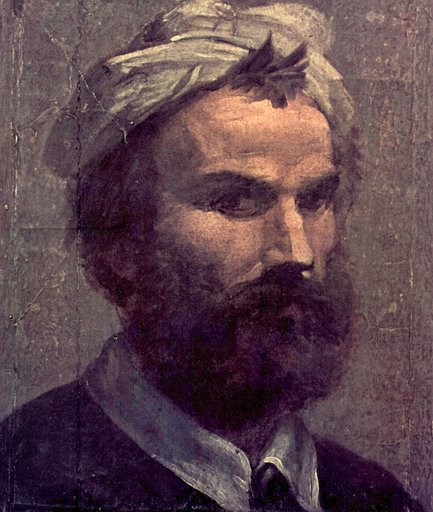
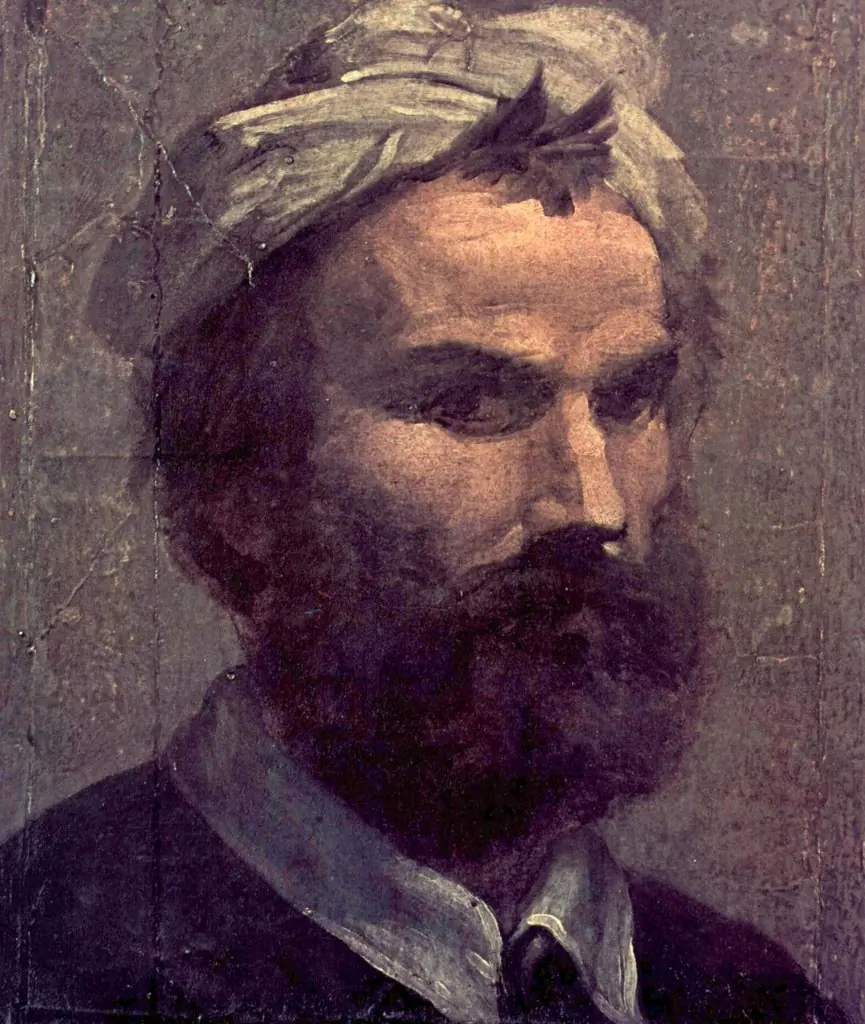
Domenico di Pace Beccafumi was an Italian Renaissance-Mannerist painter active predominantly in Siena. He is considered one of the last undiluted representatives of the Sienese school of painting.

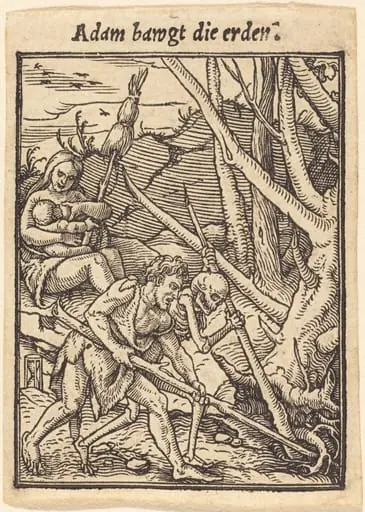 Adam bawgt die erden (Adam Ploughing)
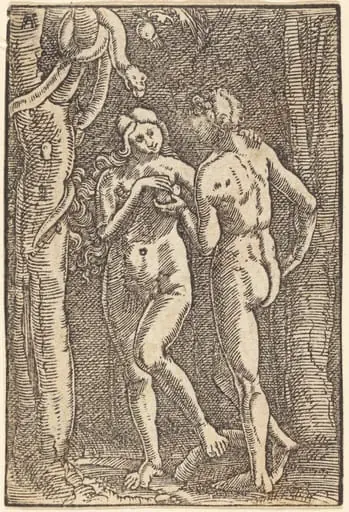 The Fall of Man
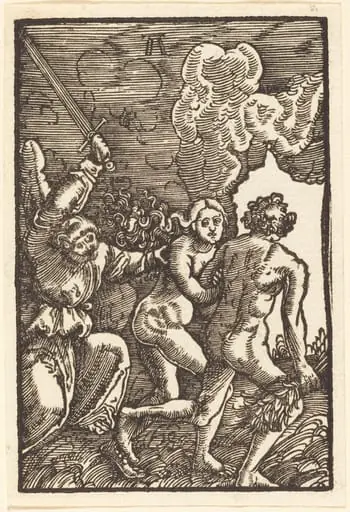 Expulsion from Paradise
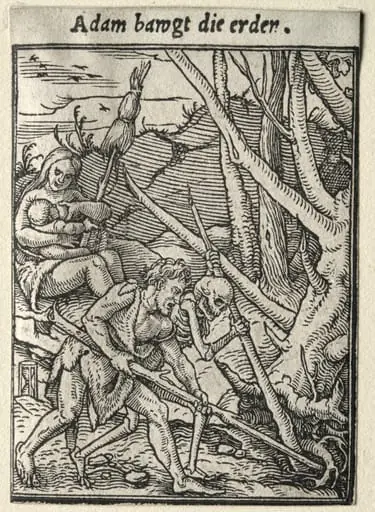 Dance of Death: Adam Tilling the Ground
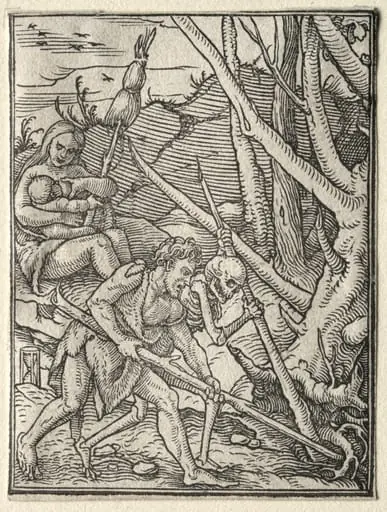 The Dance of Death: Adam Tilling the Earth
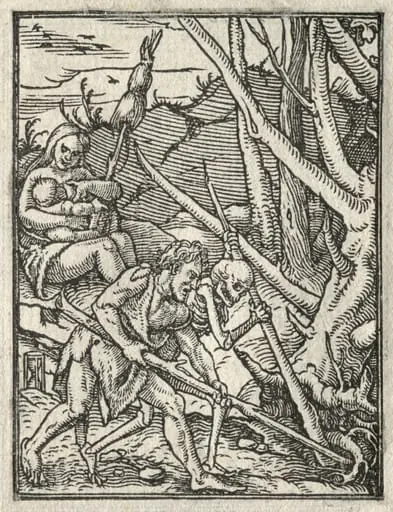 The Dance of Death: Expulsion from Paradise; Adam Cultivating the Ground
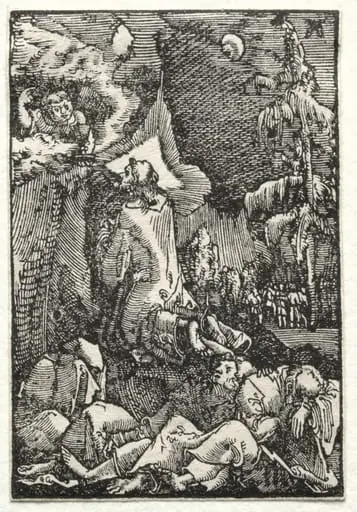 The Fall and Redemption of Man: Chirst on the Mount of Olives
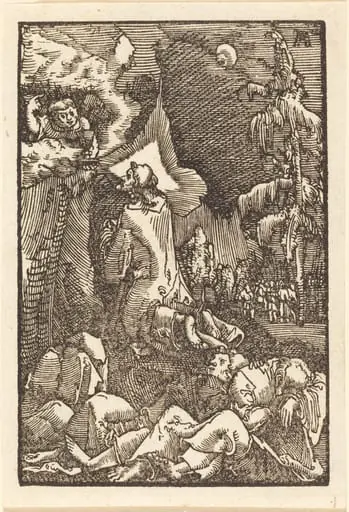 Christ on the Mount of Olives
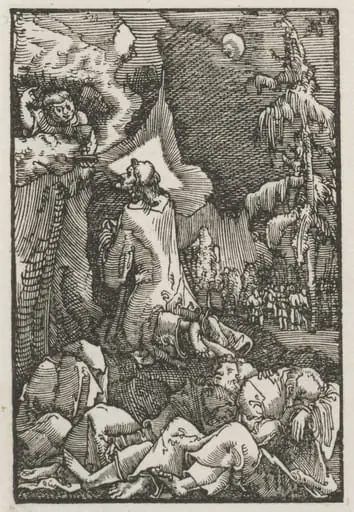 The Fall and Redemption of Man: Christ on the Mount of Olives
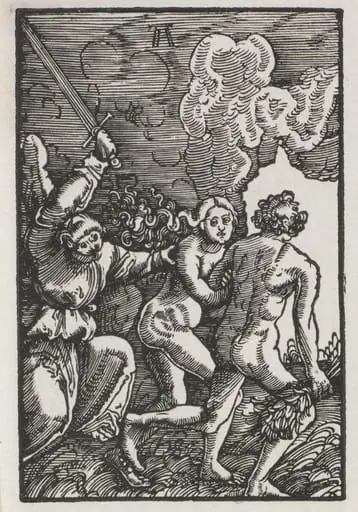 The Fall and Redemption of Man: The Expulsion from Eden
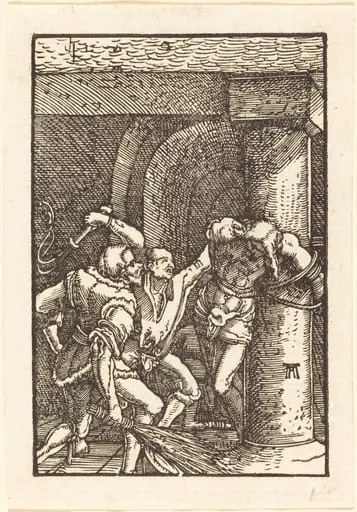 The Flagellation of Christ
- The Alchemical Properties of Metal: Mercury, Vulcan, and the Alchemist in the Cave