Artwork
Madonna of the rose
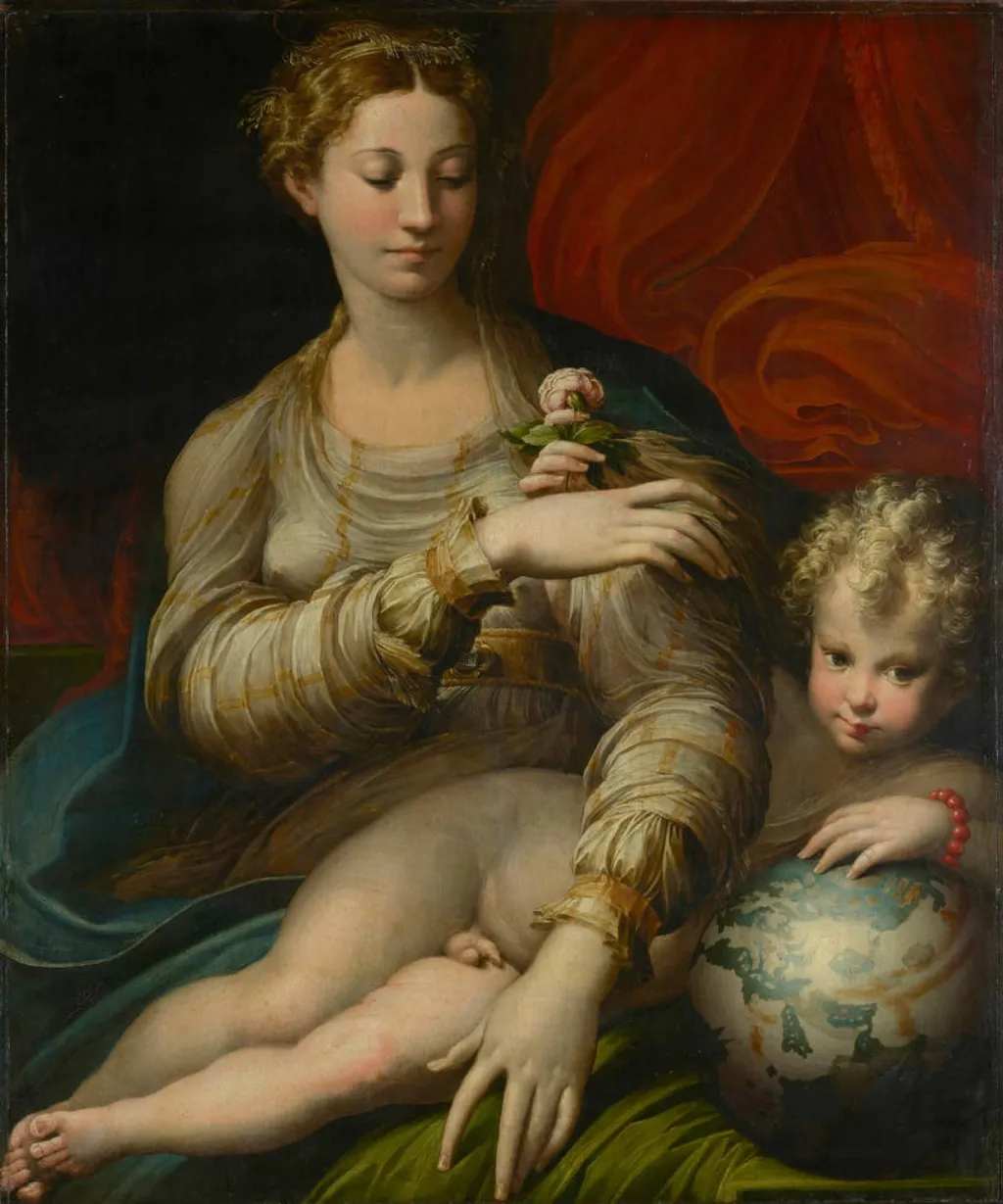
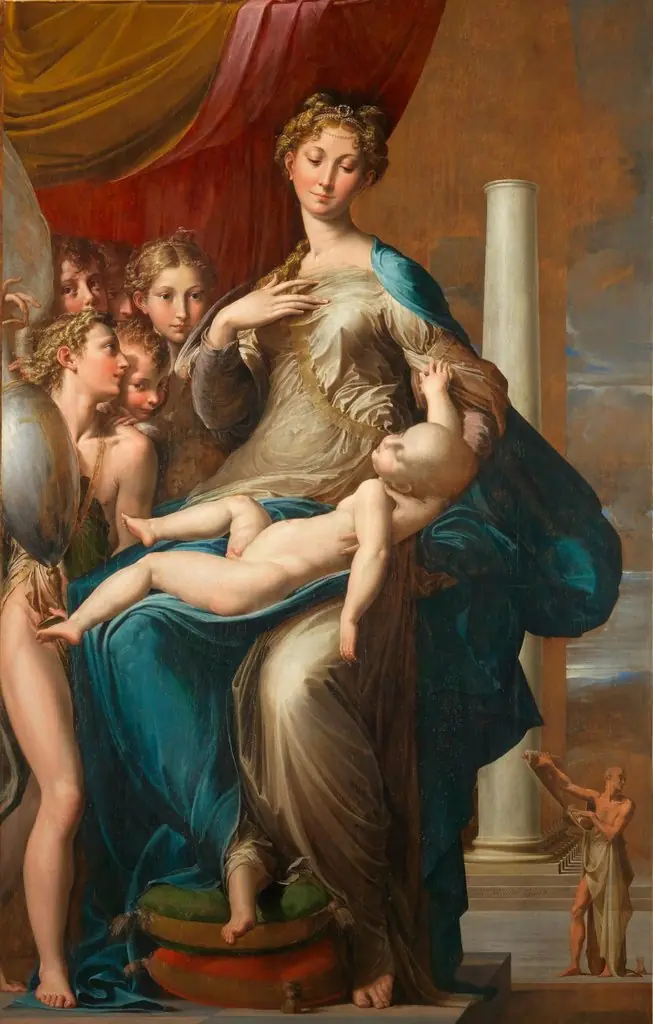
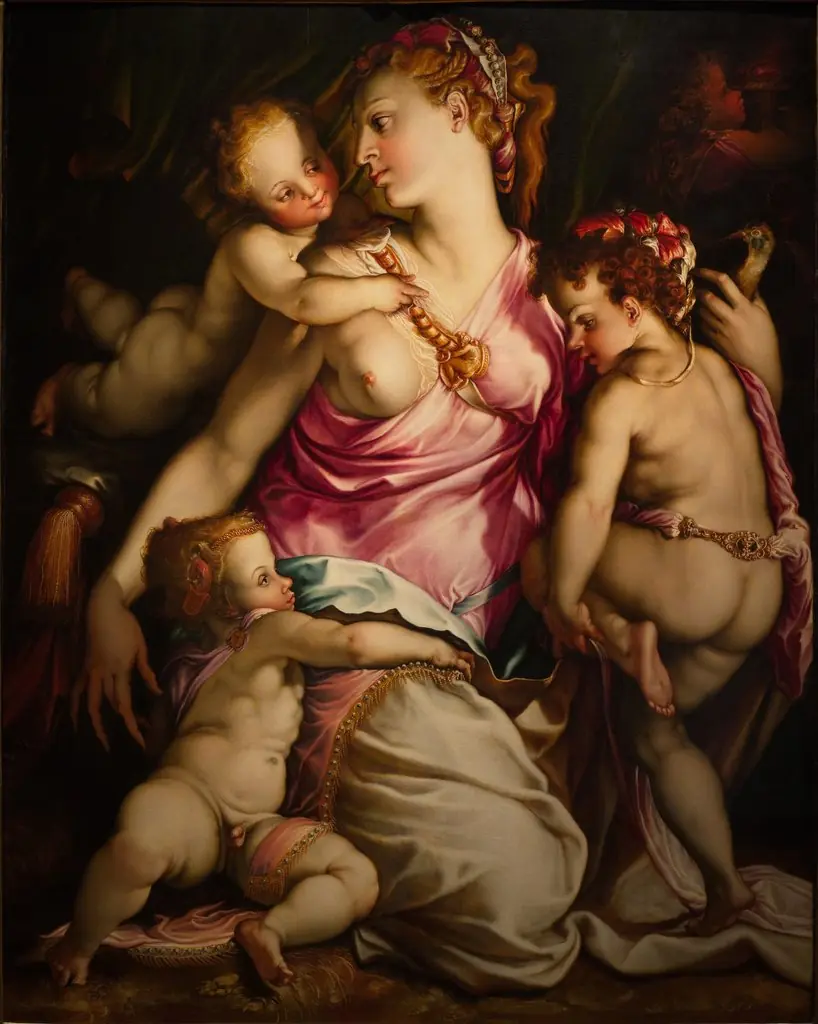
Madonna of the rose is an oil painting by the Mannerist artist Parmigianino. It dates from 1529 and is held in the collection of the Staatliche Kunstsammlungen Dresden.
About this work
Overview
5 centimetres, the work depicts the Virgin Mary seated with the Christ Child reclining across her lap, accompanied by a putto leaning on a terrestrial globe.
The Madonna of the Rose (Italian: Madonna della Rosa) is an oil on panel painting by the Italian Mannerist artist Parmigianino, executed in 1529 or 1530. Measuring 109 by 88.5 centimetres, the work depicts the Virgin Mary seated with the Christ Child reclining across her lap, accompanied by a putto leaning on a terrestrial globe. The painting is held in the Gemäldegalerie Alte Meister in Dresden, part of the Staatliche Kunstsammlungen Dresden. It is widely regarded as one of Parmigianino's most accomplished and influential compositions, celebrated since the sixteenth century for its refined elegance, technical virtuosity, and the ambiguous interplay between sacred and profane themes that characterises the artist's mature Mannerist style.
Subject & Meaning
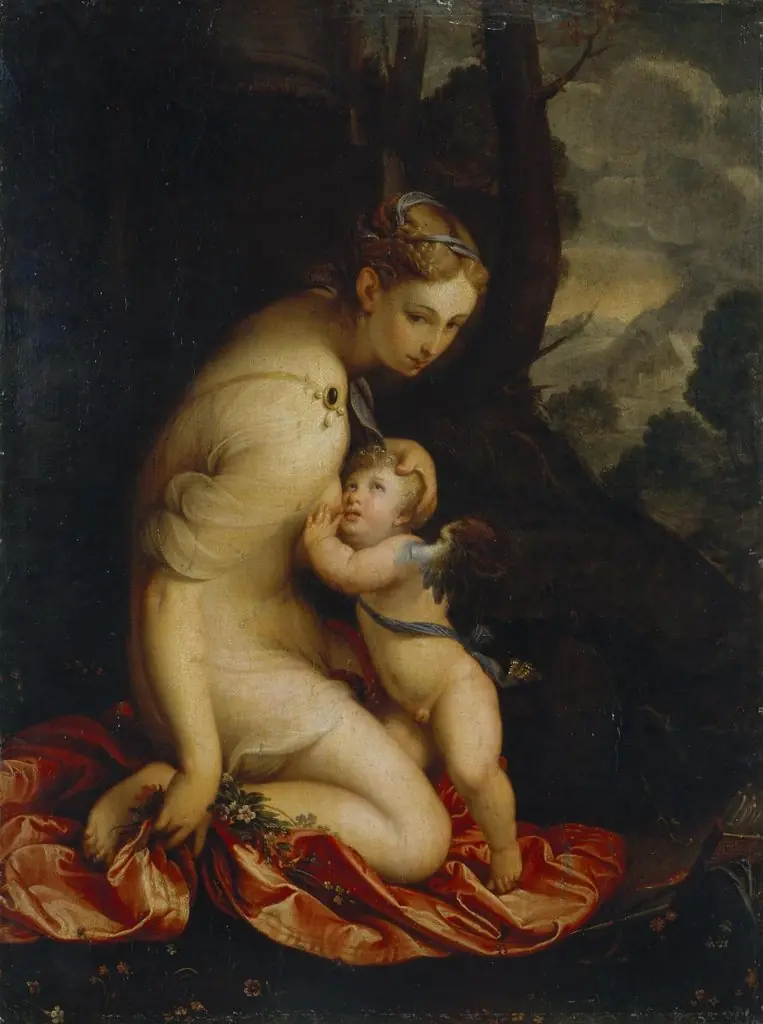
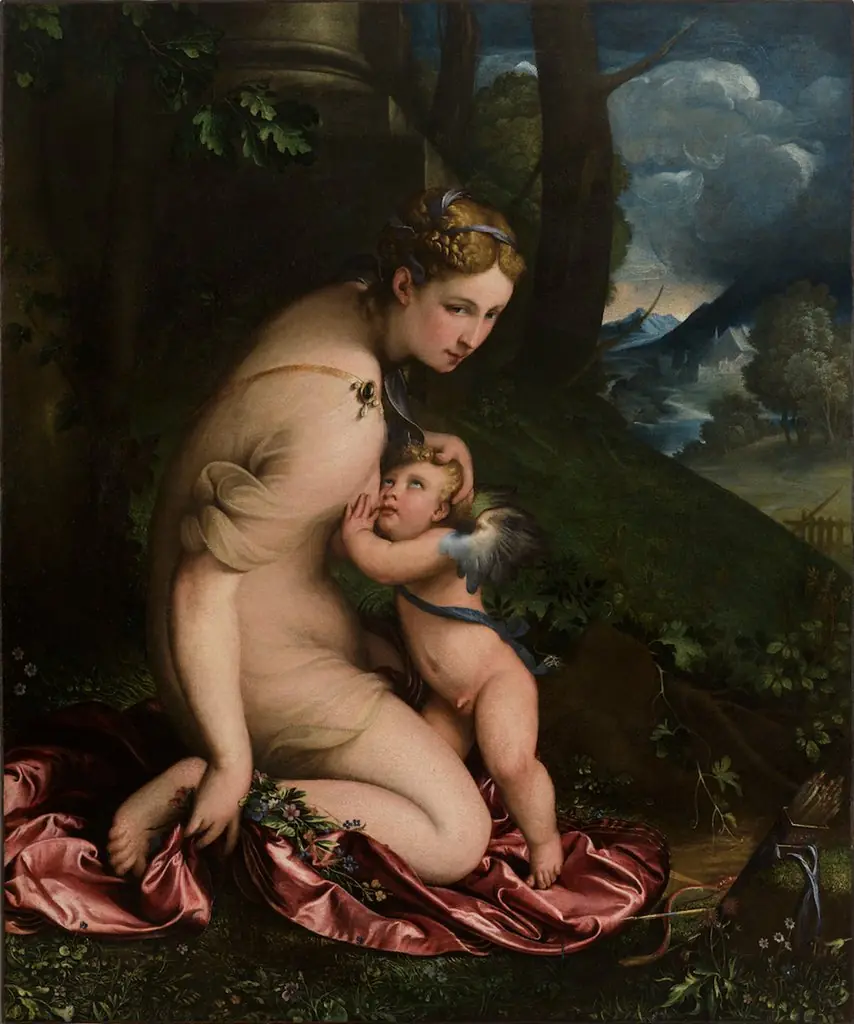
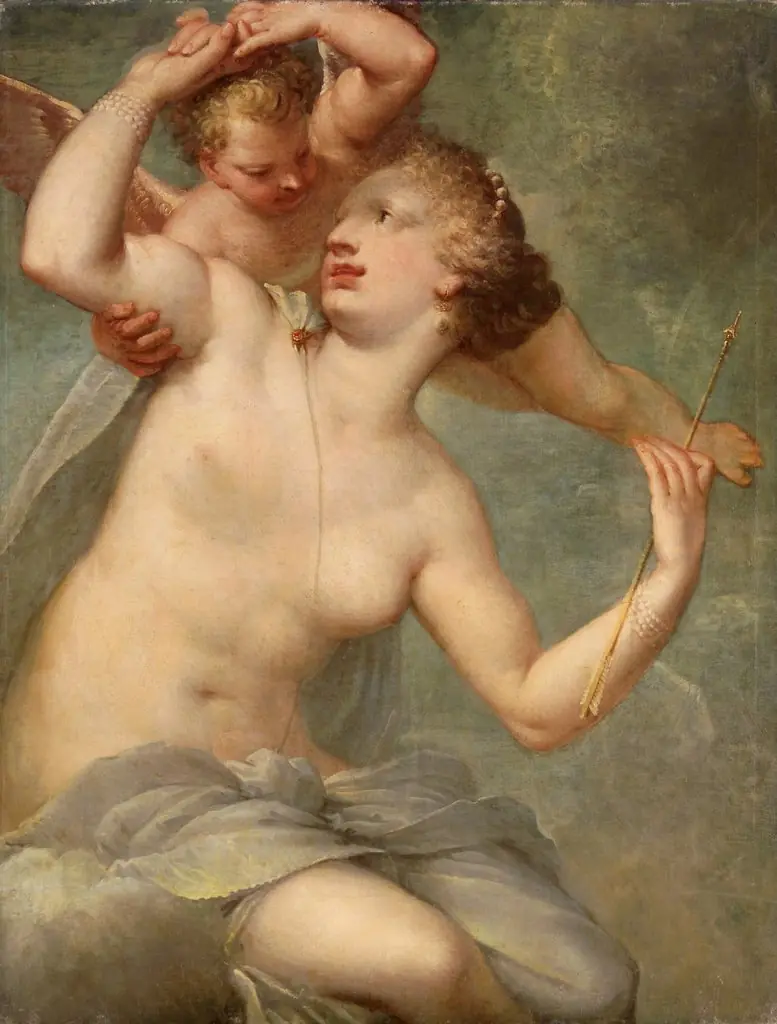
The painting presents the Madonna seated at half-length against a dark background with a swelling deep red curtain. She holds a pink rose in her right hand while her left arm extends over the nude Christ Child, who reclines across her lap and offers her the rose from below. A curly-haired putto stands at the right edge, leaning on a terrestrial globe with one hand and wearing a red beaded bracelet. The globe displays recognisable continents, Asia, Africa, and Europe rendered in muted greens and blues on a pale ground. The rose traditionally prefigures the Passion of Christ, while the globe signifies his role as Salvator Mundi. The coral bracelet serves as an apotropaic symbol, intended to ward off evil. Yet the image's meaning has been contested. Benigno Bossi, as recorded by Ireneo Affò, proposed that Parmigianino's first thought was to depict Venus and Cupid, noting apparent pentimenti such as wing traces behind the putto and ornamental details on the Virgin's head that suggested a transformation from pagan to sacred subject. This hypothesis, though disproven by preparatory drawings, points to the painting's enduring ambiguity. Maurizio Fagiolo dell'Arco offered an alchemical reading in which the rose, symbol of roundness, becomes a metaphor for the success of the opus, and the entire work represents the Immaculate Conception. The Christ Child's direct gaze at the viewer, his lively posture, and the almost pagan elegance of the Virgin's appearance contribute to this productive tension between devotional function and aesthetic refinement.
Technique & Style
The work is executed in oil on poplar panel, a support that allowed for the smooth, polished brushwork evident across the surface. Parmigianino's technique displays particular attention to the sheen of fabric and the soft texture of skin, with soft light modelling the rounded forms of faces and limbs to create gentle shadows. The palette consists of warm flesh tones, creamy whites, deep reds, and rich blues and greens. The Virgin wears a translucent white dress with gold stripes and a blue mantle draped over her shoulders, her hair arranged in an elaborate braided style with a decorative band. The silk garments adhere to her chest with pleated, worldly elegance, wrapping the body and emphasising Mary's breasts. Vasari praised the extraordinary dress with its yellowed, almost golden veil sleeves, which rendered the flesh as real and delicate, and noted that no better painted hair could be seen. The green cloth covering the lower foreground provides a chromatic anchor for the composition. This decorative elegance, formal preciousness, and refined compositional virtuosity exemplify Parmigianino's irreversible stylistic direction toward Mannerist sophistication. The preparatory studies in the Devonshire Collection at Chatsworth House reveal a kicking Christ Child, suggesting a vitality drawn from life observation that the final composition tempers into poised grace.
History & Provenance
The painting was originally commissioned by the writer Pietro Aretino, but during Pope Clement VII's residence in Bologna from December 1529 to April 1530 for the coronation of Charles V, it was presented to the pope instead. The work is generally considered completed by March 1530, when Parmigianino travelled to Venice with Senator Ludovico Carbonesi to purchase pigments for his subsequent commission, the unfinished frescoes for the San Maurizio chapel at San Petronio in Bologna, personally commissioned by Charles V. Following Parmigianino's departure from Bologna, the painting remained with father and son Dionigi and Bartolomeo Zani. Pietro Lamo recorded seeing it in Bartolomeo's house in 1560, describing it as the Madonna with a baby in her arms with his fingers on a globe. In 1566 it was located at Villa Zani in the hills around Bologna, where Antonio Doni viewed it alongside a collection of antiquities. Cavazzoni first gave the work its present title, Madonna della Rosa. Its value was already notoriously high, Doni wrote that not even a large cup of scudi would pay for it. The Zani family refused numerous significant offers, including from Vincenzo I Gonzaga on 2 February 1585 and from Cardinal Farnese, who offered 400 scudi. By Vasari's time, approximately fifty copies had been commissioned by owners who jealously guarded the original, one of which is now in the Royal Collection. In 1752, Count Paolo Zani finally sold the original to Augustus III of Saxony for 1,350 zecchini, bringing the painting to Dresden where it remains. The work has been exhibited as part of the permanent collection of the Gemäldegalerie Alte Meister.
Context
The Madonna of the Rose emerges from a critical period in Parmigianino's career, during his Bolognese sojourn following his Roman years and before his eventual move to Parma. The painting exemplifies the Mannerist movement's departure from High Renaissance classical balance toward a new formal vocabulary of elegance, ambiguity, and technical display. Vasari's early appreciation of the work's refinement and almost pagan flavour established a critical tradition that has persisted. The scholarly debate regarding Bossi's Venus and Cupid hypothesis, though rejected based on preparatory evidence, illuminates the intentional ambiguity that Parmigianino cultivated between sacred and profane subjects. This was not unique to this work but represented his broader stylistic commitment. The painting's extraordinary market value and the Zani family's refusal to sell despite prestigious offers indicate its status as a recognised masterpiece within decades of its creation. The fifty copies commissioned during Vasari's lifetime attest to its function as a cultural commodity as well as a devotional object, with ownership conferring status. The work has been discussed in standard Parmigianino literature including studies by Luisa Viola and by Mario Di Giampaolo and Elisabetta Fadda.
Legacy
The Madonna of the Rose has maintained its reputation as one of Parmigianino's most significant and influential works across nearly five centuries. Its immediate afterlife was marked by extensive replication, the fifty copies made by Vasari's time establishing a pattern of reproduction that disseminated Parmigianino's compositional ideas throughout European courts. One such copy entered the Royal Collection. The painting's residence in Dresden since 1752 has positioned it as a cornerstone of the Gemäldegalerie Alte Meister's Italian Renaissance holdings. In modern and contemporary art, the work has continued to attract attention. The Franco-Polish artist Lea Lublin reproduced the Christ Child in her 1983 triptych R.S.I. Dürer, del Sarto, Parmigianino, demonstrating the painting's capacity to generate new artistic responses. The enduring scholarly interest in its iconographic ambiguity, its technical refinement, and its place within Mannerist aesthetics ensures its continued centrality in discussions of sixteenth-century Italian painting. The painting remains on public view in Dresden, accessible to scholars and visitors as a primary document of Parmigianino's achievement and of the cultural values of the Italian Renaissance and its aftermath.
Artist & collection

Artist
Girolamo Francesco Maria Mazzola (11 January 1503 – 24 August 1540), also known as Francesco Mazzola or, more commonly, as Parmigianino (UK: US: Italian:; "the little one from Parma"), was an Italian Mannerist painter…