Artwork
The Women at the Sepulchre (The Angel at the Tomb of Christ)
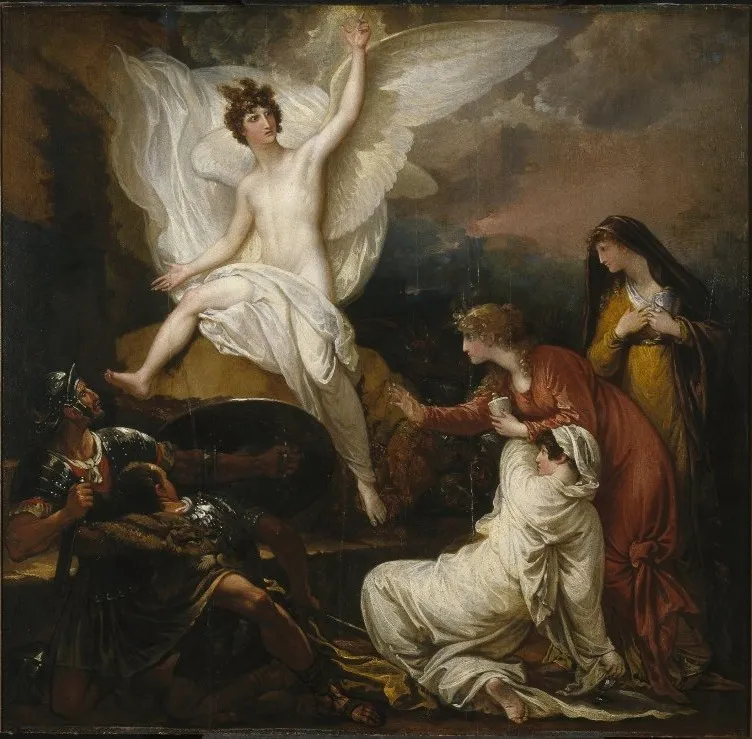
The Women at the Sepulchre (The Angel at the Tomb of Christ) is an oil painting by the American Impressionist artist Benjamin West. It dates from 1805 and is held in the collection of the Brooklyn Museum.
About this work
Overview
Painted in 1805 by Benjamin West, an American artist based in London, this oil-on-canvas work portrays a biblical moment following Christ’s burial.
Painted in 1805 by Benjamin West, an American artist based in London, this oil-on-canvas work portrays a biblical moment following Christ’s burial. West, a central figure in the Royal Academy and known for large-scale historical compositions, turned to religious themes in his later career. The painting is part of the Brooklyn Museum’s collection, reflecting its significance in early 19th-century transatlantic art.
Subject & Meaning
The scene captures the moment when women arrive at Christ’s tomb and encounter an angel announcing his resurrection. Figures are arranged in a circle around the tomb, their postures conveying grief and awe. The angel, illuminated and hovering, serves as a divine messenger, contrasting with the somber tones of the mourners. The composition emphasizes spiritual revelation emerging from sorrow, aligning with contemporary devotional sensibilities.
Technique & Style
West employed chiaroscuro to heighten emotional contrast, with the angel’s luminous form emerging from a shadowed, stormy sky. His use of impasto adds texture to the angel’s robes and the tomb’s stone, while the women’s flowing garments are rendered with fluid brushwork. The palette is restrained, deep browns, muted blues, and pale highlights, reinforcing the scene’s solemnity without theatrical excess.
History & Provenance
Commissioned during West’s tenure as president of the Royal Academy, the painting was completed near the end of his career. It remained in private hands until acquired by the Brooklyn Museum in the early 20th century. Its journey reflects the growing American interest in European-trained artists and religious subjects during the period of institutional art collection expansion.
Context
In early 19th-century Britain and America, religious history painting retained cultural weight despite rising secularism. West’s work responded to a public appetite for morally elevated narratives, blending Neoclassical structure with emotional realism. His American origins gave him a unique position between transatlantic artistic traditions, influencing how biblical stories were visualized beyond European norms.
Legacy
Though less celebrated than his earlier historical works, this painting exemplifies West’s sustained engagement with sacred themes. It influenced later American religious painters through its restrained drama and focus on quiet reverence. Its presence in a major U.S. museum underscores its role in shaping the canon of 19th-century religious art outside Europe.
Artist & collection

Artist
Benjamin West (October 10, 1738 – March 11, 1820) was an American-born British painter who specialised in history painting, creating such works as The Death of Nelson, The Death of General Wolfe, the Treaty of Paris,…

 The Expulsion of Adam and Eve from Paradise
 Omnia Vincit Amor, or The Power of Love in the Three Elements
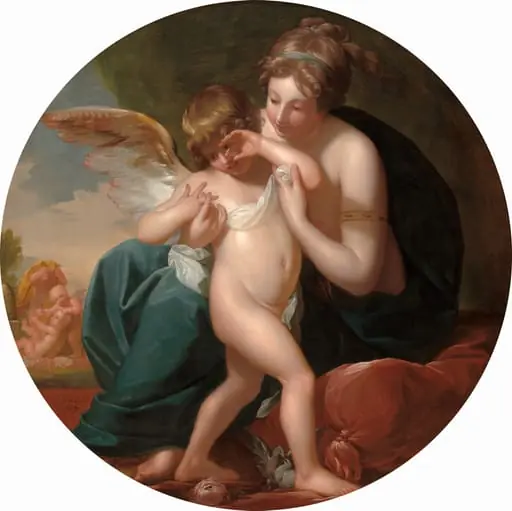 Cupid, Stung by a Bee, Is Cherished by his Mother
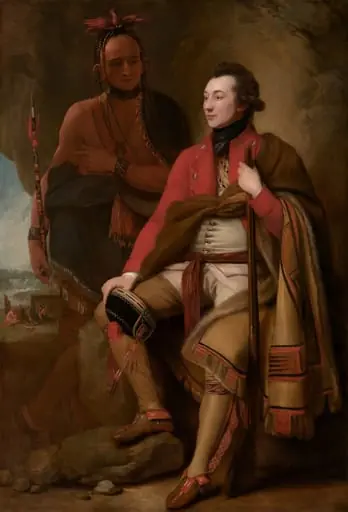 Colonel Guy Johnson and Karonghyontye (Captain David Hill)
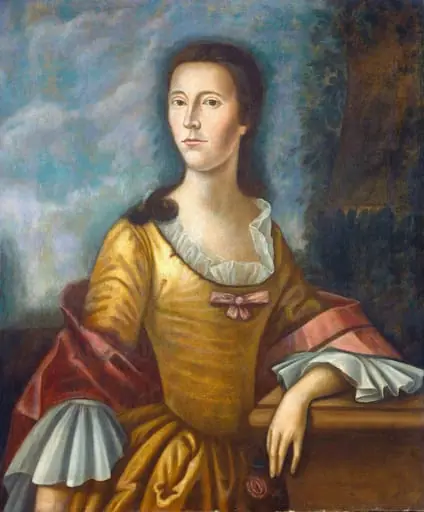 Mary Bethel Boude (Mrs. Samuel Boude)
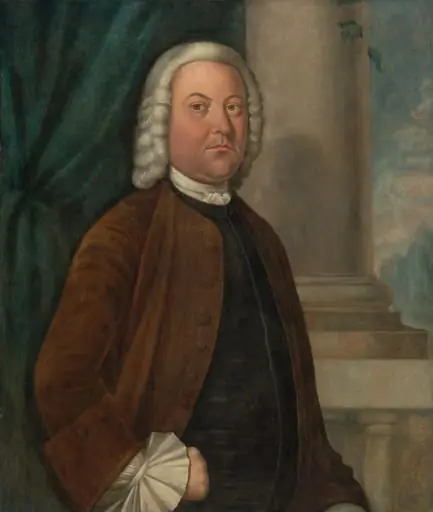 Dr. Samuel Boude
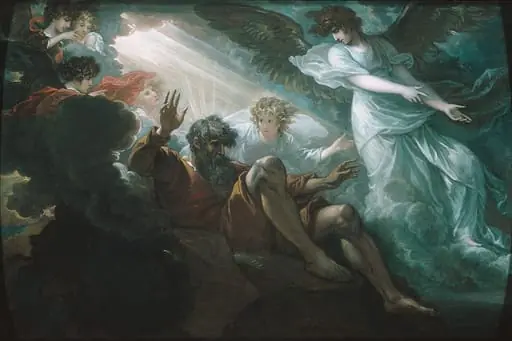 Moses Shown the Promised Land
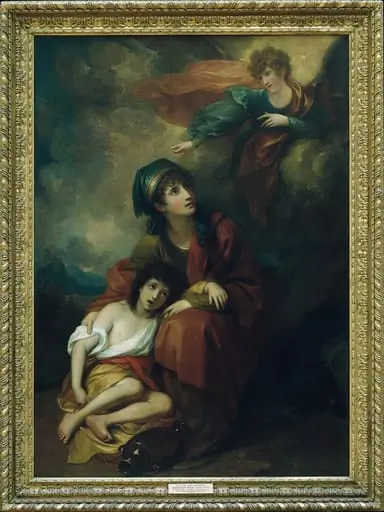 Hagar and Ishmael
 "Il Contento". Mercury abducting the Goddess Contento from the Earth
 The Apotheosis of Saint Charles Borromeo
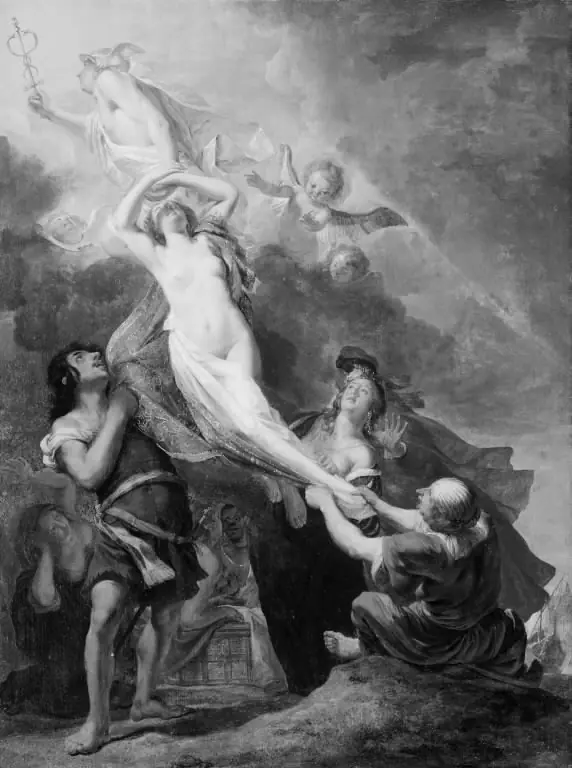 "Il Contento". Mercury abducting the Goddess Contento from the Earth
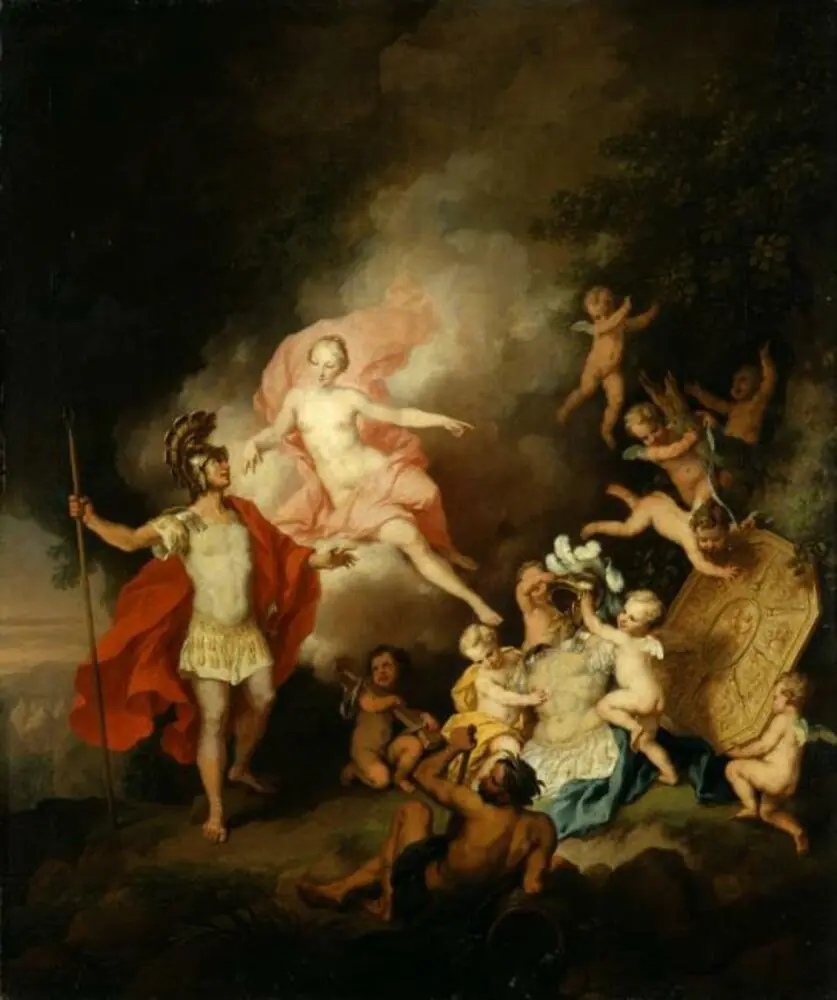 Venus hands over to Aeneas the armour forged by Vulcan
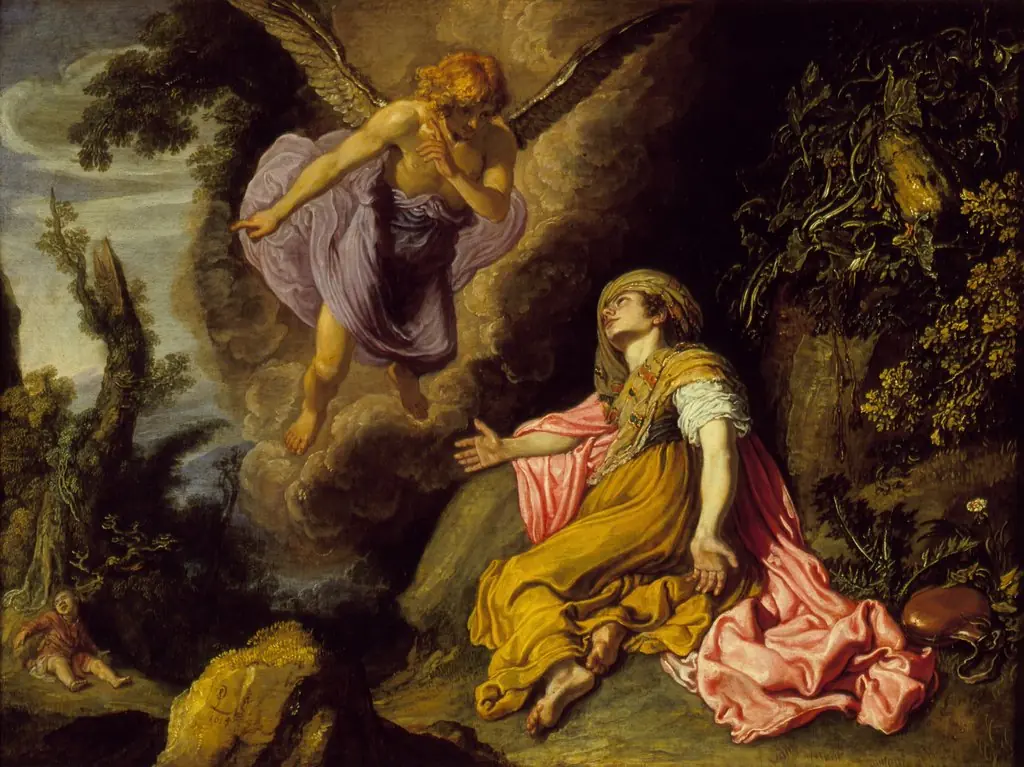 Hagar and the Angel
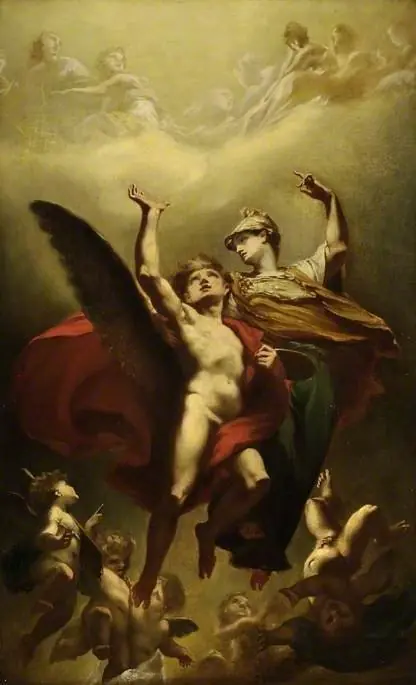 Study for 'Minerva leading the Genius of the Arts into Immortality'
 Enkelten ilmestys paimenille
 The Angel Raphael Takes Leave of Old Tobit and his Son Tobias
 Rinaldo and Armida