Artwork
Untitled
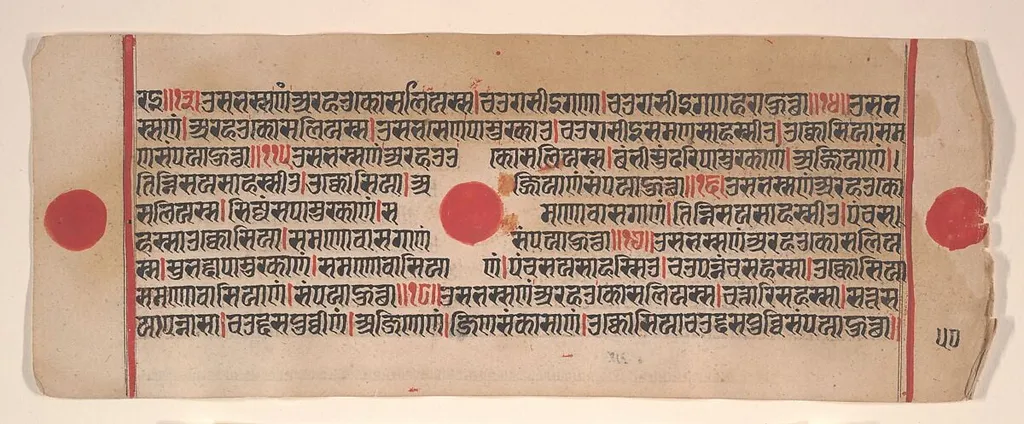
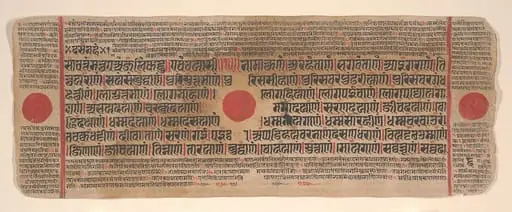
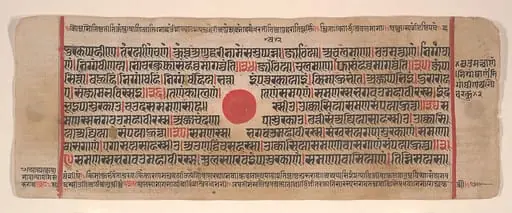
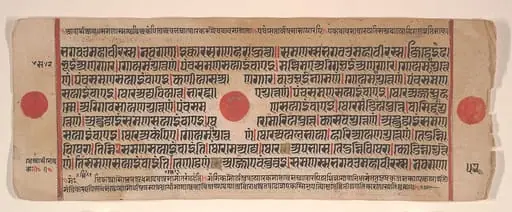
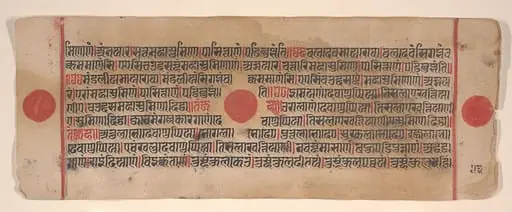
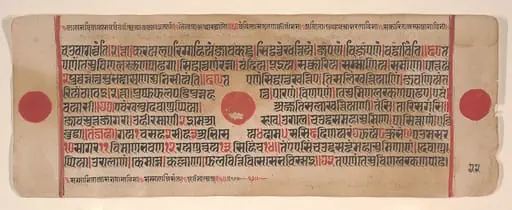
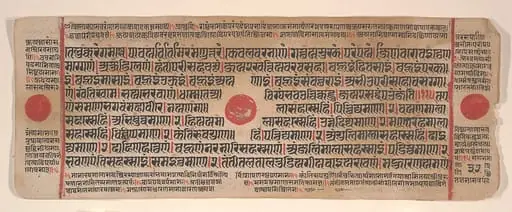
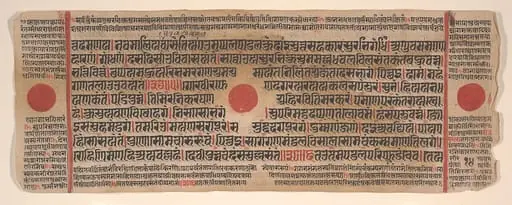
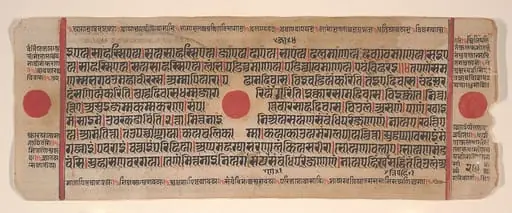
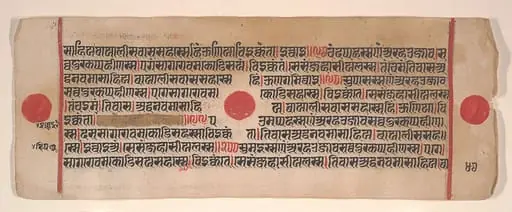
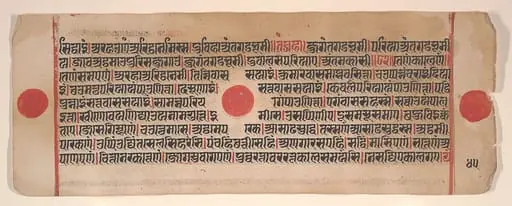
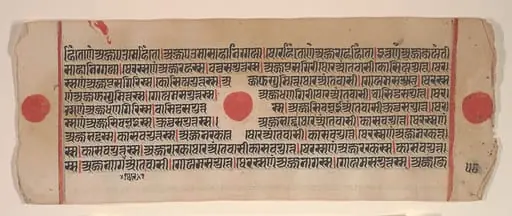
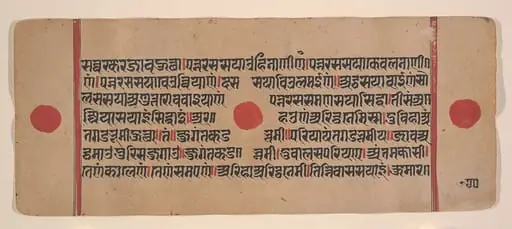
Untitled is a watercolor painting by the Indian Miniature artist Bhadrabahu. It dates from 1449 and is held in the collection of the Metropolitan Museum of Art.
About this work
Technique & Style
The use of gold alongside opaque pigment suggests careful, layered application, with metallic accents likely reserved for figural or sacred elements.
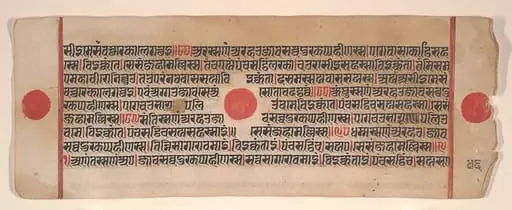
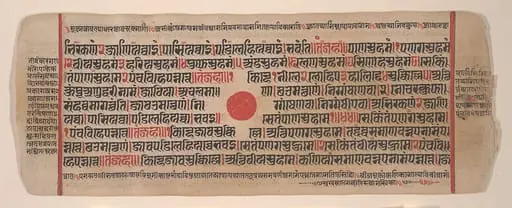
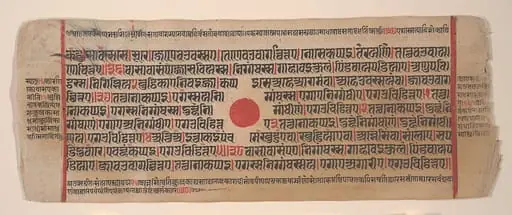
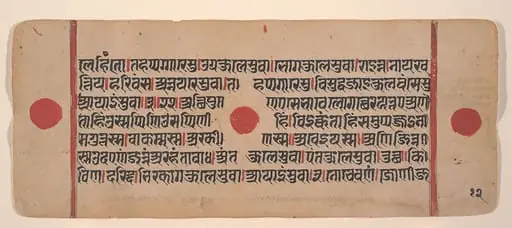
The work is executed in ink, opaque watercolor, and gold on paper, a combination characteristic of South Asian manuscript and devotional painting traditions of the mid-fifteenth century. Its modest dimensions, 11.4 cm in height by 28.9 cm in width, indicate a horizontal, elongated format suited to a folio or small panel. The use of gold alongside opaque pigment suggests careful, layered application, with metallic accents likely reserved for figural or sacred elements.
Classified as a religious painting, the work's technique aligns with Jain devotional imagery produced in India, where such mixed-media handling on paper was standard for portable religious objects.
History & Provenance
The work titled Untitled was produced in 1449 in India by the artist Bhadrabahu, employing ink, opaque watercolor, and gold on paper. Its dimensions measure 11.4 cm in height by 28.9 cm in width, and it belongs to the religious genre of Jain art. The painting is classified as a Jain religious work and is housed in the Metropolitan Museum of Art, which records it under accession number 57.51.38.53.
The Metropolitan Museum of Art’s catalogue indicates that the piece entered the museum’s collection through a formal acquisition, making it part of the museum’s permanent holdings. No earlier owners or commissioning details are documented in the available sources.
The 1449 ink and opaque watercolor painting titled Untitled by Bhadrabahu is held in the collection of the Metropolitan Museum of Art in New York. The institution catalogs the work under the accession number 57.51.38.53. Created in India, the piece depicts themes related to Jainism and measures 11.4 by 28.9 centimeters.
While the current location and inventory details are documented, the provided sources do not list specific past exhibitions or a detailed provenance history beyond its creation and current museum ownership.
Context
Untitled, a 1449 ink, opaque watercolor and gold painting on paper by Bhadrabahu, exemplifies Jain religious art of fifteenth‑century India. Its depiction of Jainism aligns with scholarly observations that the artist operated within a devotional visual culture centered on Jainiconography. The work’s inclusion in the Metropolitan Museum of Art’s collection has enabled detailed technical and iconographic studies that position Bhadrabahu among the principal painters of Jain manuscript illumination.
Contemporary reception emphasizes the piece’s technical mastery and its role in illustrating Jain theological narratives, underscoring its significance within both Indian art history and the broader study of religious manuscripts.
Legacy
The work is part of the Metropolitan Museum of Art's collection, where it is catalogued as a 1449 Jain religious painting by Bhadrabahu. Its status as one of the few surviving early Indian manuscript paintings has made it a reference point for studies of Jain artistic development and for examinations of manuscript illumination techniques in subsequent centuries. Scholars cite the piece when discussing the evolution of Jain visual narrative and its influence on later regional styles, and it features in exhibitions that trace the historical trajectory of Jain art.
The painting’s provenance and material details are documented in the museum’s records and in the Wikidata entry, underscoring its recognized legacy within art‑historical scholarship.
Overview
This untitled painting, created by Bhadrabahu in 1449, is an example of Jain religious art. Executed with ink, opaque watercolor, and gold on paper, it portrays a revered holy man. The work originates from Gujarat during the 15th century, reflecting the artistic and spiritual traditions of the region. It serves as a visual representation of a significant figure within Jainism.
Subject & Meaning
The artwork features a Jain monk seated in a cross-legged posture under a tree, holding a book. This iconography signifies a holy man, emphasizing his spiritual devotion and connection to sacred knowledge. The depiction of such a figure was central to Jain artistic traditions, serving to inspire and instruct adherents on the path of religious observance and study.
Artist & collection