Artwork
Saint Joseph in Half-Length, Holding the Christ Child
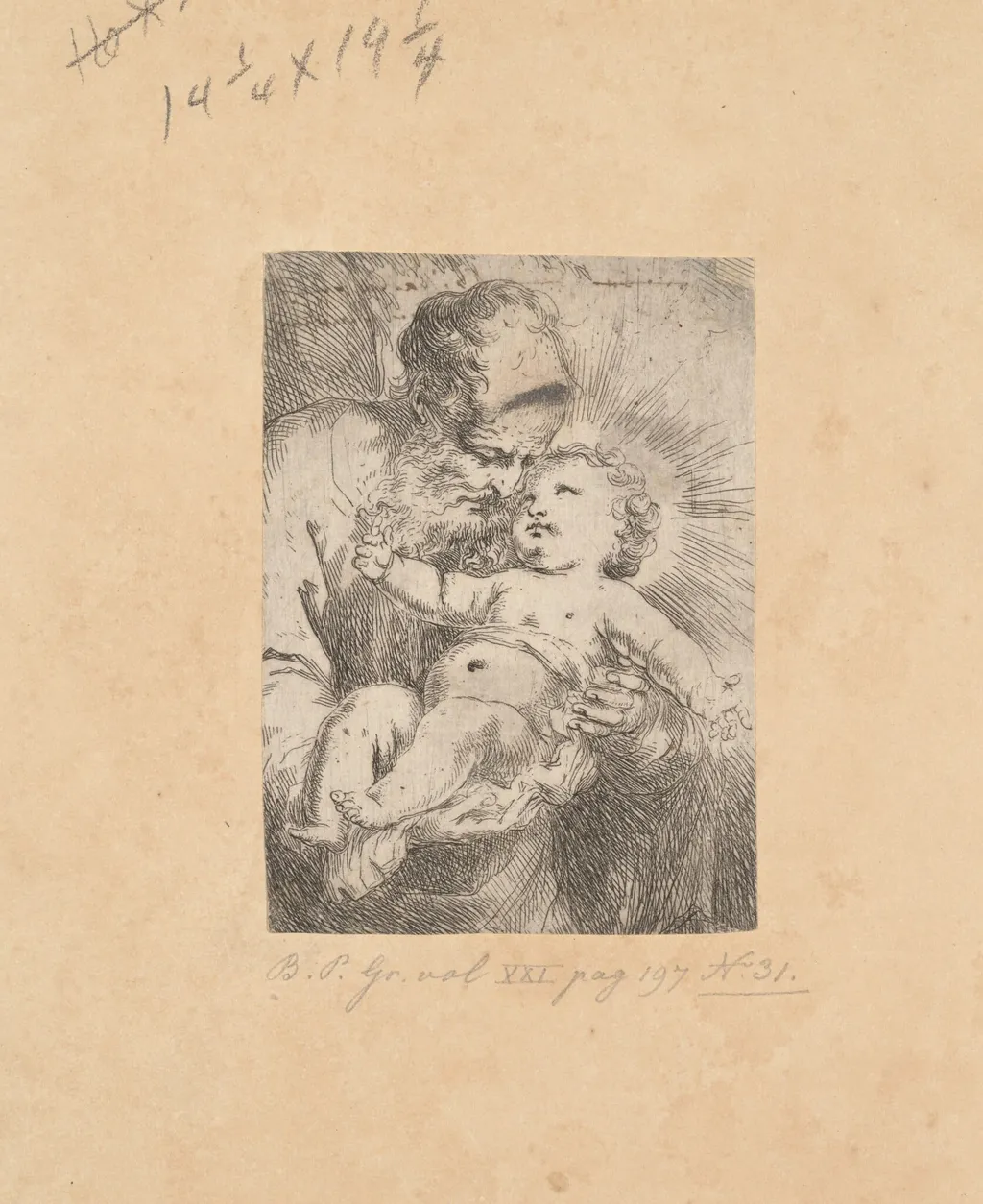
Saint Joseph in Half-Length, Holding the Christ Child is an ink print by the Baroque artist Bartolomeo Biscaino. It dates from 1654 and is held in the collection of the National Gallery of Art.
- Inscription
- Inscribed:by later hand, upper verso in pen and brown ink: [not deciphered}... Biscaino... ; by later hand, upper left of mount in graphite: 16x [crossed out] / 14 1/4 x 19 1/4; by later hand, lower center of album sheet in graphite: B. P. Gr. vol XXI pag 197 No. 31.
About this work
Overview
This 1654 etching by Bartolomeo Biscaino depicts Saint Joseph cradling the Christ Child in a half-length composition. Executed on laid paper and mounted in an album, the work belongs to a tradition of devotional prints produced in 17th-century Italy. Its intimate scale and restrained composition reflect its likely use in private spiritual contemplation rather than public display.
Subject & Meaning
The image presents Saint Joseph as a tender, aging guardian, his gaze lowered in quiet devotion as he holds the infant Jesus. The child, with gentle upraised hands, suggests both vulnerability and divine presence. The scene emphasizes Joseph’s role as protector and earthly father, a theme resonant in Counter-Reformation piety that elevated his quiet sanctity over more dramatic biblical figures.
Technique & Style
Biscaino employed etching with loose, expressive lines and dense crosshatching to model form and texture. The ink builds subtly across the figures, creating a warm, tactile surface that avoids sharp definition. Background elements are minimized to just a few suggestive strokes, directing focus to the intimate interaction between the two figures and enhancing the sketchlike immediacy of the scene.
History & Provenance
The print entered the collection of the National Gallery of Art in Washington, D.C., as part of a larger group of Italian prints assembled in the 20th century. Its mounting on an album sheet suggests it was once part of a curated collection, possibly compiled by a collector or religious institution interested in devotional imagery from the Baroque period.
Context
Created during the height of Baroque religious art in Genoa, this work aligns with a regional emphasis on emotional accessibility in sacred subjects. Biscaino’s style, influenced by both Caravaggio’s chiaroscuro and the sketchlike energy of northern European printmakers, reflects a hybrid aesthetic common among Ligurian artists seeking to convey spiritual intimacy through understated means.
Legacy
Though not widely reproduced or celebrated in major exhibitions, this etching exemplifies the quiet, personal devotional prints that circulated among clergy and lay devotees in early modern Italy. Its preservation in a major museum underscores its value as a representative artifact of a modest yet enduring tradition in religious graphic art.
Own this work as a print
Artist & collection