Artwork
Canto VI, Verse 294
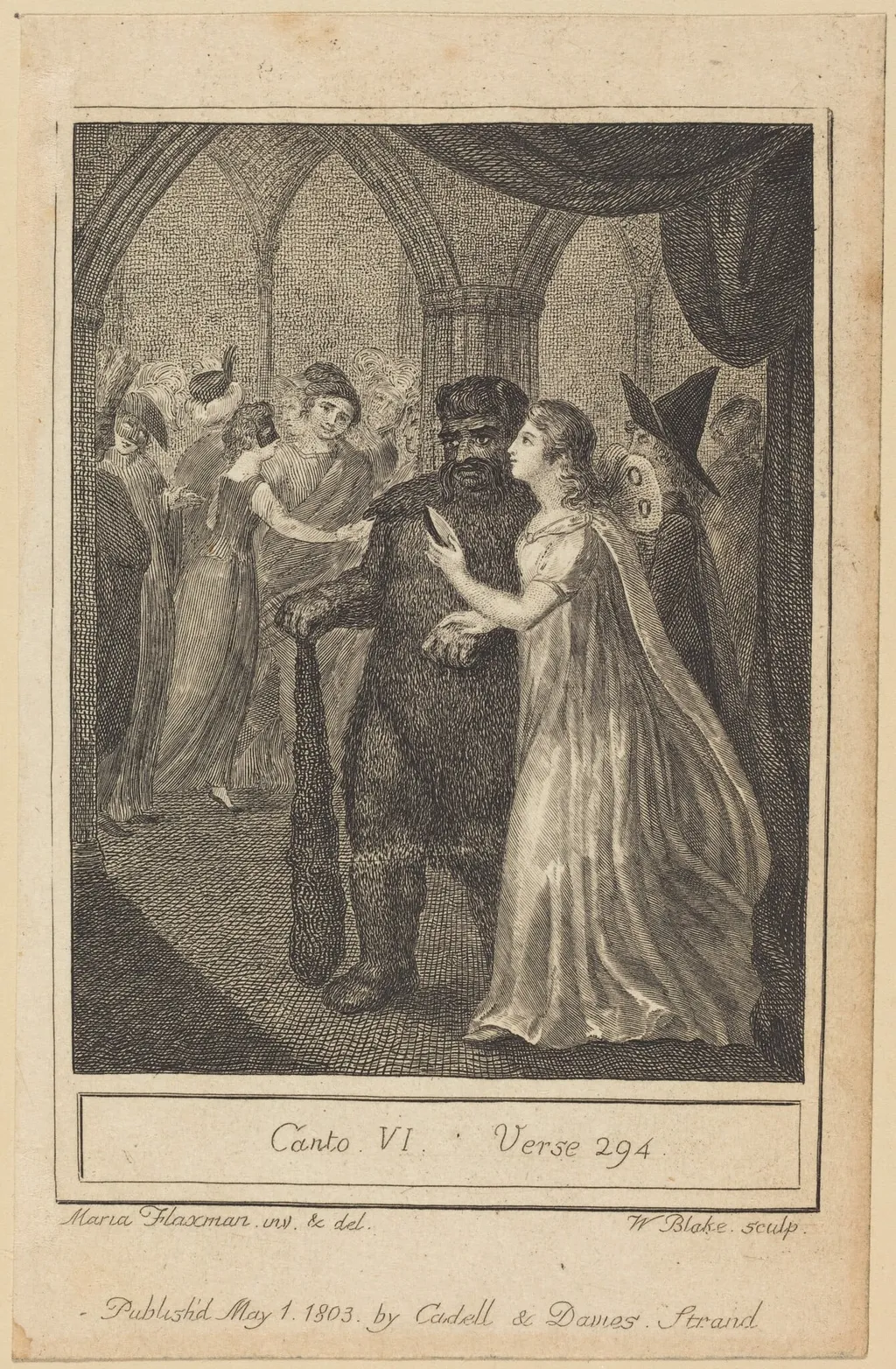
Canto VI, Verse 294 is an ink print by the Romanticist artist William Blake. It dates from 1803 and is held in the collection of the National Gallery of Art.
About this work
Overview
Though published in London, the image transcends local context, embodying a personal mythology that defied contemporary artistic norms.
Created in 1803, this engraving by William Blake is one of many illustrations produced for his extended poetic project. Executed through the labor-intensive process of incising lines into a metal plate, it reflects his dual role as poet and printmaker. Though published in London, the image transcends local context, embodying a personal mythology that defied contemporary artistic norms. Its small scale and monochrome palette emphasize intimacy over spectacle.
Subject & Meaning
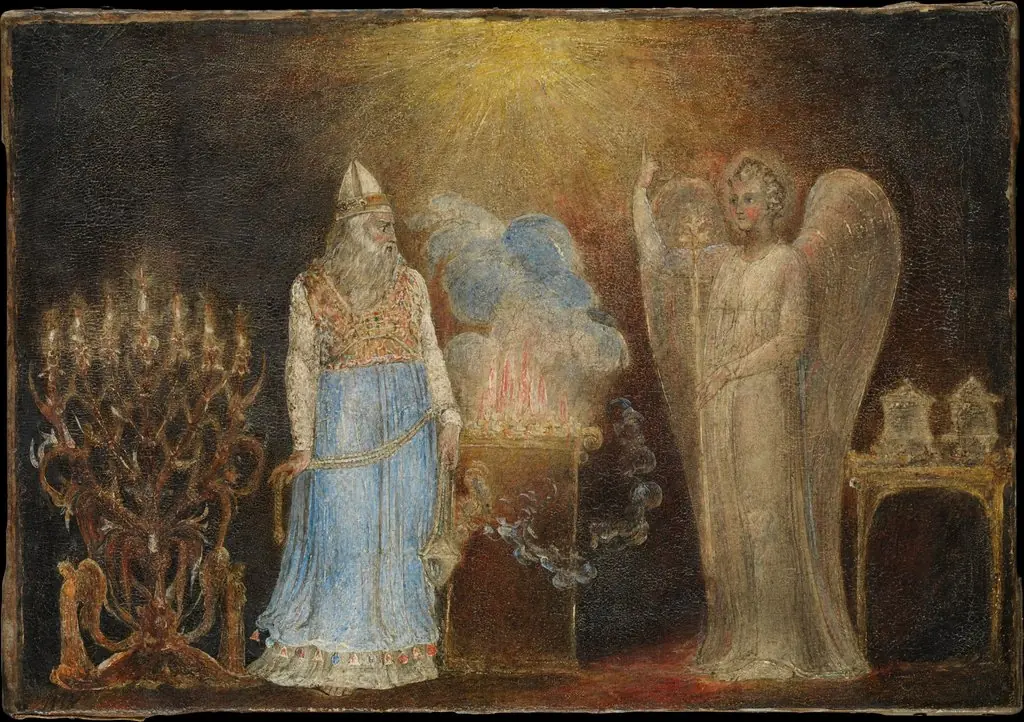
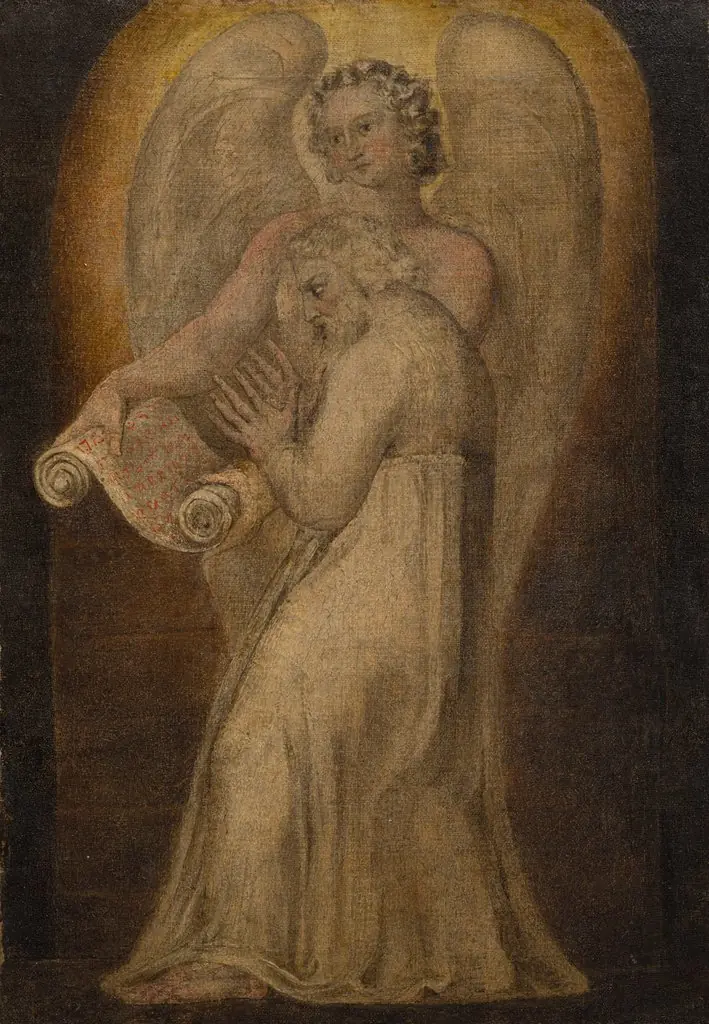
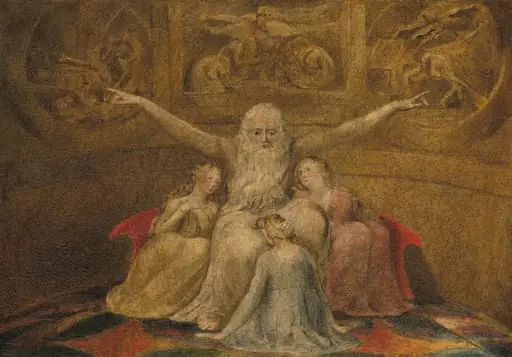
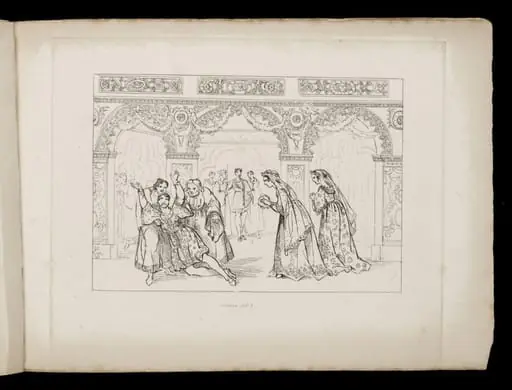
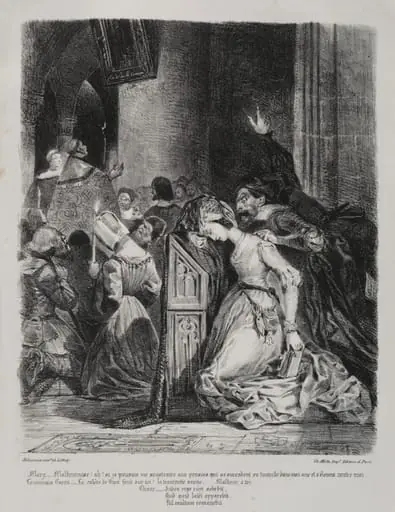
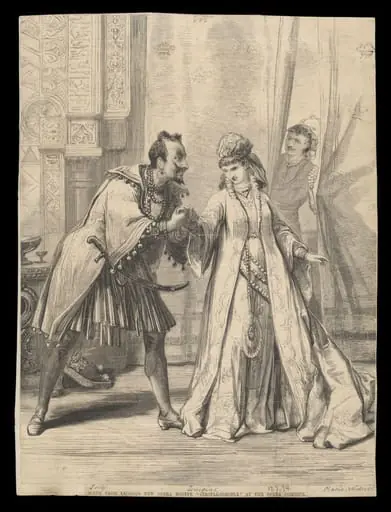
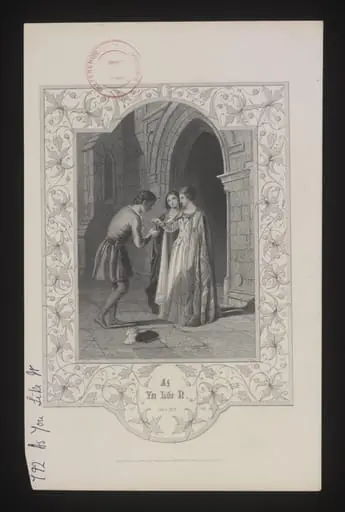
The scene depicts four figures in a quiet, nocturnal moment: a woman in flowing attire stands near a robed man holding a book, suggesting a narrative of revelation or instruction. Above them, two winged beings observe silently, their presence implying spiritual or celestial oversight. The dim lighting and indistinct background evoke mystery, aligning with Blake’s broader themes of inner vision, divine knowledge, and the tension between earthly and metaphysical realms.
Technique & Style
Blake employed intaglio engraving, carving fine lines into a copper plate to hold ink for printing. His hand-drawn precision creates subtle gradations of tone through cross-hatching and delicate linework, rather than shading. The composition avoids realism, favoring symbolic arrangement: figures are stylized, proportions are deliberate, and space is compressed.
This method allowed him to control every aspect of production, from design to print, ensuring fidelity to his vision.
History & Provenance
The engraving was produced as part of a series illustrating Blake’s own poetic writings, published under his own imprint. It circulated among a small circle of patrons and admirers during his lifetime, with no widespread commercial success. After his death, collectors and scholars gradually recognized its significance within his oeuvre.
The original plate and early impressions are now held in institutional collections, preserved as key examples of his independent publishing practice.
Context
In early 19th-century England, commercial printmaking favored clarity and mass appeal, yet Blake pursued a deeply personal aesthetic rooted in mysticism and literary symbolism. His work stood apart from prevailing Neoclassical trends, drawing instead from biblical imagery, medieval illuminated manuscripts, and radical spiritual ideas. While his contemporaries sought recognition in established academies, Blake operated outside institutional frameworks, creating art as an act of visionary expression.
Legacy
Though largely ignored in his time, Blake’s engravings like this one later became foundational to Romantic and modernist reevaluations of art and poetry. His integration of text and image, his rejection of mechanical reproduction in favor of handcrafted prints, and his insistence on artistic autonomy influenced later movements from Pre-Raphaelitism to the Arts and Crafts movement. Today, his prints are studied as complex syntheses of visual and literary thought.
Own this work as a print
Artist & collection
Artist
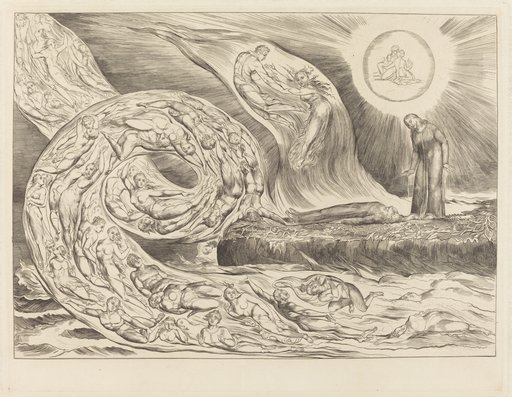
William Blake (28 November 1757 – 12 August 1827) was an English poet, painter and printmaker.