Artwork
The Last Communion of Saint Jerome
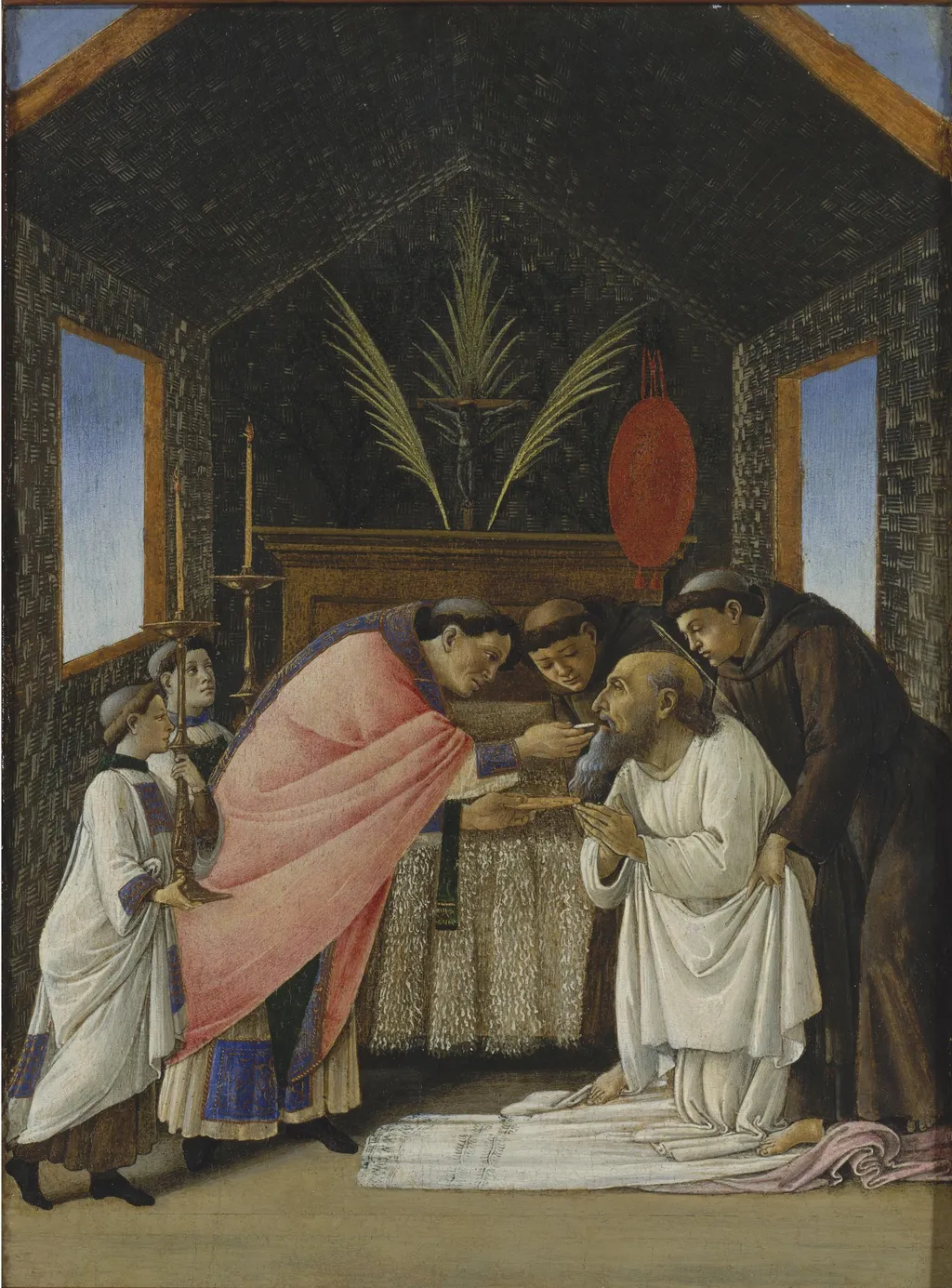
The Last Communion of Saint Jerome is a tempera painting by the Early Renaissance artist Sandro Botticelli. It dates from 1498 and is held in the collection of the Metropolitan Museum of Art.
About this work
Subject & Meaning
The painting depicts the final moments of Saint Jerome receiving the Eucharist, a scene derived from the medieval pseudepigraphical Epistle of Eusebius to Damasus. Set within the saint's hermitage, the composition shows the elderly Jerome kneeling on a white cloth, supported by two monks, as Bishop Eusebius administers the host. Iconography includes the cardinal's hat hanging on the wall, symbolizing Jerome's renunciation of worldly power, and three palm branches near a crucifix on the altar, representing eternal life and the Trinity.
The work's meaning is deeply tied to the preaching of Girolamo Savonarola; the patron, Francesco del Pugliese, likely commissioned the scene to draw parallels between Jerome's pious death and Savonarola's own martyrdom. The archaic spatial simplification and expressive proportions reflect the spiritual introspection and penitential themes prevalent in Florence during the late 1490s.
Technique & Style
Detailed textures define the coarse woolen bedcover and the bishop's embroidered vestments.
Executed in the mid-to-late 1490s, this small-scale work measures approximately 34.3 by 25.4 centimeters and is rendered in tempera on a wood panel. The composition employs a deliberately archaic spatial simplification, presenting the saint's cell as a cross-section with woven reed and straw mats lining the interior walls and ceiling. Botticelli utilizes hyperbolic proportions to enlarge the central figure of Jerome, creating an expressive, anti-naturalistic tension characteristic of his late style.
The palette emphasizes symbolic contrasts: Jerome's white garments and the bright sky suggest a celestial sphere, while the scarlet cardinal's hat hanging on the wall provides a vivid focal point. Detailed textures define the coarse woolen bedcover and the bishop's embroidered vestments. The painting is housed in a carved and gilded aedicula frame attributed to Giuliano da Maiano's workshop, surmounted by a lunette depicting the Trinity, painted by Botticelli's assistant Bartolomeo di Giovanni.
History & Provenance
Sandro Botticelli completed The Last Communion of Saint Jerome in tempera on panel in the mid-to-late 1490s, a date established through stylistic analysis linking it to his final decade of work. The painting was commissioned by Francesco del Pugliese, a Florentine merchant and follower of Girolamo Savonarola. The work is first documented in 1502 as part of del Pugliese's collection and later cited by the Anonimo Magliabechiano between 1542 and 1556.
By approximately 1553 the painting had passed to the Capponi family. In 1912 the last descendant of the Florentine branch sold the piece on the antiquities market. It was acquired by Benjamin Altman in 1913, who bequeathed it to the Metropolitan Museum of Art in New York City; it entered the collection in 1931 and is accessioned as 14.40.641.
Context
Scholarship situates The Last Communion of Saint Jerome within the fervent religious climate of late 15th-century Florence, specifically linking its unusual subject matter to the preaching of Girolamo Savonarola. Art historians argue that the depiction of Jerome's death, derived from a pseudepigraphical epistle popular among Savonarola's followers, reflects the spiritual anxieties of the era and potentially alludes to the preacher's own impending execution. The work, commissioned by Francesco del Pugliese, a known Savonarolan, exemplifies Botticelli's late style, characterized by deliberate archaism in spatial composition and hyperbolic proportions that reject contemporary naturalism in favor of expressive intensity.
This stylistic shift marks a departure from the artist's earlier work. The painting's legacy includes later Baroque interpretations by Agostino Carracci and Domenichino, while its attribution to Botticelli's final decade is confirmed through stylistic analysis and provenance records dating back to 1502.
Legacy
Botticelli's Last Communion of Saint Jerome shaped the visual treatment of a rare subject later taken up by Baroque painters. Agostino Carracci depicted the same scene in a painting now held by the Pinacoteca Nazionale di Bologna, and Domenichino treated it in a work in the Vatican Pinacoteca. A copy attributed to Botticelli's assistant Bartolomeo di Giovanni survives in the Galleria Pallavicini in Rome, indicating the composition's continued circulation within the workshop tradition.
The painting's provenance, recorded in 1502 among the possessions of Francesco di Filippo del Pugliese and again by the Anonimo Magliabechiano around 1542–1556, reflects its enduring recognition in Florentine collections before passing to the Capponi and eventually entering the Metropolitan Museum of Art through Benjamin Altman's 1931 bequest.
Overview
Sandro Botticelli's The Last Communion of Saint Jerome, completed around 1494–1495, depicts the final moments of the revered saint receiving the Eucharist. This tempera painting, now housed at the Metropolitan Museum of Art in New York City, captures a scene of profound spiritual significance. It stands as one of the artist's concluding religious works, reflecting a period of intense devotional focus in Florence.
Own this work as a print
Artist & collection
Artist
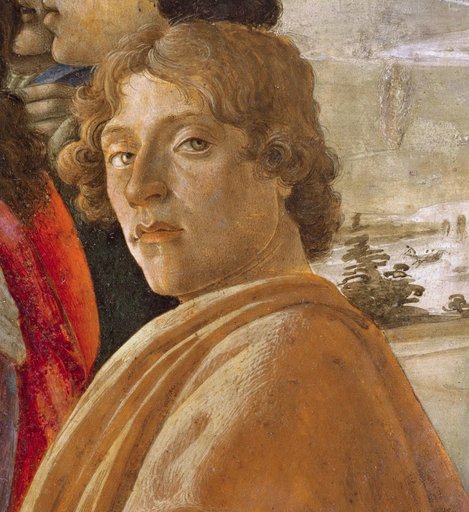
Alessandro di Mariano di Vanni Filipepi, better known as Sandro Botticelli or simply Botticelli, was an Italian painter of the Early Renaissance.

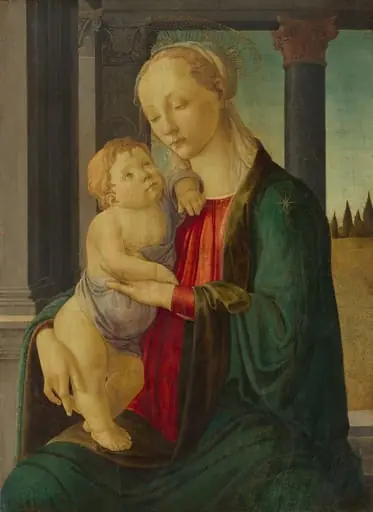
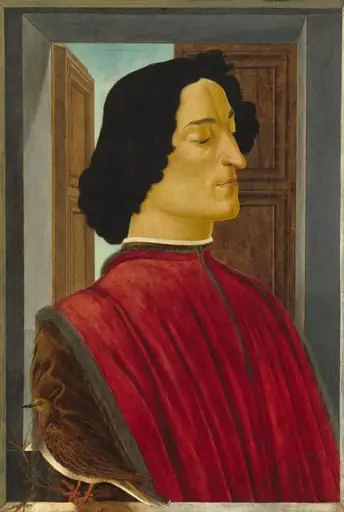
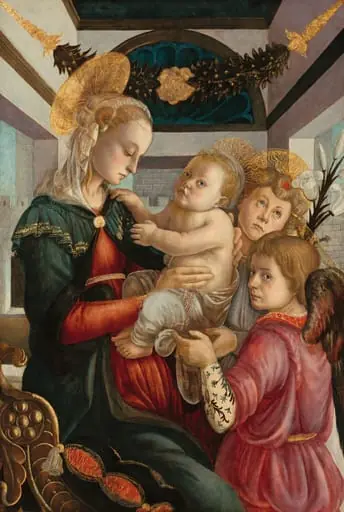
- Saint Anthony Distributing His Wealth to the Poor
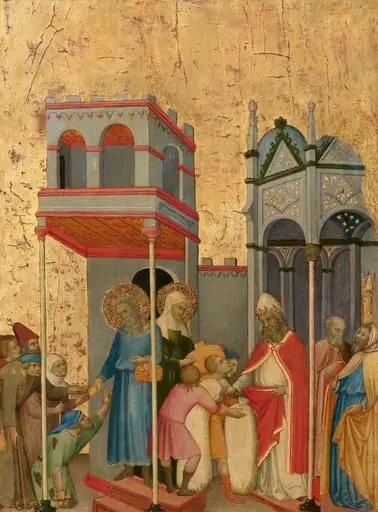 Joachim and Anna Giving Food to the Poor and Offerings to the Temple
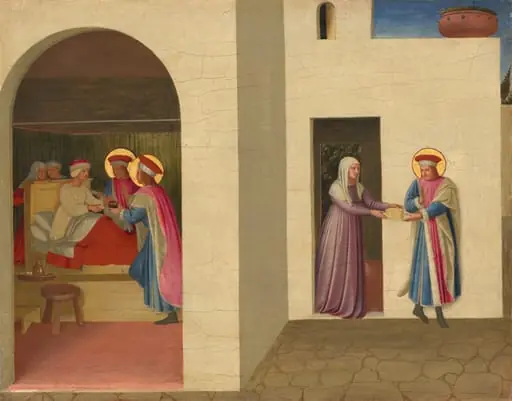 The Healing of Palladia by Saint Cosmas and Saint Damian
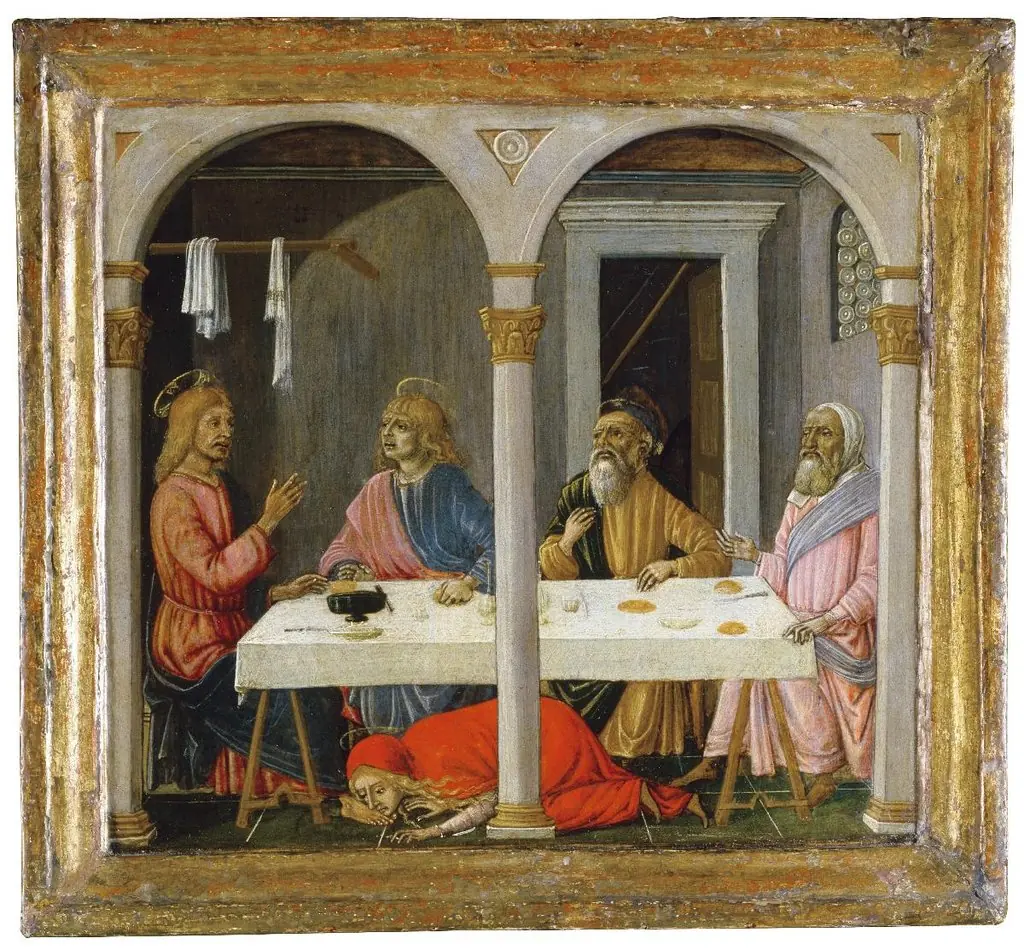 La cena in casa di Simone
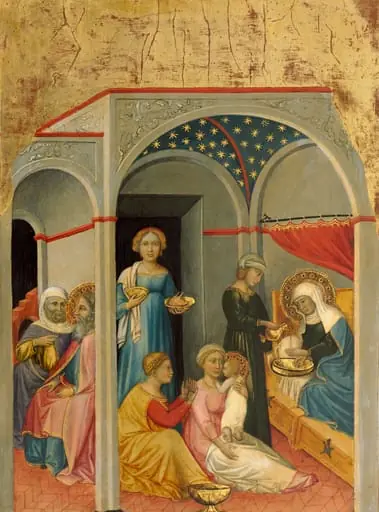 The Nativity of the Virgin
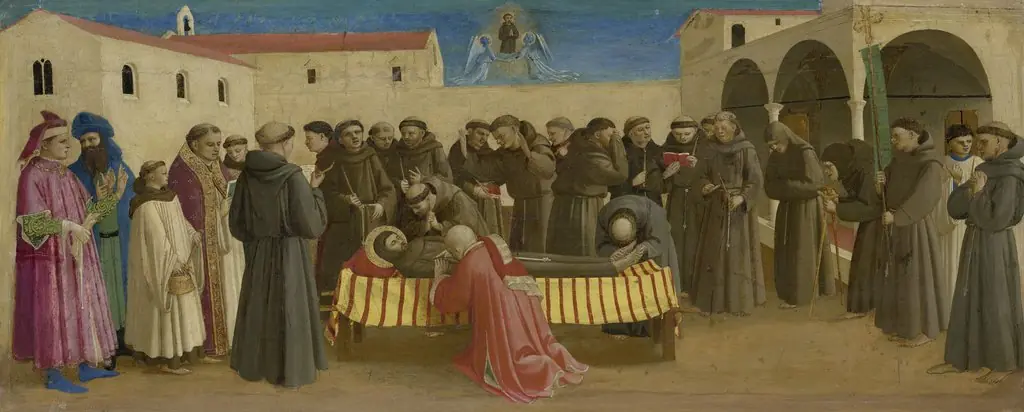 The Lamentation over St Francis
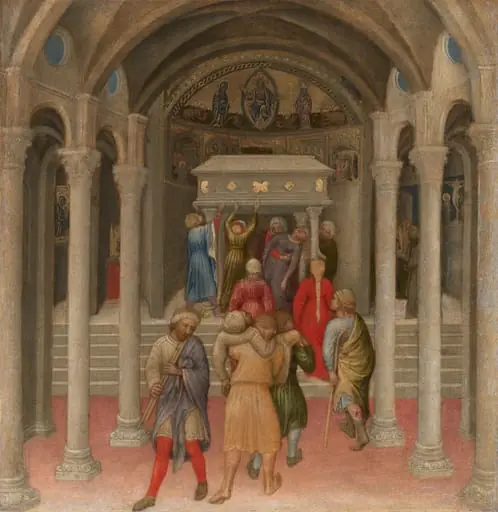 The Crippled and Sick Cured at the Tomb of Saint Nicholas
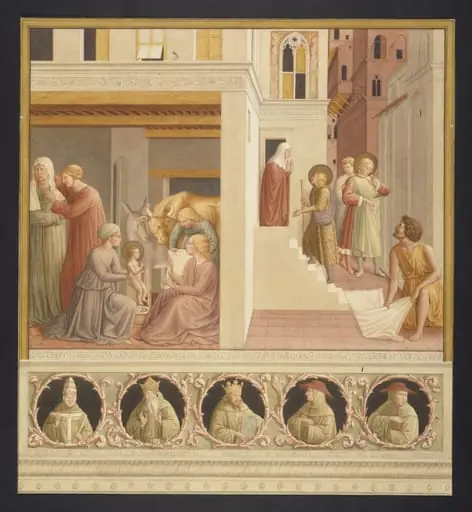 Copy after the cycle of the <i>Life of St Francis</i> (<i>Birth of St Francis</i>), Benozzo Gozzoli in San Francesco, Montefalco
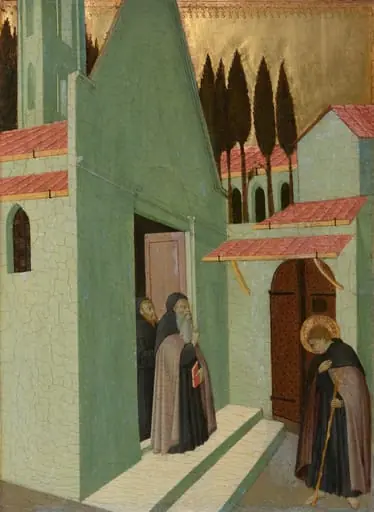 Saint Anthony Leaving His Monastery
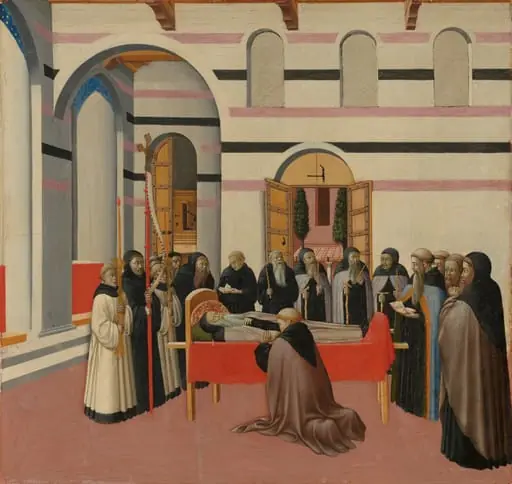 The Death of Saint Anthony
![The Papacy Offered to Saint Gregory the Great [?], by Fra Angelico](https://artifactworldgallery.com/img/fra-angelico--the-papacy-offered-to-saint-gregory-the-great--6c28505dc47c9093-w320.webp) The Papacy Offered to Saint Gregory the Great [?]
The Papacy Offered to Saint Gregory the Great [?] Saint Nicholas Providing Dowries