Artwork
The Virgin and the Child
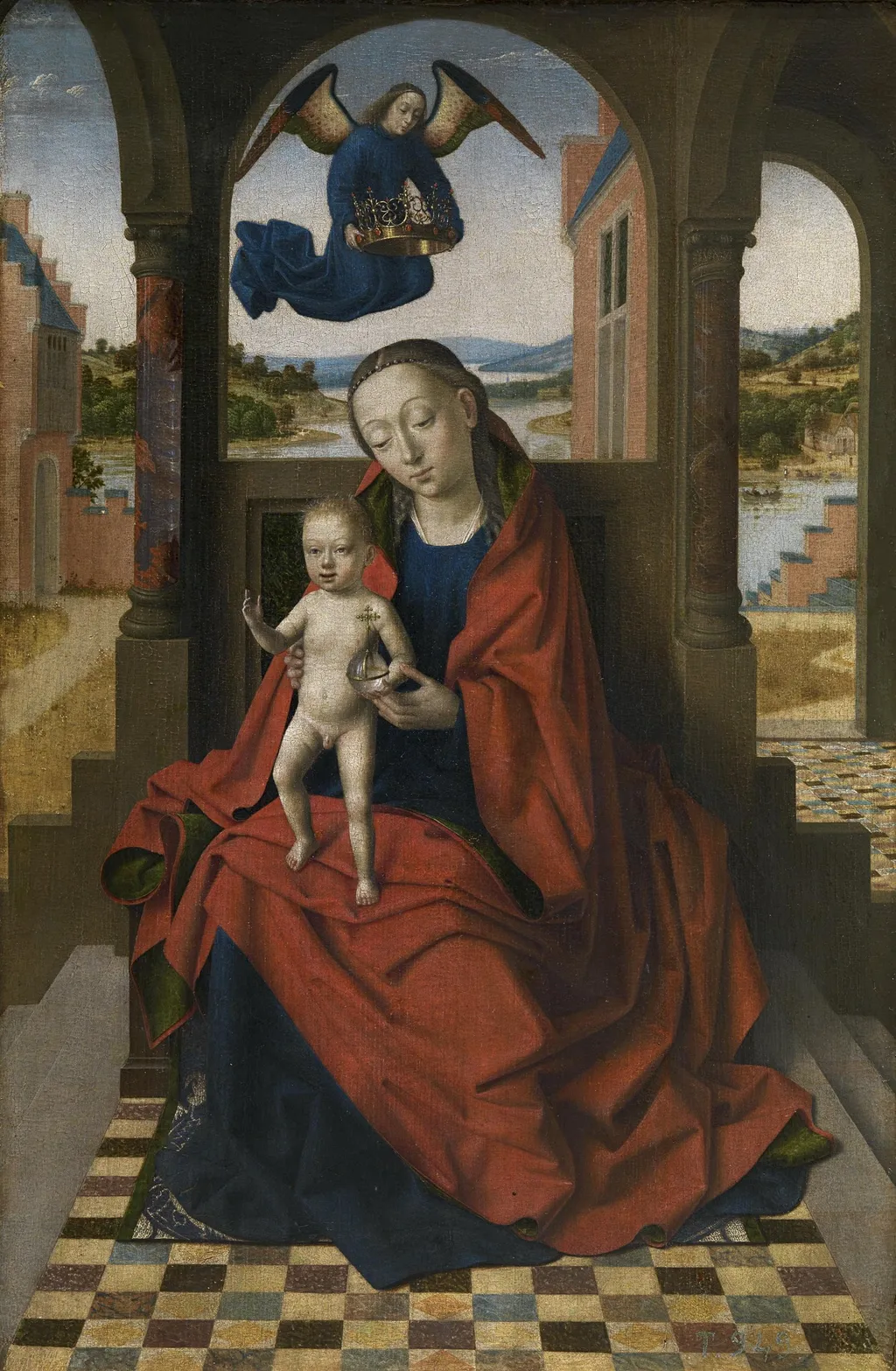
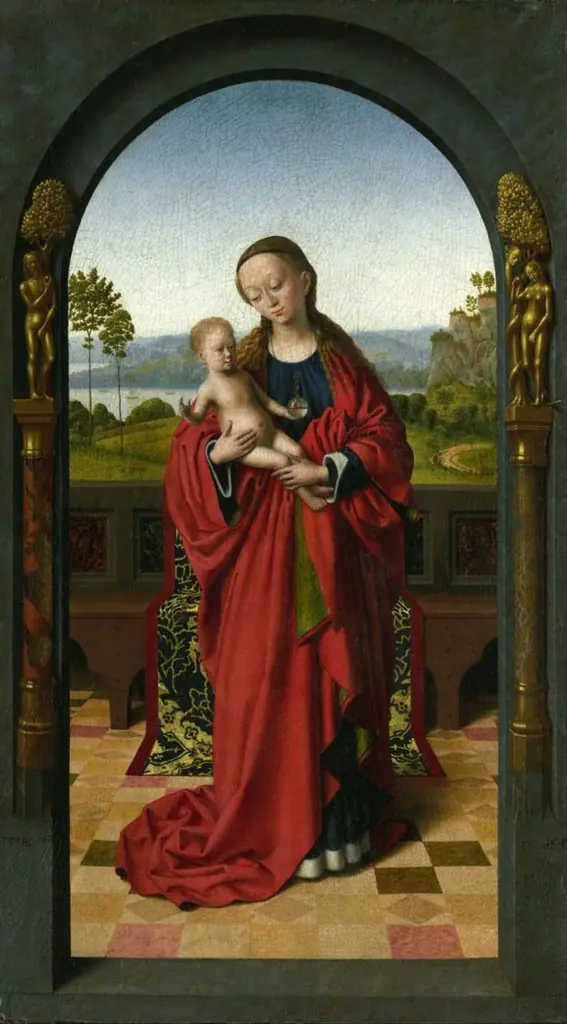
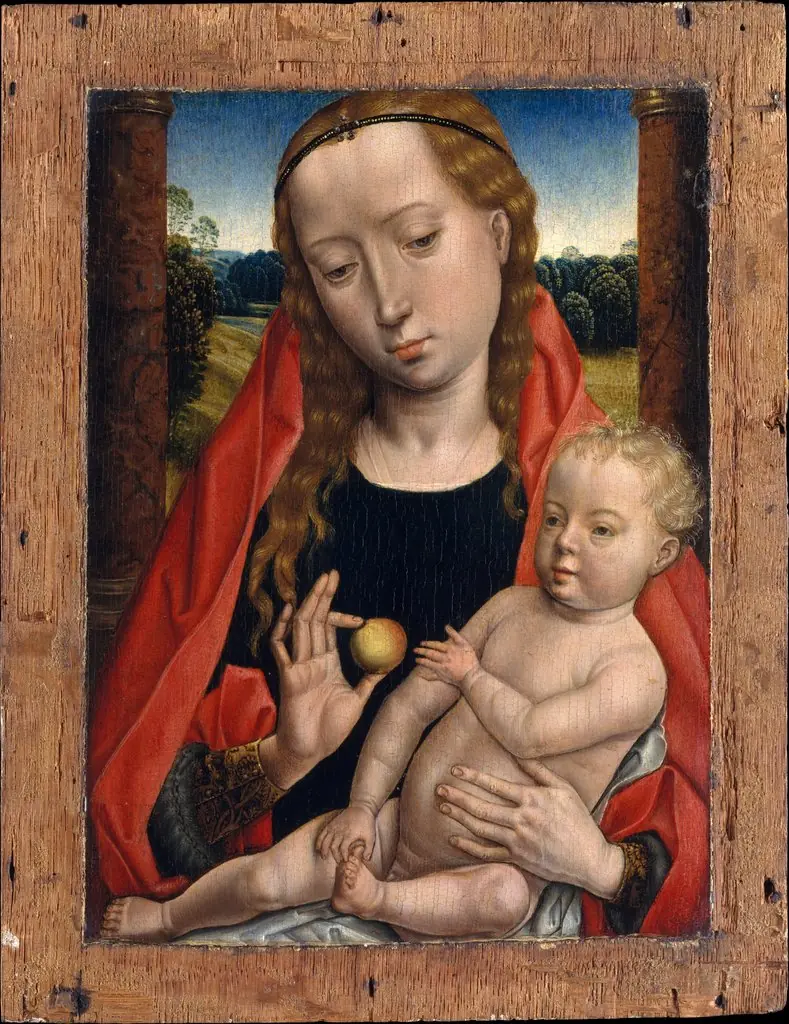
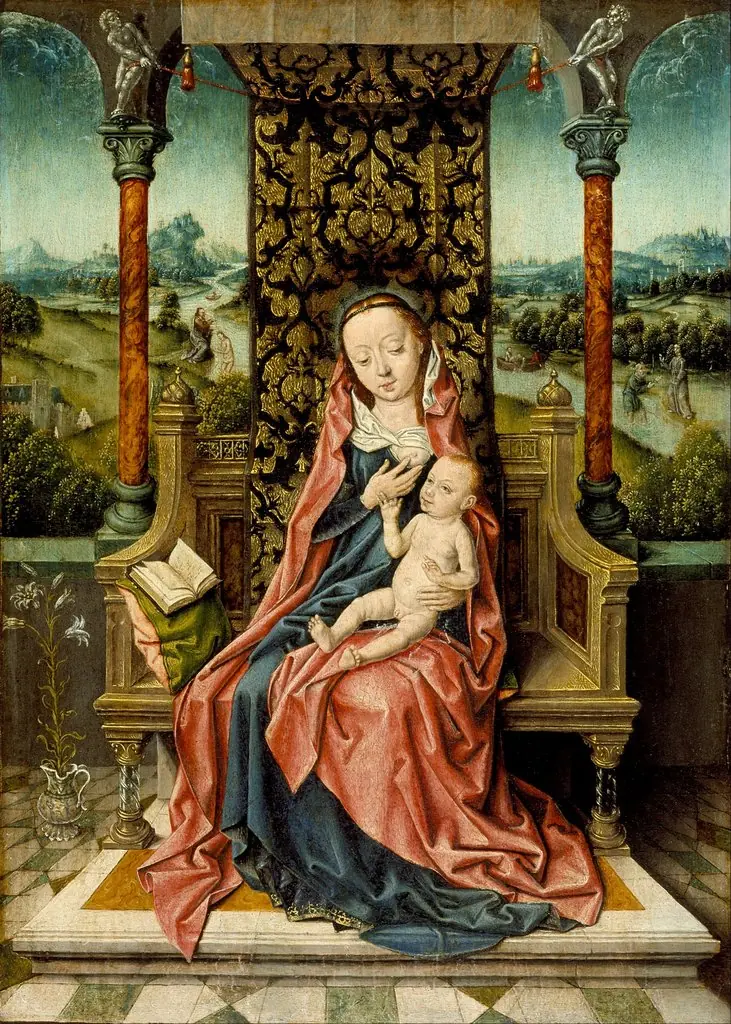
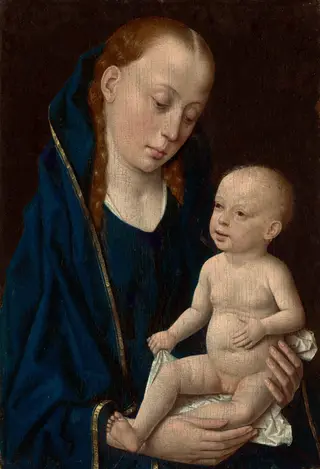
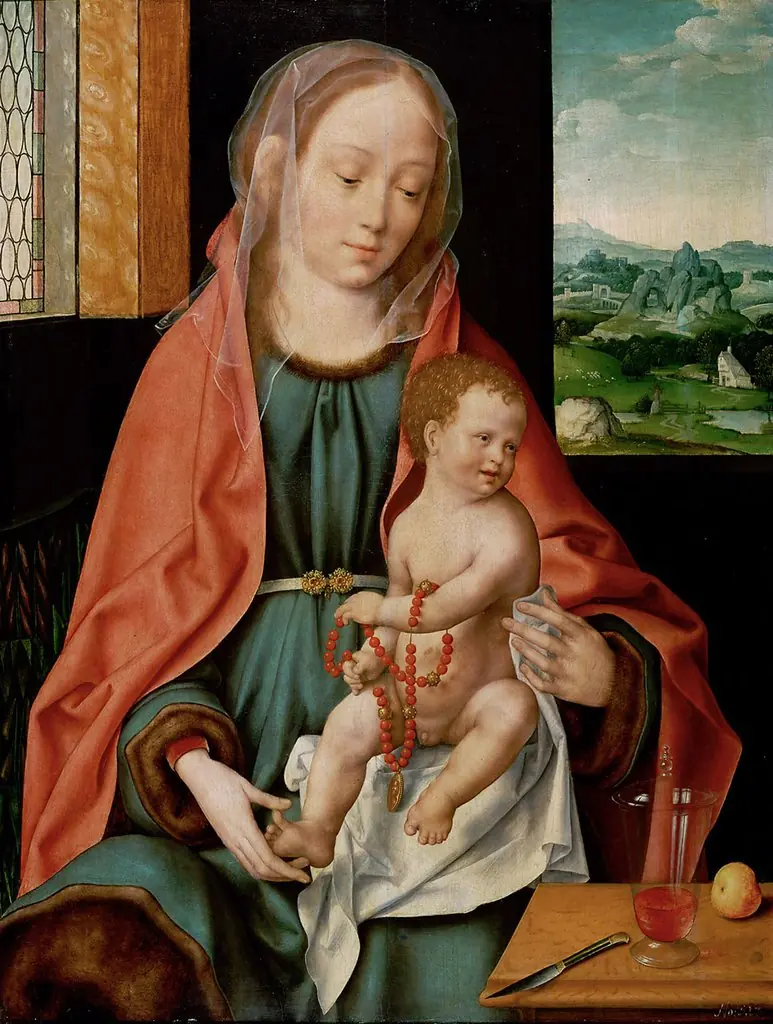
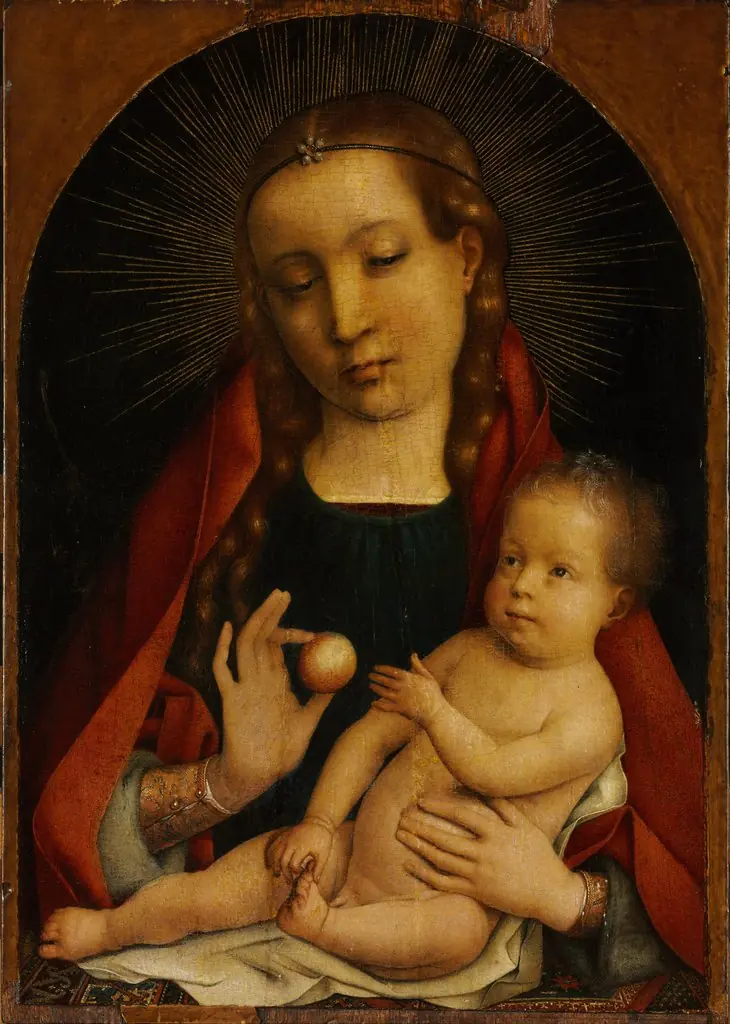
The Virgin and the Child is an oil painting by the Early Renaissance artist Petrus Christus. It dates from 1450 and is held in the collection of the Museo del Prado.
About this work
Subject & Meaning
Its iconography aligns with the traditional Madonna and Child motif, conveying both theological meaning and artistic mastery.
The painting shows the Virgin Mary cradling the infant Christ, a conventional composition in early Netherlandish art that emphasizes maternal tenderness and divine incarnation. The crown upon Mary’s head and the jeweled orb she holds symbolize her queenship and the heavenly authority granted to her, while the child’s modest attire and the presence of an angel underscore the sacred narrative of redemption. Executed in oil on panel around 1450, the work reflects the devotional practices of the period and was originally part of a religious context within the collections of the Museo del Prado and the Museo de la Trinidad. Its iconography aligns with the traditional Madonna and Child motif, conveying both theological meaning and artistic mastery.
Technique & Style
The Virgin and the Child is executed in oil paint on panel, a standard technique for Petrus Christus's devotional works of the period. The painting is relatively small in scale, measuring 49 cm in height by 34 cm in width, an intimate format suited to private religious contemplation. The composition is structured around the central figures of the Virgin Mary and the Christ Child, accompanied by an angel, with the Madonna distinguished by a crown and an orb, attributes that signal her regal and sacred status.
The handling reflects the meticulous, tightly controlled approach characteristic of Early Netherlandish panel painting, with fine detail applied to the figures and their attributes. The work is held in the collection of the Museo del Prado, having previously belonged to the Museo de la Trinidad, and is classified as a religious painting.
Context
Petrus Christus's The Virgin and the Child, executed in 1450, stands as a significant example of mid-15th-century religious art within the Early Netherlandish tradition. The work depicts the Madonna and Child accompanied by an angel, utilizing oil paint on panel to render details such as a crown and an orb. Currently held in the collection of the Museo del Prado, having originated from the Museo de la Trinidad, the painting contributes to the understanding of Christus's oeuvre during a period of intense devotional image production.
Its specific iconography, including the presence of the angel and royal attributes, reflects the theological and artistic conventions of its time.
Legacy
The painting is part of the permanent holdings of the Museo del Prado and has been featured in exhibitions, which has helped sustain its scholarly attention and public profile. Its status as a 15th‑century devotional painting underscores its recognized significance within the study of early Renaissance art. The work’s inclusion in museum displays and catalogues reflects its enduring reputation as a representative example of 15th‑century devotional imagery.
Overview
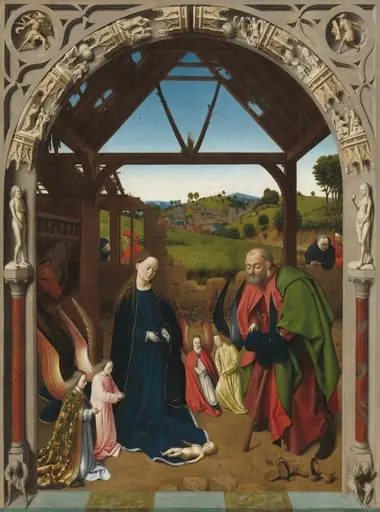
Petrus Christus, an Early Netherlandish painter, created The Virgin and the Child around 1450. This oil painting exemplifies the early Renaissance style prevalent in Bruges, where Christus was active from 1444. The work presents a traditional religious subject, depicting Mary with the infant Christ, framed by architectural elements and accompanied by celestial figures. It is currently housed in the collection of the Museo del Prado.
History & Provenance
Petrus Christus was a prominent Early Netherlandish painter who established his practice in Bruges by 1444. The Virgin and the Child was produced during the mid-15th century, a period of significant artistic innovation in the Low Countries. This painting is now part of the permanent collection at the Museo del Prado, where it represents a key example of the artistic developments of the early Renaissance.
Own this work as a print
Artist & collection
Artist
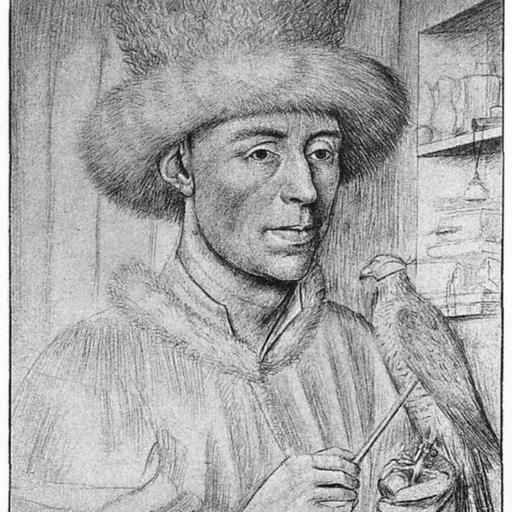
Petrus Christus (Dutch:; c. 1410/1420 – c. 1475/1476) was an Early Netherlandish painter active in Bruges from 1444, where, along with Hans Memling, he became the leading painter after the death of Jan van Eyck. He was…