Artwork
Madonna
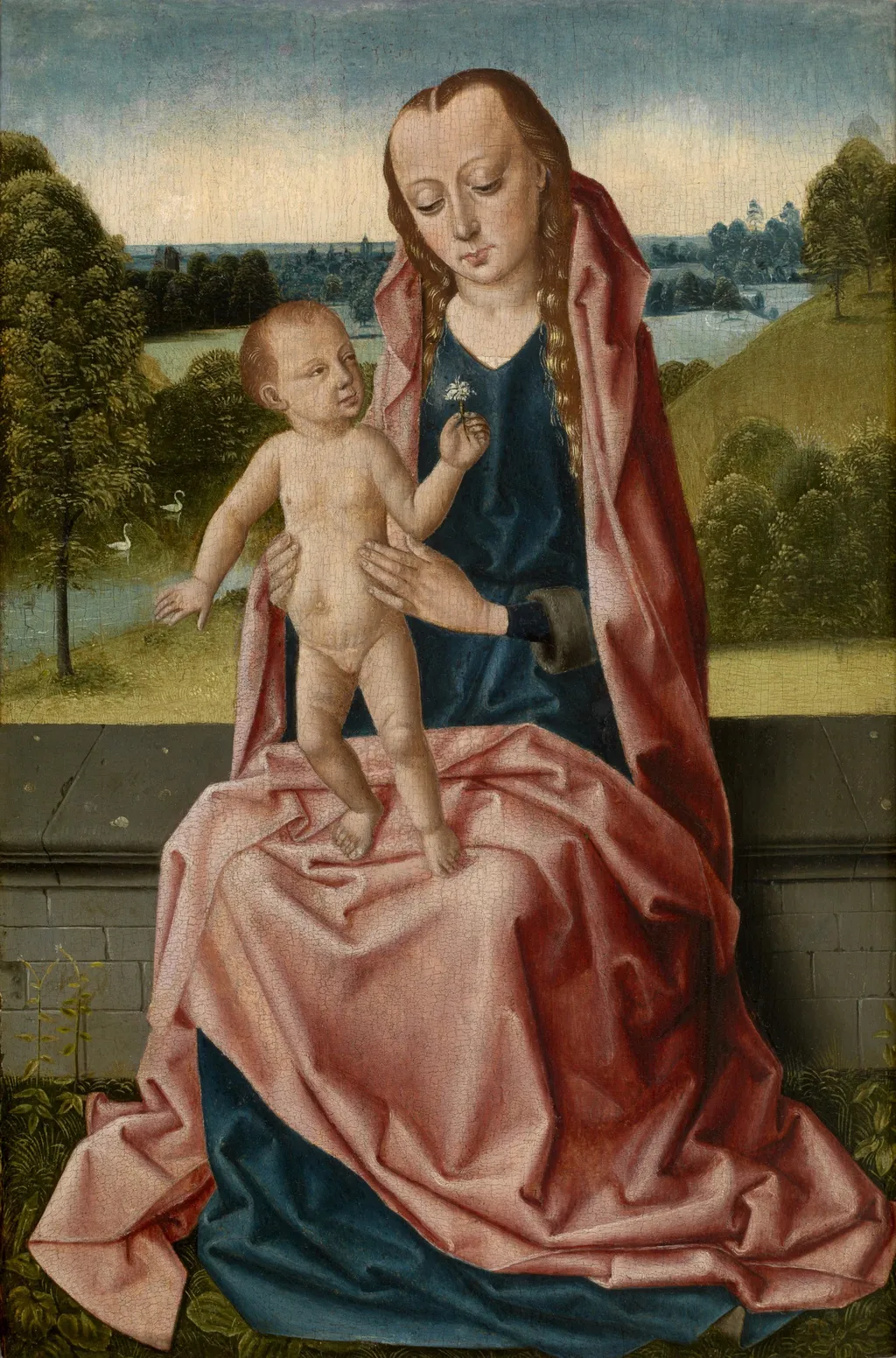
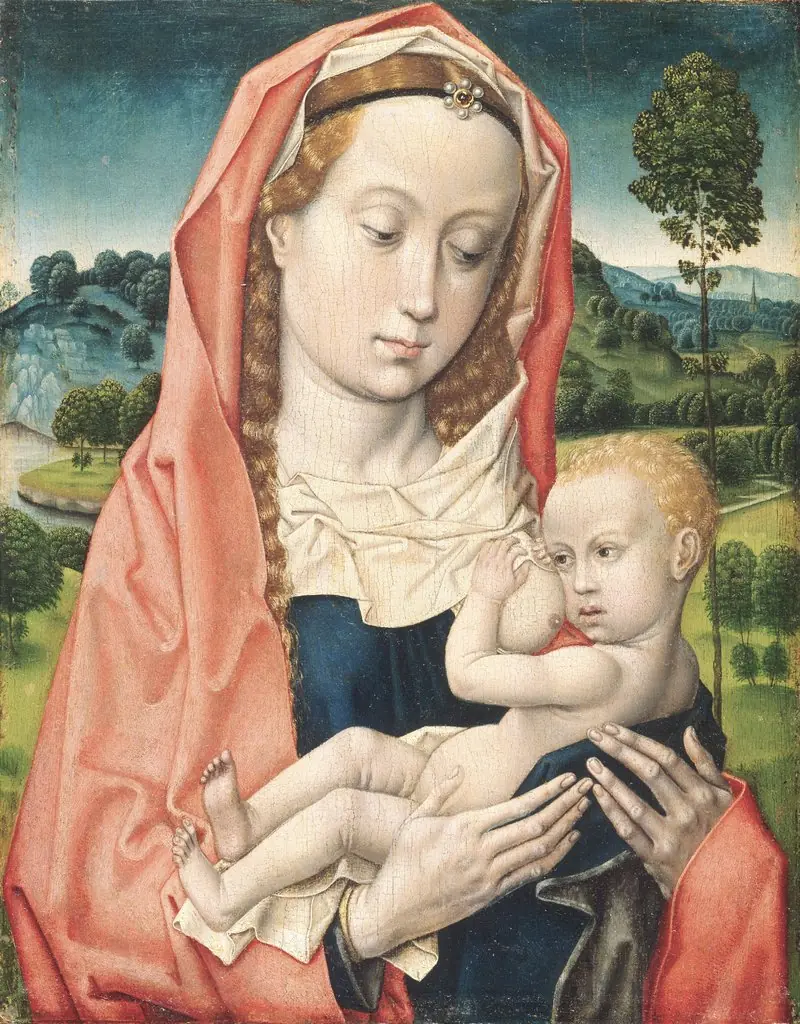
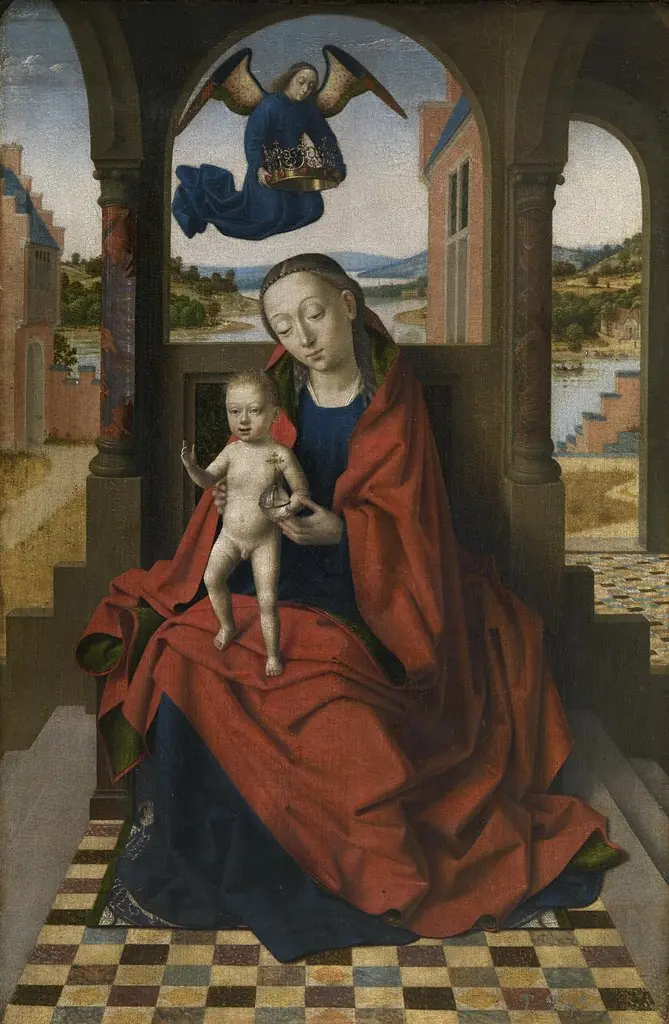
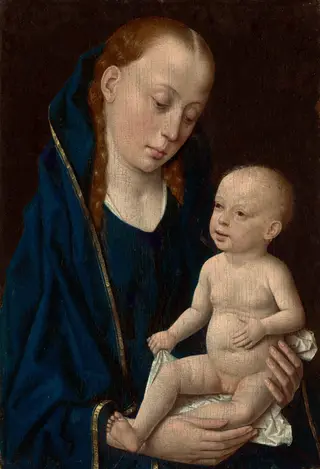
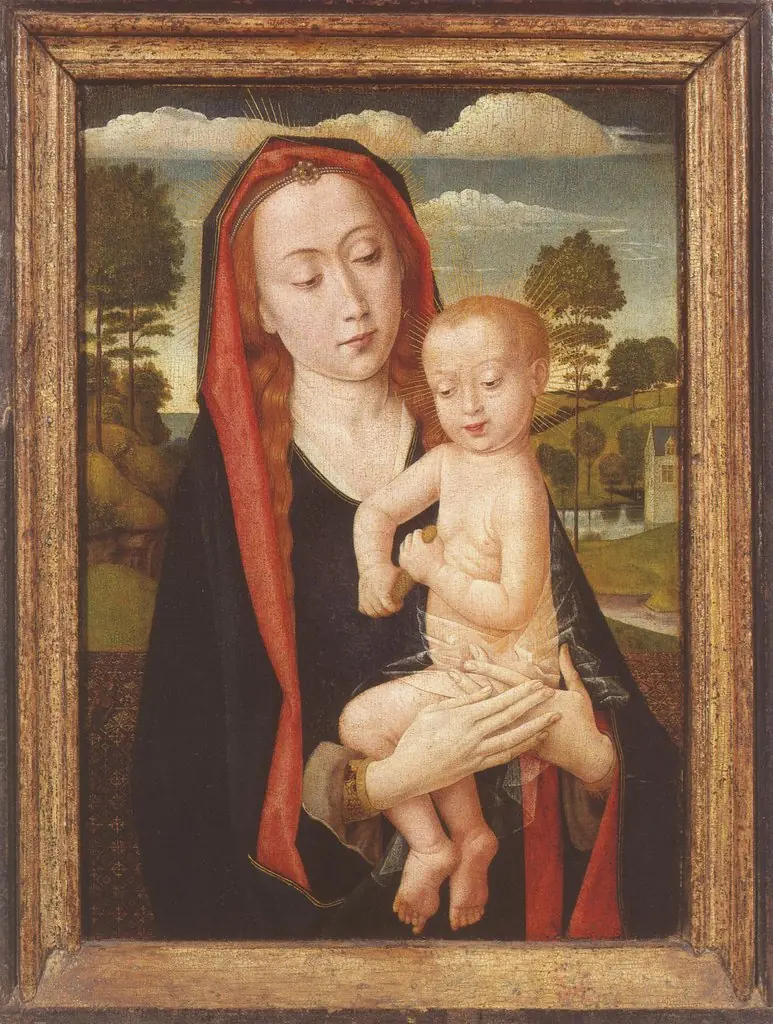
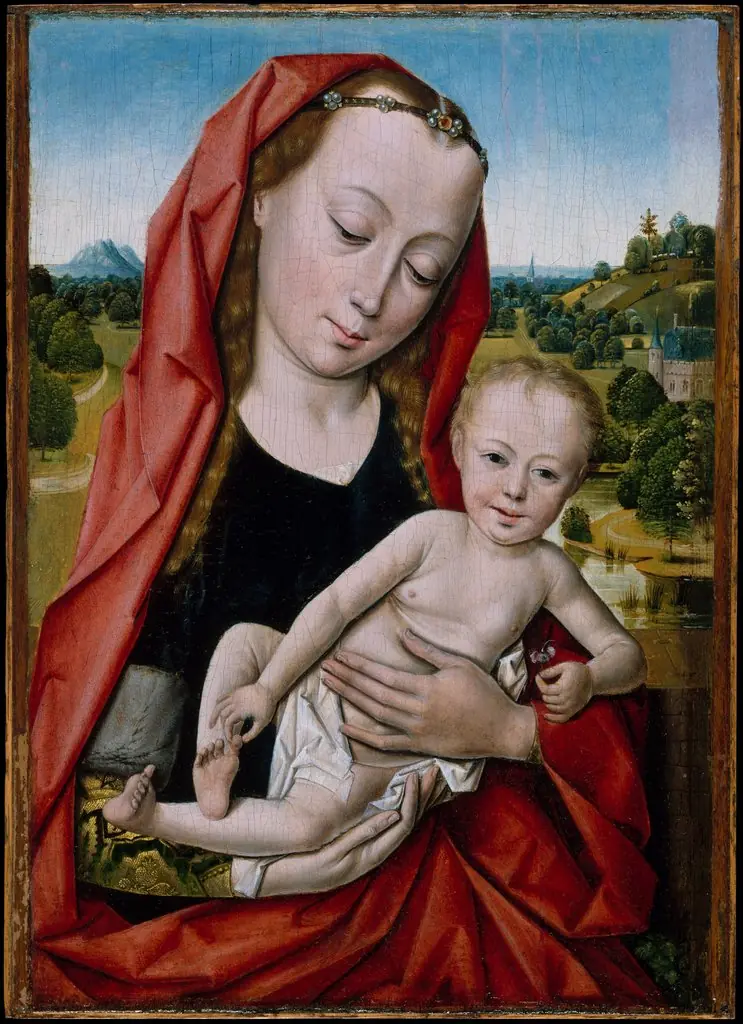
Madonna is an oil painting by the Northern Renaissance artist Unknown. It dates from 1500 and is held in the collection of the Royal Museum of Fine Arts Antwerp. The work depicts a woman in a blue dress holding a barefoot infant on her lap, her red cloak draped over her shoulders.
About this work
Subject & Meaning
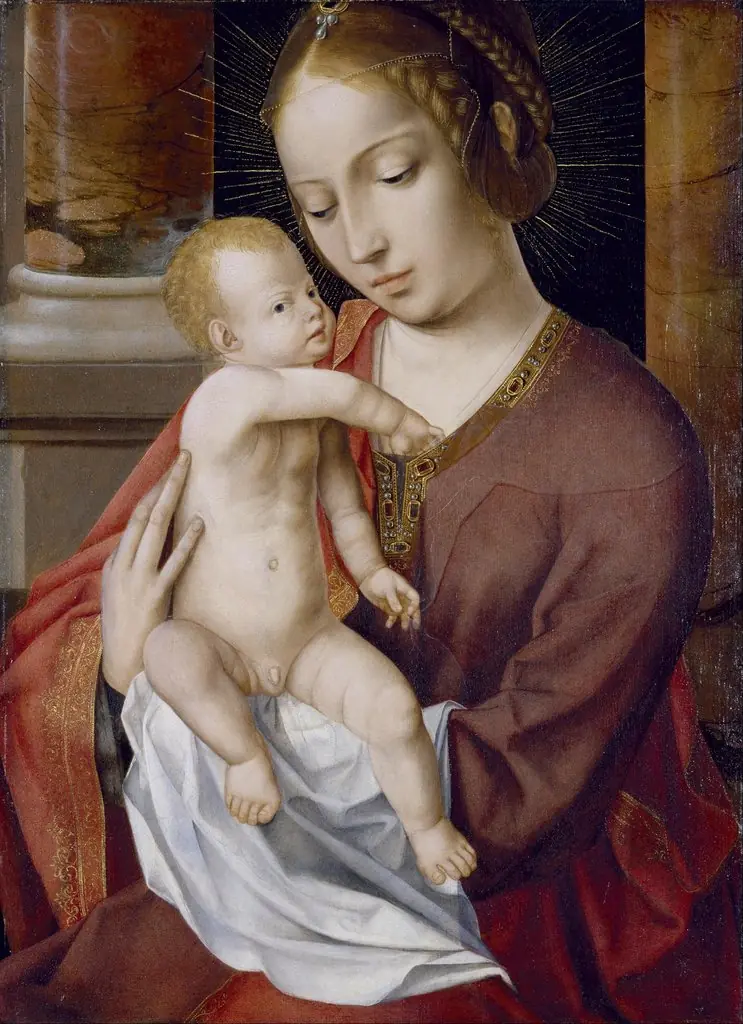
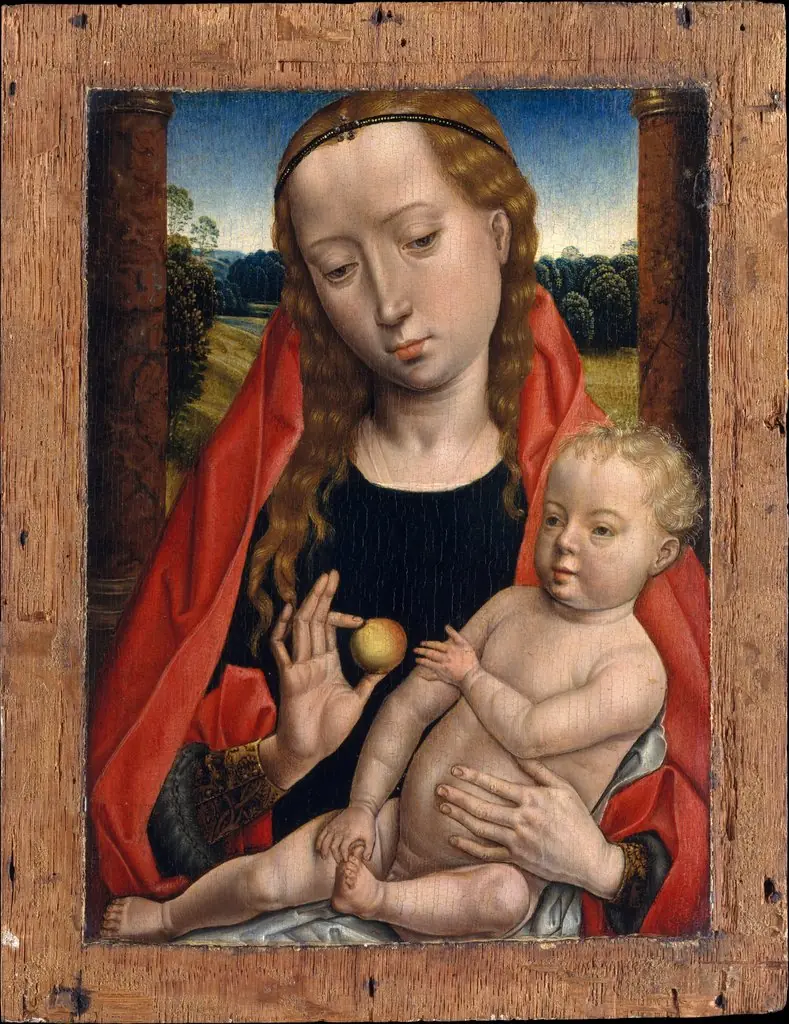
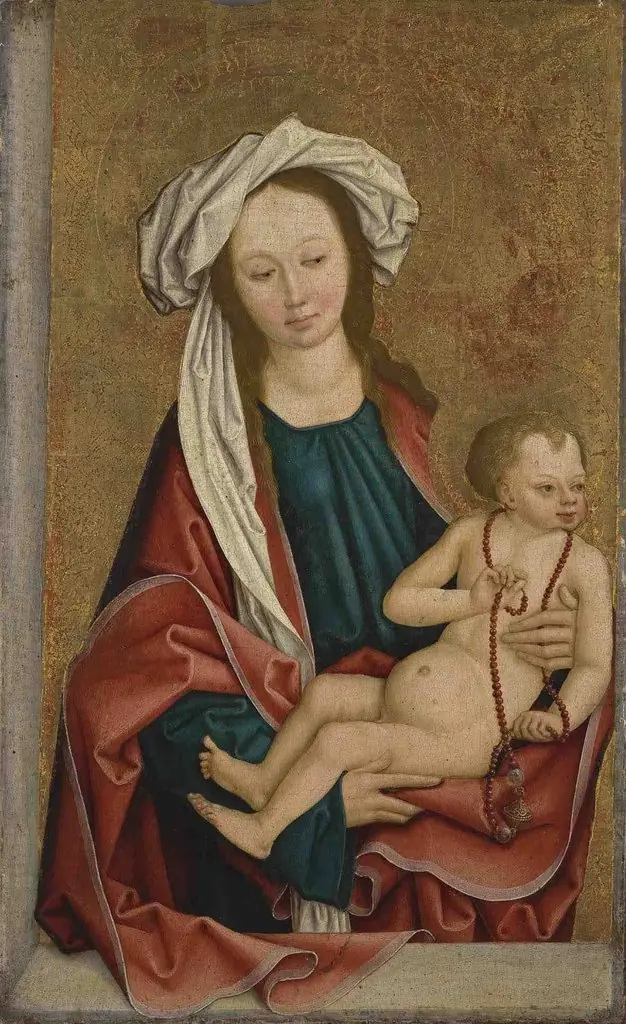
The painting depicts the Madonna and Child, a devotional subject central to religious art of the Early Netherlandish tradition.
The painting depicts the Madonna and Child, a devotional subject central to religious art of the Early Netherlandish tradition. Its main subject is the Virgin Mary with the Christ Child, rendered in oil on panel. As a religious work, it belongs to the long-established iconographic tradition of Marian imagery, in which the mother and her infant son function both as a tender human pairing and as a sacred emblem of maternal devotion and divine incarnation.
The small scale of the panel, 37.4 by 27.5 cm, is consistent with the intimate, prayerful format typical of such devotional images, intended for close, personal contemplation rather than public display.
Technique & Style
Created around 1500 in the Southern Netherlands, this Early Netherlandish work is executed in oil paint on a wooden panel. The painting measures 37.4 cm in height and 27.5 cm in width. Stylistically, the composition focuses on the religious subjects of the Virgin Mary and the Christ Child, adhering to the conventions of the Madonna and Child genre prevalent during this period.
History & Provenance
The Madonna painting was created around 1500 in the Southern Netherlands using oil paint on panel. It depicts the Virgin Mary with the Christ Child and exemplifies Early Netherlandish religious art. The work was acquired by the Royal Museum of Fine Arts Antwerp, where it remains part of the Flemish Art collection today.
The painting Madonna by Dieric Bouts is held in the collection of the Royal Museum of Fine Arts Antwerp, where it is registered under the inventory number 5130. The work is also part of the broader Vlaamse Kunstcollectie (Flemish Art Collection). Created around 1500 in the Southern Netherlands, this oil-on-panel depiction of the Madonna and Child remains associated with its institutional home in Antwerp. The provided sources do not list specific past exhibitions or loan history for this artwork.
Context
The painting Madonna, created around 1500, is attributed to Dieric Bouts and stands as a significant work within the Early Netherlandish painting movement. Depicting the Virgin Mary and the Christ Child, the piece exemplifies the religious art traditions of the Southern Netherlands during the late 15th and early 16th centuries. Executed in oil paint on panel, this small-scale devotional image reflects the stylistic characteristics and spiritual focus typical of Bouts' wider artistic context.
The work is currently held in the collection of the Royal Museum of Fine Arts Antwerp, where it serves as an important example of Northern Renaissance religious iconography.
Overview
The work depicts a woman in a blue dress holding a barefoot infant on her lap, her red cloak draped over her shoulders. The child reaches toward her face while she gently rests a finger on his head. Behind them a tranquil landscape unfolds, featuring trees, water, and a distant town, rendered in soft blues, pinks, and greens.
Artist & collection