Artwork
Hanul Dracului
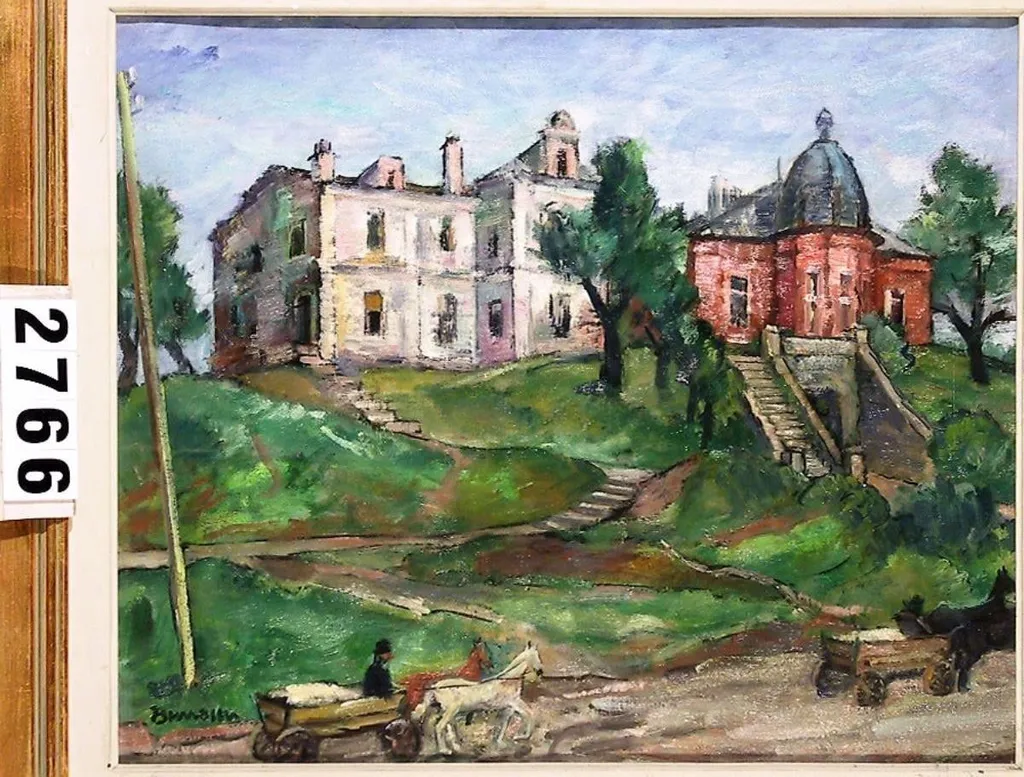
Hanul Dracului is a print by Marius Bunescu. It dates from 1931 and is held in the collection of the Brukenthal National Museum.
About this work
Overview
Trained in Constanța and Munich, he developed a refined academic style that aligned with late 19th-century European traditions.
Marius Bunescu, a Romanian painter born in 1881, completed Hanul Dracului circa 1931. Trained in Constanța and Munich, he developed a refined academic style that aligned with late 19th-century European traditions. The work emerged during a period when Bunescu was actively engaged in Romania’s art scene, having exhibited at the Official Salon since 1911 and later directing the Anastase Simu Museum. This painting reflects his sustained commitment to landscape and architectural subjects.
Subject & Meaning
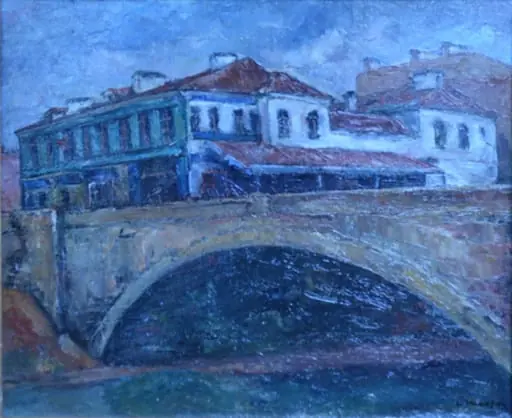
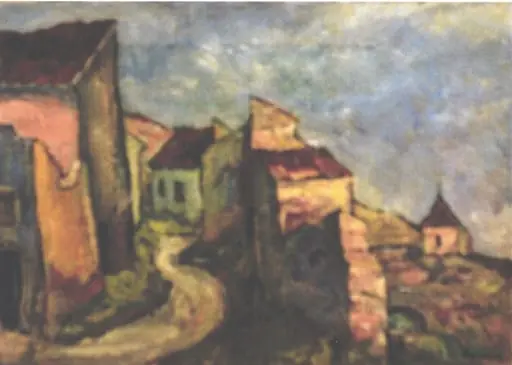
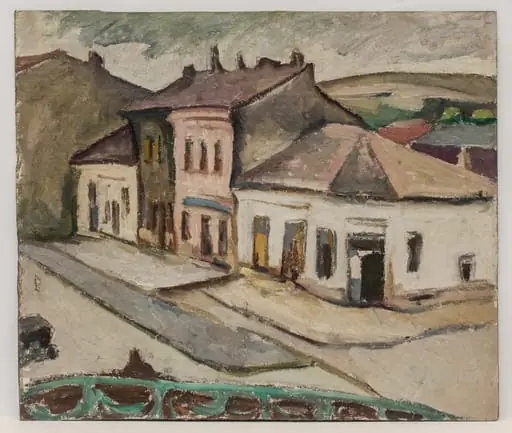
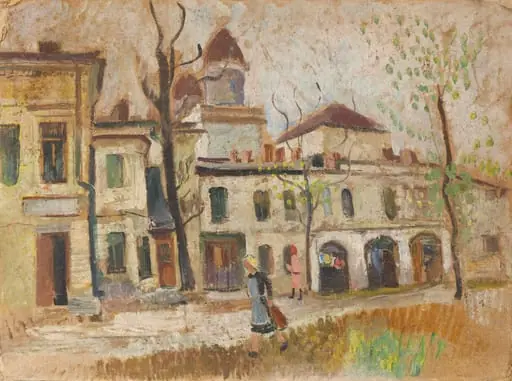
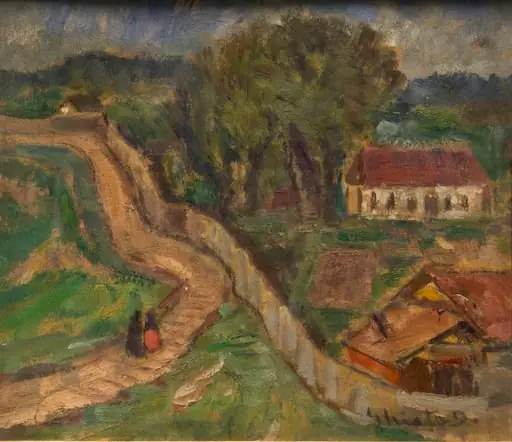
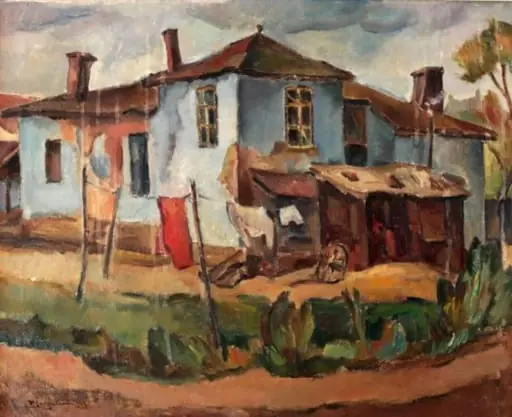
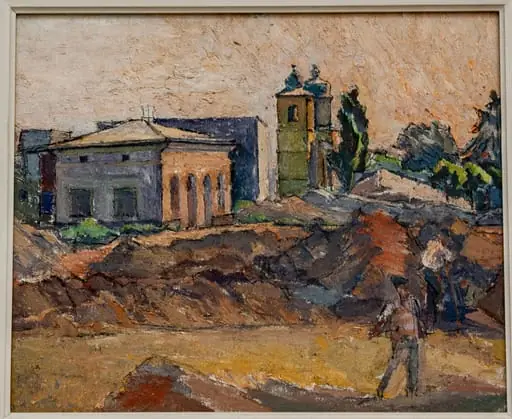
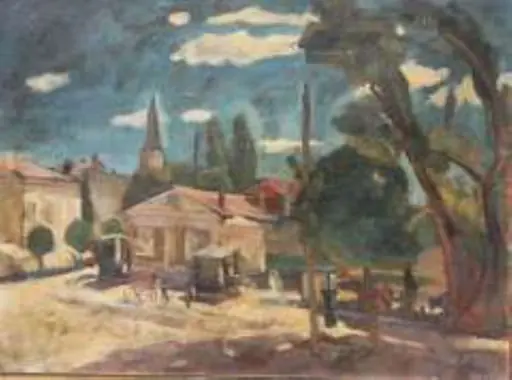
The painting depicts two aging structures, a pale, weathered building and a red-roofed one with a dome, separated by a narrow stream. A horse-drawn cart rests near a dirt path, suggesting quiet rural activity. The architecture implies a historical, possibly vernacular, settlement.
The scene evokes a sense of time’s passage, not through dramatic narrative, but through the quiet decay of materials and the stillness of the environment.
Technique & Style
Bunescu employed loose, rapid brushwork to render the grass, sky, and surface textures, creating a sense of immediacy despite the painting’s quiet mood. The buildings are rendered with more defined edges, contrasting with the fluid handling of natural elements. Color is subdued yet deliberate: the red dome stands out against muted earth tones, while the stream reflects ambient light with minimal detail. The technique balances academic precision with impressionistic spontaneity.
History & Provenance
Created around 1931, Hanul Dracului belongs to Bunescu’s mature period, following his early exhibitions and institutional roles. While its exact provenance prior to public collection is undocumented, the work aligns with his broader output of Romanian landscapes and architectural studies. It likely originated from private commissions or local exhibitions, consistent with his role in promoting national art through museums and salons.
Context
In early 20th-century Romania, artists like Bunescu sought to define a national visual identity through depictions of rural life and historic structures. Hanul Dracului fits within this movement, capturing vernacular architecture not as romanticized relic, but as lived-in, enduring presence. The painting reflects a broader cultural interest in preserving regional character amid modernization, without overt political or symbolic overtones.
Legacy
Though not widely reproduced, Hanul Dracului exemplifies Bunescu’s contribution to Romanian painting through his synthesis of academic training and observational realism. His institutional leadership helped shape public access to art, and this work remains a quiet testament to his dedication to documenting Romania’s architectural landscape. It continues to be studied as an example of interwar Romanian landscape painting grounded in local observation.
Artist & collection
Artist
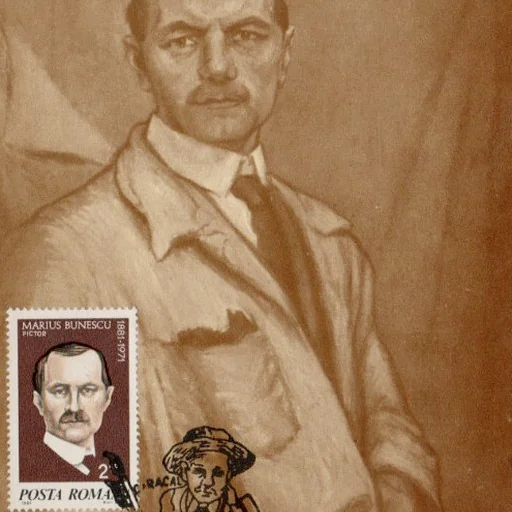
Marius Bunescu (15 May 1881 – 31 March 1971) was a Romanian painter, organizer of the National Museum of Art, and director of the Anastase Simu Museum.