Artwork
Conrad Celtis
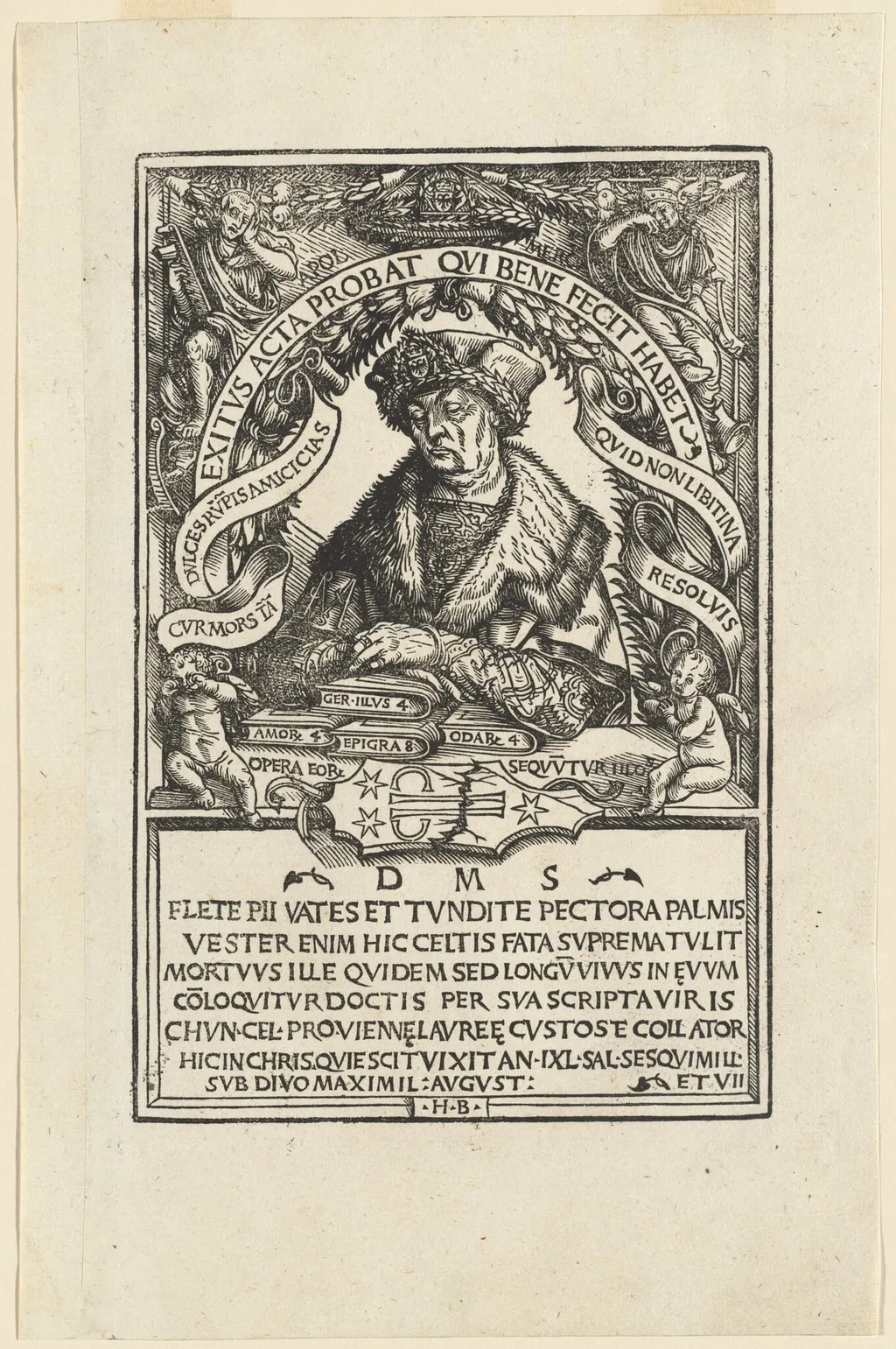
Conrad Celtis is an ink print by the Renaissance artist Hans Burgkmair I. It dates from 1507 and is held in the collection of the National Gallery of Art.
About this work
Overview
Above the sitter, a decorative banner unfurls containing Latin inscriptions, while small putti or angels emerge from the sides, framing the central figure.
Created in 1507 by Hans Burgkmair I, this woodcut is a portrait of the German humanist Conrad Celtis. The composition depicts Celtis seated at a desk, dressed in a heavy, fur-lined robe that signifies his scholarly status and wealth. He is surrounded by the tools of his trade: scattered papers, open books, and writing implements, emphasizing his role as a prolific writer and poet.
At his feet rests a small dog, a traditional symbol of loyalty and fidelity often included in portraits of the era. Above the sitter, a decorative banner unfurls containing Latin inscriptions, while small putti or angels emerge from the sides, framing the central figure. The work is executed in the medium of woodcut, utilizing Burgkmair's characteristic bold lines and cross-hatching to create depth and texture within the monochromatic format.
This print was produced during the height of the German Renaissance, serving as a visual testament to Celtis's prominence as the first Poet Laureate of the Holy Roman Empire. It stands as a significant example of Burgkmair's portraiture, capturing the intellectual spirit of the humanist movement in early 16th-century Germany.
Subject & Meaning
Celtis is depicted as a serious scholar, his fur‑lined robe and the abundance of texts emphasizing his intellectual pursuits. The Latin verse, styled as an epitaph, recounts his life and achievements, while the dog at his feet traditionally symbolizes fidelity. The presence of angels reinforces the dignified, almost sacred tone of the tribute.
Technique & Style
Executed as a black‑and‑white woodcut, the image relies on bold line work and contrasting tones typical of early 16th‑century printmaking. Burgkmair’s intricate border patterns and the delicate rendering of the scrolls and angels demonstrate his skill in combining decorative motifs with narrative detail within the constraints of the woodcut medium.
History & Provenance
Created in 1507, the print is an early example of Burgkmair’s portraiture of notable humanists. It circulated as a printed homage to Celtis, reflecting the Renaissance practice of commemorating scholars through reproducible media. The work remains in several European collections, illustrating the enduring interest in both the subject and Burgkmair’s print oeuvre.
Own this work as a print
Artist & collection


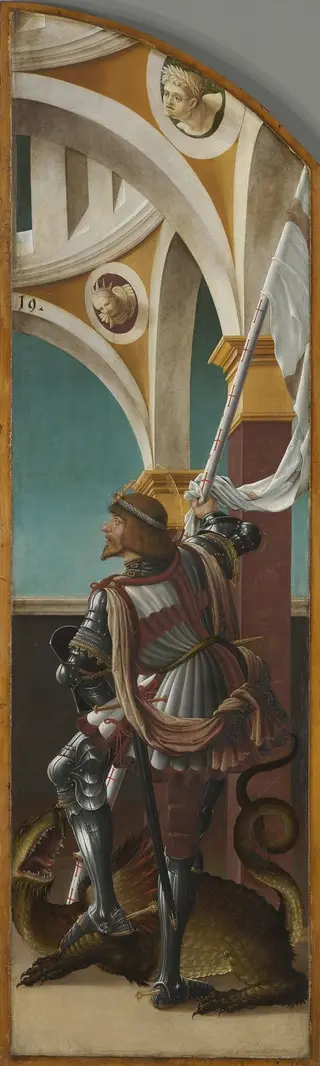

- The Emblem
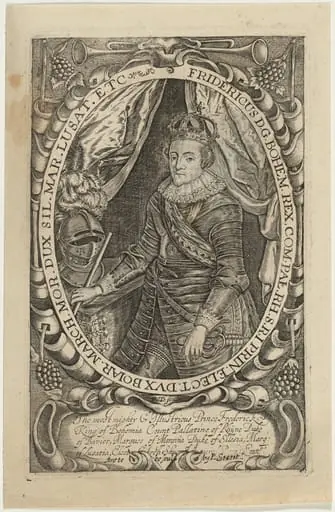 Fredericus D.G. Bohem. Rex (Frederick V, Kingof Bohemia)
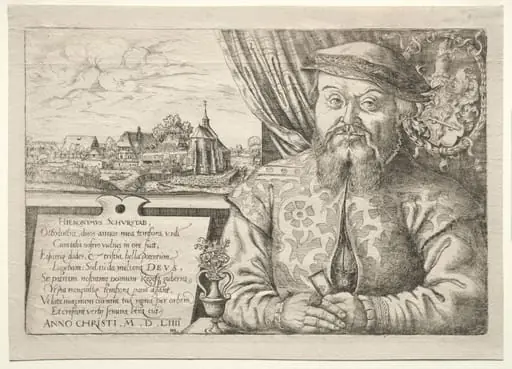 Hieronymus Schurstab, Mayor of Nuremberg
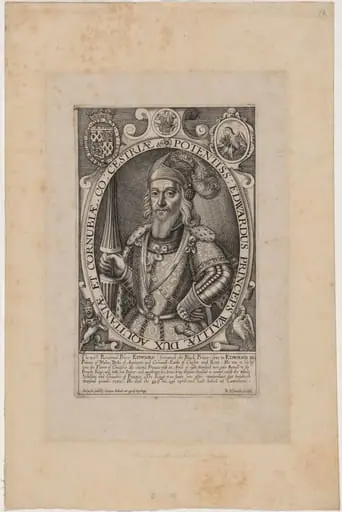 Edward, the Black Prince
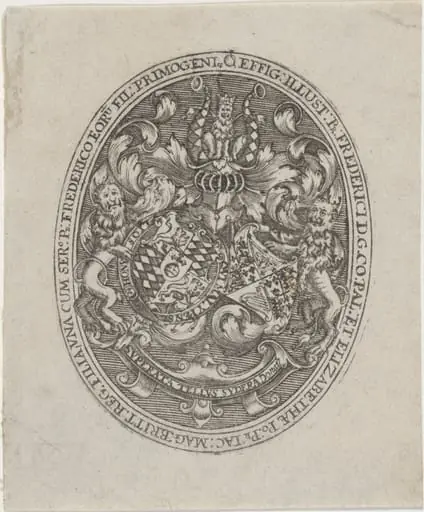 Shields of Frederick V, Elizabeth, and Prince Frederick Henry
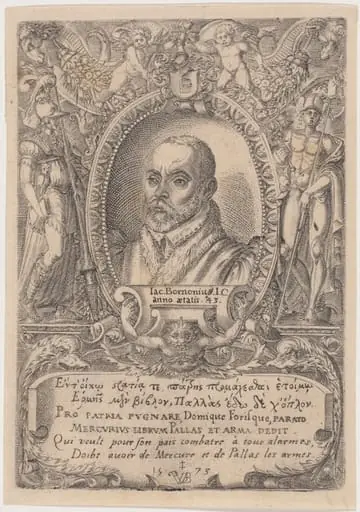 Jacob Bornonius
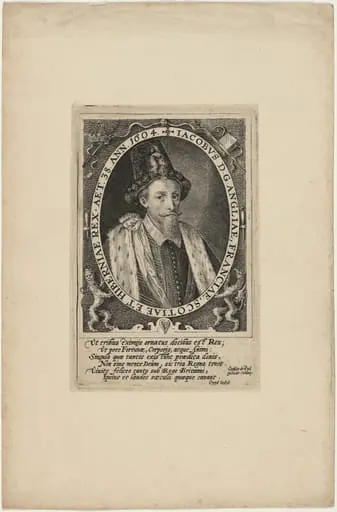 James I, King of England
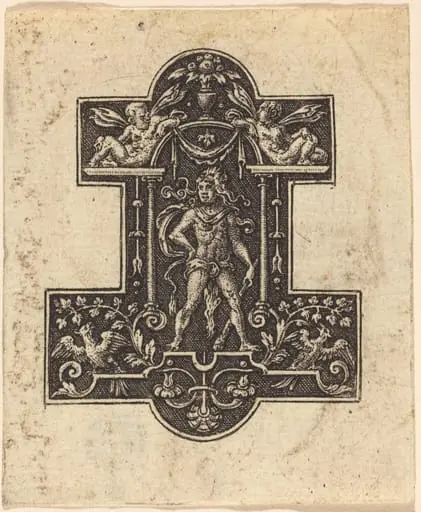 Hercules
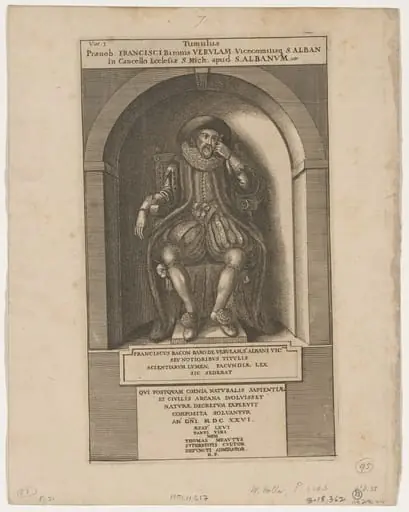 Francis Bacon in a Niche
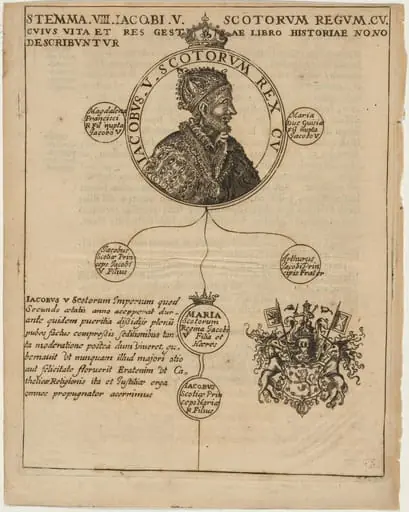 James V of Scotland with Geneology
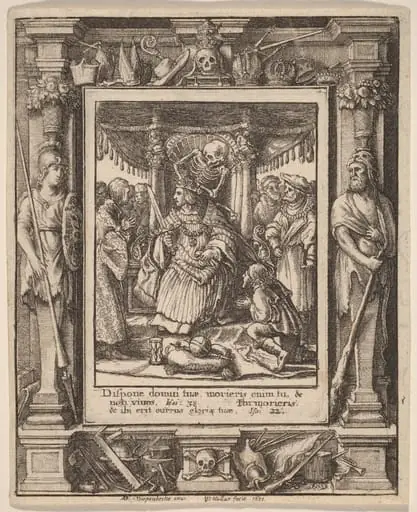 Emperor
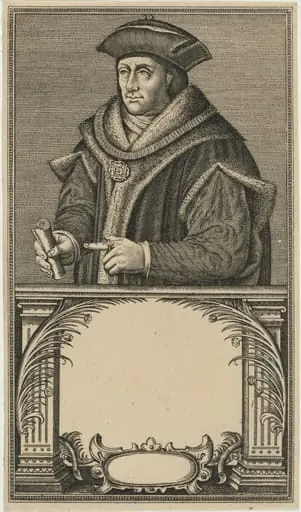 Sir Thomas More