Artwork
St. Fidelis; St. Agapetus; St. Dula; St. Latro Dimas
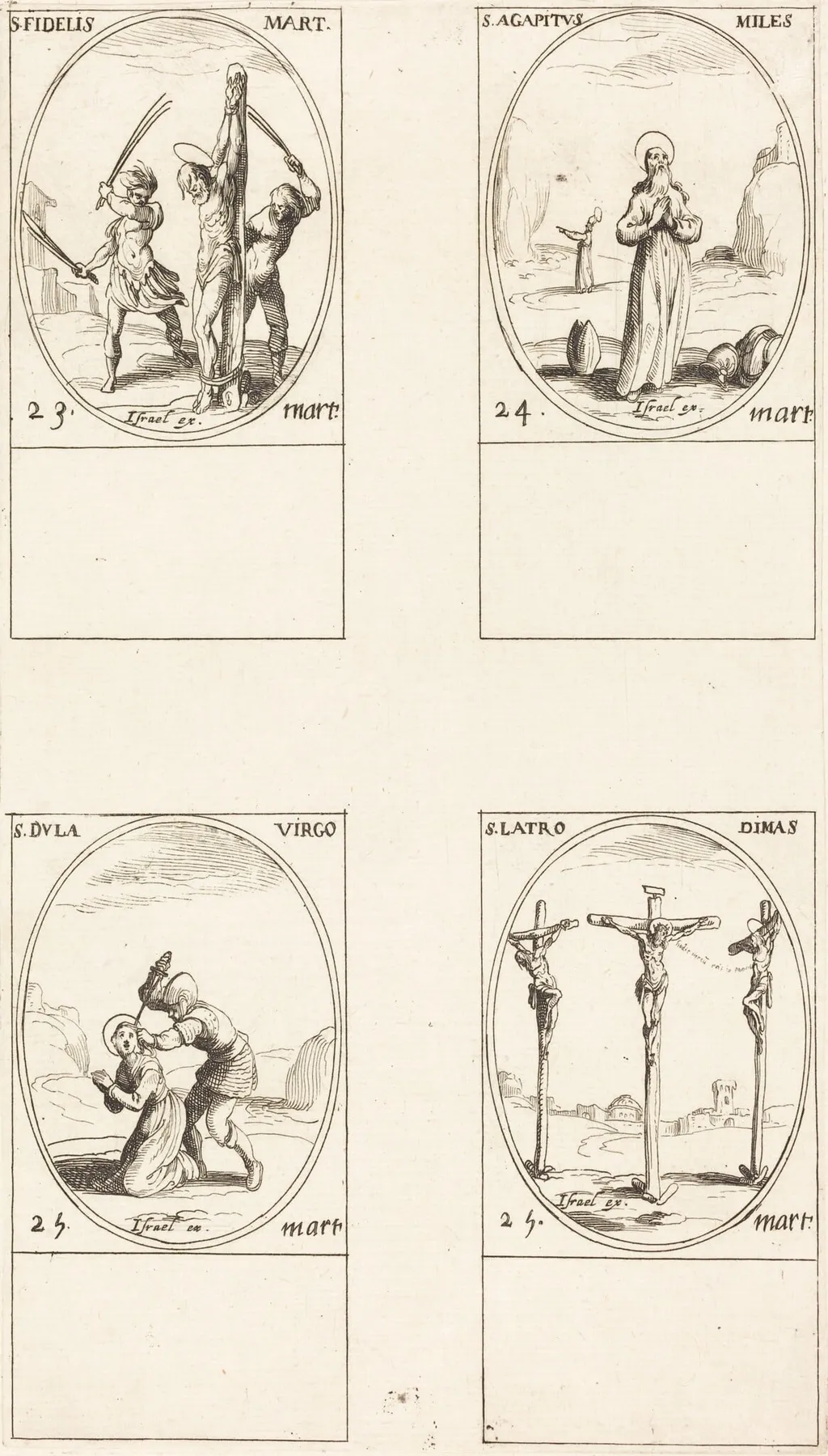
St. Fidelis; St. Agapetus; St. Dula; St. Latro Dimas is an ink print by the Baroque artist Jacques Callot. It dates from 1634 and is held in the collection of the National Gallery of Art.
About this work
Overview
The work exemplifies Callot’s skill in rendering multiple figures within a limited space, using line and shading to generate stark tonal contrasts.
Around 1634, French printmaker Jacques Callot produced an etching on laid paper that presents four compact, oval-framed scenes. Each vignette is identified with the name of a saint, St. Fidelis, St. Agapetus, St. Dula, and St. Latro Dimas, offering a concise visual narrative of their martyrdoms. The work exemplifies Callot’s skill in rendering multiple figures within a limited space, using line and shading to generate stark tonal contrasts.
Subject & Meaning
The four panels depict moments of violent persecution: two figures seize a third while a sword is raised; a solitary robed figure stands before a diminutive attendant; a kneeling cleric is assaulted with a club; and three crucified bodies dominate a landscape with a distant town. By labeling each scene with a saint’s name, Callot connects the graphic episodes to the tradition of martyrdom, emphasizing the endurance of faith amid suffering.
Technique & Style
Callot employed etching on laid paper, a method that allows fine line work and nuanced shading. The artist’s characteristic economy of line produces clear outlines and strong chiaroscuro, while the modest scale of the oval frames concentrates attention on the dramatic gestures of the figures. The composition balances detailed human action with simplified backgrounds, a hallmark of Callot’s baroque sensibility.
History & Provenance
Created in the early 1630s, the print belongs to Callot’s prolific output of more than 1,400 etchings, many of which documented contemporary military, courtly, and religious themes. Though specific ownership records for this sheet are scarce, it reflects the broader circulation of devotional imagery in early modern Europe, where prints served both private devotion and public instruction.
Context
The work emerges from a period when the Catholic Counter‑Reformation encouraged visual representations of saintly sacrifice. Callot, operating from the Duchy of Lorraine, merged his experience as a court draftsman with the era’s demand for didactic religious art, integrating narrative detail with the baroque emphasis on movement and emotional intensity.
Artist & collection
Artist
Jacques Callot (French: ; c. 1592 – 1635) was a baroque printmaker and draftsman from the Duchy of Lorraine. He is an important person in the development of the old master print. He made more than 1,400 etchings that…

 Holy Family at supper
 Restoration of the Aqueduct at Pisa
 Restoration of the Aqueduct at Pisa
 Square in Paris with Many Figures
 Square in Paris with Many Figures
 Horsemen Attacked by Robbers
 HOW WILL A COVERED PART BE CORRECTED?HOW WIKA A COVERED HEART DEED CORRECTED?
![Christ Walking on the Water [second plate], by Jacques Callot](https://artifactworldgallery.com/img/jacques-callot--christ-walking-on-the-water-second-plate--2069f3bfe4cb2126-w320.webp) Christ Walking on the Water [second plate]
Christ Walking on the Water [second plate]
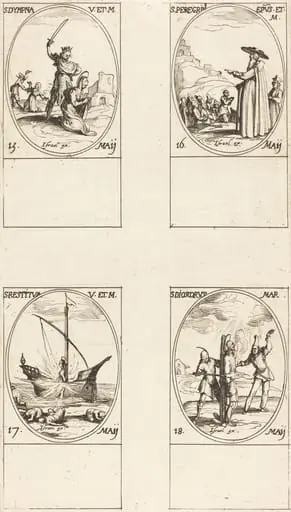 St. Dympna; St. Peregrinus; St. Restituta; St. Dioscorus
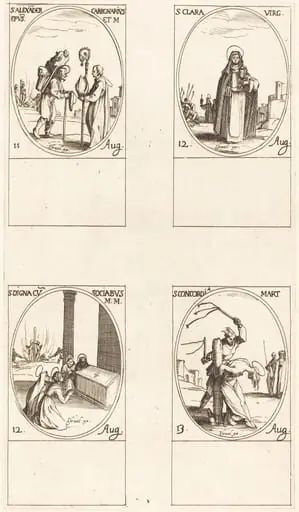 St. Alexander Carbonarius; St. Clare; St. Digna and Companions; St. Concordia
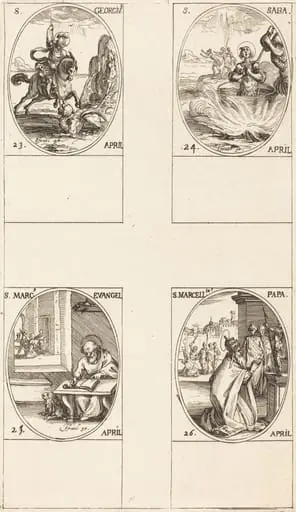 St. George; St. Sabas; St. Mark, Evangelist; St. Marcellin
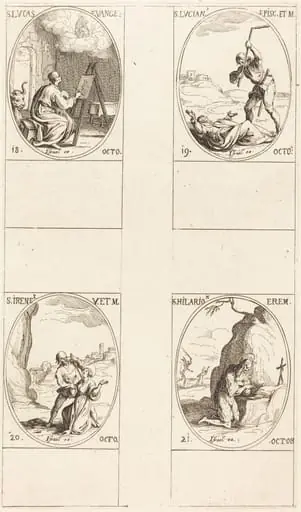 St. Luke; St. Lucian; St. Irene; St. Hilarion
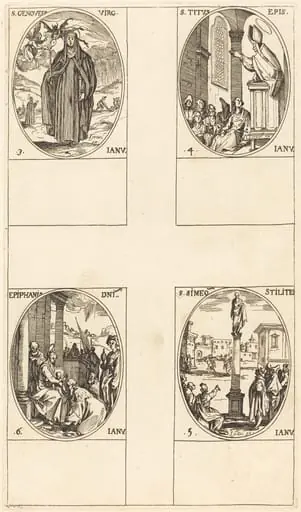 St. Genevieve; St. Titus; St. Simeon Stylites; Epiphany
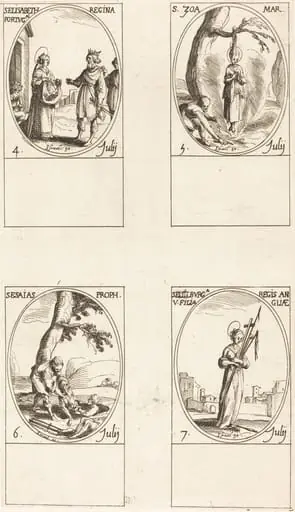 St. Elizabeth of Portugal; St. Zoe; St. Isaiah, Prophet; St. Edelburge
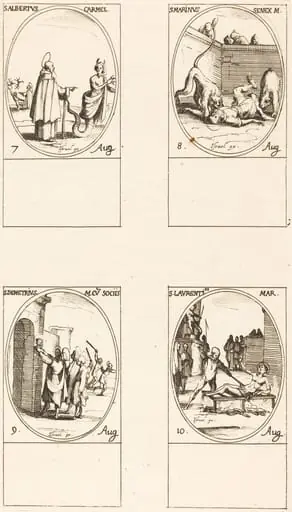 St. Albert of Sicliy, Carmelite; St. Martinus;St. Demetrius and Companions; St. Lawrence
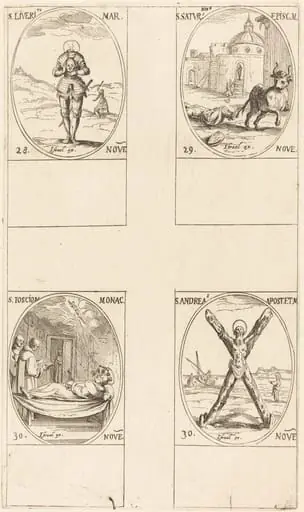 St. Liverius; St. Saturninus; St. Joscion; St. Andrew
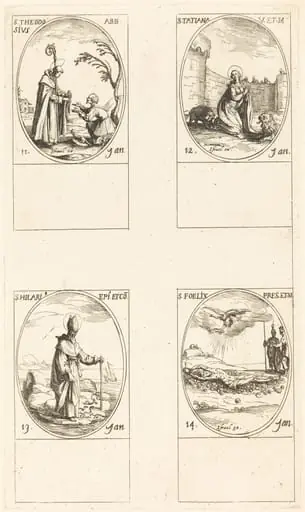 St. Theodosius; St. Tatiana; St. Hilary; St. Felix
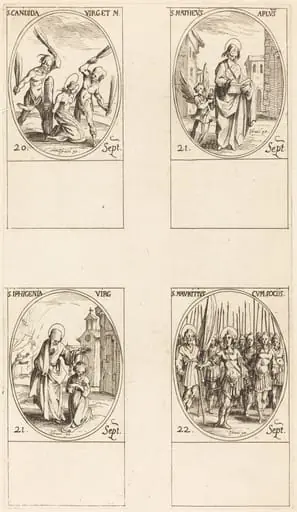 St. Canida; St. Matthew; St. Ipigenia; St. Maurice and Companions