Artwork
The Bucintoro at the Molo on Ascension Day
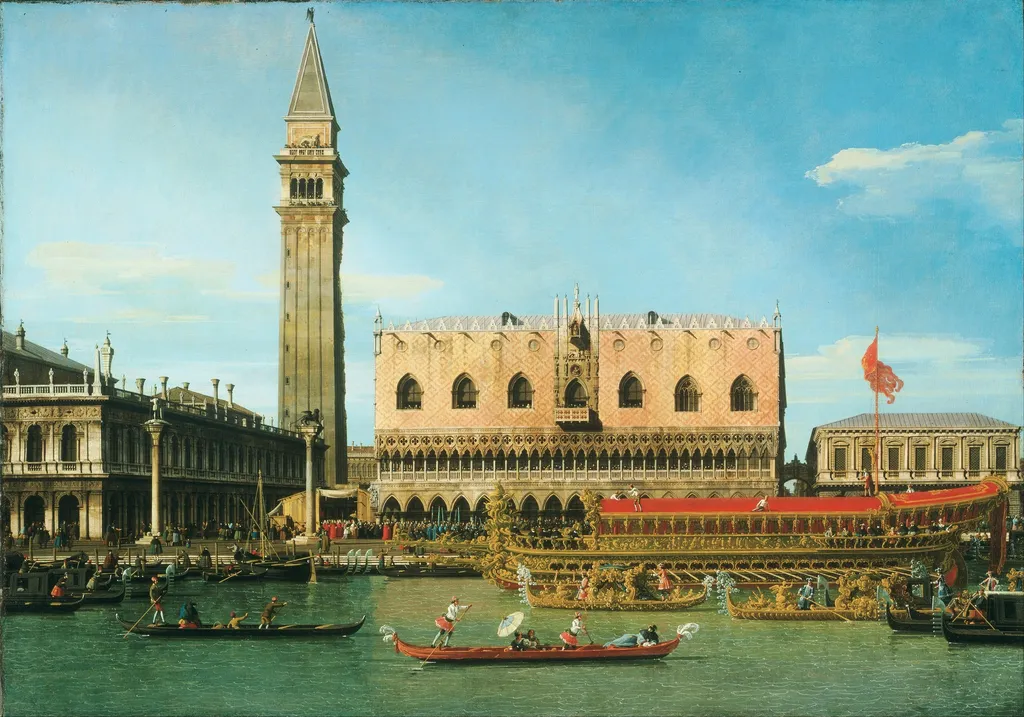
The Bucintoro at the Molo on Ascension Day is an oil painting by the Rococo painting artist Canaletto. It dates from 1745 and is held in the collection of the Philadelphia Museum of Art.
About this work
Subject & Meaning
The composition centers on the ornate vessel as it navigates the San Marco basin, flanked by the columns of San Teodoro and San Marco.
The painting depicts the ceremonial departure of the Bucintoro, the Doge's state barge, from the Molo of the Doge's Palace in Venice during the Feast of the Ascension. This event, known as the Sposalizio del Mare, symbolized Venice's historical dominion over the Adriatic Sea. The composition centers on the ornate vessel as it navigates the San Marco basin, flanked by the columns of San Teodoro and San Marco.
Surrounding landmarks, including the Doge's Palace, St Mark's Campanile, and the Biblioteca Nazionale Marciana, frame the scene to emphasize the city's architectural grandeur and civic power. As a veduta, the work captures the specific pageantry of the 1745 celebration, immortalizing the ritual that reinforced the Republic's identity and maritime authority.
Technique & Style
Canaletto executed The Bucintoro at the Molo on Ascension Day in 1745 using oil paint applied to a canvas support. The work measures 114.9 cm in height and 162.6 cm in width, functioning as a large-scale veduta that captures the Venetian cityscape with precise architectural detail. The painting depicts the Doge's barge, the Bucintoro, alongside specific landmarks such as the columns of San Teodoro and San Marco, the Doge's Palace, and St Mark's Campanile.
As a representative cityscape, the piece demonstrates the formal qualities typical of the genre, focusing on the accurate rendering of light, perspective, and the bustling atmosphere of the Molo on Ascension Day.
History & Provenance
The work was commissioned by the Doge of Venice to commemorate the ceremonial launch of the Bucintoro, a gilded barge used during the Ascension Day festivities. Canaletto painted the scene in 1745, capturing the elaborate procession on the Molo in Venice. The painting entered the collection of William L. Elkins, who donated his assembled works to the Philadelphia Museum of Art in 1924, where it remains on view.
The painting resides in the collection of the Philadelphia Museum of Art, accessioned as part of The William L. Elkins Collection in 1924. It has been exhibited at the museum in displays of Venetian vedute and related works from the 18th century.
Overview
The 1745 oil painting titled The Bucintoro at the Molo on Ascension Day portrays a ceremonial gathering in Venice. Central to the composition are the bustling Piazzetta San Marco, the Doge’s Palace, and the expansive San Marco basin, all rendered with the clarity typical of 18th‑century vedute.
Context
The piece belongs to a series of vedute that document Venice’s public rituals and its built environment. By situating the Bucintoro amid recognizable landmarks, Canaletto offers both a topographical record and a visual celebration of the Republic’s ceremonial life.
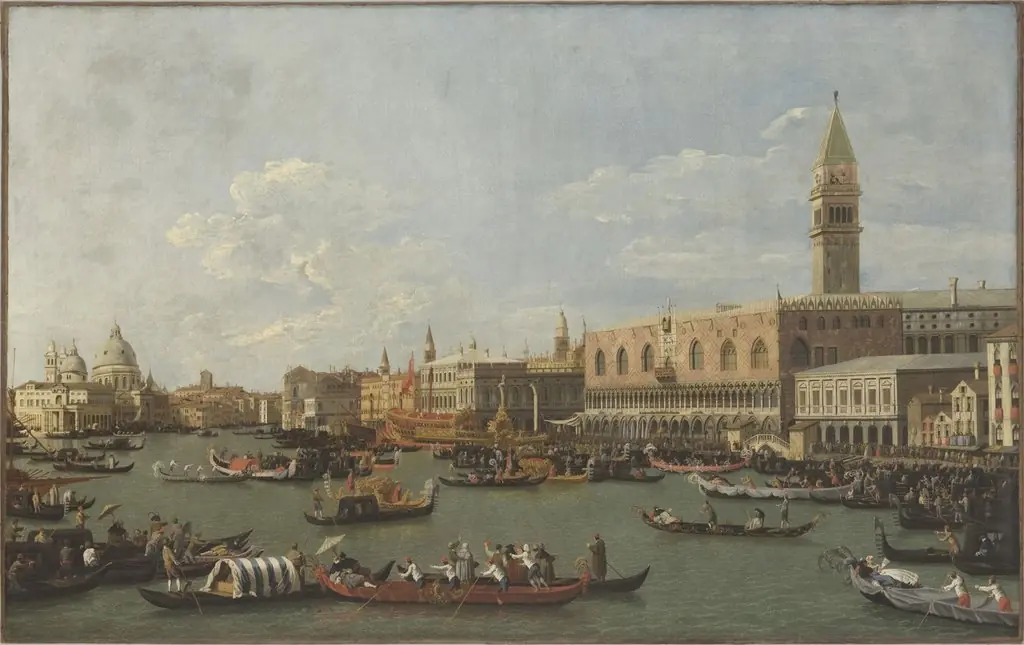
Own this work as a print
Artist & collection
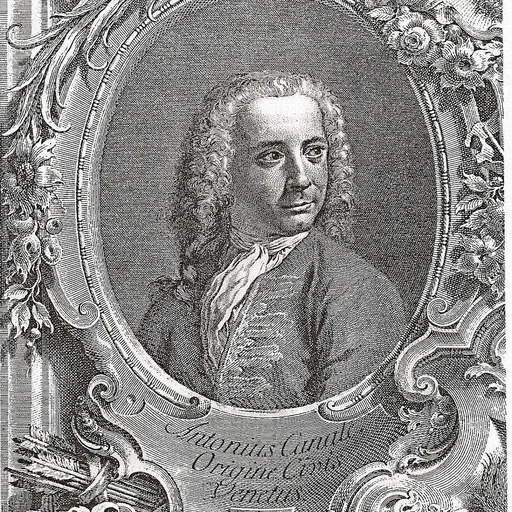
Artist
Giovanni Antonio Canal (18 October 1697 – 19 April 1768), commonly known as Canaletto (Italian: ), was an Italian painter from the Republic of Venice, considered an important member of the 18th-century Venetian school.

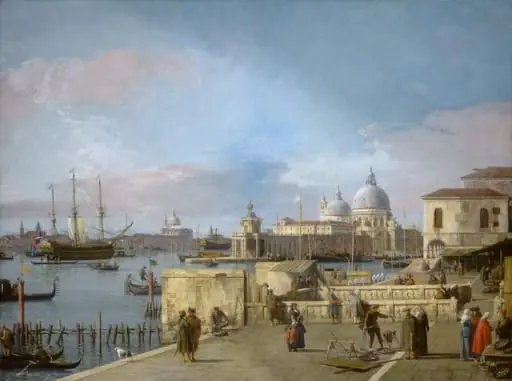
 View of Venice from the Island of San Giorgio
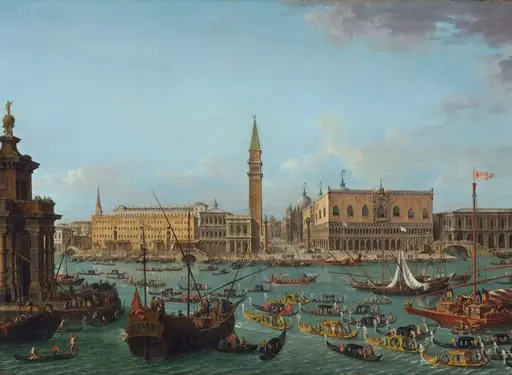 Procession of Gondolas in the Bacino di San Marco, Venice
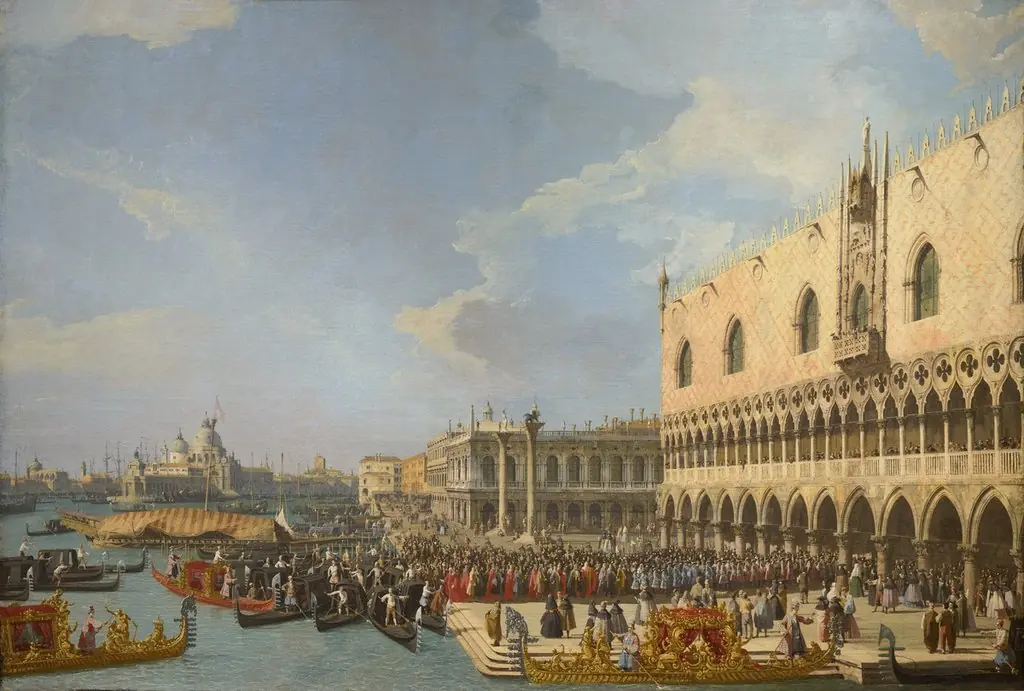 Ricevimento dell’ ambasciatore imperiale a Palazzo Ducale
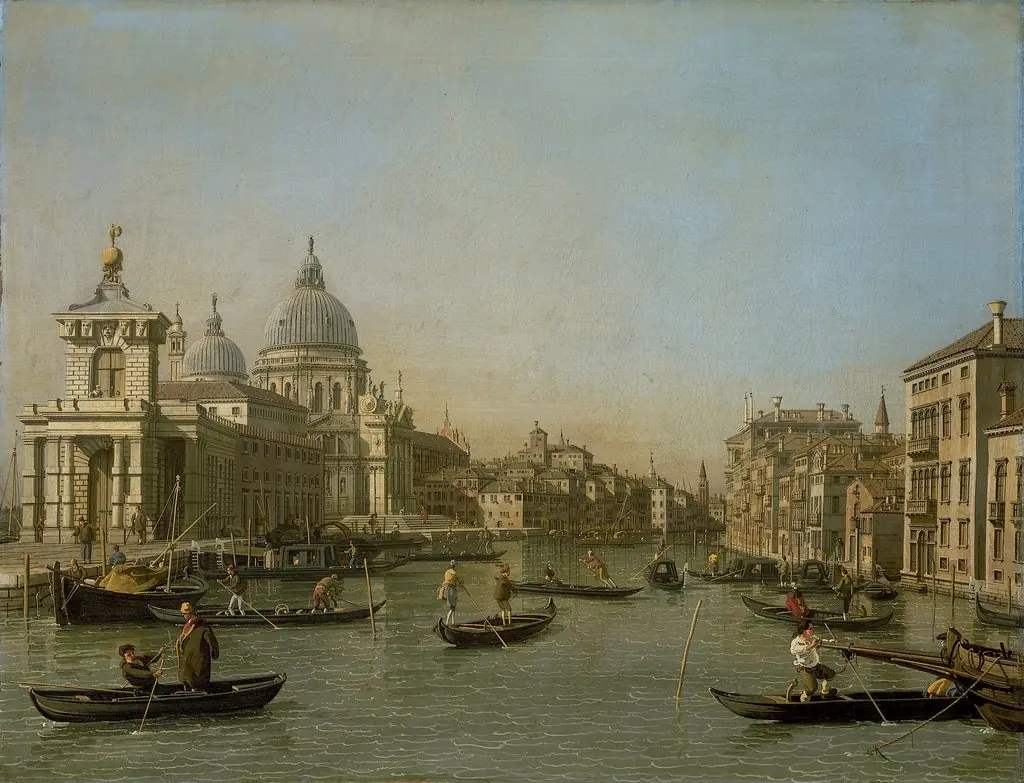 The Entrance to the Grand Canal at the Punta della Dogana and Santa Maria della Salute
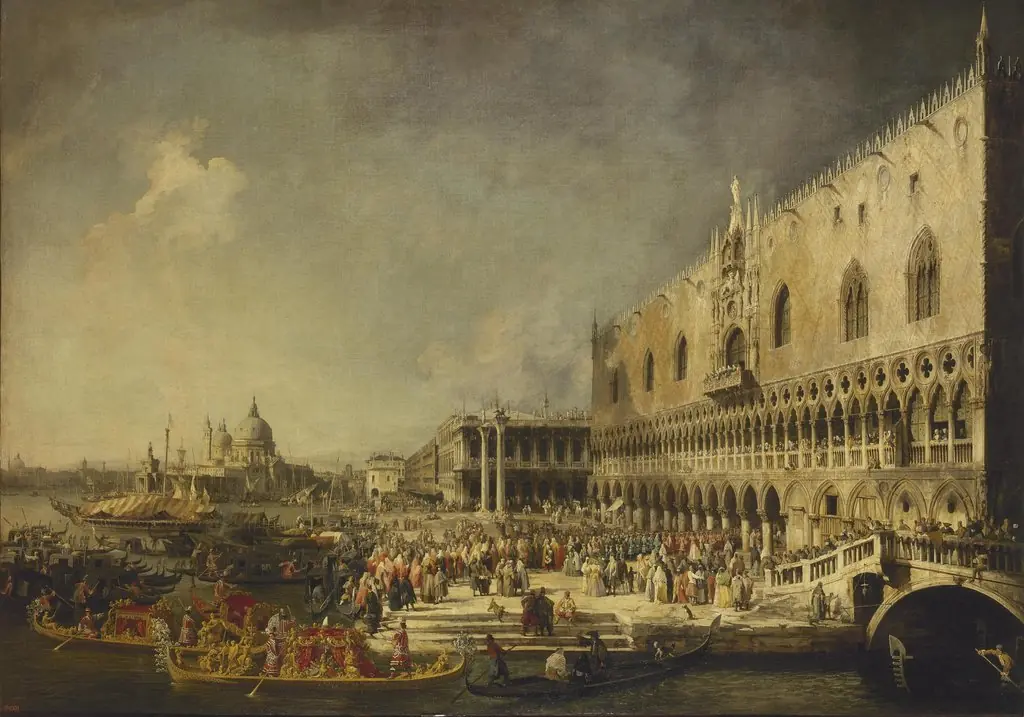 Arrival of the French Ambassador in Venice
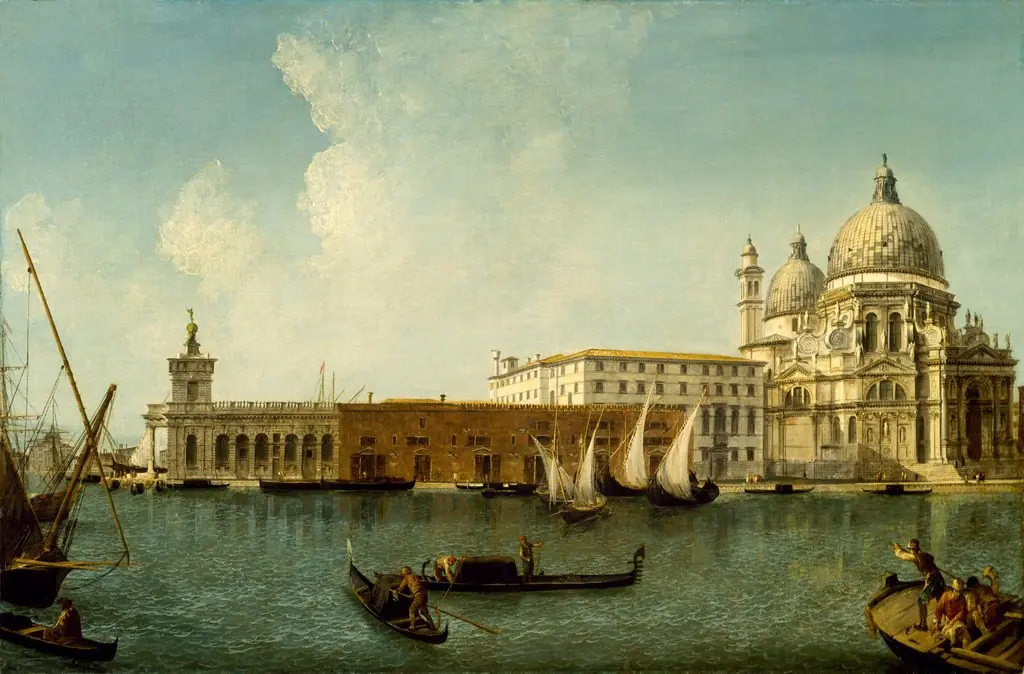 View of the Dogana and Santa Maria della Salute
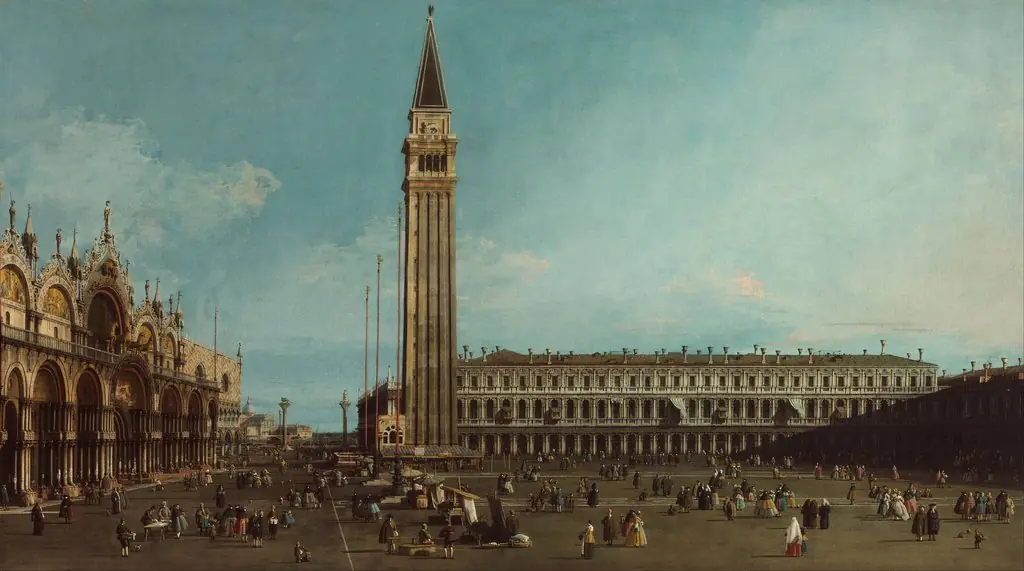 The Piazza San Marco, Venice